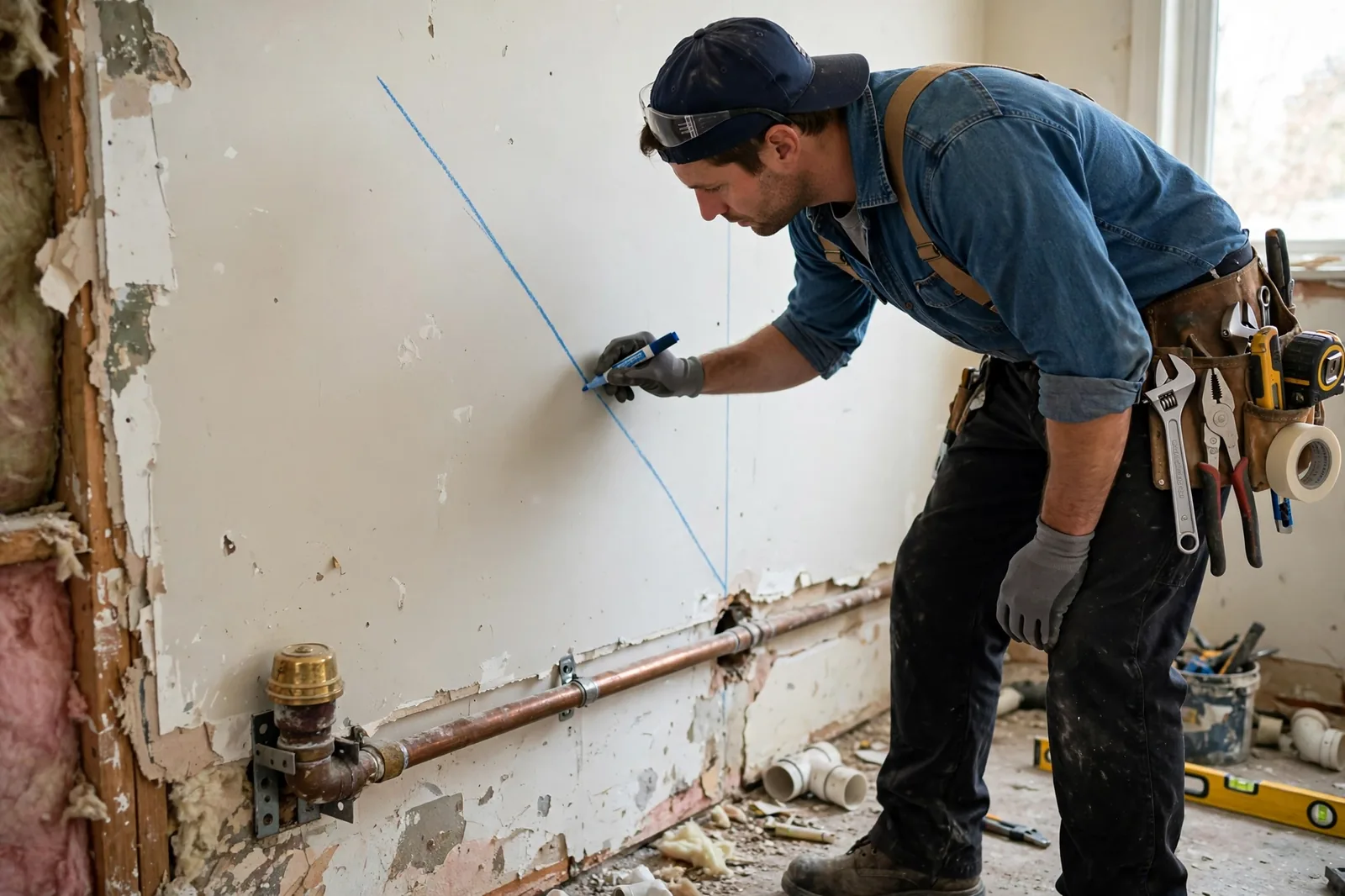
How Is A Burst Pipe Under A Foundation Fixed?
Free Call · Answered 24/7 · Local Pros Near You
In This Guide
- How Is A Burst Pipe Under A Foundation Or Driveway Fixed?
- Who Fixes An Underground Water Line Break?
- What Signs Point To A Break Under Concrete?
- How Do Pros Pinpoint The Break Before Digging?
- When Does Rerouting Beat Digging?
- What Does The Actual Repair Involve?
- How Is The Area Restored And Tested Afterwards?
Quick Answer
A burst pipe under a foundation or driveway is fixed in one of three ways: dig down to the break and replace that section, open the floor above it when the break sits under a slab, or abandon the buried run and reroute a new line through walls or attic space. The right choice depends on where the break sits, the pipe's age and condition, and how much digging each option truly needs.
How Is A Burst Pipe Under A Foundation Or Driveway Fixed?
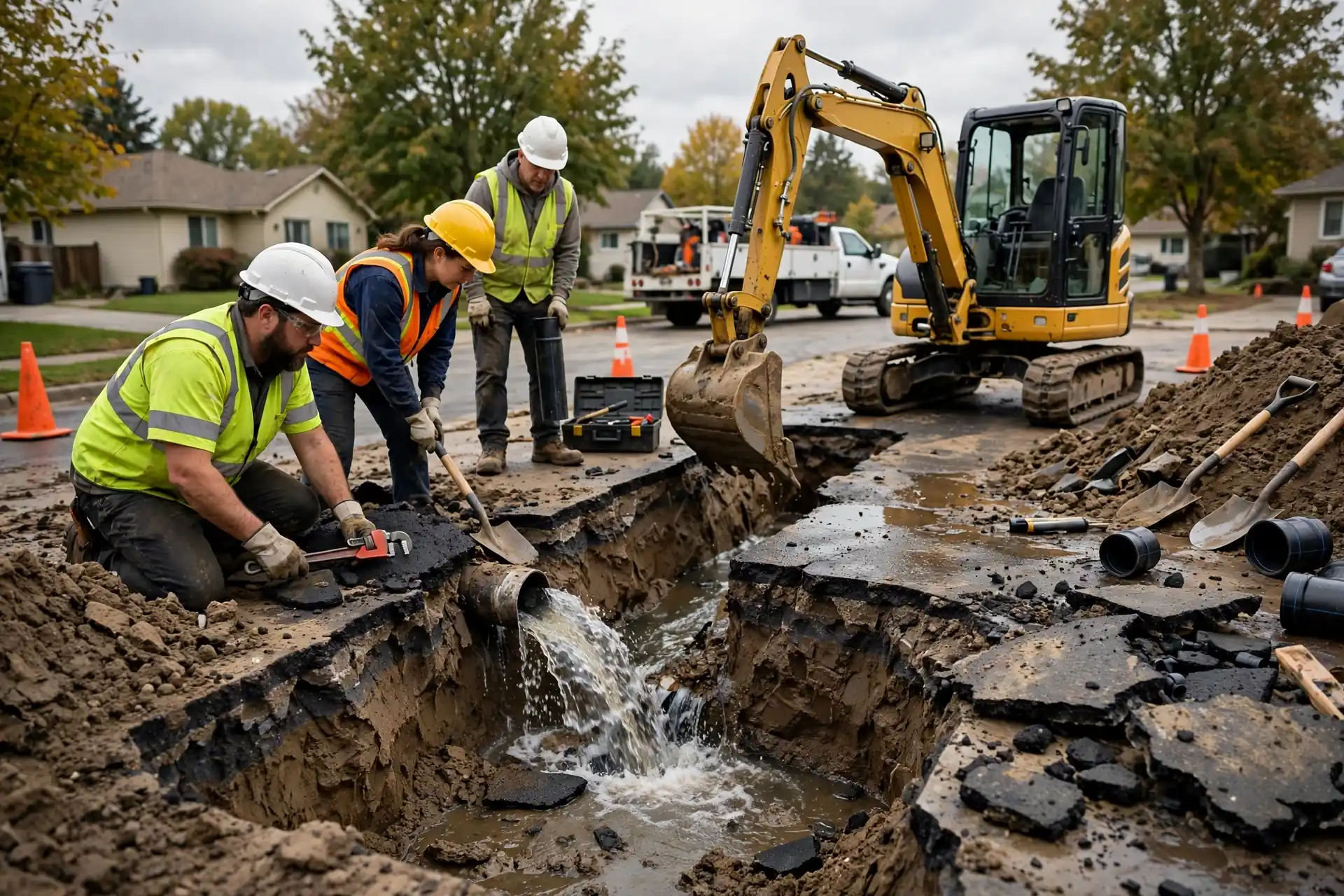
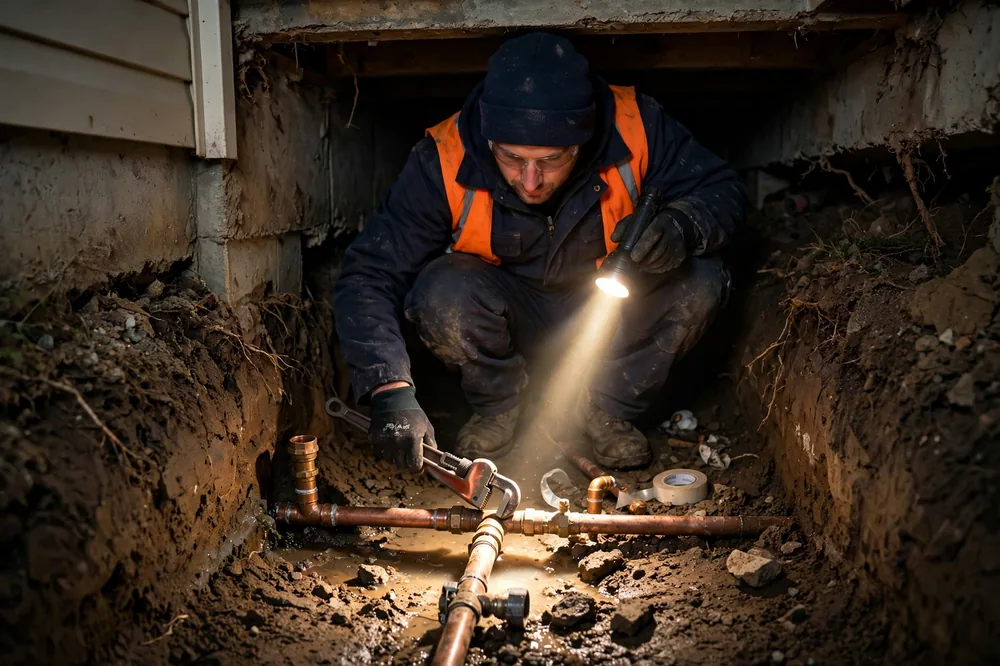
There are three honest routes, and a good pro explains all of them before digging. The first is direct excavation: dig to the break, cut out the damaged section and join in new pipe. The second is opening the floor above the break, which suits a line under a thin slab inside the home. The third is rerouting, where the buried section is capped and a new line runs through accessible space instead.
The choice turns on facts, not habit. A single break in an otherwise sound line often deserves direct repair. A line that is old, corroded or has broken before often deserves rerouting, because fixing one spot leaves the next weak spot buried and waiting. Our guide to rerouting pipes away from cold walls covers the logic of moving a problem line rather than patching it.
Does The Driveway Always Have To Come Up?
No. If the break sits near the edge of a driveway, digging from the side may reach it. If it sits in the middle, a small section of concrete is usually cut and later replaced, not the whole slab. Sometimes rerouting avoids breaking concrete at all. Ask for the dig plan in plain terms before work starts, including who patches the surface afterwards and how that surface will look.
Who Fixes An Underground Water Line Break?
Underground supply breaks are handled by plumbing pros with excavation and leak location equipment, sometimes working alongside a digging contractor for deep or long trenches. The city water utility, the municipal utility that supplies water and owns the meter, is responsible for the street side of the meter, while the line from the meter to and under your home is normally the homeowner's side. That boundary decides who you call first.
Rural homes can differ. A well line, the pipe carrying water from a private well into the home, belongs to the homeowner along its whole run, and the pro who services the well system may work with the plumbing pro on the repair. Around burst pipe help in Idaho City, older lines and mixed ownership make that first boundary question especially worth asking before anyone digs.
Pipe Frozen Or Burst Right Now? One Free Call Connects You With A Local Pro.
Call NowWhat Signs Point To A Break Under Concrete?
The signs are indirect, because the break hides underground. A water meter, the utility meter that records water use, that moves while every tap is off is the classic first clue. Add a patch of grass that stays green or soggy in dry weather, soil that sinks or heaves, a warm or damp spot on a slab floor, or water appearing at the edge of a foundation with no rain to explain it.
Sound helps too. A faint hiss near the floor when the house is quiet can be water escaping under pressure below. In farming country near burst pipe help in Howe, an irrigation line, buried sprinkler piping that must be blown out before winter, can mimic the same signs, so a careful pro confirms which system is losing water before choosing where to dig.
Why Did The Line Break Underground At All?
Buried lines face their own stresses. Shifting soil, ground movement from settling, frost or moisture changes, can bend a line until it cracks. Tree root intrusion, roots growing toward moisture that can shift, crush or enter buried lines, adds pressure over years. Add freeze depth in a hard Idaho winter and pipe corrosion, the gradual wearing away of a pipe wall, and an old buried line has several ways to fail at once.
How Do Pros Pinpoint The Break Before Digging?
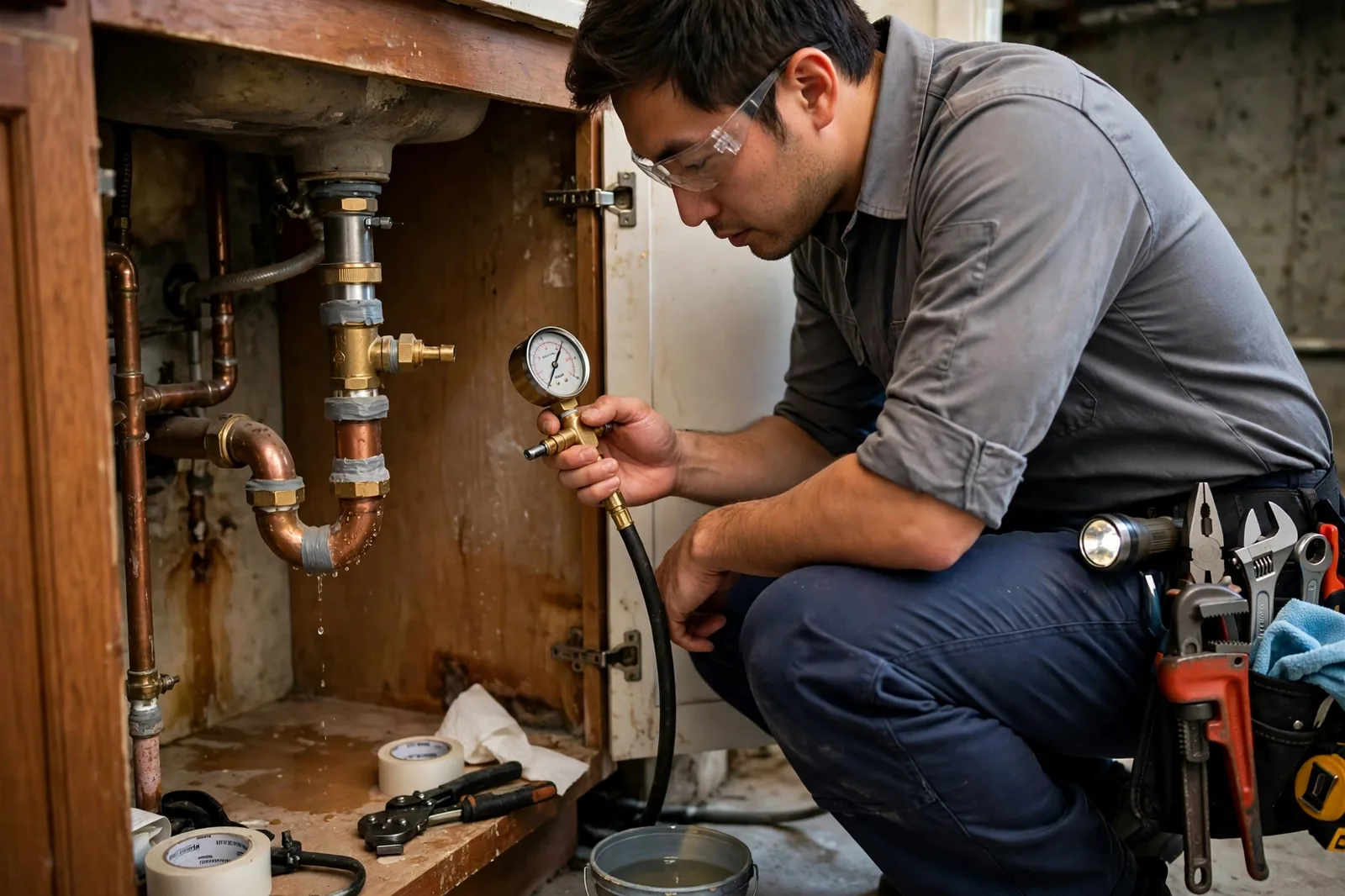
Digging starts with listening. Acoustic leak detection, listening equipment and a method used to hear water escaping from a pipe inside a wall, floor or ground, lets the pro rank spots by sound and mark where escaping water is loudest. A pressure test, filling a line at a set pressure and watching for a drop, confirms the loss is real and shows roughly how large it is before any soil moves.
The pro also walks the line's known route, checks valve boxes and the entry point, and reviews any past repair spots, because old joints are common failure points. Where the home has a crawl space, the shallow space under a home where pipes often run unheated, part of the run may be visible and checked directly. Only when listening, testing and layout agree does the first shovel go in.
When Does Rerouting Beat Digging?
Rerouting wins when the buried line is broadly worn out, when the break sits under expensive flooring or a thick slab, or when the same line has failed before. A new run through a wall cavity, an attic, the space above the ceiling where pipes can freeze without protection, or along a garage wall can be insulated, fitted with heat tape, an electric cable applied along a pipe to keep it above freezing, and reached easily if it ever needs work again.
Rerouting is not an escape from planning, though. The new route must avoid the freeze risks that helped cause the original failure, especially in an exterior wall, an outside-facing wall whose runs sit closest to outdoor cold. Homeowners near burst pipe help in Huston weighing both options should ask one question: which choice leaves me with the younger, more reachable line in ten years?
What Happens To The Old Buried Line?
It is capped at both ends and left in place, drained and out of service. A capped, dry line underground causes no ongoing harm, and leaving it avoids the cost of removing it. The pro should note the reroute clearly, ideally on a simple sketch kept with your home records, so a future owner or pro knows the buried line is dead and the live line runs overhead.
What Does The Actual Repair Involve?
Once the break is exposed, the damaged section is cut out with a pipe cutter, a tool that cuts a clean section of pipe so a damaged part can be removed, and new pipe is joined in with fittings matched to the existing material. A water service line, the buried pipe bringing water from the utility main or a well into the home, may be copper pipe, the metal pipe used in many homes, older galvanized steel pipe, an older zinc-coated steel pipe that corrodes from the inside, or newer flexible plastic, and each joins differently.
Depth matters in Idaho. A replacement section should sit below the local frost depth where that is practical, bedded in material that will not press sharp stones against it as soil settles. The trench is backfilled in layers and compacted, because loose fill over a new line is how a repaired driveway or lawn develops a sunken stripe the following spring.
How Is The Area Restored And Tested Afterwards?
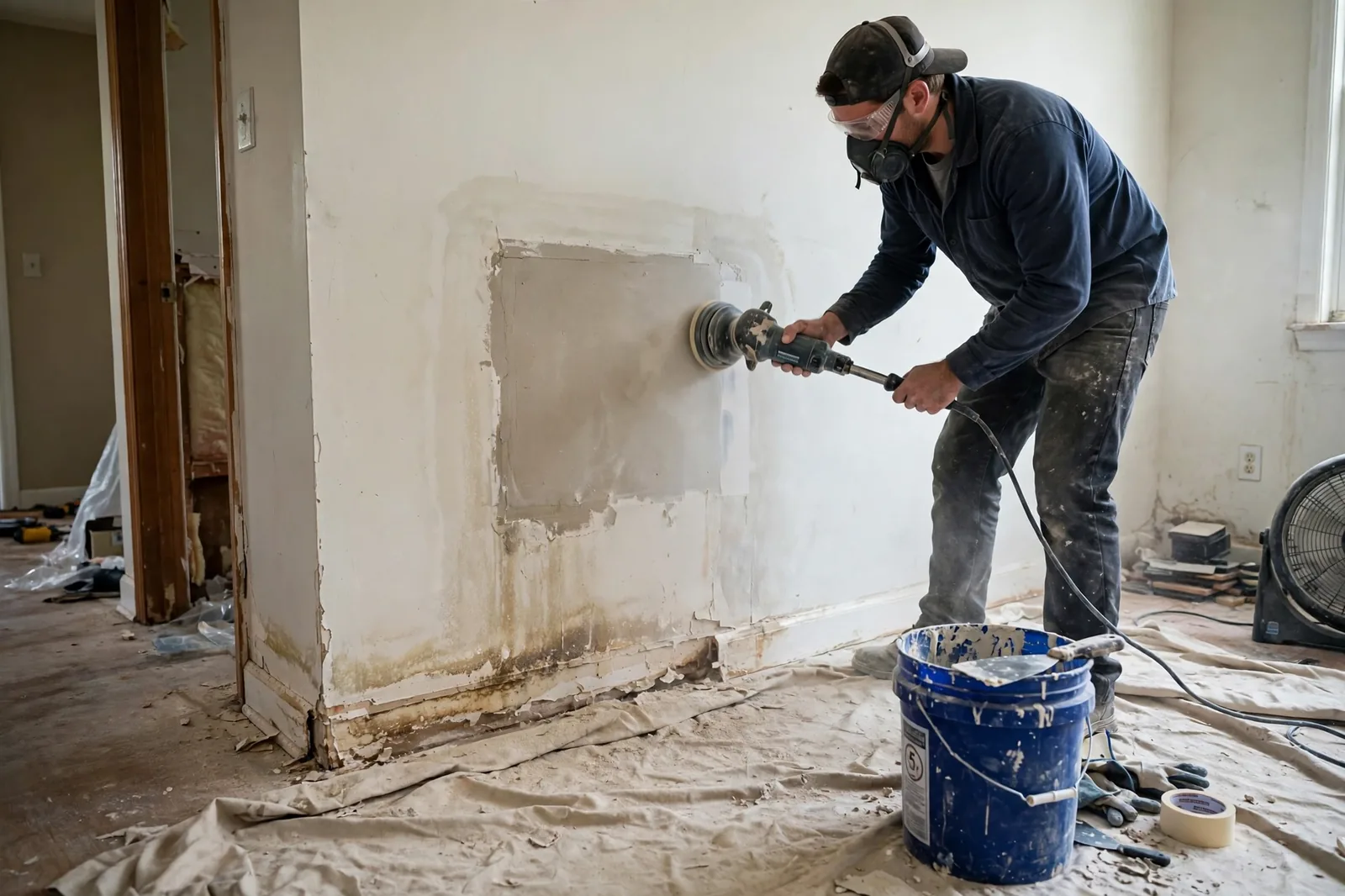
Testing comes before covering. The repaired or rerouted line is pressure tested again, joints are inspected under full house pressure, and every tap is run to clear air and sediment. Only a line that holds pressure with no weeping joint gets buried or closed in. If water entered the home during the break, the follow-up work matches our guide to wall and floor restoration after a burst.
Surface restoration follows: concrete sections are repoured, soil is levelled and seed or sod is discussed honestly, since a trench line shows for a season. Keep the paperwork — the dig sketch, test result and dated photos support insurance and any future sale. If your meter still moves with taps off, call Idaho Burst Pipe Pros on (800) 555-0100. It is a free connection service to independent local pros, answered 24/7, with arrivals typically in 30 to 60 minutes.
How Soon Can You Use The Water Normally?
Usually the same day the repair passes its pressure test, once the line has been flushed and the water runs clear. Run each tap for a minute or two, check the water heater, the appliance that heats household water, and watch the repaired area for dampness over the next day. Any new meter movement, hissing or soggy soil near the trench deserves a call back straight away, while the work is fresh.
Frequently Asked Questions
Straight answers, no fine print. If your question is not here, one free call gets you a local pro who can check your exact problem.
Still Have Questions? Call Free
Answered 24/7 — a local pro can arrive in 30–60 minutes.
Call Now — (800) 555-0100Three routes cover most cases: dig down to the break and replace that section, open the floor above a break under a slab, or cap the buried run and reroute a new line through walls or attic space. The pro locates the break first with listening equipment and pressure testing, then recommends based on the line's age, the break's position and how much digging each route truly requires.
A plumbing pro with leak location and excavation experience handles the homeowner's side of the system, sometimes with a digging contractor for deeper trenches. The utility is responsible for the street side of its meter; the line from the meter into and under your home is normally yours. On a private well system the whole run is the homeowner's, and a well service pro may share the job with the plumbing pro.
They listen before they dig. Sensitive equipment picks up the sound of water escaping under pressure, and that sound peaks near the break. Pressure testing confirms the loss, and the line's known route, valve boxes and past repair spots are checked against what the equipment says. When listening, testing and layout agree on one spot, the trench opens there, which is why a careful dig is usually small.
Sometimes. If the break is small and the pipe around it is sound, options that avoid opening the floor may be discussed, but many under-slab breaks are handled by rerouting instead: the buried section is capped and a new line runs through accessible space. That avoids cutting finished floors and leaves the new line reachable. Ask the pro to explain honestly which routes suit your pipe material, break size and floor type.
Cold reaches buried lines that sit too shallow, especially where soil cover is thin near foundations, driveways and entries. Water inside freezes and expands, and the freeze thaw cycle, repeated freezing and warming that weakens a pipe, stresses the same spots year after year. Ground movement and corrosion add their own damage. A replacement section bedded deeper, with proper cover, is far less likely to repeat the failure next winter.
Close the main water shutoff valve, the main valve that stops all water entering the home, if the meter shows water moving with taps off. That stops the underground loss, which can otherwise run for days and undermine soil. Photograph any soggy ground, sinking soil or damp flooring with dates, keep belongings off wet floors, and avoid driving over a suspected break area, since weight on softened, washed-out soil can worsen the damage above the line.
Locating the break and a straightforward dig-and-replace repair often fit within a day or two, while rerouting, deep trenches or concrete work can extend the schedule. Weather, soil conditions and how quickly the exact spot is confirmed all play a part. A careful pro gives you the range after the location step, not before, and explains what could change it. Restoration of lawns and concrete usually follows once the line passes its tests.
Policies differ, and the details matter: many cover sudden water damage inside the home while treating the buried pipe itself, worn out over years, differently. Prompt reporting and good documentation help either way. Photograph the signs, save the pro's locate and test notes, and ask your insurance company early what it needs. The Idaho Department Of Insurance, the state agency that regulates insurers and helps consumers with questions, can explain your options if a claim stalls.
A sound repair at the right depth should not, but the rest of an old line keeps its age. If the pipe is broadly corroded or has broken in several places, one more spot repair leaves the next failure buried and waiting. That is the honest case for rerouting or replacing the full run. Ask the pro what condition the exposed section showed, because that glimpse is the evidence your decision should rest on.
It depends on how deep the line sits, how the break is reached, what surface must be opened and replaced, the pipe material, and whether rerouting is wiser than digging. Locating work, testing, backfill and surface restoration all factor in, as does any indoor drying. No honest pro prices it before locating the break. Get the options in writing, with what each includes, so you are comparing complete routes rather than bare numbers.
Reviewed By Hamza
Lead Water Damage Restoration & Structural Drying Specialist
Hamza is an emergency water restoration specialist with deep expertise in burst pipe mitigation, freeze damage remediation, and industrial structural drying across freezing northern climates. He focuses on rapid moisture extraction, thermal imaging diagnostics, and comprehensive subfloor restoration to protect homes from mold and structural deterioration.
Updated October 27, 2026
Need Burst Pipe Help In Idaho?
One free call connects you with a local pro — answered 24/7, and a pro can arrive in 30–60 minutes.
Call Now — (800) 555-0100Free Call · Answered 24/7 · Local Pros Near You