Wall And Floor Restoration After A Burst Pipe: What Is Involved?
Free Call · Answered 24/7 · Local Pros Near You
In This Guide
- Does Fixing A Burst Pipe Include Putting The Wall Back?
- Why Is Rebuilding Quoted Separately From The Pipe Repair?
- What Does The Drying Stage Involve Before Any Rebuilding?
- What Does Wall Restoration Actually Include?
- What Does Floor Restoration Involve After A Burst?
- How Do Restoration Costs Break Down?
- What Should You Do From The First Day To Protect The Rebuild?
Quick Answer
Restoring walls and floors after a burst is a separate stage from fixing the pipe. The repair stops the water and replaces the split section. Then the opened areas must dry fully, with readings to prove it, before drywall, insulation, flooring, and paint go back. Rebuilding is quoted separately because its true scope only becomes clear once drying shows what can be saved and what must be replaced.
Does Fixing A Burst Pipe Include Putting The Wall Back?
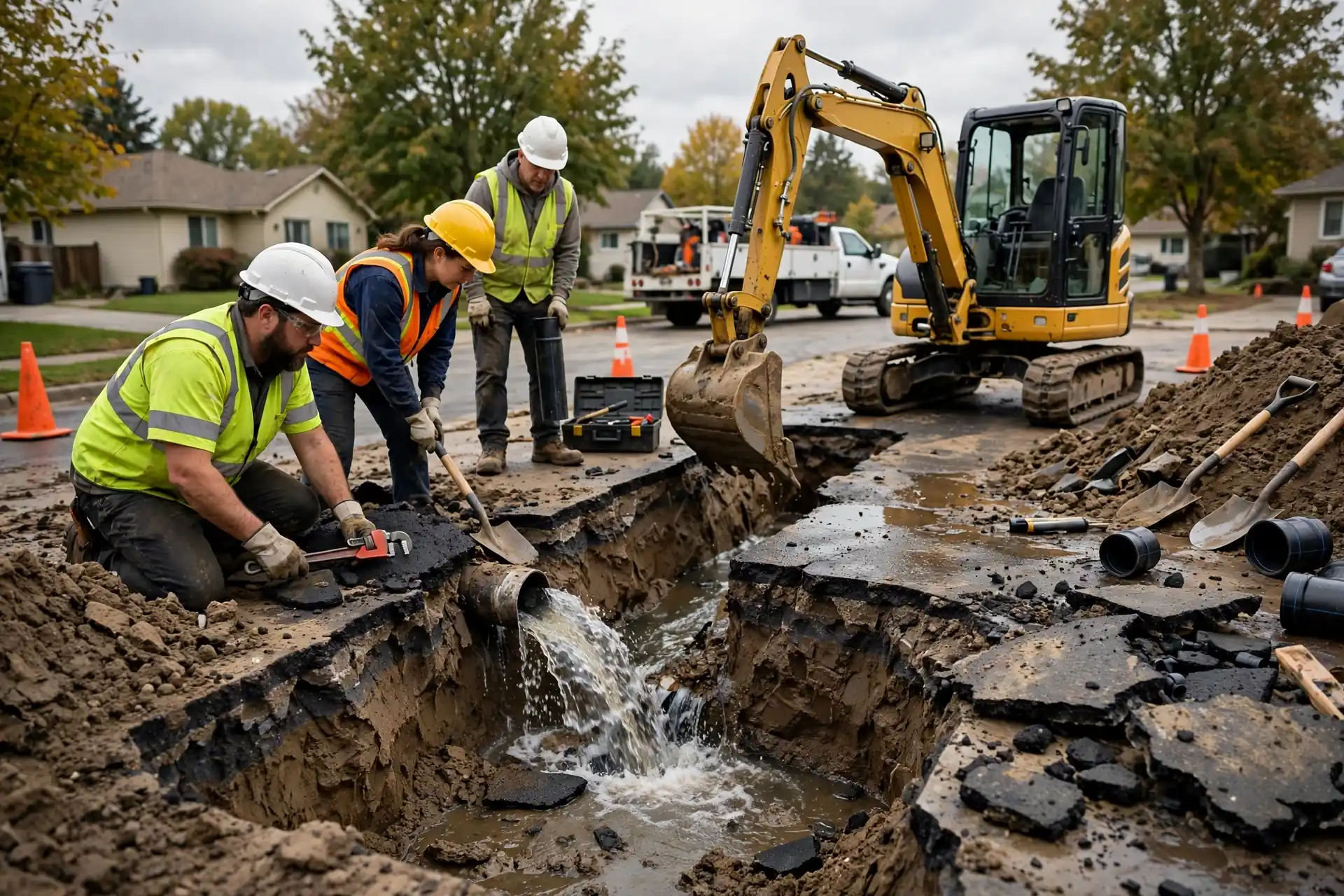
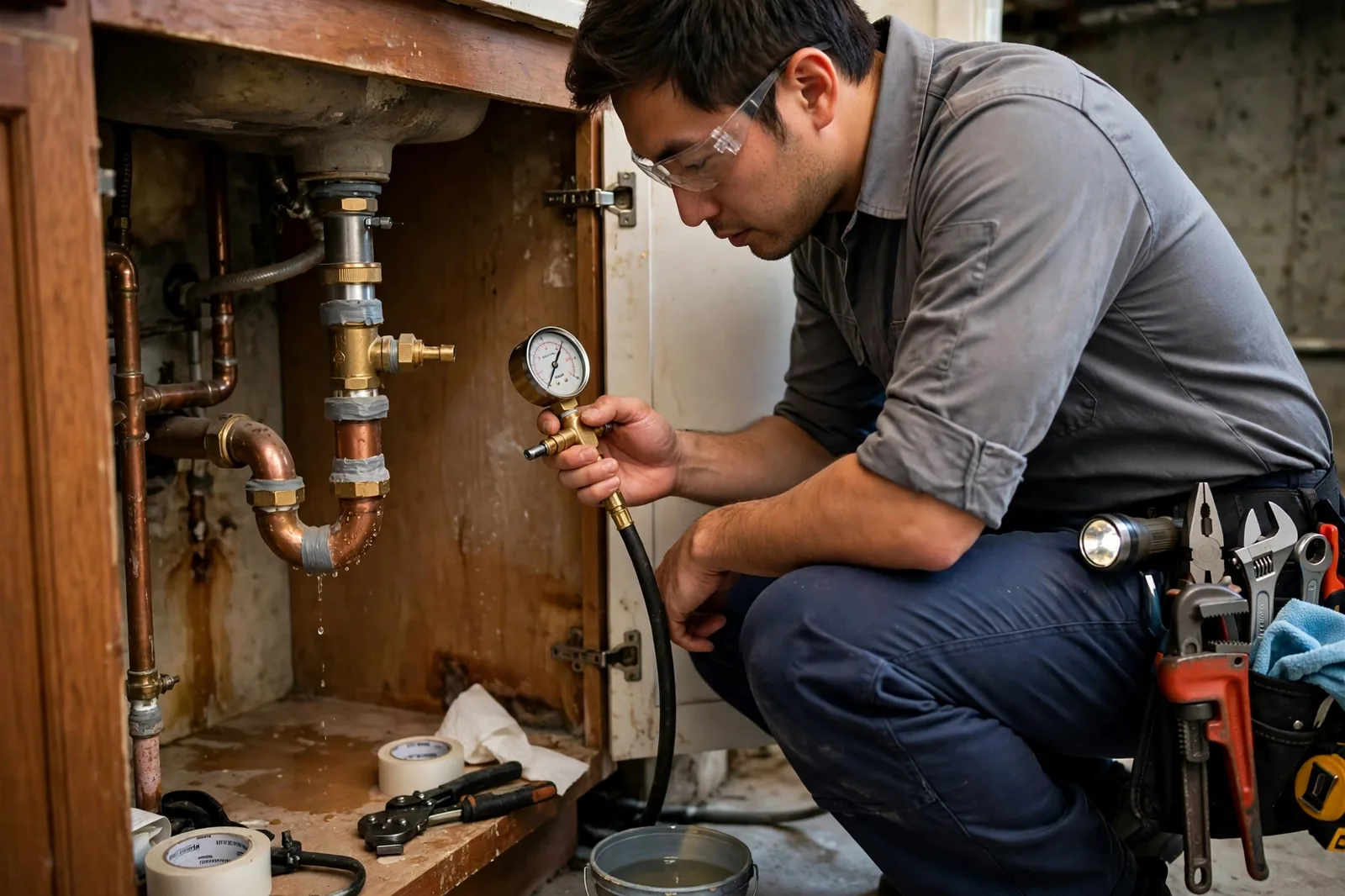
Usually, no. The burst pipe repair covers the plumbing itself: finding the break, cutting out the damaged section, fitting new pipe and a brass fitting or two where lines join, and running a pressure test, filling the line at a set pressure and watching for a drop, to prove the system holds. When a wall or floor was opened to reach the pipe, that opening is normally made safe and left ready for the drying and rebuilding stages, not finished on the spot.
There is a practical reason for the split. Rebuilding over a repair that has not been dried and tested risks sealing moisture and an unproven pipe inside a closed wall. Pros separate the stages so each one can be checked before the next covers it. Our article on second leaks found after a burst pipe shows why that testing pause matters: a second weak spot is far cheaper to fix while the wall is still open.
Why Do Homeowners Expect One Single Job?
Because from the homeowner's side it is one event: water came out, a wall opened, and the room should be whole again. Behind that simple picture sit at least three trades and three stages that follow each other. Understanding the stages helps you judge each quote on its own merits instead of wondering why the first bill did not cover the last coat of paint.
Why Is Rebuilding Quoted Separately From The Pipe Repair?
On the day of the burst, nobody can honestly price the rebuild. Wet drywall might dry in place or might crumble. Flooring might settle flat or might cup as it dries. Saturated insulation, wall or floor insulation soaked by a leak, usually has to come out, but the full area it covers is unknown until the cavity is open and readings are taken. A quote written that day would be a guess dressed as a number.
After structural drying, the planned drying of walls, floors, and framing, the picture settles. Moisture readings show which materials recovered and which did not, and the rebuild scope can be listed surface by surface. Homeowners comparing burst pipe help in Idaho Falls will hear the same sequence from careful pros: repair, dry, measure, then quote the rebuild on facts rather than on the worst or rosiest guess.
What Should A Rebuild Quote Actually List?
A clear quote names each surface: how much drywall, which flooring and how many square feet, whether insulation and baseboards are included, and how texture and paint will be matched. It should state what drying must achieve before work starts. Vague one-line quotes hide the very details that decide whether the finished room looks and performs like the original.
Pipe Frozen Or Burst Right Now? One Free Call Connects You With A Local Pro.
Call NowWhat Does The Drying Stage Involve Before Any Rebuilding?
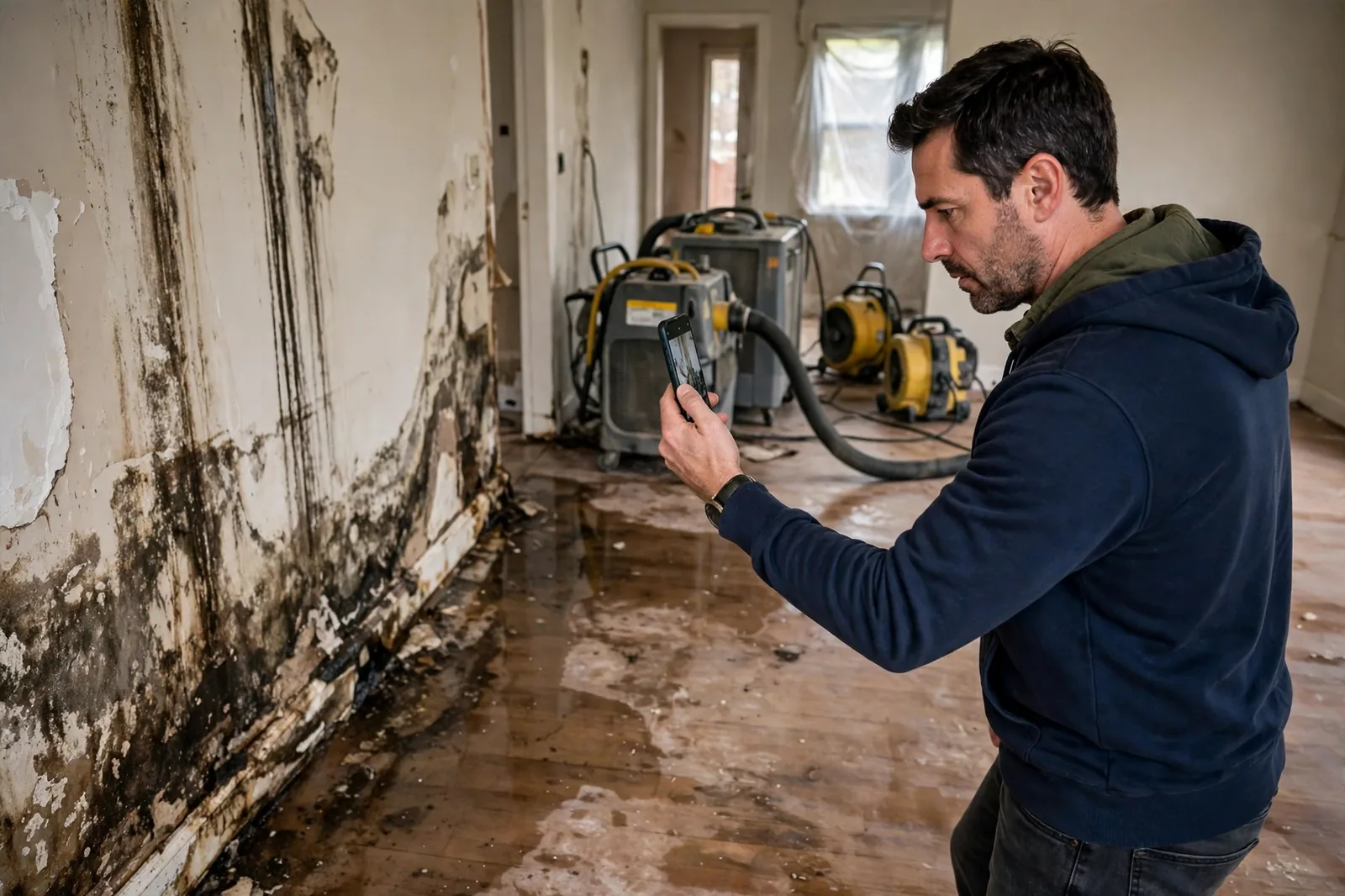
Drying starts with water extraction, removing standing water with pumps and vacuums, wherever the burst pooled water. Then openings are made or widened where readings demand it, wet insulation is removed, and an air mover, a fan that pushes air across wet surfaces, works alongside a dehumidifier, equipment that pulls moisture from the air, to draw water out of framing, subfloor, and wall cavities over several days.
A moisture meter, a handheld device that measures moisture in drywall and wood, guides the whole stage. Readings are taken at the same marked points each visit, and drying continues until they return to normal levels and hold there. The EPA advises drying wet materials within 24 to 48 hours where possible to limit mold growth, which is why this stage starts immediately after the repair rather than waiting for the rebuild crew.
What Does Wall Restoration Actually Include?
Wall restoration replaces what the water and the repair took out. New insulation goes into the dry cavity, then drywall is hung, taped, and textured to match the surrounding surface. Baseboards and trim that were removed or damaged are refitted or replaced, and the wall is primed and painted. Where a ceiling opened, the same steps apply overhead, with extra care for the staining that often spreads wider than the wet area itself.
In kitchens and bathrooms, cabinets may join the scope. A kitchen sink cabinet base soaked by a burst often swells or softens and needs rebuilding even when the wall behind it recovers. Owners in the eastern Idaho communities around burst pipe help in Iona see this often after under-sink and laundry bursts, where the cabinet, not the wall, turns out to be the largest rebuild item.
Why Does Matching Texture And Paint Take Care?
A patch can be structurally perfect and still show as a rectangle under room light if the texture differs slightly or the paint sheen blends poorly. Good restorers feather texture past the patch edges and often paint the whole wall surface, corner to corner, so light falls evenly. That extra care is a normal part of a quality rebuild scope, not an upcharge to argue about.
What Does Floor Restoration Involve After A Burst?
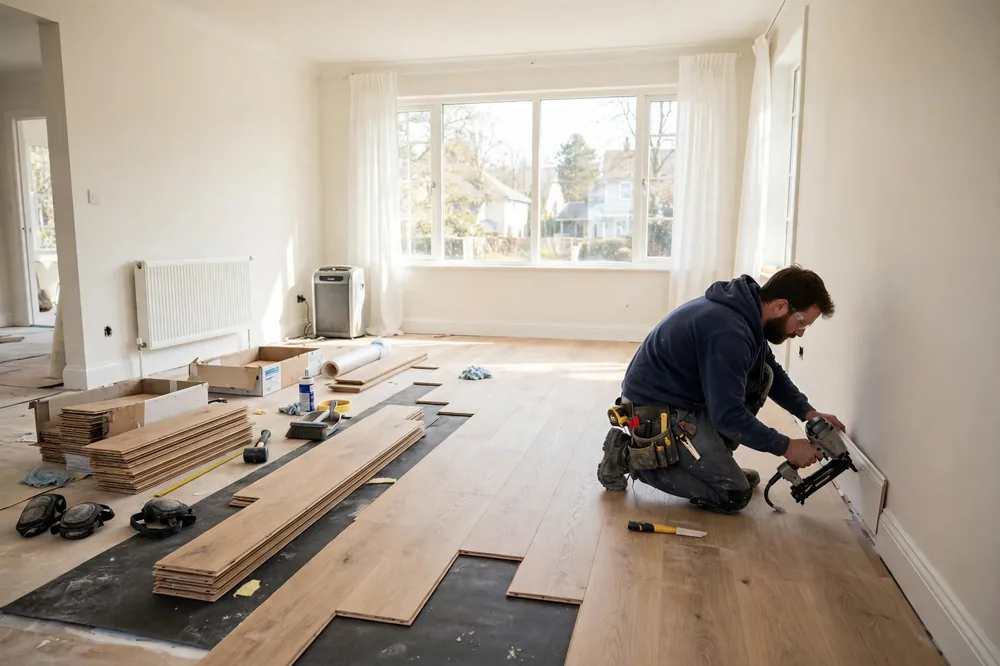
Floors are judged layer by layer. The surface material, the underlayment, and the subfloor each hold water differently. A wet and dry vacuum handles the first standing water, pooled water left sitting on the floor, but the layers below decide the scope. Boards that cupped, laminate that swelled at the seams, and vinyl that lost its bond over a damp subfloor all point to replacement of at least the affected area.
Where readings show the subfloor dried soundly and the surface stayed flat, partial work may be enough: replacing damaged boards or sections and refinishing to blend. Where water ran under a whole room, more comes up. The honest scope follows the moisture map, not a preference for big or small jobs. That map, drawn during drying, is the document to ask for when the floor quote arrives.
How Do Restoration Costs Break Down?
Restoration cost follows scope, and scope follows water. The main factors are how many surfaces opened, how much flooring and drywall needs replacing rather than drying, whether insulation, cabinets, or trim are involved, and how closely finishes must be matched. A small, well-placed opening from accurate leak finding keeps every one of those factors smaller, which is why pinpointing the break matters to the final bill, not just the repair bill.
Labour sequencing matters too. Drywall, flooring, and paint each need their own visits with drying and curing gaps between them, so a rebuild is priced as a short project, not a single afternoon. None of this involves the pipe itself: by rebuild time, the copper pipe or PEX pipe run behind the wall should already be repaired, tested, and dry, with the rebuild simply restoring the room around it.
How Can You Keep The Rebuild Scope Honest?
Ask for the scope in writing, surface by surface, and keep the drying records and photos with it. Check that every listed item traces back to a wet or opened area you actually saw. If a burst also damaged a foundation-adjacent area, our article on burst pipes under a foundation or driveway explains the extra access work that can sit behind a larger quote.
What Should You Do From The First Day To Protect The Rebuild?
Photograph everything, early and often: the wet rooms before cleanup, the opened walls, the damaged flooring, and the drying equipment in place. Keep the repair invoice, drying readings, and rebuild quote together. Those records support an insurance claim and also protect you in any dispute about scope, because they show the damage as it was, not as anyone later remembers it.
Then let the stages run in order, even when an open wall tempts everyone to rush. Homeowners near burst pipe help in Inkom hear the same closing advice: a room rebuilt over proven-dry framing stays finished, while a room closed early often reopens for mold or warped finishes. If a new burst happens before any rebuild, the emergency burst pipe hub for Idaho covers the first-hour steps to limit the damage all over again.
Frequently Asked Questions
Straight answers, no fine print. If your question is not here, one free call gets you a local pro who can check your exact problem.
Still Have Questions? Call Free
Answered 24/7 — a local pro can arrive in 30–60 minutes.
Call Now — (800) 555-0100Usually not as one job. The pipe repair fixes the plumbing: cutting out the split, fitting new pipe, and testing the line. Rebuilding covers drywall, paint, flooring, cabinets, and trim, which is different work, often by different trades, and it can only be priced once drying is finished and the true extent of damage is known. Keeping the two scopes separate protects you from paying for rebuilding that drying might still change.
Because the plumber cannot know the full rebuild scope on day one. Wet materials may dry in place or may need replacing, and that answer only comes after moisture readings settle. Rebuilding also involves choices about finishes and materials that belong to you, not the emergency visit. A separate quote, written after drying, reflects the real scope instead of a guess made while the wall was still wet and open.
Drying comes before rebuilding, always. Walls and floors are opened as needed, wet insulation removed, and air movers and dehumidifiers run until moisture readings return to normal levels. Closing a wall over damp framing invites mold growth and can warp new finishes from behind. Only when readings hold steady at dry levels does patching, flooring, and paint begin, so the rebuild sits on a sound, dry base.
Not always. Flooring that dried quickly and stayed flat, with readings back to normal, may be saved, especially solid materials. Flooring that cupped, lifted, or stayed wet underneath usually needs at least partial replacement, because moisture trapped below keeps damaging it. A pro checks readings under the surface, not just on top, before advising you, since a dry-looking board can still sit over a damp subfloor.
Saturated insulation holds water against framing, dries very slowly, and loses much of its insulating value, so in a wall opened for a burst it normally comes out. Removing it also lets the framing itself dry fully and lets the pro inspect for mold or damage. New insulation goes in at rebuild time, once the cavity is dry and the repaired pipe has passed its pressure test.
Small, well-placed openings patch quickly: a section of drywall, tape, texture, and paint. Larger areas where several walls or a ceiling opened take longer and may need texture and paint blended across a whole surface to look right. Timelines stretch when flooring or cabinets join the scope. Ask for the rebuild steps in order, with drying completion as the clear start point for the finishing work.
Factors include how much wall, ceiling, and floor opened, whether insulation and cabinets were involved, the finishes being matched, and how long drying ran before work could start. Matching older textures, specialty flooring, or custom cabinets raises both time and cost. A written scope listing each surface and material keeps surprises down, and photos taken during the damage and drying stages help if an insurer reviews the work later.
Photograph every wet and opened area before cleanup, during drying, and after the pipe repair, and keep the written scopes for each stage. Insurers usually want to see the cause, the damage, and the steps taken to limit further loss. The Idaho Department of Insurance can help with general questions about claims. Clear records make the rebuild scope easier to explain and approve.
Picking the finish is your call: paint colours, flooring type, and trim are homeowner choices, and a good restorer will match existing finishes where you want continuity. Where matching an old or discontinued material proves impractical, they should say so early and show the closest options. The pipe and drying stages have right answers; the finishing stage has preferences, and those preferences belong to you.
Yes, and that is exactly when to call. Idaho Burst Pipe Pros answers 24/7 on (800) 555-0100 and connects you with an independent local pro, typically arriving in 30–60 minutes. The pro stops the water, repairs the pipe, and sets drying in motion. The rebuild conversation follows once readings settle, and you will get it as its own clear scope rather than a rushed add-on to the emergency visit.
Reviewed By Hamza
Lead Water Damage Restoration & Structural Drying Specialist
Hamza is an emergency water restoration specialist with deep expertise in burst pipe mitigation, freeze damage remediation, and industrial structural drying across freezing northern climates. He focuses on rapid moisture extraction, thermal imaging diagnostics, and comprehensive subfloor restoration to protect homes from mold and structural deterioration.
Updated October 27, 2026
Need Burst Pipe Help In Idaho?
One free call connects you with a local pro — answered 24/7, and a pro can arrive in 30–60 minutes.
Call Now — (800) 555-0100Free Call · Answered 24/7 · Local Pros Near You