What Happens If You Drill Or Dig Into A Water Pipe?
Free Call · Answered 24/7 · Local Pros Near You
In This Guide
- What Happens The Moment A Drill Hits A Pipe?
- What Should You Do In The First Ten Minutes?
- Can Landscaping Damage A Buried Line?
- How Do Pros Repair A Punctured Pipe?
- How Much Wall Or Ground Has To Open Up?
- Who Pays When A Pipe Is Hit During Work?
- How Do You Avoid Hitting A Pipe Next Time?
- When Is A Pipe Strike An Emergency?
Quick Answer
Drilling or digging into a water pipe usually means an instant leak under full pressure. A drill through a supply line inside a wall sprays water until the main shutoff is closed, while a shovel strike on a buried line can flood a trench and undermine soil. The first moves are always the same: shut off the water, cut power to wet areas, and then assess the damage.
What Happens The Moment A Drill Hits A Pipe?
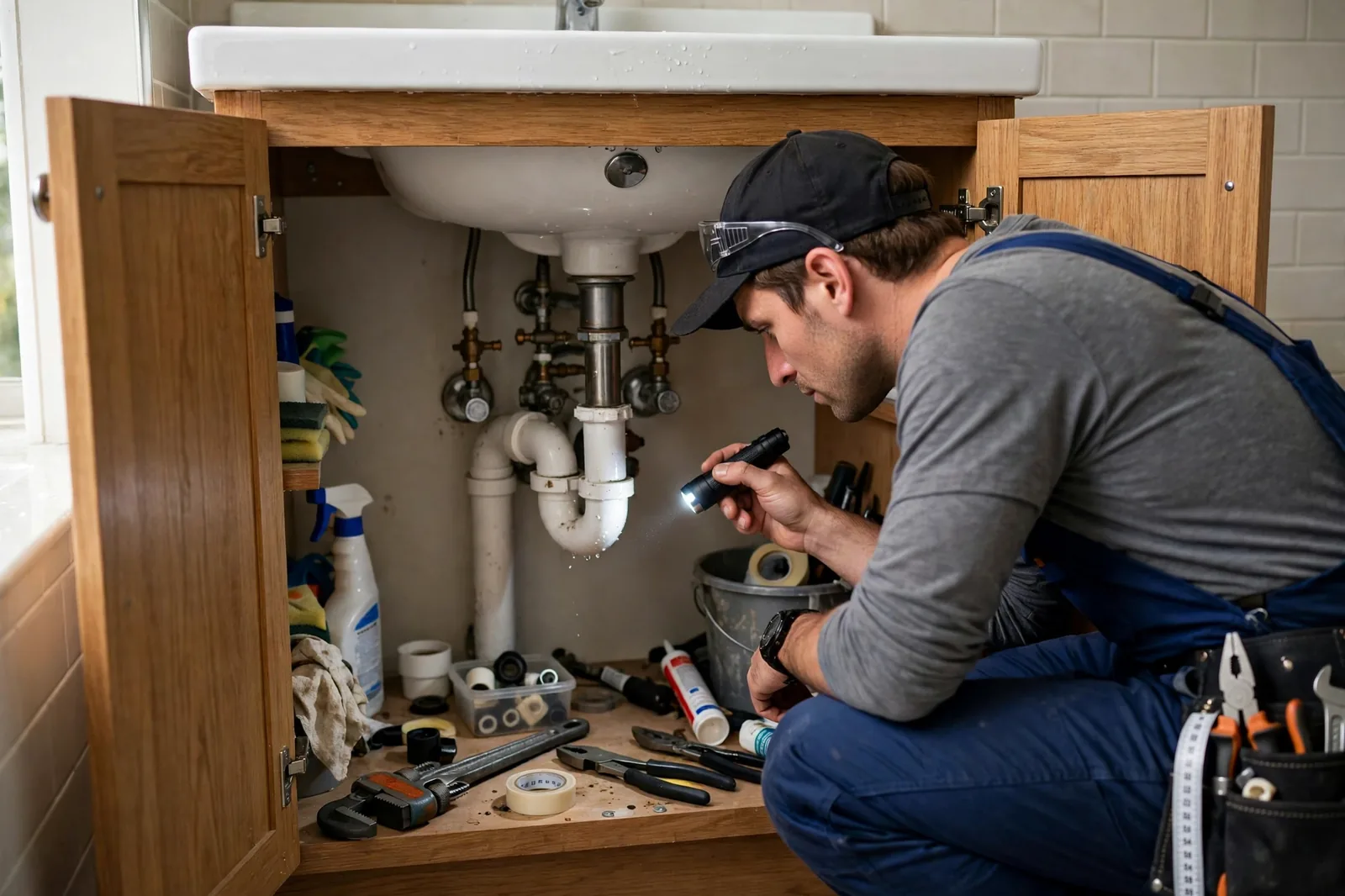
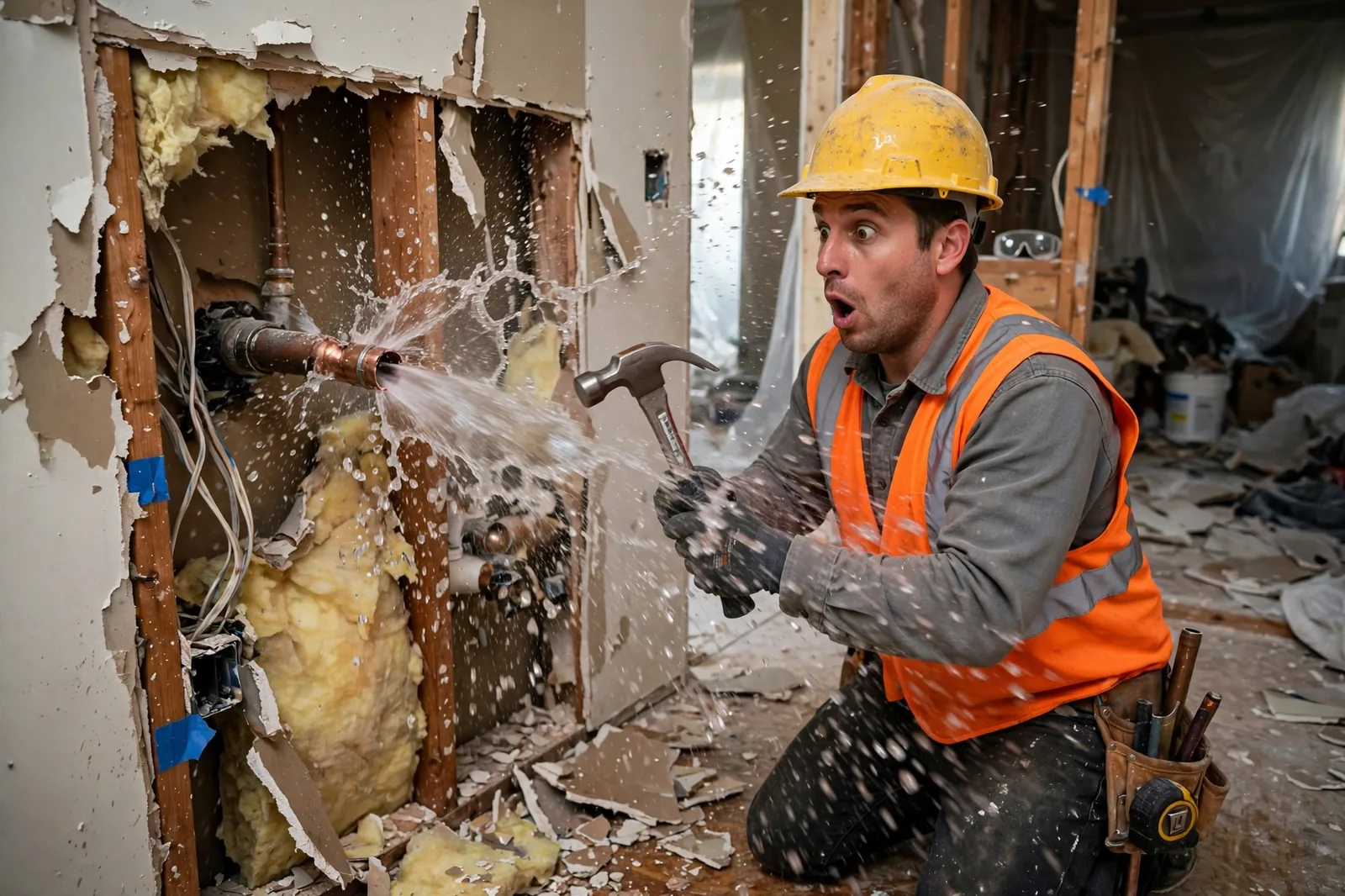
A drill bit that reaches a pressurised supply line does not cause a slow drip. It opens a hole in a pipe carrying full house pressure, and water jets into the wall cavity, soaks the surrounding insulation, and runs down inside the wall to the floor below. Within minutes, water can spread across rooms that sit nowhere near the hole you were drilling.
The damage depends on the material. A copper pipe, the metal pipe used in many Idaho homes, gets a clean puncture that sprays in one direction. CPVC pipe, a rigid plastic rated for hot and cold supply, can crack outward from the hole, so the damaged length is longer than the puncture itself. Either way, the leak runs until somebody closes the valve.
Why Does Water Appear So Far From The Hole?
Water inside a wall follows framing, wiring, and the pipe itself, then pools at the lowest point it can reach. A puncture above a ceiling can stain a wall two rooms away, and a hit in an upstairs bathroom often shows first as a drip through a downstairs light fitting, which is why the wettest spot is rarely the break point.
What Should You Do In The First Ten Minutes?
Close the main water shutoff valve, the main valve that stops all water entering the home. It usually sits where the main line enters the house, near the meter, or beside the water heater, the appliance that heats household water. Every minute of delay adds gallons to walls and floors, so find the valve before you move furniture or start mopping.
Then switch off power to the wet area if water is anywhere near outlets, the panel, or appliances, and keep people off wet floors near electrics. Move belongings out of the water and take dated photos for an insurance claim. Homeowners working through a project near burst pipe help in Cataldo follow the same order: stop the water, make it safe, document, then call.
Should You Pull The Drill Or Screw Back Out?
If a screw or nail is plugging the hole and the leak is only weeping, leave it in place until the water is shut off, because removing it opens the full hole. Once the valve is closed and pressure is gone, the fastener can come out safely. If water is already spraying freely, go straight to the shutoff instead.
Pipe Frozen Or Burst Right Now? One Free Call Connects You With A Local Pro.
Call NowCan Landscaping Damage A Buried Line?
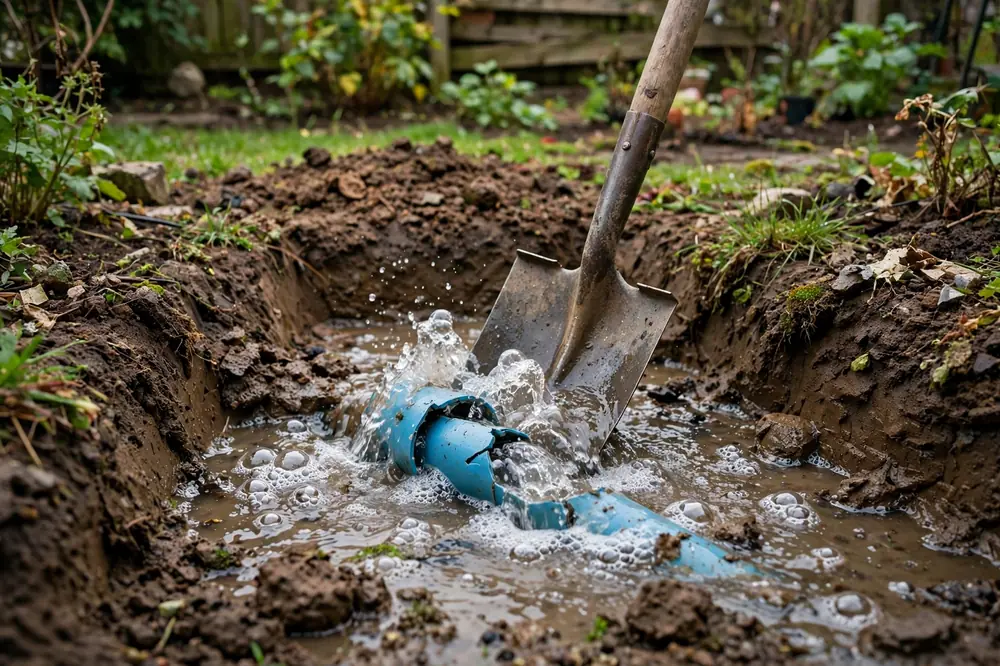
Yes. A shovel, post-hole digger, tiller, or fence auger can crack or slice a buried water service line, the pipe bringing water from the utility main or a well into the home. Buried lines are not always as deep as expected, especially on older properties where ground has been regraded, and plastic lines give no warning clang the way metal does before the tool breaks through.
A nick matters as much as a clean break. A line scored by a spade may hold pressure for days, then fail under normal use or split during the next freeze when ice expansion pressure, the force of water expanding as it freezes, stresses the weakened wall. Shifting soil, ground movement from settling or moisture changes, can also open a nick wider over time.
How Do You Know You Have Hit A Buried Line?
The trench tells you: water rising in a hole you are digging, soil washing away, or a hiss under the ground all point to a strike. At the house, pressure drops and the water meter, the utility meter that records water use, keeps moving with every tap closed. Mark the spot, stop digging, and shut the water off at the meter or main valve.
How Do Pros Repair A Punctured Pipe?
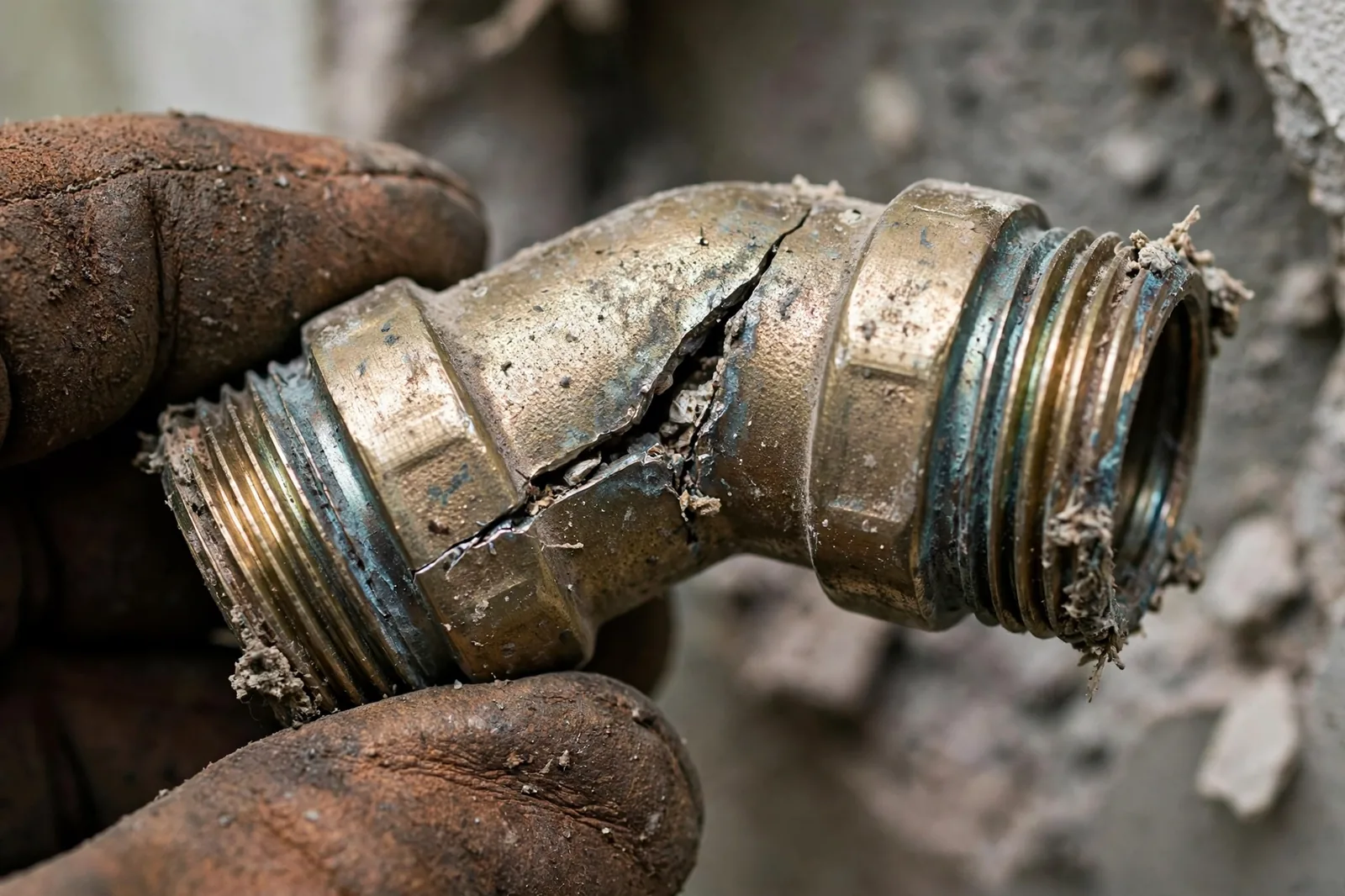
The pro confirms the shutoff, drains the damaged run, and opens just enough wall or trench to see the full extent of the damage. A puncture is never patched at the hole alone if the pipe has cracked beyond it, so the damaged section is cut out squarely with a pipe cutter, a tool that cuts a clean section of pipe, and replaced with new pipe joined by a brass fitting, a corrosion-resistant metal connector.
In a trench, the same repair adds bedding and backfill care, because a repaired line laid on sharp rock can fail again. If you have read about can poor installation make a pipe burst years later, you will recognise the theme: the joint and the support around it decide how long the repair lasts, not just the new piece of pipe.
Are Quick Patches Ever Enough?
A pipe repair clamp, a metal band tightened over a damaged section, or epoxy putty, a hand-mixed sealing compound, can stop a leak for a few hours in an emergency. Both are short-term measures. Under full pressure, patches on a cracked line tend to weep again, so plan on a proper cut-out repair even if a patch gets you through the night dry.
How Much Wall Or Ground Has To Open Up?
Less than most people fear, when the hit point is known. A drill strike usually needs a modest opening around the hole so the pro can cut back to sound pipe on both sides. The bigger openings come when water has travelled and the actual break hides, which is where a moisture meter, a handheld device that measures moisture in drywall and wood, helps trace how far the water spread before any cutting starts.
Outside, the trench only needs to expose the damaged length plus working room, though wet, collapsing soil can force a wider dig for safety. Homeowners near burst pipe help in Chester often ask about the lawn as much as the line, and a careful crew stacks turf and soil separately so the yard goes back close to how it started.
What About The Water That Already Escaped?
Drying matters as much as the pipe repair. Water extraction, removing standing water with pumps and vacuums, comes first, then structural drying, the planned drying of walls and floors, with an air mover, a fan that pushes air across wet surfaces, and a dehumidifier, equipment that pulls moisture from the air. The EPA advises drying wet materials within 24 to 48 hours to limit mold growth, fungi that can start on wet materials within days.
Who Pays When A Pipe Is Hit During Work?
Cost responsibility depends on who was working and what cover applies, and this post cannot decide your case. A contractor who hits a line during paid work usually carries the repair through their own arrangements, while a homeowner drilling into their own wall normally claims on home insurance or pays directly. Photographs, the project contract, and a written timeline all help whichever route you take.
One factor is how fast the water was stopped. Insurers look closely at whether the shutoff was closed promptly, because an hour of spraying causes far more damage than the puncture itself. If a claim stalls, the Idaho Department of Insurance, the state agency that regulates insurers, helps consumers with questions and complaints. Keep receipts for drying and repair from the first day.
Does It Matter If You Did Not Know The Pipe Was There?
Supply lines inside walls follow no visible map, and most homeowners drill in good faith. What matters more, for both safety and any claim, is what happened next: shutting the water off quickly, avoiding electrical hazards, and getting the damaged section properly replaced rather than hidden behind a patch. Note what you were doing and where, while it is fresh.
How Do You Avoid Hitting A Pipe Next Time?
Before digging outdoors, call the local locate service through your city water utility, the municipal utility that supplies water, so buried lines get marked, and dig by hand within the marked zone. Lines added later, such as an irrigation line, buried sprinkler piping, or a private well line, the pipe carrying water from a private well, may not be on any map, so probe gently in old ground.
Before drilling indoors, think about what sits behind the wall. Pipes run vertically and horizontally from taps, toilets, and the kitchen sink cabinet, the cabinet under a kitchen sink. A stud finder with a pipe and wire scan mode, shallow pilot holes, and checking the other side of the wall all lower the odds. Thinking through how branch lines run from the main to each room helps you picture the hidden routes behind any wall.
Which Jobs Carry The Highest Risk?
Hanging cabinets and shelving on bathroom and kitchen walls, driving long screws near a hose bib, the outdoor tap for hoses, and augering fence posts near the street all rank high. So do deck footings and tree planting over the service route. If a job needs deep holes or long fasteners near known plumbing, that is the moment to slow down and locate first.
When Is A Pipe Strike An Emergency?
Treat it as an emergency whenever water is flowing and you cannot find or close the shutoff, whenever water reaches electrics, a ceiling sags, or a buried break is washing soil away from under a drive or foundation. Those situations grow worse by the minute and belong with a pro, not a wait-and-see approach.
Idaho Burst Pipe Pros is a free service connecting callers with independent local pros; calls are answered 24/7 and pros typically arrive in 30–60 minutes. Crews around burst pipe help in Clark Fork handle strikes in every season, and for anything urgent statewide the emergency burst pipe hub for Idaho explains the fastest route to help, including calling (800) 555-0100. Describe exactly what was hit, where, and whether the water is fully stopped, so the pro arrives with the right fittings and drying equipment ready.
Frequently Asked Questions
Straight answers, no fine print. If your question is not here, one free call gets you a local pro who can check your exact problem.
Still Have Questions? Call Free
Answered 24/7 — a local pro can arrive in 30–60 minutes.
Call Now — (800) 555-0100The drill opens a hole in a pipe carrying full house pressure, so water sprays into the wall cavity until the main shutoff is closed. It soaks insulation and drywall, runs down inside the wall, and can appear in rooms far from the hole. Close the water first, then deal with the repair and drying, in that order.
Yes. Shovels, tillers, fence augers, and post-hole diggers can crack or slice buried supply lines, especially where lines run shallower than expected on older properties. Even a nick that does not leak straight away can fail later under pressure or during a freeze. Call for line marking before you dig, and dig by hand near any marked route.
A punctured supply line can release a surprising amount of water in minutes, because it flows at full pressure with nothing limiting it. The visible flood depends on where the break sits: a wall cavity can hide the first several minutes, then water emerges along floors and ceilings at once. That delay is why shutting the water off comes before any cleanup.
If you are confident closing the shutoff, draining the line, cutting out the damaged section, and joining new pipe so it holds pressure, a small repair is possible. Many homeowners prefer a pro because a joint that weeps inside a closed wall causes a second round of damage. A clamp or putty patch should only ever be a temporary measure.
Not always. A scored pipe wall is a weak point, and normal pressure cycles, soil movement, or a hard freeze can open it days or months later. If a tool touched a buried line hard enough to mark it, having that section checked while the trench is still open is far cheaper than digging it up again after it fails.
Call for help immediately and, if you can do it safely, use the shutoff at the street meter, which the utility can also close for you. Move belongings, keep people away from wet electrics, and do not keep searching room by room while water runs. Knowing your main valve location before any project starts prevents this scramble.
Many home policies cover sudden, accidental water damage from a burst or punctured pipe, including drying and repairs to damaged parts of the home. Cover for the pipe repair itself varies by policy. Photograph everything, keep receipts, and notify your insurer promptly. The state insurance department can help if you hit problems with a claim.
Picture the plumbing: lines run in straight vertical and horizontal paths from taps, toilets, and sinks, so avoid drilling in line with fixtures on either side of the wall. A detector that scans for pipes and wires adds a layer of safety, and a small pilot hole lets you check the cavity before committing to a long screw or anchor.
Drills and diggers can strike drain lines and, more seriously, gas lines too. A damaged drain usually leaks slowly and smells, while a suspected gas strike means leaving the area at once and calling the utility or emergency services from outside. This post covers water lines, but treat any unknown pipe or cable in the ground with the same caution.
Once the water is off and the damaged section is exposed, replacing a short length of pipe is often a matter of a few hours. The longer part is usually drying: walls and floors that soaked up water may need days of monitored drying before they can be closed. Your pro can give a timeline after seeing how far the water travelled.
Reviewed By Hamza
Lead Water Damage Restoration & Structural Drying Specialist
Hamza is an emergency water restoration specialist with deep expertise in burst pipe mitigation, freeze damage remediation, and industrial structural drying across freezing northern climates. He focuses on rapid moisture extraction, thermal imaging diagnostics, and comprehensive subfloor restoration to protect homes from mold and structural deterioration.
Updated October 27, 2026
Need Burst Pipe Help In Idaho?
One free call connects you with a local pro — answered 24/7, and a pro can arrive in 30–60 minutes.
Call Now — (800) 555-0100Free Call · Answered 24/7 · Local Pros Near You