Why Do Pipes Burst During A Thaw And Not The Freeze?
Free Call · Answered 24/7 · Local Pros Near You
In This Guide
- Why Does The Ice Not Split The Pipe Right Away?
- What Happens Inside The Pipe When The Thaw Starts?
- Where Do Thaw Bursts Usually Happen In Idaho Homes?
- What Are The Signs A Pipe Split During The Thaw?
- What Should You Do In The First Hour After A Thaw Burst?
- How Do Pros Find And Fix A Thaw Burst?
- How Do You Stop It Happening Next Winter?
- Which Pipes Burst First When The Thaw Comes?
Quick Answer
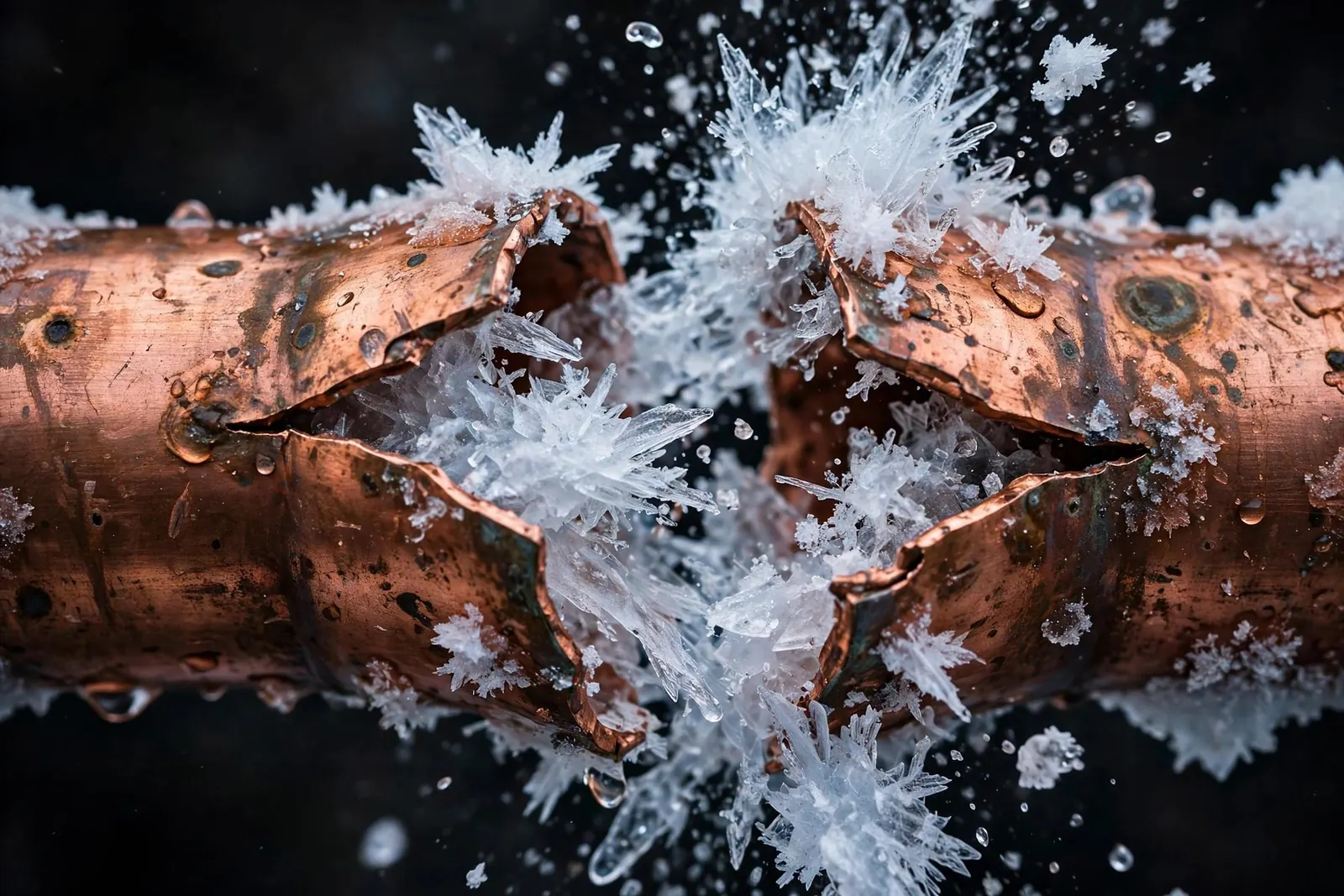
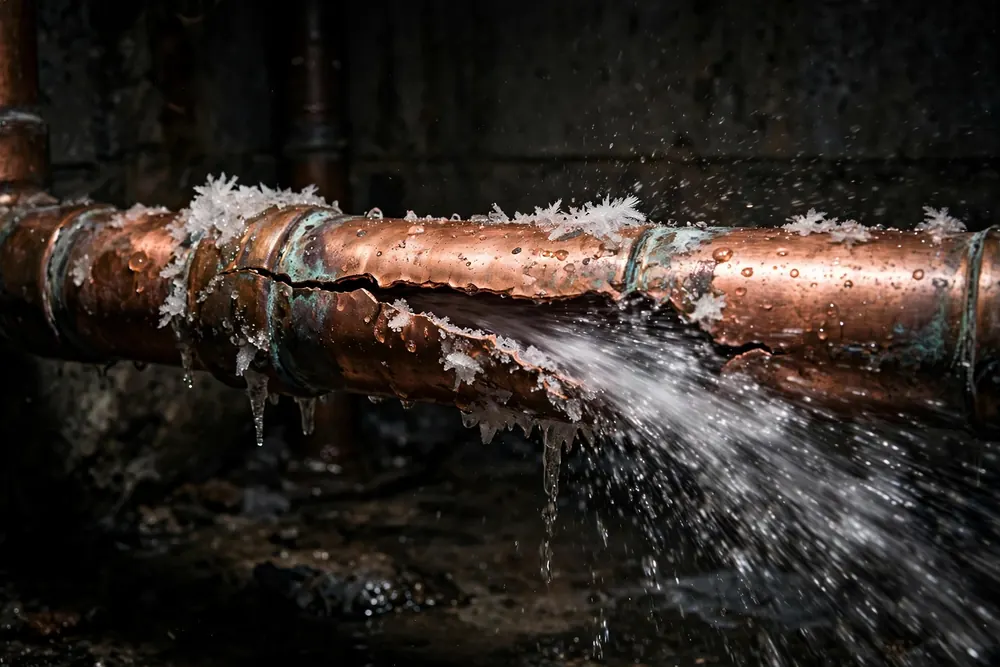
Most thaw bursts actually split during the freeze. Ice inside the pipe expands, pressure cracks the wall, and the ice itself plugs the crack so nothing leaks. When the thaw melts that plug, water pressure returns and pours through the split. That is why so many Idaho homes flood on the first mild day after a hard freeze, not during the coldest night itself.
Why Does The Ice Not Split The Pipe Right Away?
Ice needs time and a sealed section before it can do real damage. As water in a pipe freezes, the ice grows along the coldest part of the line first. Early on, the forming ice can still push water ahead of it toward a tap, so pressure stays low and the pipe holds. The trouble starts when the ice seals the pipe completely, trapping liquid water between the ice plug and a closed tap or valve.
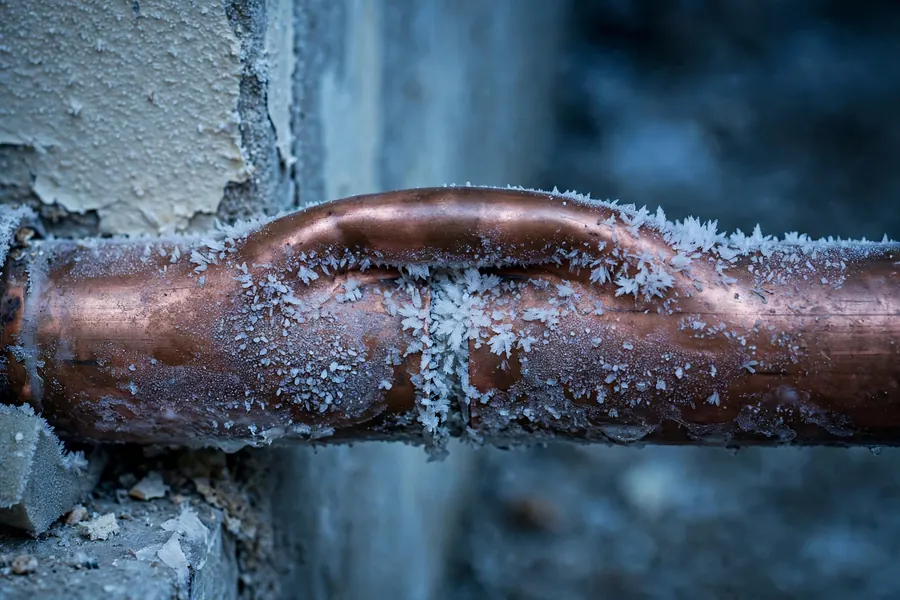
From that point, each new layer of ice squeezes the trapped water harder. Water does not compress, so the pressure climbs fast. This force is ice expansion pressure, the pressure created when water expands as it freezes inside a closed pipe. A copper pipe, the metal pipe used in many Idaho homes, is strong but rigid, so once the pressure passes what the wall can hold, the wall splits lengthwise.
Where Does The Split Actually Start?
The split usually starts at the weakest point near the ice, not in the middle of it. A section thinned by pipe corrosion, the gradual wearing away of the pipe wall, a joint, or a failed fitting, a connector that cracks or separates, gives way first. Galvanized steel pipe in older Idaho homes has often lost wall thickness over decades, so it needs less pressure to fail than a sound new line.
What Happens Inside The Pipe When The Thaw Starts?
When warm air or rising temperatures reach the frozen line, the ice plug starts to shrink from the outside in. Meltwater slips past the plug, and the trapped section is suddenly connected to full house pressure again. If the wall split during the freeze, that returning pressure pushes water straight out of the crack, sometimes as a fine spray and sometimes as an open stream.
The leak can start slowly, then grow. A hairline split may only weep while pressure is low, then open wider as the last ice clears and flow rises. This is the freeze thaw cycle at work: repeated freezing and warming weakens a line over a season, and the final thaw is when the damage shows. A pipe that survives January can still fail in a mild February warm-up.
Why Does The Water Seem To Come From Nowhere?
Water often shows up far from the break. It follows framing, runs along the pipe itself and pools at the lowest point, so a split in a line above the ceiling can stain a ceiling two rooms away. The attic, the space above the ceiling, holds pipes that get little house heat, and a thaw leak up there can soak insulation and drywall before a single drip shows below.
Pipe Frozen Or Burst Right Now? One Free Call Connects You With A Local Pro.
Call NowWhere Do Thaw Bursts Usually Happen In Idaho Homes?
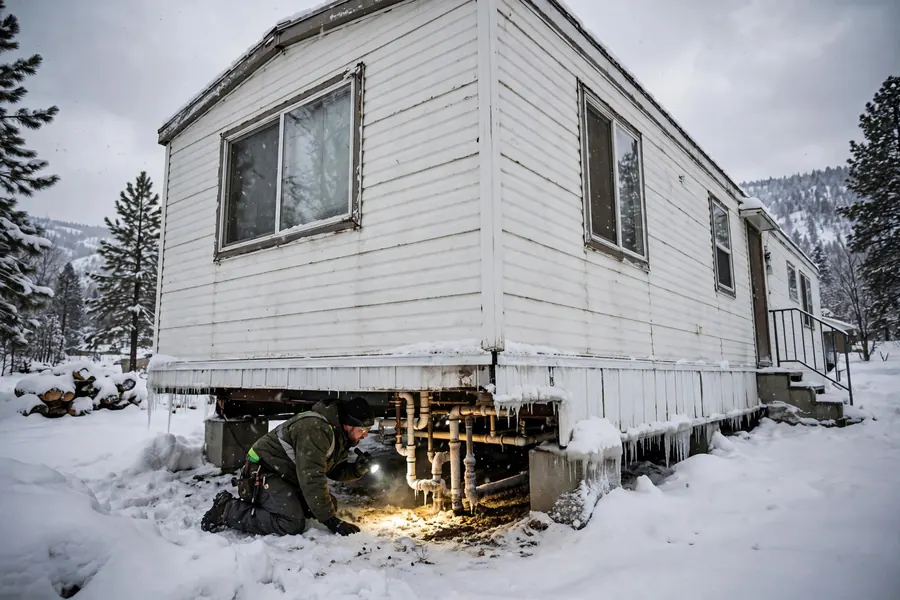
Thaw bursts follow the cold. The lines that froze first are the ones that split: runs inside an exterior wall, lines across a crawl space, pipes in an attic or garage, and the feed to a hose bib, the outdoor tap for hoses. Kitchen and bathroom lines on outside walls are a common Idaho failure point, because the wall cavity sits close to outdoor air.
Rural homes face the same pattern. In farming towns, burst pipe help in Aberdeen often starts with lines in outbuildings and shallow runs that froze days earlier. Across the wider area covered by burst pipe help in Bingham County, thaw leaks also show up in vacant homes and shops that sat unheated through the cold snap.
Which Homes Carry The Highest Risk?
Homes with CPVC pipe, a rigid plastic rated for hot and cold supply that turns brittle with age and cold, and homes with a long history of freezes carry higher risk. Manufactured homes and cabins that sit empty carry more risk still, because nobody hears the first drip or sees the first stain when the thaw begins and water starts moving again.
What Are The Signs A Pipe Split During The Thaw?
The clearest sign is water where it should not be: a spreading ceiling stain, bubbling paint, a damp wall that feels cold, or standing water, pooled water left sitting in a room, on a floor with no spilled source. A sudden drop in water pressure at several taps, or one tap that spits and coughs as flow returns, also points to a split line losing water inside a wall or floor.
Your water meter, the utility meter that records water use, tells the truth even when the leak hides. If every tap is off and the meter dial still moves, water is escaping somewhere. Homeowners reading about burst pipe help in Blackfoot often start with exactly that check, because it confirms a hidden leak within minutes.
What Sounds And Smells Should You Notice?
Listen for hissing or running water inside a wall when no tap is open. Smell for a musty odor a day or two later, which can mean wet insulation or the start of mold growth inside the wall cavity. Warped floorboards, a cabinet base that feels soft, and a water heater that runs more often than usual round out the early signs of a thaw leak.
What Should You Do In The First Hour After A Thaw Burst?
Close the main water shutoff valve, the main valve that stops all water entering the home. It usually sits where the main line enters the house, near the meter or by the basement or under-home entry. Closing it stops the flow feeding the split, and every minute it stays open adds more water to floors and walls. Then turn off power to wet areas if water is near outlets or the panel.
Move rugs, boxes and furniture out of the water, and take dated photos of every wet room before cleanup starts, because those photos support an insurance claim. Homeowners in the capital can check local steps for burst pipe help in Boise, but the first hour looks the same statewide: stop the water, protect belongings, document the damage, then call for help.
What Should You Avoid Doing?
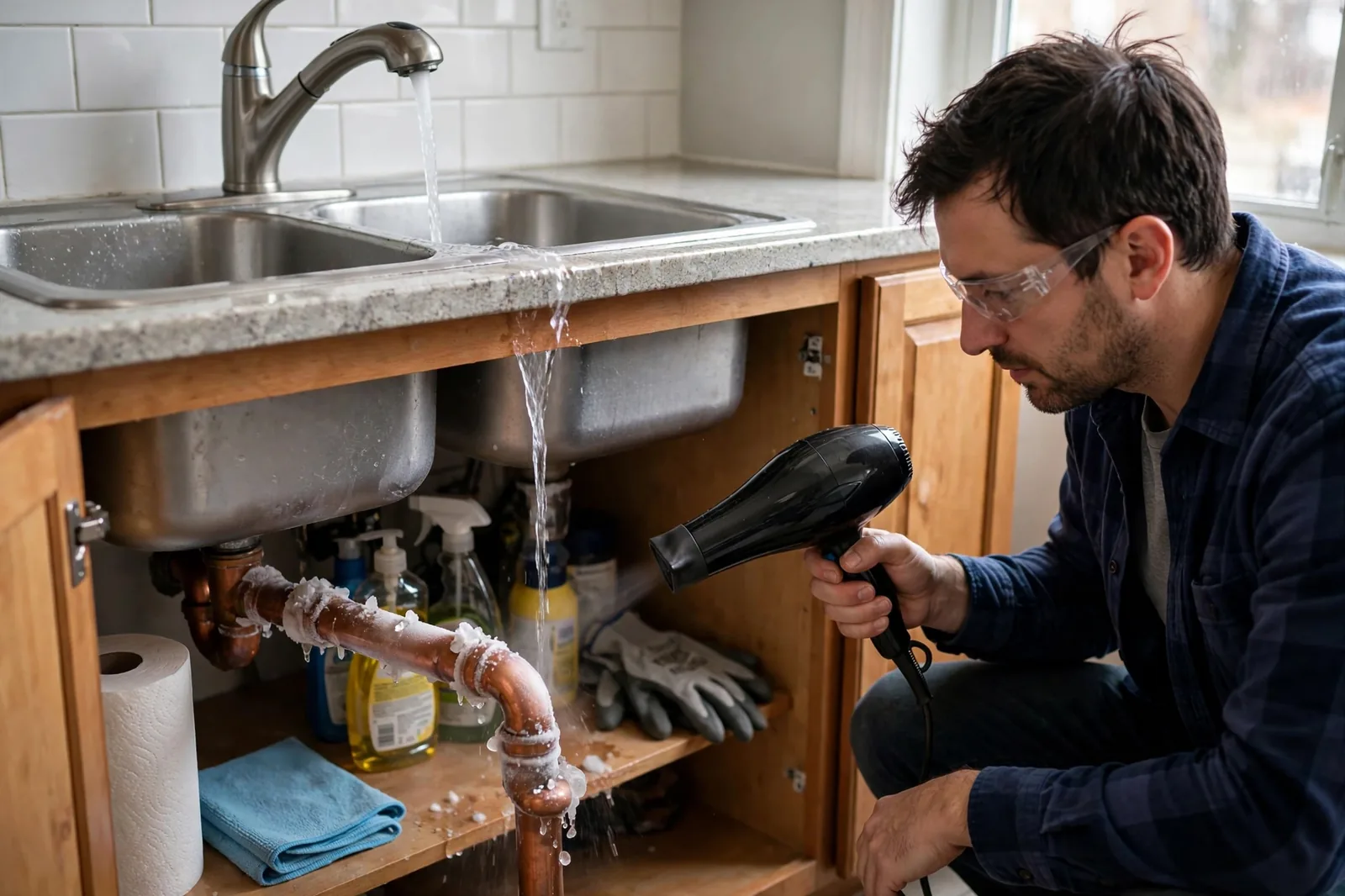
Do not use a blowtorch or any open flame to thaw a pipe or dry the area. The American Red Cross warns against open flame because it can start a fire inside a wall. Do not tear out large wall sections yourself, and do not ignore a small leak because it slowed down. A split that weeps today can open fully at the next rise in pressure.
How Do Pros Find And Fix A Thaw Burst?
A pro starts by confirming the shutoff and reading the water meter to check whether water is still moving. A thermal imaging camera, a camera that shows temperature differences on a surface, helps trace cold, wet areas behind walls, and a moisture meter, a handheld device that measures moisture in drywall and wood, shows how far the water spread. Together they narrow the opening to the damaged section instead of the whole wall.
The fix is to cut out the split section, fit new pipe and fittings, and restore pressure slowly. Homeowners comparing burst pipe help in Pocatello will hear the same final step: a pressure test, filling the line at a set pressure and watching for a drop, proves no second split hides further along the run before the walls are closed again.
A careful pro also checks the lines that did not burst. A thaw that split one pipe often leaves its neighbours stressed, bulged or weeping at a joint, and finding those in the same visit is far cheaper than a second flood next week.
What Happens After The Pipe Is Fixed?
Repairing the pipe is only half the job. Water extraction, removing standing water with pumps and vacuums, comes first if water pooled. Then structural drying, the planned drying of walls, floors and framing, uses an air mover, a fan that pushes air across wet surfaces, and a dehumidifier, equipment that pulls moisture from the air, until meter readings return to normal. The EPA advises drying wet materials within 24 to 48 hours to limit mold growth.
How Do You Stop It Happening Next Winter?
Insulate the runs that froze. A pipe insulation sleeve, foam tubing slipped over a pipe, slows heat loss in a crawl space, attic and garage. Fit heat tape, an electric cable applied along a pipe to keep it above freezing, on the coldest sections, and seal gaps where outdoor air pours in around pipes, vents and the sill plate at the top of the foundation wall.
Before the first hard freeze, disconnect hoses from every hose bib and drain that line, open cabinet doors under sinks on cold nights, and let a tap drip slowly during extreme cold. If a home will sit empty, shut the water off at the main valve and drain the lines. FEMA winter weather guidance makes the same point: an empty house still needs its plumbing winterized before the cold sets in.
Which Pipes Should You Protect First?
Start with any line that has frozen before, then exterior wall runs, under-floor lines and lines above the ceiling. PEX pipe, a flexible plastic pipe, flexes better in a freeze than rigid pipe, so when a split section is replaced, ask the pro whether a material change makes sense for that run. One protected run costs far less than one more thaw burst and the drying that follows it.
Which Pipes Burst First When The Thaw Comes?
Not every pipe carries the same risk when temperatures rise. The lines that burst first at a thaw are the ones that froze hardest: supply lines in exterior walls, pipes in unheated crawl spaces, lines feeding outdoor faucets, and pipework in garages, barns and outbuildings. These sit closest to outside air, so they freeze earliest in a cold snap and hold the most ice. When the thaw reaches them, the meltwater behind the remaining ice plug has the longest stretch of trapped pressure to release, and the split usually opens at the weakest point — often a joint or a section already thinned by age.
Material and history matter too. Older copper lines that have survived many freeze cycles can carry tiny stress fractures that only open under thaw pressure, while a newer line on the same wall may come through unharmed. Homes in colder Idaho towns, where freeze days run past 150 a year, put these weak points under test every single winter. That is why a pipe can survive the coldest night of January and still burst on a mild afternoon in February: the freeze loaded the line, and the thaw pulled the trigger.
Frequently Asked Questions
Straight answers, no fine print. If your question is not here, one free call gets you a local pro who can check your exact problem.
Still Have Questions? Call Free
Answered 24/7 — a local pro can arrive in 30–60 minutes.
Call Now — (800) 555-0100No. Many frozen pipes thaw without splitting, especially PEX pipe, which can flex slightly as ice forms. A pipe bursts when ice expansion pressure grows past what the pipe wall can hold, and that depends on the material, the age of the line and whether the ice was fully trapped. Treat every frozen pipe as at risk, watch it closely during the thaw, and check for leaks as soon as flow returns.
Yes, a frozen pipe can burst. As water inside freezes, it expands and pushes against the pipe wall and against the water still trapped in the line. If that pressure has nowhere to go, the wall can split, often away from the ice itself. Copper pipe and older CPVC pipe are less forgiving than flexible lines. The leak then appears when the ice melts and water moves again.
No, not all frozen pipes burst. Some freeze only partly, some have room for the ice to expand toward an open tap, and some materials flex enough to survive one freeze. The danger is that you cannot see inside the wall to know which kind you have. A pipe that froze once has still been stressed, so check it carefully during the thaw and watch for damp spots or a drop in pressure.
Pipes can burst if they freeze, but freezing alone does not split every line. The split happens when ice expansion pressure builds inside a closed section faster than the pipe can flex or the pressure can escape. Long, hard freezes, pipes in a crawl space or exterior wall, and older corroded lines raise the risk. The safest habit is to assume a frozen pipe may be split until the thaw proves it dry.
Pipes most often split during the coldest part of the freeze, when ice fills the line and pressure peaks, but the leak shows up during the thaw. That timing fools many homeowners: the damage happens overnight, then water appears hours or a day later as temperatures rise and the ice plug melts. Watch your home most closely in the first hours of a warm-up after a hard freeze.
Frozen pipes burst because water expands as it turns to ice, by roughly nine percent. In a closed pipe, that expansion creates ice expansion pressure that pushes on the pipe wall and on the water trapped between the ice and a closed tap or valve. The wall splits at its weakest point, which may be a corroded section, a joint or a failed fitting rather than the iciest spot.
Yes. A pipe can freeze solid and thaw again without bursting when the ice has room to expand, the freeze is brief, or the material flexes. PEX pipe handles this better than rigid lines. Still, one freeze can weaken a joint or start a tiny crack that leaks slowly inside a wall. After any freeze, run each tap, check pressure and look for damp drywall or a moving water meter.
Frozen pipes burst through pressure, not through the ice simply pushing outward in one spot. Ice forms and grows along the coldest section, sealing the line. More freezing then pressurizes the water trapped between the ice plug and the nearest closed tap. That trapped water has nowhere to go, so pressure climbs until the pipe wall gives way, often in a section with no ice in it at all.
Frozen pipes are caused by cold air reaching water lines that lack heat or insulation. Pipes in an exterior wall, crawl space, attic or garage freeze first, especially during long cold snaps, windy nights and power cuts that stop the heat. A hose bib with a hose still attached, fallen insulation and open under-floor vents all raise the risk. Old homes with lines run on outside walls freeze more often.
Pipes do not burst the moment they freeze; many split while frozen but only leak during the thaw. The crack forms under ice pressure during the freeze, yet ice plugging the line holds the water back. When the plug melts, pressure returns and water pours through the split. So the honest answer is that freezing causes the break, and thawing reveals it, which is why leaks so often start on a warming day.
Reviewed By Hamza
Lead Water Damage Restoration & Structural Drying Specialist
Hamza is an emergency water restoration specialist with deep expertise in burst pipe mitigation, freeze damage remediation, and industrial structural drying across freezing northern climates. He focuses on rapid moisture extraction, thermal imaging diagnostics, and comprehensive subfloor restoration to protect homes from mold and structural deterioration.
Updated October 27, 2026
Need Burst Pipe Help In Idaho?
One free call connects you with a local pro — answered 24/7, and a pro can arrive in 30–60 minutes.
Call Now — (800) 555-0100Free Call · Answered 24/7 · Local Pros Near You