Acoustic Leak Detection For Hidden Burst Pipes
Free Call · Answered 24/7 · Local Pros Near You
In This Guide
- How Does Listening Equipment Find A Hidden Leak?
- Can A Pro Hear A Leak Inside A Wall Or Floor?
- When Is Listening The Right First Method?
- How Does Listening Work Alongside Other Methods?
- What Happens Once The Leak Is Pinpointed?
- What Makes A Hidden Leak Hard To Hear?
- How Do You Act On A Suspected Hidden Leak?
Quick Answer
Hidden burst pipes can be found by sound. Water escaping under pressure hisses and sprays as it leaves the pipe, and sensitive listening equipment picks that sound up through walls, floors, and ground. By comparing the noise at several points, a pro can pinpoint the break within a small area before opening anything, so the repair starts with one small, well-placed opening instead of guesswork.
How Does Listening Equipment Find A Hidden Leak?
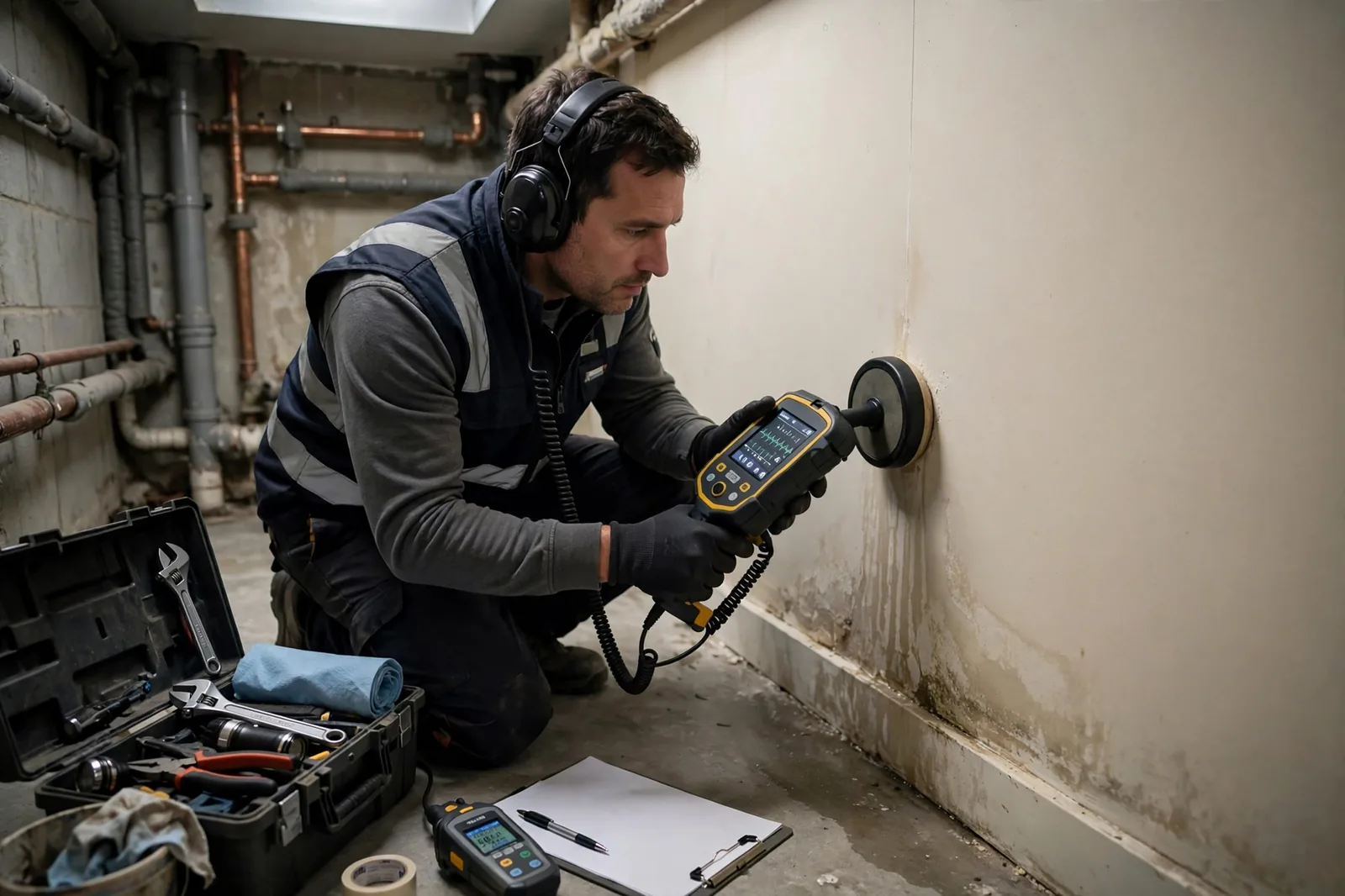
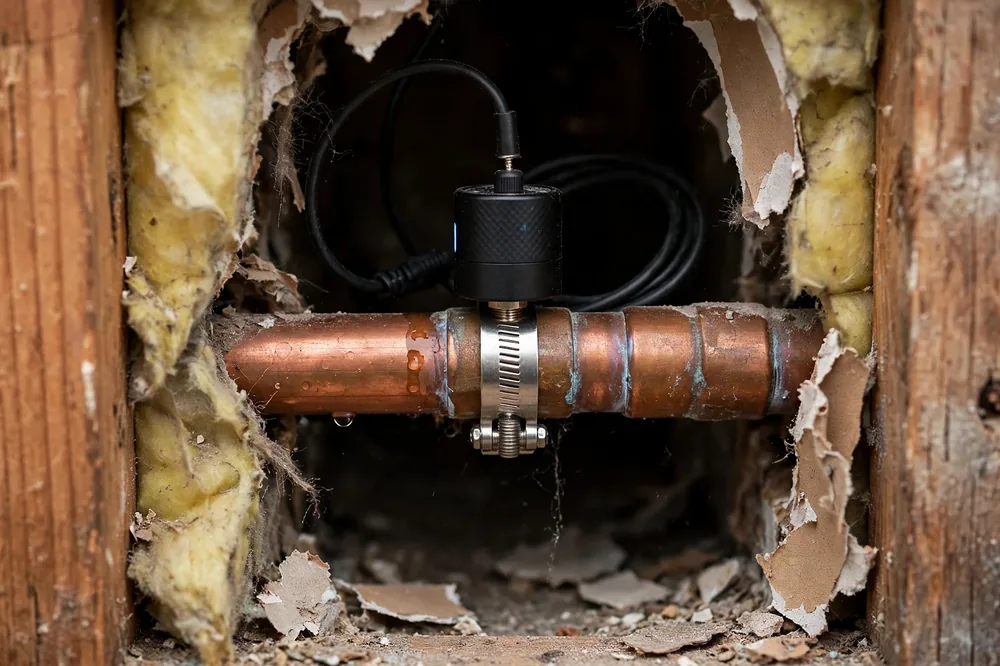
Listening equipment and a method used to hear water escaping from a pipe inside a wall, floor, or ground, starts from one simple fact: a pressurised leak is noisy. Water squeezing out of a split vibrates, and that vibration travels along the pipe and through the building materials around it. A pro places sensitive microphones or a listening rod at taps, valves, floors, and along the likely route of the line, then compares what each point hears.
The loudest, clearest signal usually sits closest to the break. By moving the sensors and noting where the sound strengthens and fades, the pro narrows a whole wall or a whole slab down to a small target area. Only then does any cutting begin. Our overview of how pros find a burst pipe inside a wall explains where listening fits among the other methods pros combine on a typical search.
Why Does Escaping Water Make A Sound At All?
A leak is not silent because the water is forced through a narrow opening at house pressure. That jet vibrates the pipe and the water around it, creating a steady hiss, spray, or hum that travels along the line. A mere drip at a tap makes almost no such sound, which is one way pros separate a true hidden leak from ordinary plumbing noise.
Can A Pro Hear A Leak Inside A Wall Or Floor?
In most homes, yes. The sound of a pressurised leak carries through drywall, wood framing, tile, and even concrete well enough for modern equipment to pick up. The pro listens at the wall surface, at nearby fixtures, and sometimes at the pipe itself where it is exposed in a basement or crawl space, the shallow space under a home where supply pipes often run unheated. Each listening point either strengthens or weakens the picture of where the water is leaving the line.
Quiet matters. A running furnace fan, a washing machine, or traffic noise can blur a faint signal, so pros often work with appliances off and may return at a quieter hour for a stubborn search. Pressure matters too: a leak on a line holding full pressure sings clearly, while a slow weep at a failed fitting, a connector that cracks or separates, may need a moisture meter or a pressure test to confirm what the ears suspect.
Does The Floor Or Wall Material Change The Result?
Yes. Sound carries well through metal pipe and hard surfaces, and less clearly through some plastics and thick, soft layers. Carpet, insulation, and soil each muffle the signal differently. A pro who knows those differences adjusts sensor placement and expectations, and confirms the marked spot with a second method before any opening is made in your home.
Pipe Frozen Or Burst Right Now? One Free Call Connects You With A Local Pro.
Call NowWhen Is Listening The Right First Method?
Listening earns its place when water is clearly escaping but nothing shows where. The classic pattern is a water meter that keeps moving with all taps off, a spreading damp patch with no visible source, or the sound of running water inside a wall at night. In those cases, opening walls on a guess wastes money and rooms. Sound gives the search a map before anyone picks up a saw.
Homeowners reading about burst pipe help in Garden Valley often start from exactly that pattern in a quiet house, where a faint hiss behind a wall is easier to notice. In a rural home on a well, the same role is played by a pump that cycles when no tap is open, which points to water leaving the line somewhere hidden.
What Clues From The Meter Support A Listening Search?
Your water meter, the utility meter that records water use, gives the clearest clue: a dial that moves while every tap is closed proves water is leaving the system somewhere. The size of that movement hints at the size of the loss. A fast spin suggests a major break worth urgent action; a slow creep still deserves a search, because slow leaks soak quietly.
How Does Listening Work Alongside Other Methods?
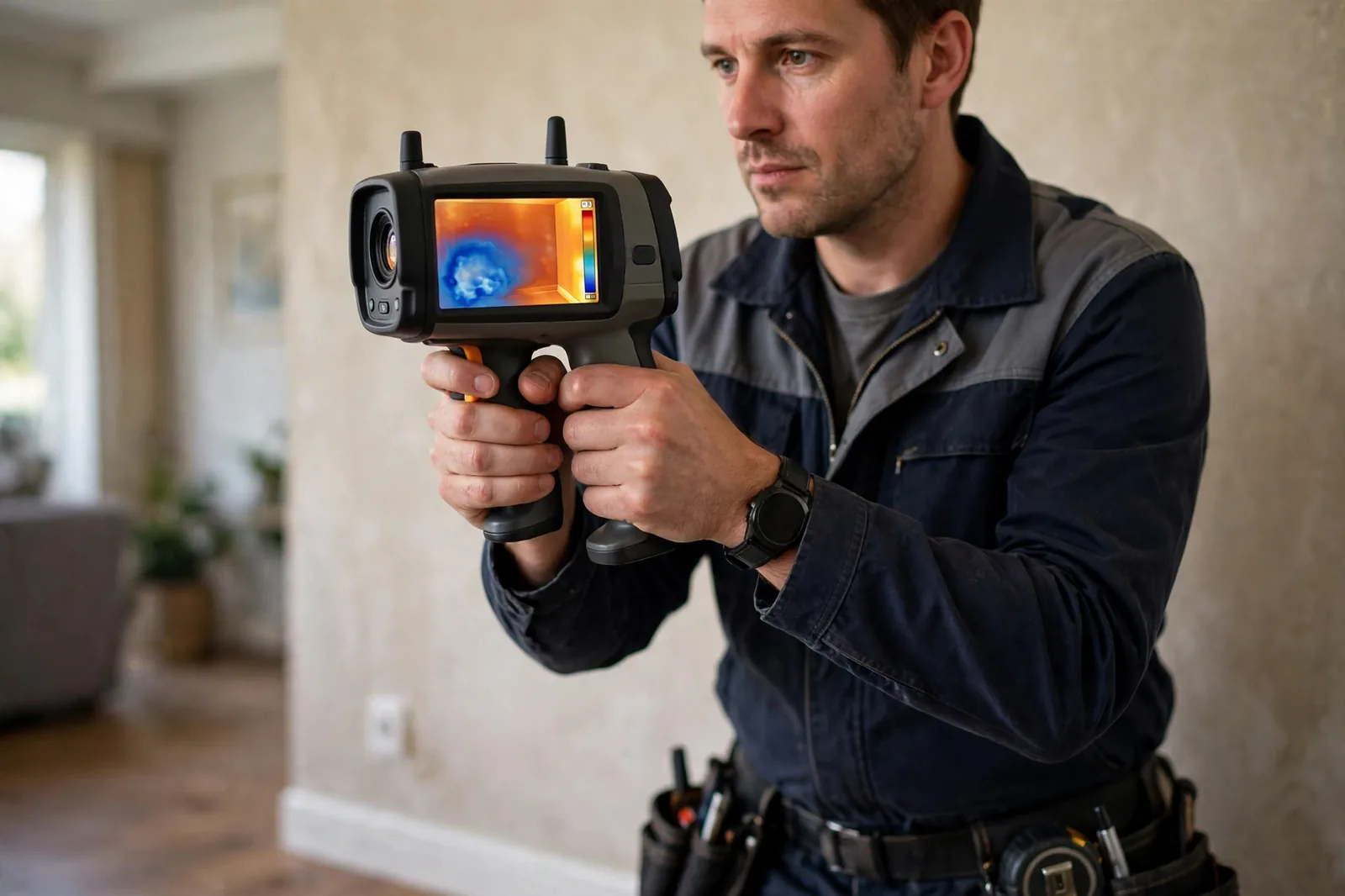
Good leak finding is a combination, not a contest. A thermal imaging camera, a camera that shows temperature differences on a surface, can show the cold or warm plume where water spreads behind a wall, which tells the pro where to place the microphones. Our guide to thermal imaging for frozen and burst pipes explains what those temperature pictures can and cannot prove on their own.
A pressure test, filling a line at a set pressure and watching for a drop, confirms that a section leaks and later proves the repair holds. A moisture meter, a handheld device that measures moisture in drywall and wood, maps how far the water has already travelled. Together, the three checks turn a suspicion into a marked spot, a confirmed break, and a drying plan based on readings rather than guesses.
What Happens Once The Leak Is Pinpointed?
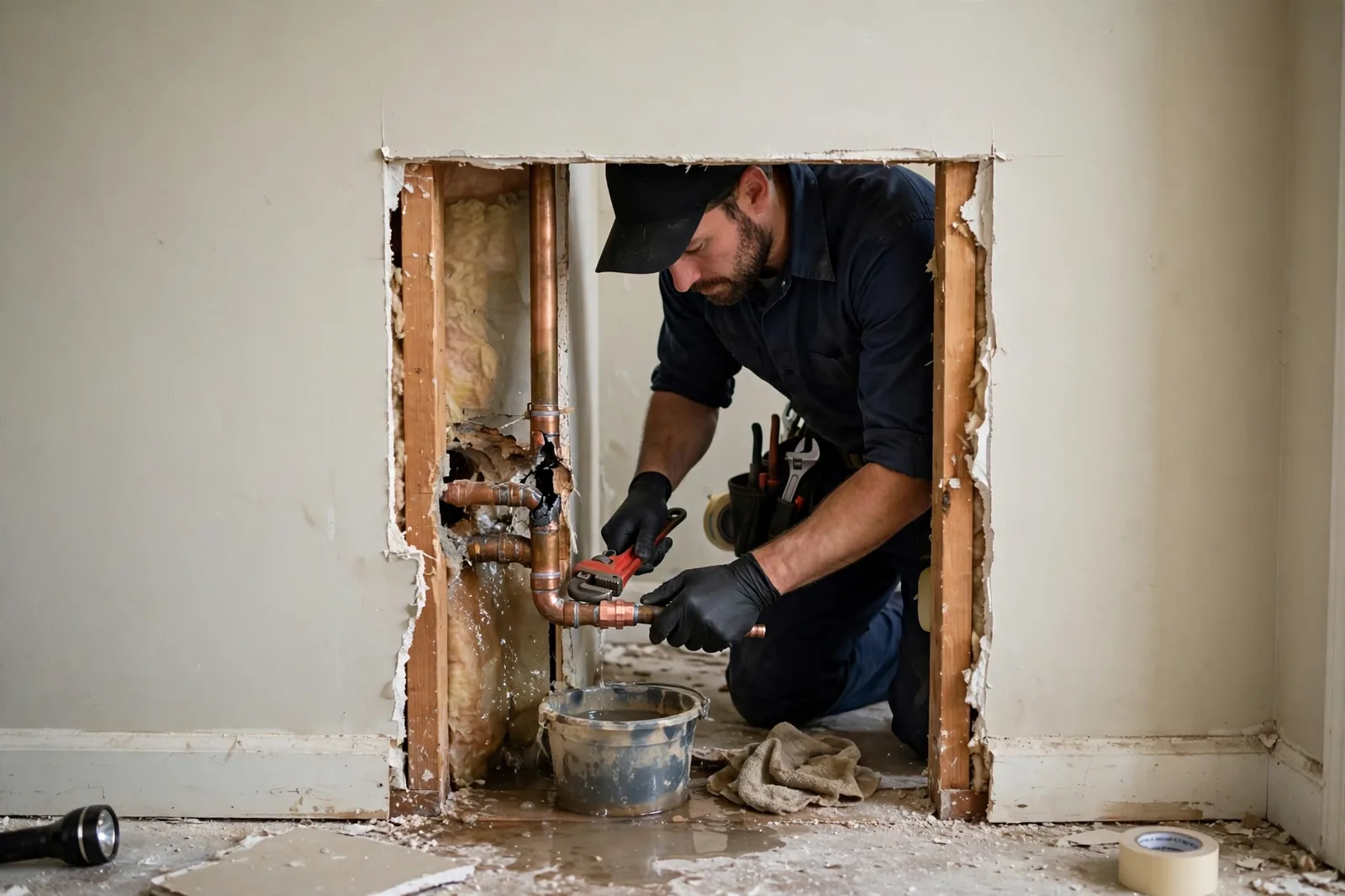
With the spot marked, the pro first closes the main water shutoff valve, the main valve that stops all water entering the home, if it is not already closed. Then a small opening is made at the marked place, sized for hands and tools rather than for searching. Seeing the actual break settles the repair choice at once: a split section of copper pipe, the metal pipe used in many Idaho homes, is cut out and replaced, while a cracked fitting is swapped and its neighbours inspected.
Because the opening is small and placed with confidence, patching it later is simpler too. Just as important, finding the break early limits how much water escaped. Standing water, pooled water left sitting in a room, may still need water extraction, removing it with pumps and vacuums, and structural drying may follow, but a leak found on day one spreads far less than a leak found after weeks of soaking.
What If The Sound Points To More Than One Spot?
Sometimes the search finds a main break plus a second weeping joint nearby, stressed by the same freeze or the same age. That is unwelcome news but useful timing: both can be fixed through nearby openings in one visit. A follow-up pressure test on the whole line then proves whether the system is finally tight before any wall is closed again.
What Makes A Hidden Leak Hard To Hear?
Some leaks are simply quiet. A hairline crack that weeps rather than sprays makes little sound, and low pressure in the line lowers the volume further. Pipe material plays a part: PEX pipe, a flexible plastic pipe, carries sound less crisply than metal, and PVC pipe in drain lines is not pressurised at all, so drain leaks are found by other means. Deep soil, thick slabs, and busy daytime noise all work against the microphones as well.
Age complicates the picture too. Pipe corrosion, the gradual wearing away of a pipe wall, can leave several thin spots weeping along one old run, so the sound has no single clear peak. Galvanized steel pipe, an older zinc-coated steel pipe that corrodes from inside, is a common example in older Idaho homes. In those cases the honest answer may be that one section needs replacing rather than one hole patching, and the listening results help show why.
How Do You Act On A Suspected Hidden Leak?
Do the simple checks first. Turn every tap off and watch the meter for movement. Walk the home slowly at a quiet hour and listen at walls and floors. Note damp spots, musty smells, soft paint, or a floor area that feels oddly warm or cold, and write down where each sign sits. Those notes shorten the pro's search, because the listening starts where your clues already point.
If the signs add up, do not wait for a stain to grow. Owners in the communities covered by burst pipe help in Glenns Ferry and burst pipe help in Gibbonsville hear the same advice: a hidden leak found early is a small repair, while the same leak found late can mean saturated insulation, mold growth inside a wall, and rooms opened for drying. For urgent cases, the emergency burst pipe hub for Idaho sets out the first steps to take while help is on the way.
Frequently Asked Questions
Straight answers, no fine print. If your question is not here, one free call gets you a local pro who can check your exact problem.
Still Have Questions? Call Free
Answered 24/7 — a local pro can arrive in 30–60 minutes.
Call Now — (800) 555-0100It is a method for finding leaks by sound. Water escaping under pressure makes a distinct noise as it leaves the pipe, and sensitive ground microphones and listening equipment pick that noise up through walls, floors, and even soil. By comparing the sound at several points, a pro narrows the leak to a small area before opening anything, which keeps the repair opening small.
Often, yes. Sound from a pressurised leak travels through pipe, water, and building materials, and modern listening equipment is sensitive enough to pick it up through drywall, flooring, and concrete. It works less well on a slow drip with little pressure, or in a noisy room. A pro may quiet the house, boost pressure slightly, or combine listening with other checks to confirm the spot.
A damp patch with no clear source, a drop in pressure, warm or cold spots on a floor, the sound of water when nothing is running, or a meter that moves with all taps off. Any of these can mean water is escaping where you cannot see it. The earlier the leak is pinpointed, the smaller the water spread and the less drying and rebuilding the home needs.
Usually minutes to a few hours, depending on the home's size, how the pipes are routed, and how much background noise there is. The pro listens along the likely runs first, then narrows in. A clear, pressurised leak in a quiet house can be found quickly, while a small leak under a thick floor takes longer. Finding it the same day still beats opening walls on a hunch.
Not always. Very slow leaks may make too little sound, plastic pipe carries sound less clearly than metal, and heavy background noise can mask a signal. That is why pros combine methods: listening, pressure testing, moisture readings, and temperature scanning together either confirm a spot or rule areas out. A leak that resists one method usually gives itself away to another during the same visit.
Turn off anything that makes noise or uses water: appliances, heating fans where safe, and taps. Note where you have seen damp, heard sounds, or felt warm or cold patches, and clear access to the meter and shutoff. Then let the pro work in quiet. The fewer competing sounds in the house, the clearer the leak's signal and the faster the search goes.
Dripping and running sounds travel differently. A drip is intermittent and often local to a fitting or trap, while a leak under pressure makes a steadier hiss or spray sound that carries along the pipe. Experienced listeners also test with taps open and closed to separate normal plumbing noises from a true escape. That distinction helps avoid opening a wall for a harmless, ordinary sound.
It guides the size of the opening. Instead of cutting a long trench along a wall, the pro opens a small section at the marked spot to confirm and repair the pipe. If the sound suggests the break sits between two points, the opening goes at the stronger signal. Smaller, well-placed openings mean less patching, less dust, and a faster return to normal rooms afterwards.
It depends on pipe material, how long the line is, what covers it, and how many methods the search needs. Homes where the leak is found with one pass cost less in search time than homes needing several techniques. What detection reliably avoids is the larger bill: repeated guess openings, long water spread, and rebuilding rooms that were opened in the wrong places during a blind search.
Call when you suspect hidden water loss: a moving meter, spreading damp, or sounds with no visible source. Idaho Burst Pipe Pros answers 24/7 on (800) 555-0100 and connects you with an independent local pro, typically arriving in 30–60 minutes. Mention any sounds you have heard and where; a leak you can hear faintly at night is exactly the kind of clue that speeds the search.
Reviewed By Hamza
Lead Water Damage Restoration & Structural Drying Specialist
Hamza is an emergency water restoration specialist with deep expertise in burst pipe mitigation, freeze damage remediation, and industrial structural drying across freezing northern climates. He focuses on rapid moisture extraction, thermal imaging diagnostics, and comprehensive subfloor restoration to protect homes from mold and structural deterioration.
Updated October 27, 2026
Need Burst Pipe Help In Idaho?
One free call connects you with a local pro — answered 24/7, and a pro can arrive in 30–60 minutes.
Call Now — (800) 555-0100Free Call · Answered 24/7 · Local Pros Near You