Can Thermal Imaging Find A Frozen Or Burst Pipe?
Free Call · Answered 24/7 · Local Pros Near You
In This Guide
- How Does Thermal Imaging Find A Frozen Or Leaking Pipe?
- Can A Camera See Water Behind Drywall?
- How Does It Pinpoint A Frozen Section?
- How Does It Trace A Leak That Has Already Burst?
- What Can Thermal Imaging Not Do?
- How Much Wall Comes Out When Imaging Guides The Repair?
- When Should You Ask For A Thermal Scan?
- How Do You Book A Scan For A Suspected Hidden Leak?
Quick Answer
Yes, in many cases. A thermal camera shows temperature differences across a wall or floor, so a frozen section reads much colder than the pipe around it and a leak shows as a spreading cold or warm patch where water is moving behind the surface. It cannot see the pipe itself, and it works alongside listening equipment and moisture checks rather than replacing them.
How Does Thermal Imaging Find A Frozen Or Leaking Pipe?
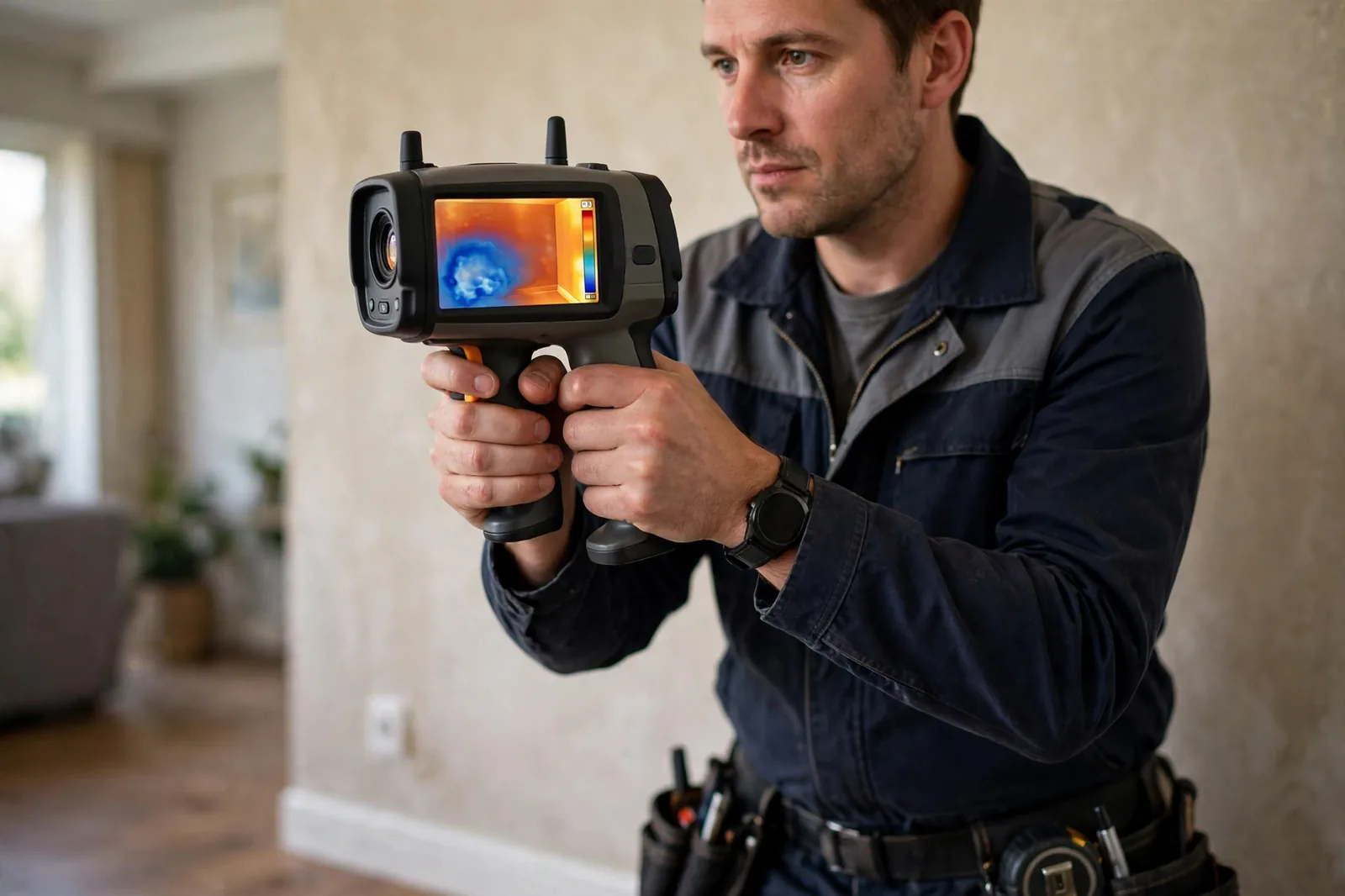
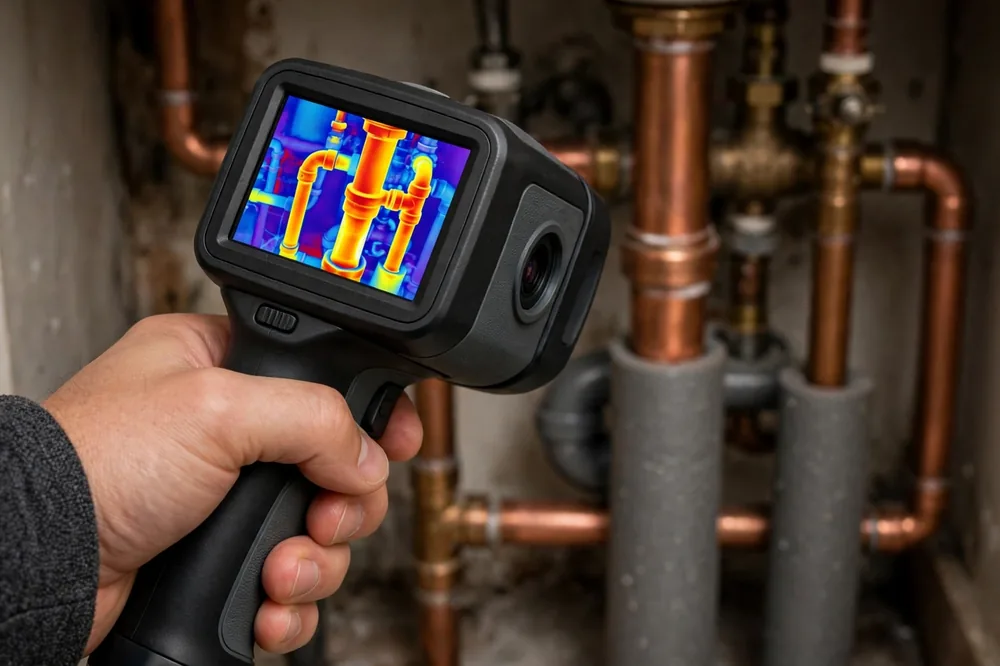
A thermal imaging camera, a camera that shows temperature differences on a surface, turns those differences into a picture you can read at a glance. Pipes carrying water sit at a different temperature from the dry wall around them, so the camera traces the run of a line behind drywall without opening anything. A frozen stretch shows as a sharply colder band along that run.
A leak changes the picture again. Water escaping into a wall cavity cools or warms the surface unevenly as it spreads, leaving a soft-edged patch that grows from the break point. Homeowners asking about burst pipe help in Grace often picture the camera finding the pipe like an X-ray, but what it really finds is the temperature trail the water leaves behind.
What Do The Colours On The Screen Mean?
The camera assigns colours to surface temperatures, typically blues and purples for colder areas and yellows and reds for warmer ones, though palettes vary. The pro reads the shapes, not just the colours: a straight cold line suggests a pipe, a spreading blob suggests pooling water, and a sharp cold corner suggests air leaking in from outside.
Can A Camera See Water Behind Drywall?
Not directly. The camera reads the surface temperature of the drywall itself, and water behind that drywall changes the surface temperature because the wet material conducts heat differently and evaporation cools it. That is why a damp patch shows clearly even though the water itself stays hidden, and why the outline on screen is softer than the real wet area.
The method has limits. Thick plaster, tile, metal sheeting, or a deep wall cavity can blur the signal, and a very slow leak that has reached room temperature may barely register. That is why pros confirm a thermal picture with a moisture meter, a handheld device that measures moisture in drywall and wood, pressed against the surface before deciding where to open.
Does It Work On Floors And Ceilings Too?
Yes. Warm water lines under a floor create a readable pattern, and a leak in a ceiling line often shows as a cold patch that spreads along a joist bay. In an attic, the space above the ceiling, a frozen line stands out against slightly warmer roof decking on a cold morning, which can pinpoint the frozen section before thawing begins.
Pipe Frozen Or Burst Right Now? One Free Call Connects You With A Local Pro.
Call NowHow Does It Pinpoint A Frozen Section?
During a freeze, the pro scans the suspected run and looks for the stretch where the temperature drops furthest and stays lowest. Ice inside the pipe holds that section well below the temperature of the water-filled pipe on either side, so the ends of the cold band roughly mark the ends of the ice. That tells the pro exactly where to apply gentle heat first.
Warming then proceeds carefully, often with electric heating pad thawing, applying gentle electric heat to a frozen pipe section, working from the tap back toward the frozen stretch so meltwater can escape. The camera watches the cold band shrink in real time. The American Red Cross lists heating pads and warm towels among safe thawing methods, and warns against open flame, which can start a fire inside a wall.
Why Does Finding The Exact Frozen Spot Matter?
Heating the wrong stretch wastes the coldest hours and can push meltwater against ice that still blocks the line, raising pressure on a weakened wall. Knowing where the ice starts and ends also tells the pro which joints to check first once flow returns, because ice expansion pressure, the force of water expanding as it freezes, does its damage near the plug.
How Does It Trace A Leak That Has Already Burst?
With a burst line, the scan starts at the visible water and works backward. Standing water, pooled water left sitting in a room, cools a floor in a broad sheet, but the trail usually narrows toward the break, where fresh water keeps arriving. A skilled reader follows that narrowing trail along the pipe run until the temperature pattern sharpens at the source.
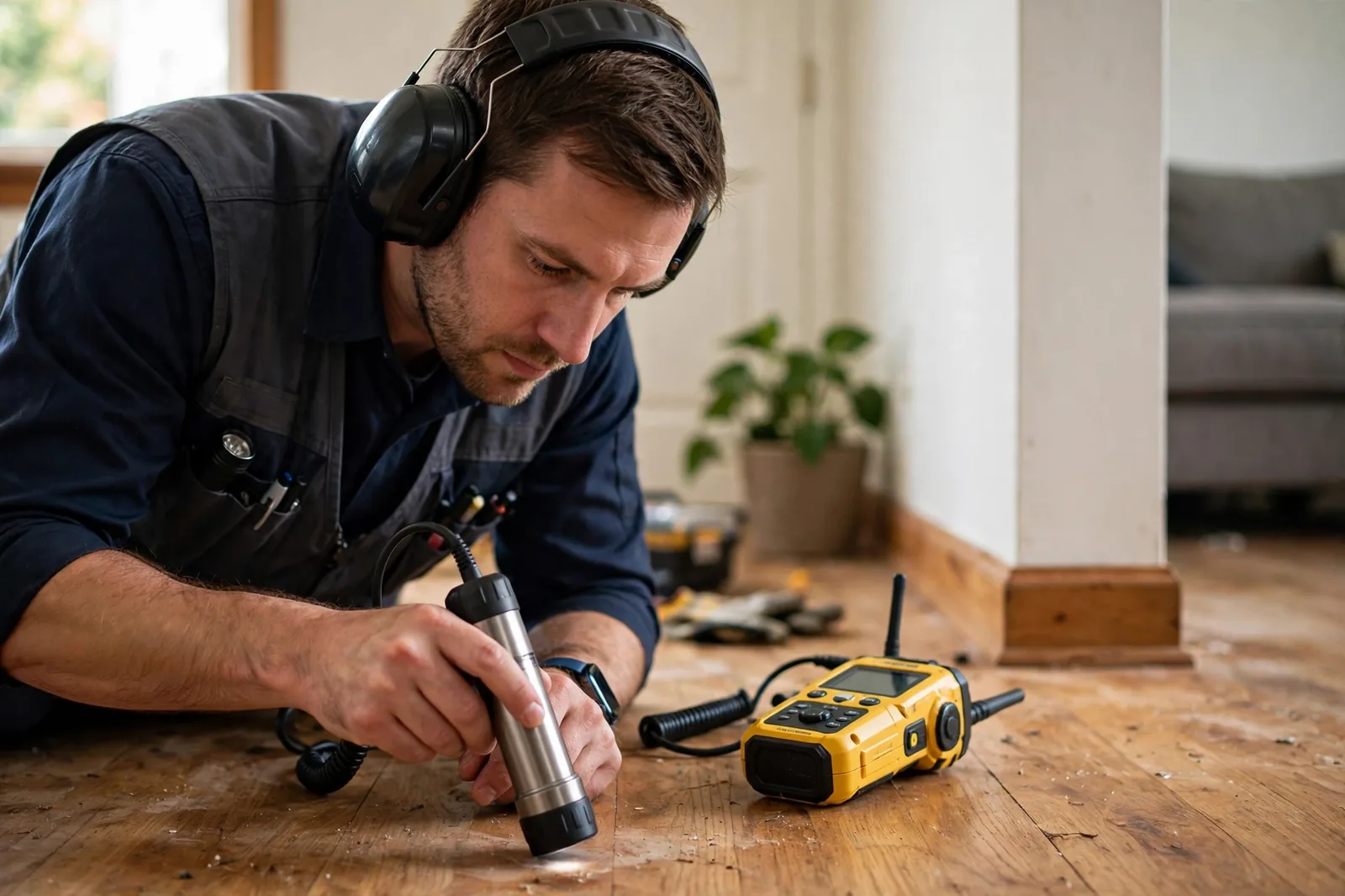
This is where pairing tools matters. Acoustic leak detection, listening equipment used to hear water escaping from a pipe, can confirm the spot the camera suggests, because a pressurised split makes a faint hiss a trained ear and sensor can locate. Used together, the two methods back each other up on difficult leaks where either one alone might leave doubt.
Can It Show How Far The Water Spread?
Largely, yes. Damp framing and saturated insulation, wall insulation soaked by a leak, read at different temperatures from dry material, so the scan outlines the wet zone on each surface it checks. That outline guides the drying plan and shows which wall sections truly need opening, instead of stripping a whole room on guesswork alone.
What Can Thermal Imaging Not Do?
It cannot tell you the pipe material, its age, or whether a wall that looks sound has split behind a stud. It cannot see through metal, read a line buried deep in concrete with no temperature contrast, or prove a repair is sound afterwards. A dry-looking picture also cannot rule out a slow leak inside a thick wall, which is why symptoms like a moving water meter still matter.
Weather can fool it, too. Sun on an exterior wall, an outside-facing wall, warms one side and hides cold patterns, while a cold snap can make a whole crawl space, the shallow space under a home, read uniformly cold. Good pros schedule scans with those limits in mind and treat the camera as one witness among several, not as the verdict.
Why Do Pros Still Open A Small Test Hole Sometimes?
Because a picture is evidence, not proof. A small, neat inspection opening confirms the pipe's condition, lets the pro feel for damp framing, and settles questions the camera cannot answer. The point of scanning first is that the hole lands in the right place the first time, instead of a row of exploratory cuts across a room.
How Much Wall Comes Out When Imaging Guides The Repair?
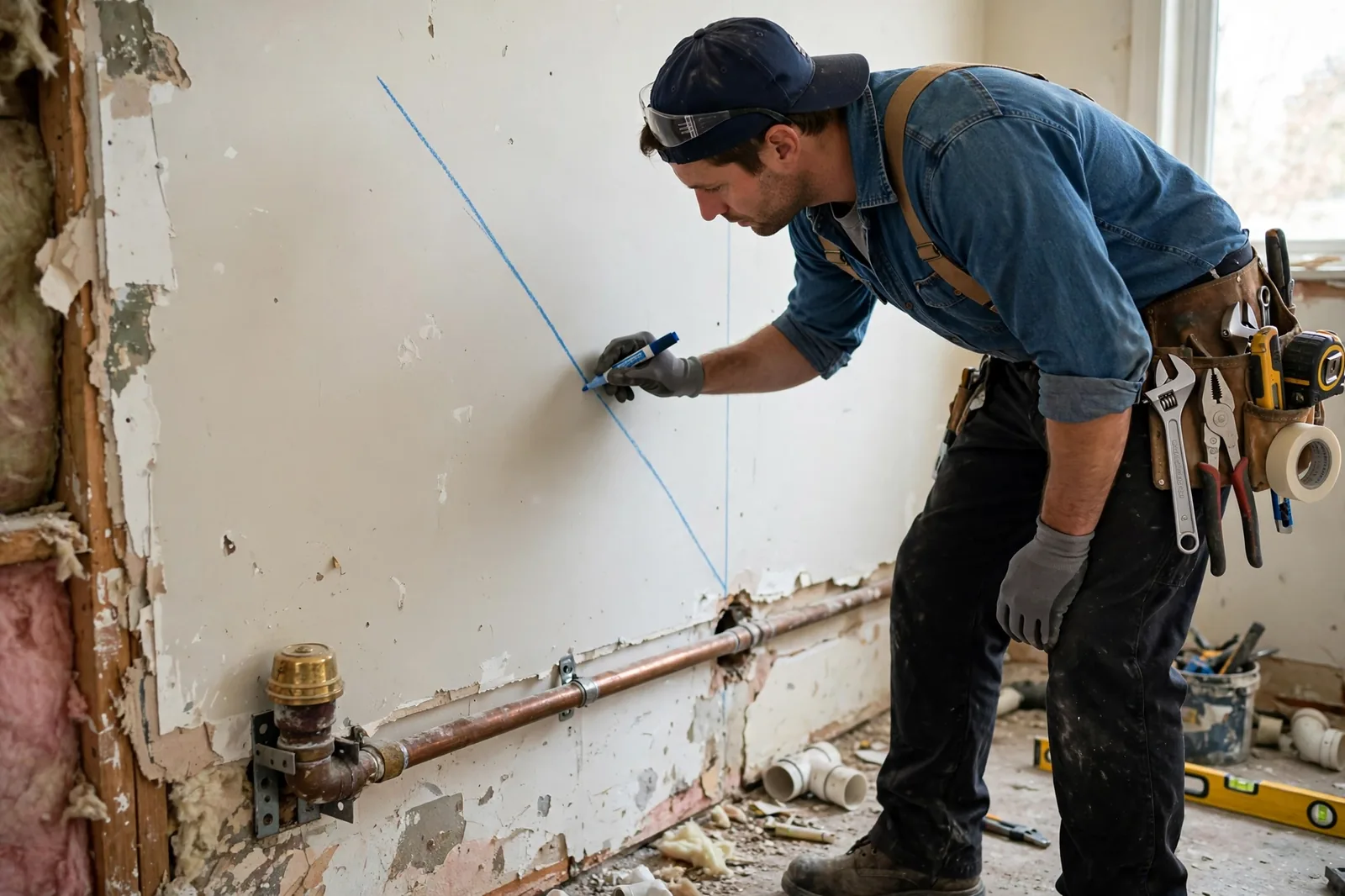
Usually far less than with guesswork. When the scan and listening checks agree on a spot, the opening can be limited to the damaged section and enough room to cut and join new pipe. Homeowners weighing this up often read how much wall has to come out to fix a burst pipe alongside this guide, because the two questions arrive together on almost every hidden leak.
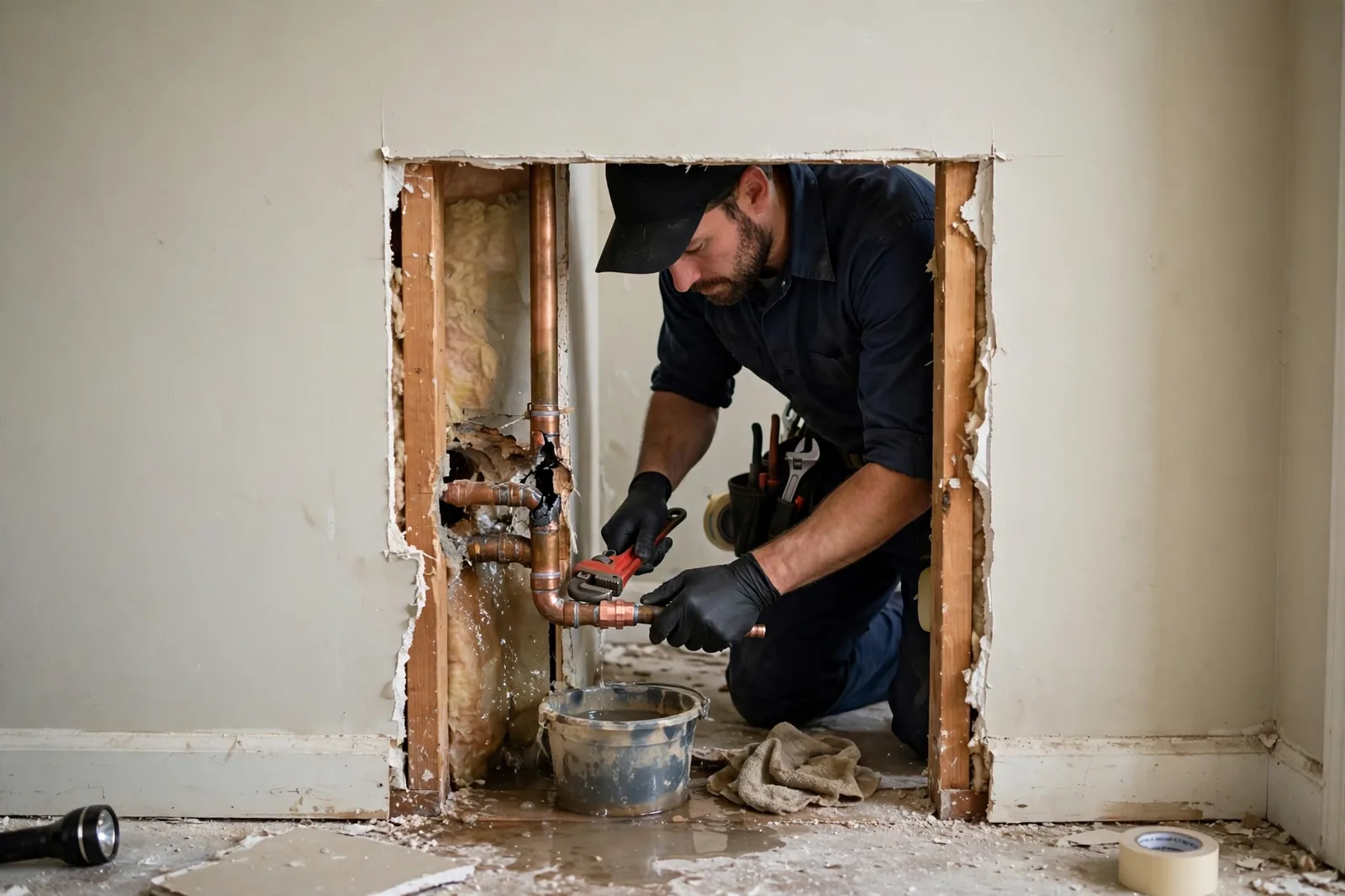
The repair itself stays conventional: cut out the split with a pipe cutter, fit new pipe with a brass fitting, a corrosion-resistant metal connector, then run a pressure test, filling the line at a set pressure and watching for a drop, before the wall closes. Around burst pipe help in Grand View, crews describe the camera's real saving as time and wall, not magic.
What Happens To The Wet Areas The Camera Found?
They get dried, not just closed up. Water extraction, removing standing water with pumps and vacuums, comes first where water pooled, then structural drying, the planned drying of walls and floors, uses an air mover and a dehumidifier, equipment that pulls moisture from the air. The EPA advises drying wet materials within 24 to 48 hours to limit mold growth.
When Should You Ask For A Thermal Scan?
Ask when water is appearing but the source is not obvious, when one section of pipe freezes every winter and you want to know exactly where, or when a ceiling stain grows with no fitting above it that you can see. A scan early in the visit is cheaper than exploratory demolition, and it gives you a picture record of the wet areas for insurance.
It also helps before problems start. A scan of an exterior wall run during cold weather shows where insulation has fallen away or cold air pours in, so you can add a pipe insulation sleeve, foam tubing slipped over a pipe, in the right places. The Department of Energy describes thermographic inspections as a way to find heat loss and air leaks in homes, which is the same picture, used for prevention.
Can You Rent A Camera And Do It Yourself?
Consumer cameras and phone attachments exist, and they can show obvious cold spots. Reading them well takes practice, though, because reflections, sunlight, and heating ducts all paint misleading patterns. For finding a leak you intend to cut a wall for, most homeowners are better served by a pro who scans, confirms with other tools, and stands behind the location chosen.
How Do You Book A Scan For A Suspected Hidden Leak?
Start the same way as any burst: if water is flowing, close the main water shutoff valve, the main valve that stops all water entering the home, before anything else. A scan works on a system that is leaking slowly or frozen, and the pro will tell you whether they want pressure on or off when they arrive, so describe the symptoms clearly when you call.
Idaho Burst Pipe Pros is a free service connecting callers with independent local pros; calls are answered 24/7 and pros typically arrive in 30–60 minutes. Teams near burst pipe help in Greenleaf carry thermal cameras as standard kit, and the emergency burst pipe hub for Idaho explains the process statewide. Call (800) 555-0100 and mention that the leak is hidden, so the right equipment comes on the first visit.
Frequently Asked Questions
Straight answers, no fine print. If your question is not here, one free call gets you a local pro who can check your exact problem.
Still Have Questions? Call Free
Answered 24/7 — a local pro can arrive in 30–60 minutes.
Call Now — (800) 555-0100The camera reads surface temperatures and turns the differences into a picture. Water moving behind a wall changes the temperature of that surface, so a leak shows as an uneven cold or warm patch that spreads from the break. The pro follows that pattern back along the pipe run, then confirms the spot with moisture readings before opening anything.
Not the water itself. It sees the effect the water has on the drywall surface, because wet material conducts heat differently and evaporation cools it. That makes hidden damp show up clearly in most ordinary walls. Thick tile, metal, or very deep cavities can blur the signal, which is why a moisture meter check backs up the picture.
Yes. The frozen stretch of a pipe reads much colder than the water-filled sections on either side, so the scan shows a cold band that roughly matches the length of the ice inside. That lets the pro apply gentle heat in the right place and watch the cold band shrink as the ice melts, instead of warming the whole run blindly.
Usually not. A scan is strong evidence, but pros confirm it with moisture readings, listening equipment, or pressure checks before cutting. Sunlight, heating ducts, and cold weather can all distort the picture. Treat the camera as a guide that narrows the search to one spot, with a second method confirming that the spot is right.
No. The camera never touches the surface and nothing is opened during the scan itself. That is its main advantage over exploratory cutting: the wall only opens once the evidence points to one place. Any small inspection hole afterwards is deliberate and placed, rather than part of a row of guesses across a room.
Sometimes. A hot water leak under a slab often warms the concrete above it enough to show on camera, while a cold line may show very little contrast. Depth, floor coverings, and sunlight all affect the result. Under slabs, listening equipment and pressure checks usually share the work of pinpointing the break.
Cost depends on the home's size, how many areas need scanning, and whether the visit is an emergency call-out or part of a repair job, where scanning is often included in the diagnosis. What it reliably saves is demolition: opening one correct spot instead of several guessed ones. Ask what the visit includes when you book, so the scope is clear.
It can help. A scan during cold weather shows where pipes run cold, where insulation has slipped, and where outside air leaks into a wall cavity. Fixing those spots with insulation and sealing before the hardest cold arrives lowers the freeze risk on that run. It is a useful check for any line that has frozen in a previous winter.
Cold patches have other causes: missing insulation, air leaks around framing, duct problems, or a pipe carrying cold water normally. A good reader checks the shape of the patch and confirms with moisture readings before calling anything a leak. A dry, straight cold line is usually just the pipe itself showing through the wall.
Scanning the rooms involved in a leak usually takes well under an hour once the pro is set up, though a full-home survey takes longer. The bigger time question is reaching you: calls are answered 24/7 and pros typically arrive in 30–60 minutes. While you wait, close the shutoff if water is flowing and move belongings out of wet areas.
Reviewed By Hamza
Lead Water Damage Restoration & Structural Drying Specialist
Hamza is an emergency water restoration specialist with deep expertise in burst pipe mitigation, freeze damage remediation, and industrial structural drying across freezing northern climates. He focuses on rapid moisture extraction, thermal imaging diagnostics, and comprehensive subfloor restoration to protect homes from mold and structural deterioration.
Updated October 27, 2026
Need Burst Pipe Help In Idaho?
One free call connects you with a local pro — answered 24/7, and a pro can arrive in 30–60 minutes.
Call Now — (800) 555-0100Free Call · Answered 24/7 · Local Pros Near You