How Much Wall Has To Come Out To Fix A Burst Pipe?
Free Call · Answered 24/7 · Local Pros Near You
In This Guide
- Will A Pro Have To Cut My Wall To Fix A Burst Pipe?
- How Big Is The Opening For A Pipe Repair?
- How Do Pros Keep The Opening Small?
- What If The Pipe Is In A Floor Or Ceiling Instead?
- When Does More Wall Have To Come Out?
- What Happens Through The Opening During Repair?
- How Is The Wall Closed And Finished Afterwards?
Quick Answer
Usually far less than homeowners fear. When a pro locates the break first with listening gear, heat imaging and moisture checks, the opening is often only large enough to cut out the split section and join new pipe, commonly a patch about one to two feet across. Bigger openings happen when the leak ran longer, several sections split, or insulation and drywall are too wet to save.
Will A Pro Have To Cut My Wall To Fix A Burst Pipe?
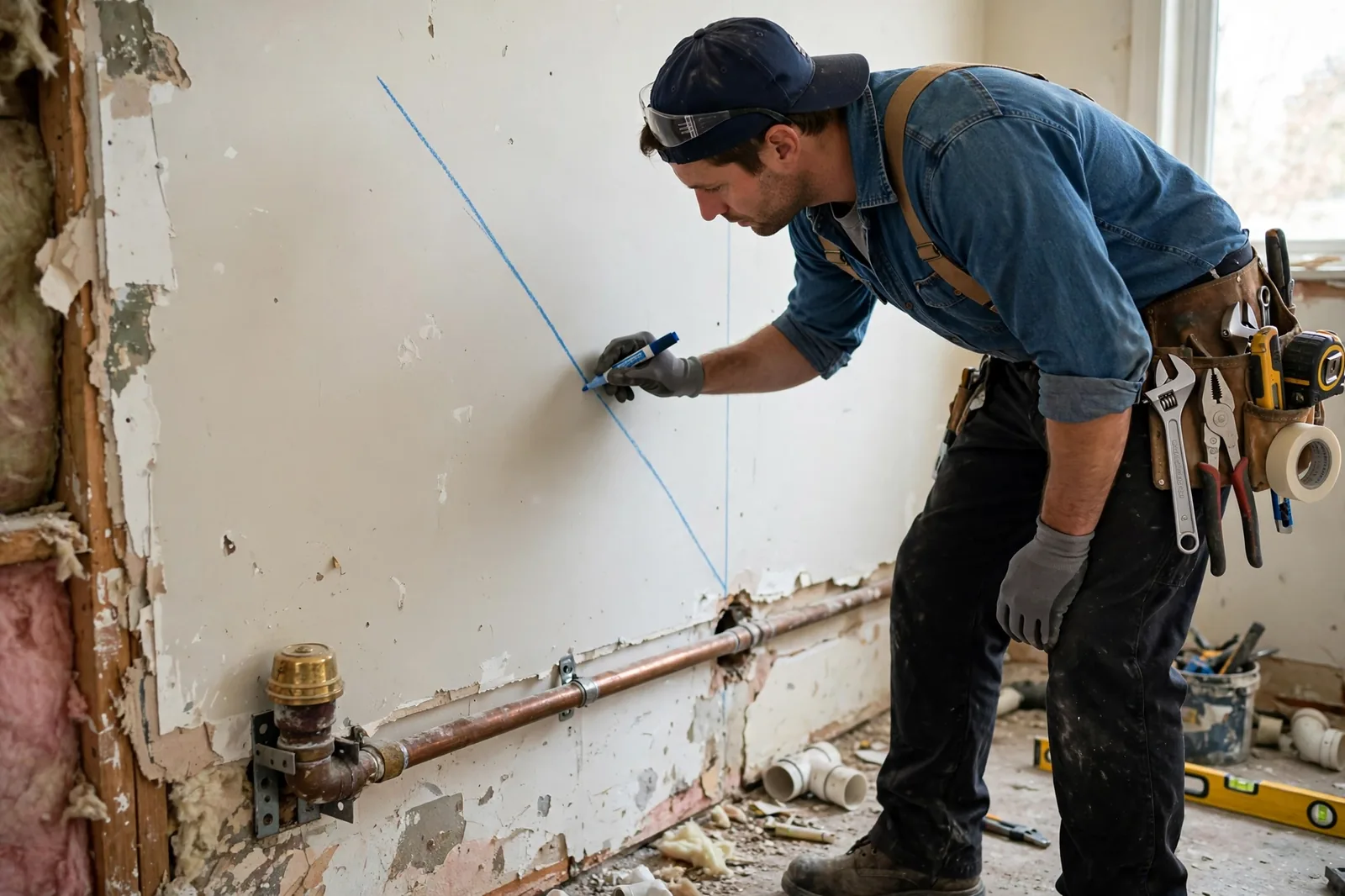
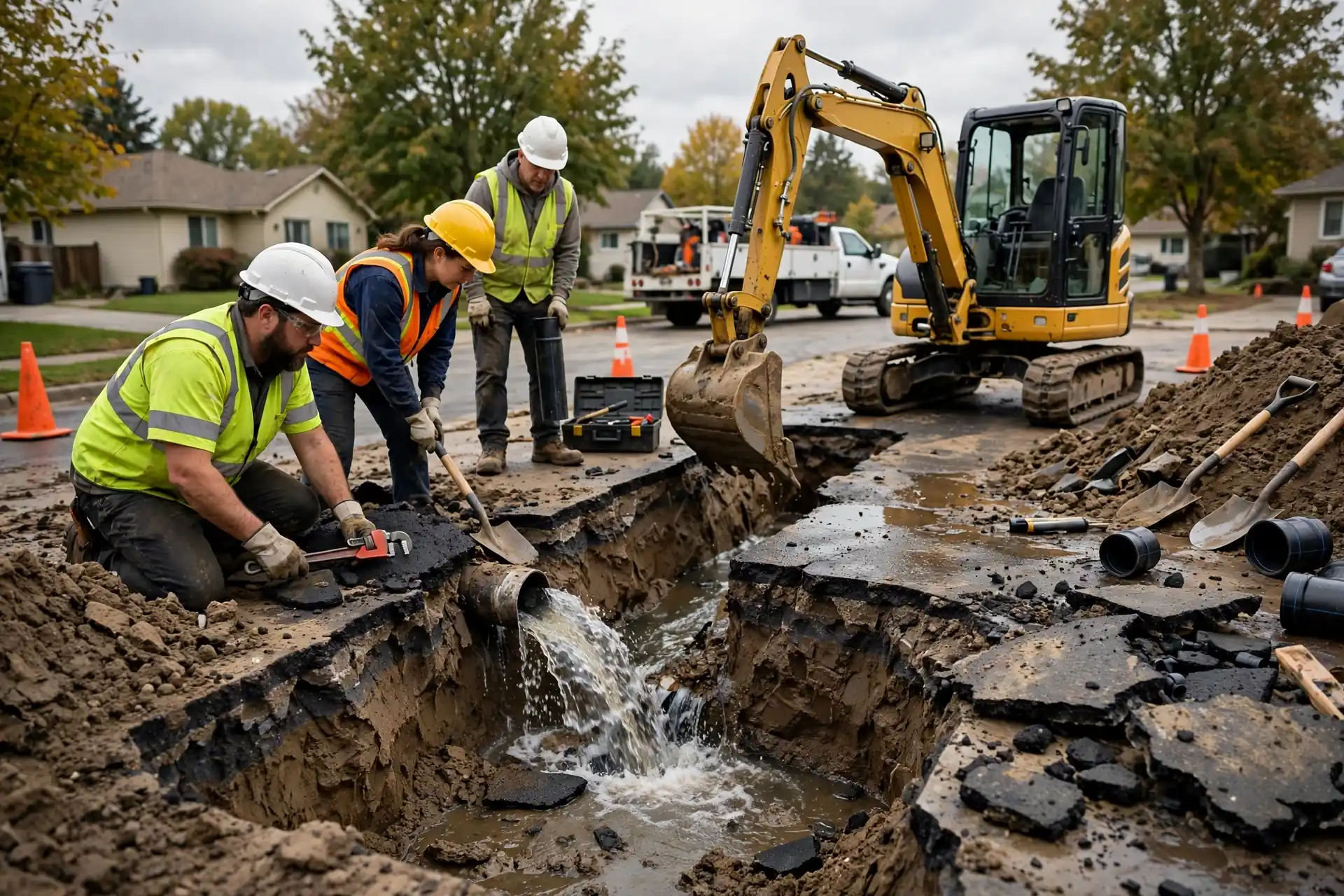
If the pipe runs inside a finished wall and there is no panel or open route to it, yes, some wall has to open. Pipe cannot be cut out and rejoined through drywall that stays intact. The real question is not whether an opening is needed, but how small careful locating can keep it.
Start by closing the main water shutoff valve, the main valve that stops all water entering the home, before anything is cut. Opening a wall around a live, spraying line makes the damage worse and the work harder. Once the water is off and the area is drained, the pro can plan the opening calmly instead of cutting under pressure.
When Can A Wall Be Left Alone?
If the burst is in a crawl space, an unfinished basement or behind an existing access panel, no finished wall needs cutting at all. Some breaks can also be reached from the other side of the wall, through a closet or utility space, sparing the finished room. A good pro checks every route before choosing where to open.
How Big Is The Opening For A Pipe Repair?
For a single split in a straight run, the opening usually needs to expose the damaged section plus a few inches of sound pipe on each side, so a pipe cutter, a tool that cuts a clean section of pipe, can work and new fittings can be joined squarely. In practice that often means an opening around one to two feet across, though depth and framing can change it.
Studs, cross-bracing and a second pipe in the same bay can all force the opening wider or taller. So can finding more damage than expected: a failed fitting at a bend, pipe corrosion spreading along the run, or a second split nearby. The honest answer is a planned small opening that grows only when the pipe itself demands it.
Framing can also affect access in older homes, where pipes were run tight against studs or through notched timber that should not be cut further. A pro may shift the opening sideways into the next bay rather than weaken a structural member, even when the break itself sits behind the harder spot.
Pipe Frozen Or Burst Right Now? One Free Call Connects You With A Local Pro.
Call NowHow Do Pros Keep The Opening Small?
Locating comes before cutting. A thermal imaging camera, a camera that shows temperature differences on a surface, reveals the cold, wet patch around a break. Acoustic leak detection, listening equipment used to hear water escaping inside a wall, pinpoints the sound of the leak itself. Together they narrow the opening to one wall bay instead of a whole wall.
A moisture meter, a handheld device that measures moisture in drywall and wood, then traces how far water spread beyond the break. Homeowners can read more in how thermal imaging finds frozen and burst pipes. In homes around burst pipe help in Hayden, this locate-first approach is what separates a tidy repair from a room full of drywall dust.
What Does A Moisture Map Show?
A moisture map is a grid of meter readings across the wall and floor that shows where water travelled and where it stopped. It separates the wet area that must open or dry from sound material that can stay. Mapping also gives a record for drying checks later, so closing the wall is based on readings, not on how the surface feels.
What If The Pipe Is In A Floor Or Ceiling Instead?
Ceiling pipes are often reached from below, through the ceiling of the room under the leak, because gravity has already soaked that ceiling material and much of it must come out anyway. Floor pipes may be reached from a crawl space, the shallow space under a home, or a basement, the lowest level where burst water collects, without touching the finished floor above.
Where no route exists, a small section of floor or ceiling opens instead of wall. A sagging, water-heavy ceiling is opened carefully and early, because standing water, pooled water left sitting above the ceiling, can bring the whole sheet down. The principle stays the same: open where the damage already is, and only as much as the repair needs.
Access from below is often kinder to the home, because an unfinished ceiling or open joist space can be patched or left neat, while the finished floor above stays untouched. Where pipes run above a finished ceiling, the opening follows the same locate-first rule as a wall, and the wet material below it is checked before anything closes.
When Does More Wall Have To Come Out?
More wall comes out when water has spread. Saturated insulation, wall or floor insulation soaked by a leak, holds moisture against framing and usually must be removed so the cavity can dry. Drywall that has gone soft, swollen or crumbly cannot be saved, and a pro will cut back to material that is sound and dry at the edges.
Mold growth, fungi that can start on wet materials within days, can also widen the removal area if drying was delayed. None of this is guesswork: readings and the feel of the material decide the cut line. Owners weighing bigger changes can also read about rerouting pipes away from cold exterior walls while the wall is already open.
Does Removed Drywall Mean The Leak Was Huge?
Not always. A modest leak that ran for days can wet a wide area, while a dramatic spray stopped in minutes may soak very little. Removal follows the moisture readings and the condition of the material, not the drama of the burst itself. That is why two similar bursts can leave very different amounts of wall to patch.
What Happens Through The Opening During Repair?
Through the opening, the pro cuts out the split section and any weakened pipe around it, then fits new pipe and joins it by the correct method for the material, whether copper pipe, PEX pipe or CPVC pipe. The line is then pressure tested, filled at a set pressure and watched for a drop, before anyone talks about closing the wall.
Drying runs alongside. Water extraction, removing standing water with pumps and vacuums, clears pooled water first. Then structural drying, the planned drying of walls, floors and framing, uses an air mover, a fan that pushes air across wet surfaces, and a dehumidifier, equipment that pulls moisture from the air, aimed into the open cavity, which is exactly why the opening is useful beyond the pipe fix itself.
How Is The Wall Closed And Finished Afterwards?
The wall closes only after meter readings show the cavity dry. New insulation replaces what came out, the drywall patch is fitted, taped and finished, and the surface is ready for paint. A careful crew photographs the repaired pipe before closing, so you have a record of what sits behind the patch.
For homeowners in areas like burst pipe help in Hammett or burst pipe help in Harrison, the sequence matters more than speed: locate, open small, repair, test, dry, then close. Idaho Burst Pipe Pros connects callers with independent local pros through one free call on (800) 555-0100, answered 24/7. A wall opened thoughtfully is a patch, not a remodel.
Should You Fit An Access Panel This Time?
If the opening sits over a valve, cleanout or joint you may need again, ask for a framed access panel instead of a sealed patch. It costs little while the wall is open and saves cutting next time. Panels suit closets, utility walls and the backs of cabinets, where they stay discreet but reachable for future checks.
Frequently Asked Questions
Straight answers, no fine print. If your question is not here, one free call gets you a local pro who can check your exact problem.
Still Have Questions? Call Free
Answered 24/7 — a local pro can arrive in 30–60 minutes.
Call Now — (800) 555-0100Usually yes, if the burst sits inside a wall, ceiling or floor with no access panel behind it. The opening can stay small when locating tools pinpoint the break first. A pro who guesses and opens a wide area without checking is creating extra repair work. Ask how the break will be located before any cutting starts, and expect a focused opening, not a demolished wall.
Many repairs need an opening roughly one to two feet across, large enough for two hands, a cutter and room to join new pipe. A joint repair, a valve or a bend can need a little more. The exact size depends on how accurately the break was located, how deep the pipe sits and how much damaged pipe must come out, so treat any size given in advance as an estimate.
Sometimes. A hatch or panel fitted during the repair gives future access to a valve or joint without cutting again, and it looks tidier than a rough patch. Panels work well behind showers, under sinks and at main valves. Ask the pro to frame and fit one wherever the opening covers a joint you may need to reach again later.
Floors are opened only when no wall or ceiling route reaches the pipe. A pro may lift boards, cut a small section of subfloor, or come up through a crawl space instead. Slab homes are different: the crew may open the floor over the break or reroute the line overhead. The choice depends on access, and it should be explained before cutting begins.
Usually the plumbing repair and the wall patch are separate jobs, and sometimes separate trades. The pro fixing the pipe may leave the opening tidy and dry-ready, while a drywaller or the homeowner patches it after drying is confirmed complete. Agree who patches, and when, before work starts, so the opening is not closed over damp material by mistake.
Closing early traps moisture inside the wall, where it can feed mold growth and rot framing in the dark. A moisture meter check should show the wood and drywall edges back at normal levels first. Drying can take days even for a small leak. It feels slow, but closing a dry wall once is cheaper than reopening a moldy one later.
Move furniture, rugs and stored items away from the wall, clear a path to the shutoff and the work area, and keep pets in another room. Take photos before cutting for your records. If you can, find out where the pipe runs and whether an access panel already exists. Small preparation like this shortens the visit and protects your belongings from dust.
Yes, if the remaining drywall, insulation and framing have dried fully and were not contaminated or crumbling. Saturated insulation usually comes out because it stays wet and loses value. Soft, swollen drywall also comes out. Sound material that dries to normal meter readings can often stay, and a pro should explain which category each material falls into and why.
Ask where the break is, how it was located, how large an opening is planned, what happens if the damage runs further, who handles drying and patching, and whether the repair will be pressure tested before closing. Clear answers turn a worrying job into a planned one. If the answers stay vague, get them clarified before the saw starts.
Call promptly if water is running, the wall is bulging, or you cannot stop the flow. Also call if a ceiling sags under pooled water, because that weight can bring the ceiling down. Through the emergency burst pipe help page for Idaho, one free call to (800) 555-0100 connects you with an independent local pro who typically arrives in 30–60 minutes.
Reviewed By Hamza
Lead Water Damage Restoration & Structural Drying Specialist
Hamza is an emergency water restoration specialist with deep expertise in burst pipe mitigation, freeze damage remediation, and industrial structural drying across freezing northern climates. He focuses on rapid moisture extraction, thermal imaging diagnostics, and comprehensive subfloor restoration to protect homes from mold and structural deterioration.
Updated October 27, 2026
Need Burst Pipe Help In Idaho?
One free call connects you with a local pro — answered 24/7, and a pro can arrive in 30–60 minutes.
Call Now — (800) 555-0100Free Call · Answered 24/7 · Local Pros Near You