How Do Pros Find A Burst Pipe Inside A Wall?
Free Call · Answered 24/7 · Local Pros Near You
In This Guide
- How Do Pros Find A Burst Pipe Inside A Wall Without Tearing It Open?
- How Is Hidden Water Damage Measured?
- What Does The Meter Test Show First?
- How Does Thermal Imaging Narrow The Search?
- How Does Listening Pinpoint The Exact Spot?
- When Is A Small Opening Still Needed?
- What Happens After The Leak Is Found And Fixed?
Quick Answer
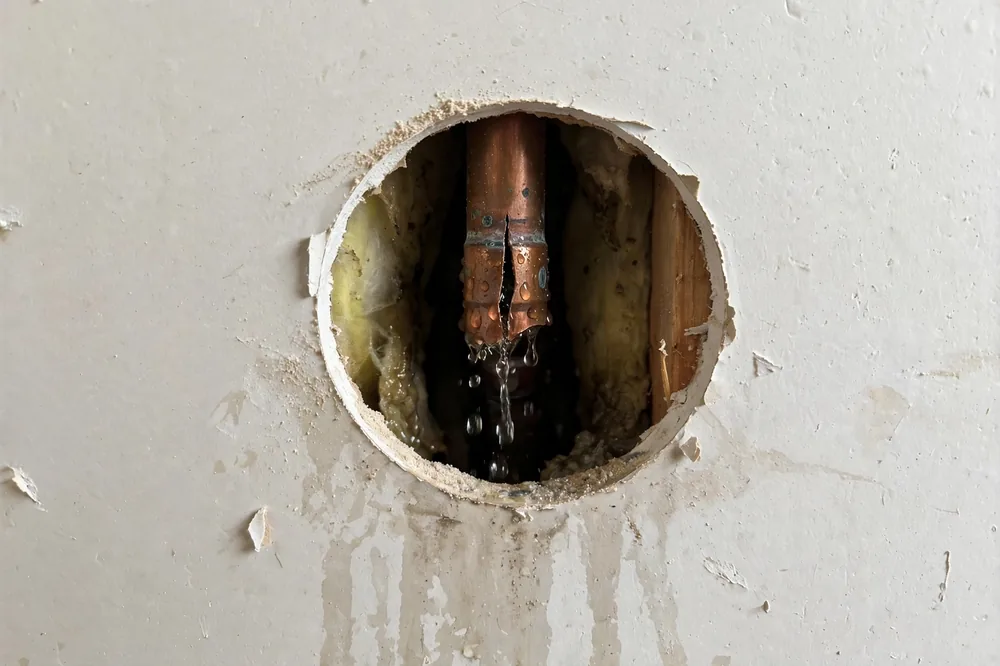
Pros find a burst pipe inside a wall by narrowing the search before opening anything. They test the meter, isolate branches, read moisture in the drywall, scan for cold wet patches with thermal imaging, and listen for escaping water. Each step shrinks the suspect area, so the first opening is usually a small, targeted cut over the break instead of a wall torn open at random.
How Do Pros Find A Burst Pipe Inside A Wall Without Tearing It Open?
The search follows evidence, not guesswork. A pro starts with what the home already shows: which rooms are wet, which taps lost pressure, and whether the leak runs constantly or only when a fixture is used. Constant flow points to a supply line, while water that appears only after a shower or flush points elsewhere. That first interview often halves the search area before any tool comes out.
Only then do instruments narrow it further, layer by layer. The goal is a small, confident target: one stud bay, one floor section, one fitting. Homeowners comparing burst pipe help in Garden City hear the same promise from careful pros — measure twice, open once — because every extra hole is extra repair work later.
Why Not Just Open The Wettest Spot?
Because water travels. It runs along framing, follows the pipe itself and pools at low points, so the wettest stain can sit a room away from the break. Opening the stain first often reveals only soaked material, not the source. Pros trace the moisture uphill and upstream instead, and open where the readings, sounds and layout all agree the break must be.
How Is Hidden Water Damage Measured?
Hidden damage is measured in moisture readings, not guesses. A moisture meter, a handheld device that measures moisture in drywall, wood and flooring, gives numbers that can be compared against a dry area of the same material. Readings are taken in a grid across the wall and floor, which turns a vague damp feeling into a map showing where the water started, how far it spread and what is still dry.
Those numbers also decide what happens next. Material that reads near its dry baseline may only need air movement, while saturated insulation, wall or floor insulation soaked by a leak that holds moisture against framing, usually has to come out so the cavity can dry. Careful measurement is what keeps a repair focused, and our guide to acoustic leak detection for hidden bursts covers the listening side of the same process.
Pipe Frozen Or Burst Right Now? One Free Call Connects You With A Local Pro.
Call NowWhat Does The Meter Test Show First?
The first test uses the water meter, the utility meter that records water use. With every tap off and no appliance running, a dial or digital readout that still moves means water is leaving the system somewhere. That simple check confirms a live leak in minutes and rules out old staining from an earlier event, which matters before any wall is opened.
Next, the pro isolates branches. Closing valves to parts of the system and watching the meter tells them which section holds the break: if the movement stops when one branch closes, the leak lives on that branch. In a crawl space, the shallow space under a home where supply pipes often run unheated, a visual pass along that branch may even find the split before wall work begins.
What Does A Pressure Test Add?
A pressure test, filling a line at a set pressure and watching for a drop that shows a leak remains, confirms which isolated section is guilty and how fast it loses pressure. A quick drop suggests an open split; a slow fall suggests a weeping joint or pinhole. The same test is repeated after repair, because a line that holds pressure is a line with no second break hiding in it.
How Does Thermal Imaging Narrow The Search?
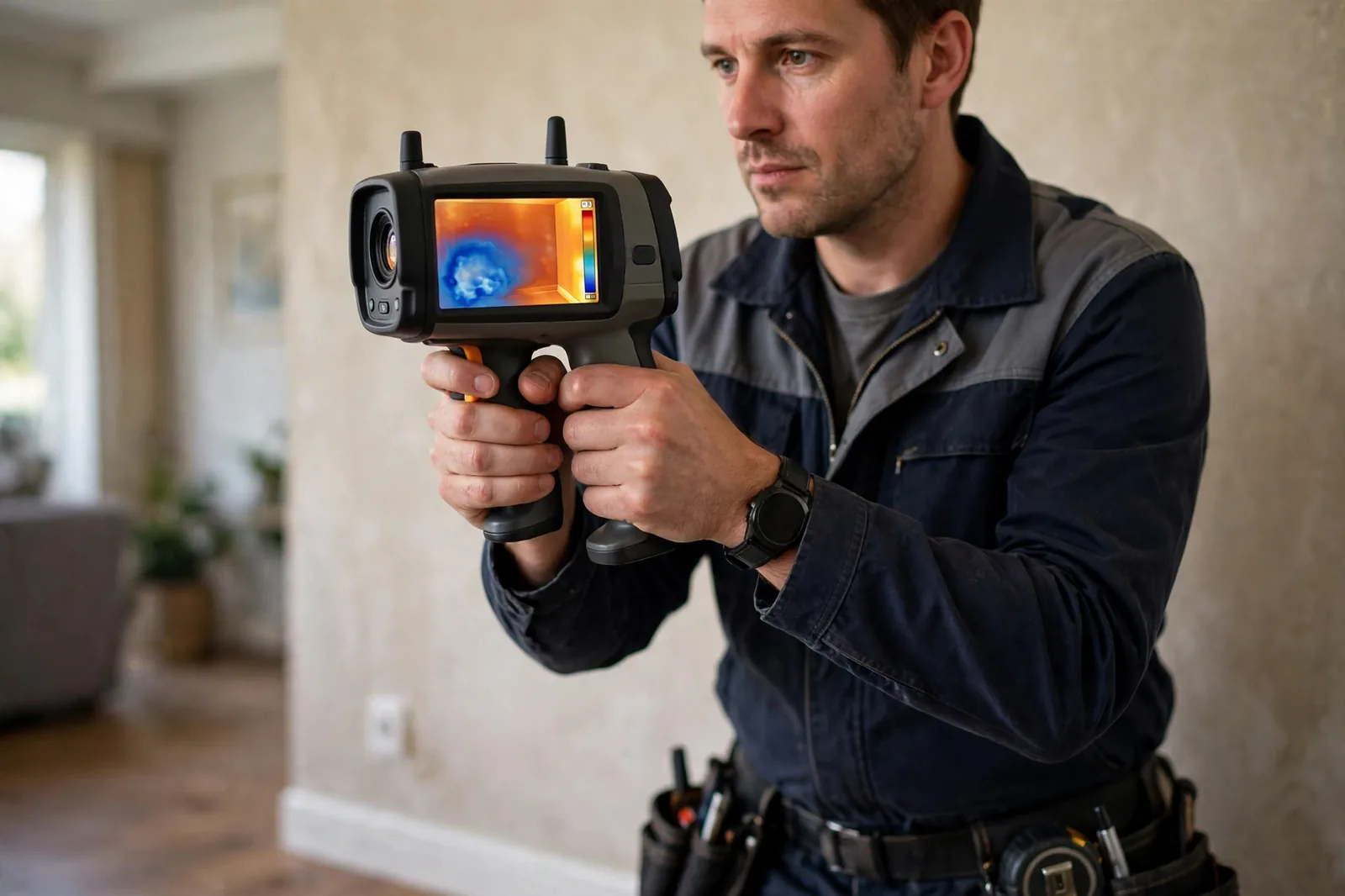
A thermal imaging camera, a camera that shows temperature differences on a surface, makes wet areas visible without touching the wall. Wet drywall and framing hold a different temperature from dry material, and a cold supply line behind a wall often shows as a soft streak. The pro scans slowly and marks the edges of any cold, damp patch, which usually outlines the path water took from the break.
Imaging has limits, and a careful pro says so. Sun-warmed walls, heating ducts and reflections can mislead the picture, so thermal findings are always confirmed with meter readings before cutting. Used together, the two tools agree on a target far more reliably than either alone, whether the home sits in burst pipe help in Fort Hall or anywhere else in eastern Idaho, the colder eastern part of the state including Idaho Falls and Pocatello.
How Does Listening Pinpoint The Exact Spot?
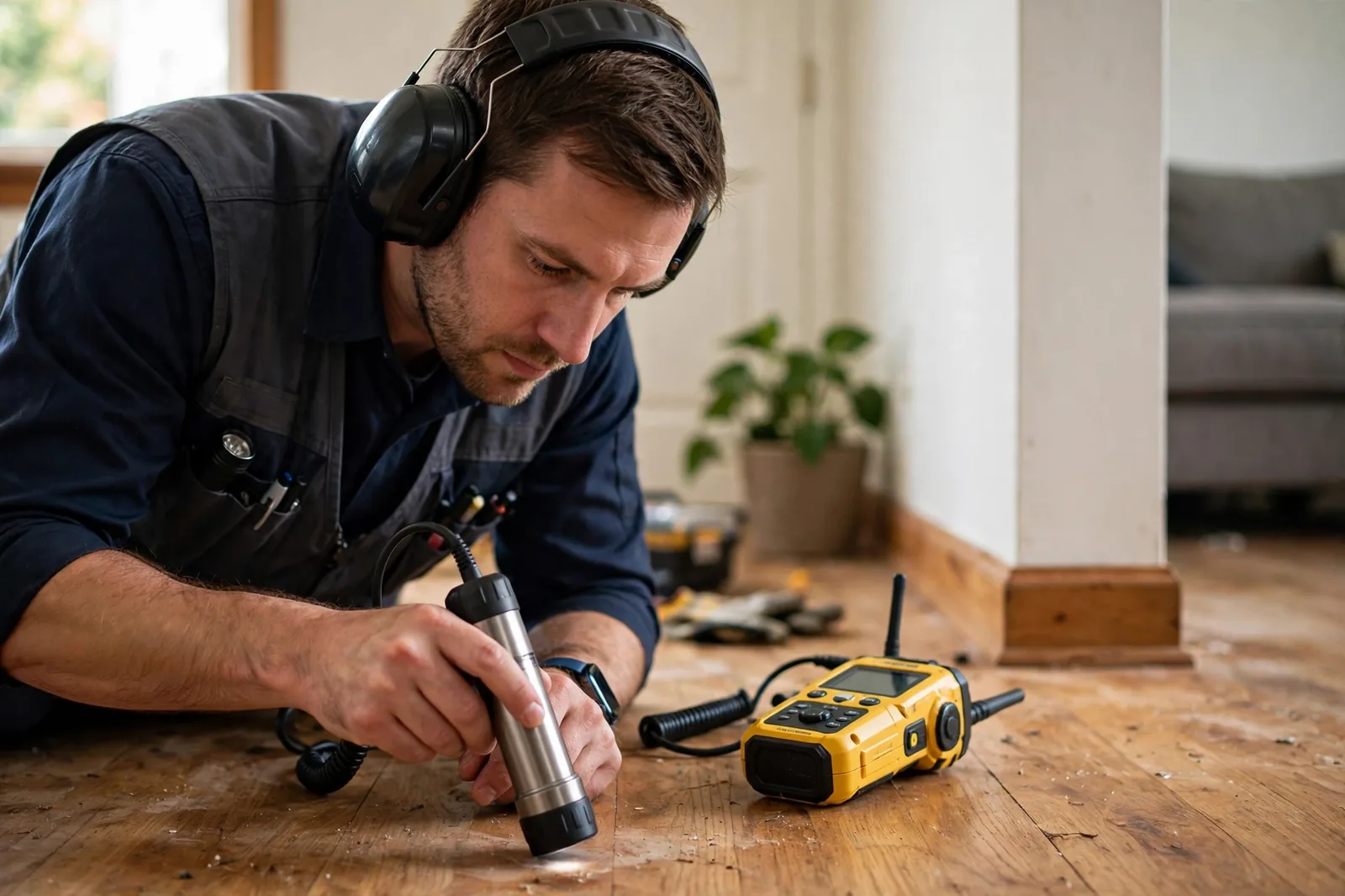
Water escaping under pressure makes sound, even inside a wall. Acoustic leak detection, listening equipment and a method used to hear water escaping from a pipe inside a wall, floor or ground, lets a trained ear follow that sound to its loudest point, which is usually close to the break itself. Floors go quiet room by room, and the search narrows to a few inches.
Listening works well once other noise stops. Appliances are switched off, the house is quiet, and sometimes the line is tested at a steady pressure so the sound stays constant. It pairs well with what the homeowner already noticed: banging from water hammer, a pressure shock wave and banging sound when flowing water stops suddenly, can mark joints that were stressed long before the freeze, as our water hammer and burst pipe risk guide explains.
Can Listening Find A Leak Under A Floor?
Often, yes. Sound travels through slab and subfloor well enough for sensitive equipment to rank one spot louder than its neighbours. The pro marks that spot, confirms it with moisture readings at the baseboards and floor surface, and only then discusses opening the floor. Under-floor breaks take longer to confirm than wall breaks, but the same evidence-first order still applies.
When Is A Small Opening Still Needed?
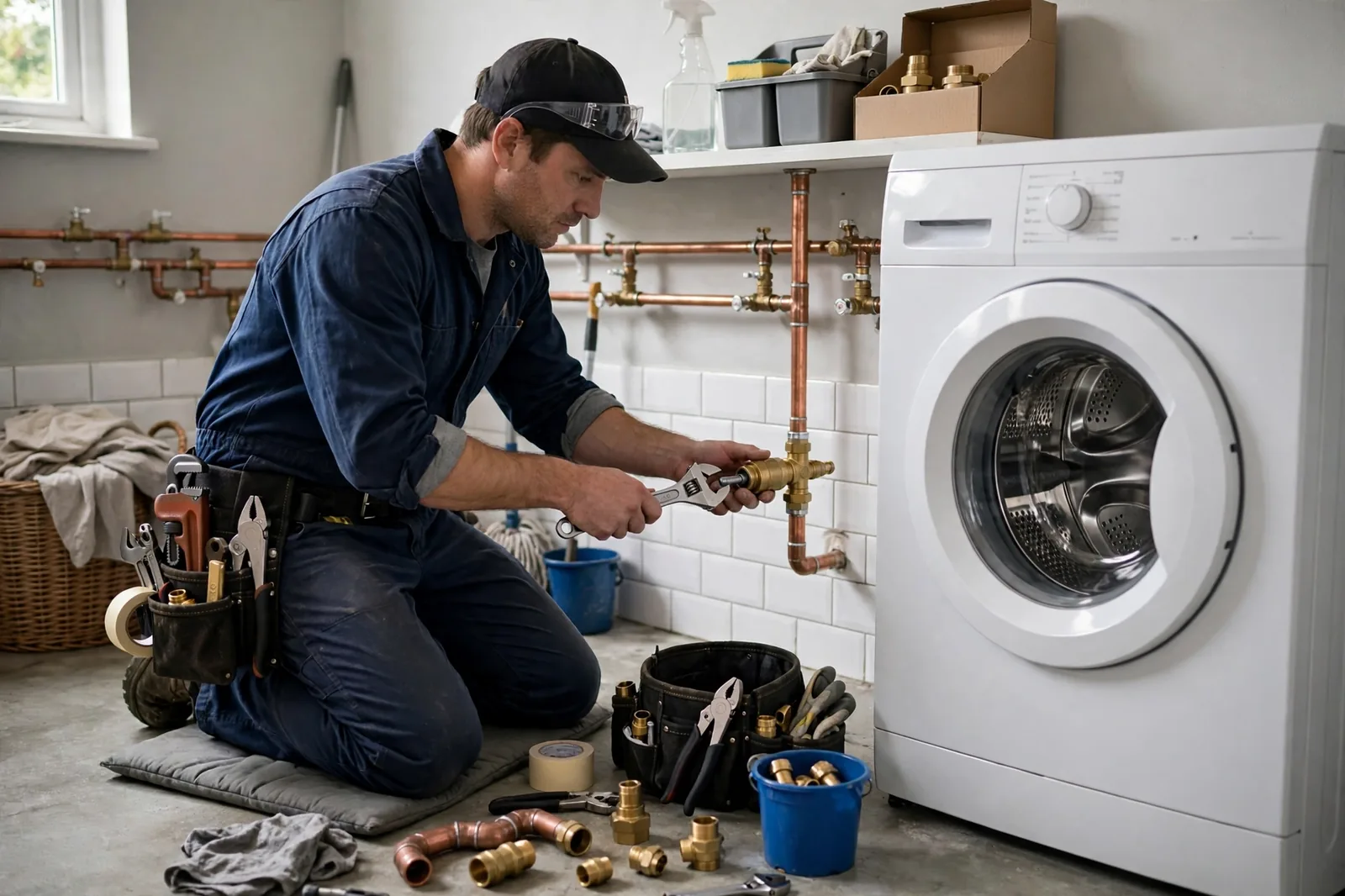
Instruments narrow the search; they do not remove the need for one careful opening. Once the evidence agrees, the pro cuts a small section, often between two studs, at the marked spot. A pipe cutter, a tool that cuts a clean section of pipe so a damaged part can be removed, and the replacement fittings need working room, but that room is measured in inches, not in whole walls.
What the opening reveals decides the repair. A clean split in straight pipe is cut out and replaced. A failed fitting, a joint, elbow or connector that cracks or separates, is swapped for a new connector, and corroded neighbours may be replaced while the wall is open. In older homes around burst pipe help in Fruitland, pipe corrosion, the gradual wearing away of a pipe wall until it fails, is often found alongside the break that brought the pro out.
What Happens After The Leak Is Found And Fixed?
Finding and fixing the pipe is only half the visit. Standing water, pooled water left sitting in a room, is removed first through water extraction, removing standing water with pumps and vacuums. Then structural drying, the planned drying of walls, floors and framing, uses an air mover, a fan that pushes air across wet surfaces, and a dehumidifier, equipment that pulls moisture from the air, until meter readings match the dry baseline recorded at the start.
That drying record matters. The EPA, the US Environmental Protection Agency, which publishes guidance on mold cleanup and drying wet materials, advises drying wet materials within 24 to 48 hours to limit mold growth, the fungi that can start growing on wet building materials within days. If you suspect a hidden break now, close the main water shutoff valve, the main valve that stops all water entering the home, and call Idaho Burst Pipe Pros on (800) 555-0100; calls are answered 24/7 and pros typically arrive in 30 to 60 minutes.
Will The Wall Be Closed The Same Day?
Usually not, and that is a good sign. A wall closed over a still-damp cavity traps moisture and invites hidden decay. Most pros leave the opening until drying readings confirm the cavity is dry, then patch. A small delay at this stage prevents a second, larger repair later, and your drying log will show exactly why the wait was needed.
Frequently Asked Questions
Straight answers, no fine print. If your question is not here, one free call gets you a local pro who can check your exact problem.
Still Have Questions? Call Free
Answered 24/7 — a local pro can arrive in 30–60 minutes.
Call Now — (800) 555-0100They narrow the search in stages: confirm the leak with the meter, isolate which branch loses water, map moisture readings across the wall, scan for cold wet patches with thermal imaging, and listen for escaping water. Each stage shrinks the suspect area, so the first cut is small and placed where all the evidence agrees. Random opening is a last resort, not a starting point, for any careful pro.
It is measured with moisture readings taken across walls, floors and framing, compared against a dry area of the same material in your home. Those numbers show how far water spread, which materials are saturated and which are still dry. Readings are repeated during drying until they return to the dry baseline. That record also supports an insurance claim, because it documents the damage with numbers rather than impressions.
Not literally. The camera reads surface temperatures, and wet material behind drywall changes the surface temperature enough to show as a patch or streak. It is excellent for tracing where water spread and for spotting a cold line's path. Because sunlight, ducts and reflections can fool it, a careful pro confirms every thermal finding with moisture readings before cutting, so the opening lands on evidence, not on a picture alone.
It is a listening method that uses sensitive equipment to hear water escaping under pressure inside a wall, floor or ground. The sound is loudest near the break, so the pro moves across the surface and marks where it peaks. The house needs to be quiet and appliances off for it to work well. It is especially useful for under-floor and under-slab breaks, where opening on a guess would be costly.
A careful search should not. Meter tests, moisture readings, thermal scans and listening are all non-destructive. One small opening is usually needed to make the repair itself, placed where the evidence points and sized for the work. That is very different from tearing out whole walls to hunt. Ask any pro to explain their readings before they cut, and to show you the readings that chose the spot.
Many wall leaks are located within the first visit, often in an hour or two of testing, because the meter, moisture map and imaging quickly agree. Under-floor breaks, very slow seeps and leaks that only run when a fixture is used can take longer. What matters more than speed is certainty: a pro who confirms the spot with two kinds of evidence saves you the cost of a wrong opening.
You can gather useful clues. Turn every tap off and watch whether the meter still moves. Feel walls for cold damp patches, look for bubbling paint or a musty smell, and note which taps lost pressure. Photograph everything with dates. Then stop: do not cut walls or floors yourself. Share your notes with the pro, because they genuinely shorten the search, and keep the shutoff closed if water is still moving.
No, but it always means water is going somewhere. A running toilet, a stuck water softener or an irrigation leak can also move the meter. That is why pros isolate branches next: closing sections one at a time shows which part of the system is losing water. If the loss sits on a house supply branch with no fixture running, a hidden break becomes the likely cause and the search focuses there.
Tell the pro exactly that, because it changes the search. Water that appears only during a shower may come from a drain, a valve behind the shower wall or a supply line under pressure only while the fixture runs. The pro will run that fixture while watching readings and listening, rather than testing a quiet house. Details like timing, which rooms are affected and when stains grow are real evidence in a hidden leak search.
Call Idaho Burst Pipe Pros on (800) 555-0100. It is a free service that connects callers with independent local pros; calls are answered 24/7 and pros typically arrive in 30 to 60 minutes. While you wait, close the main shutoff if water is moving with taps off, move belongings away from wet walls, and take dated photos. Do not open walls yourself: a measured search keeps the repair, and the final bill of work, far smaller.
Reviewed By Hamza
Lead Water Damage Restoration & Structural Drying Specialist
Hamza is an emergency water restoration specialist with deep expertise in burst pipe mitigation, freeze damage remediation, and industrial structural drying across freezing northern climates. He focuses on rapid moisture extraction, thermal imaging diagnostics, and comprehensive subfloor restoration to protect homes from mold and structural deterioration.
Updated October 27, 2026
Need Burst Pipe Help In Idaho?
One free call connects you with a local pro — answered 24/7, and a pro can arrive in 30–60 minutes.
Call Now — (800) 555-0100Free Call · Answered 24/7 · Local Pros Near You