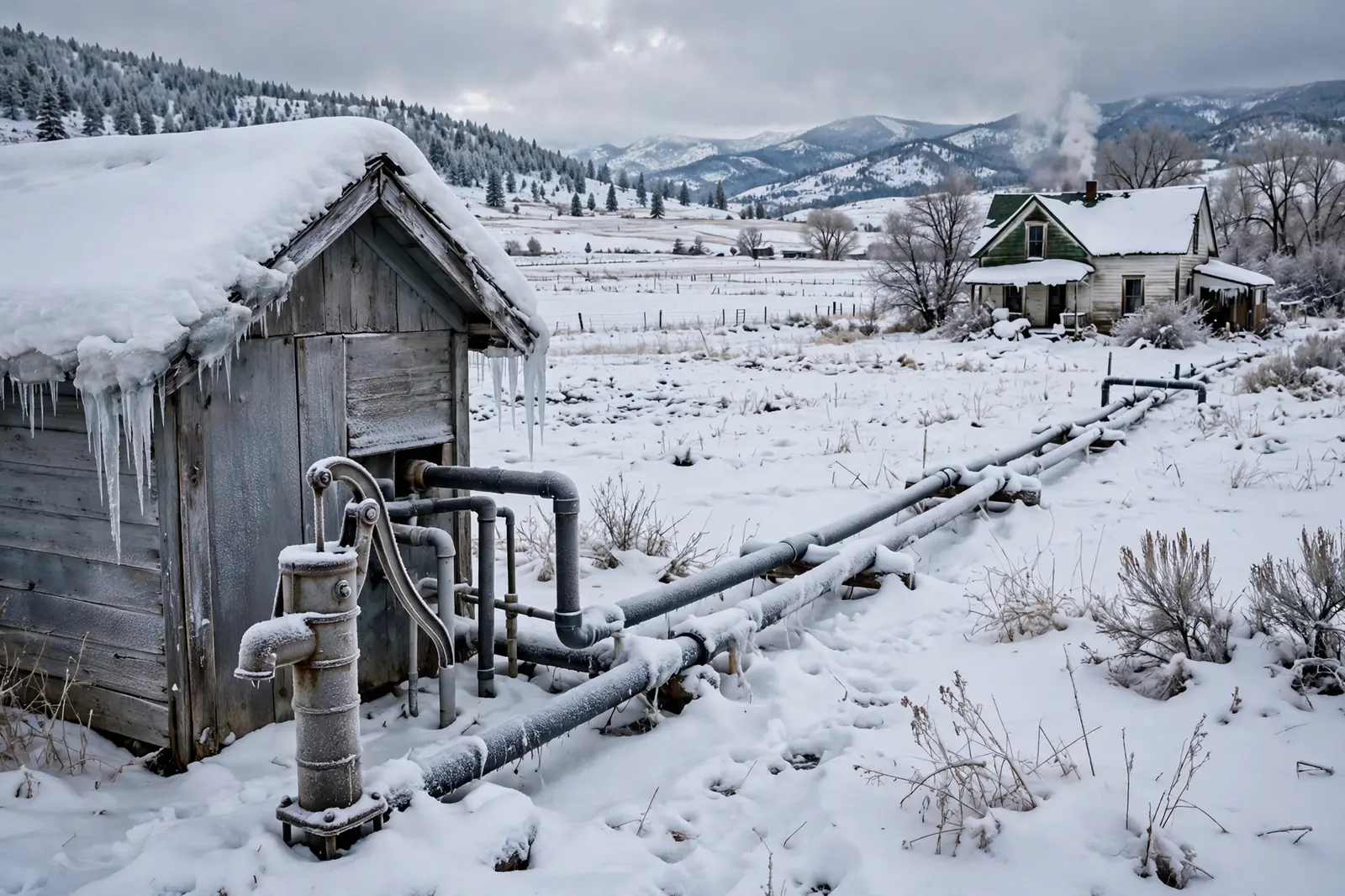
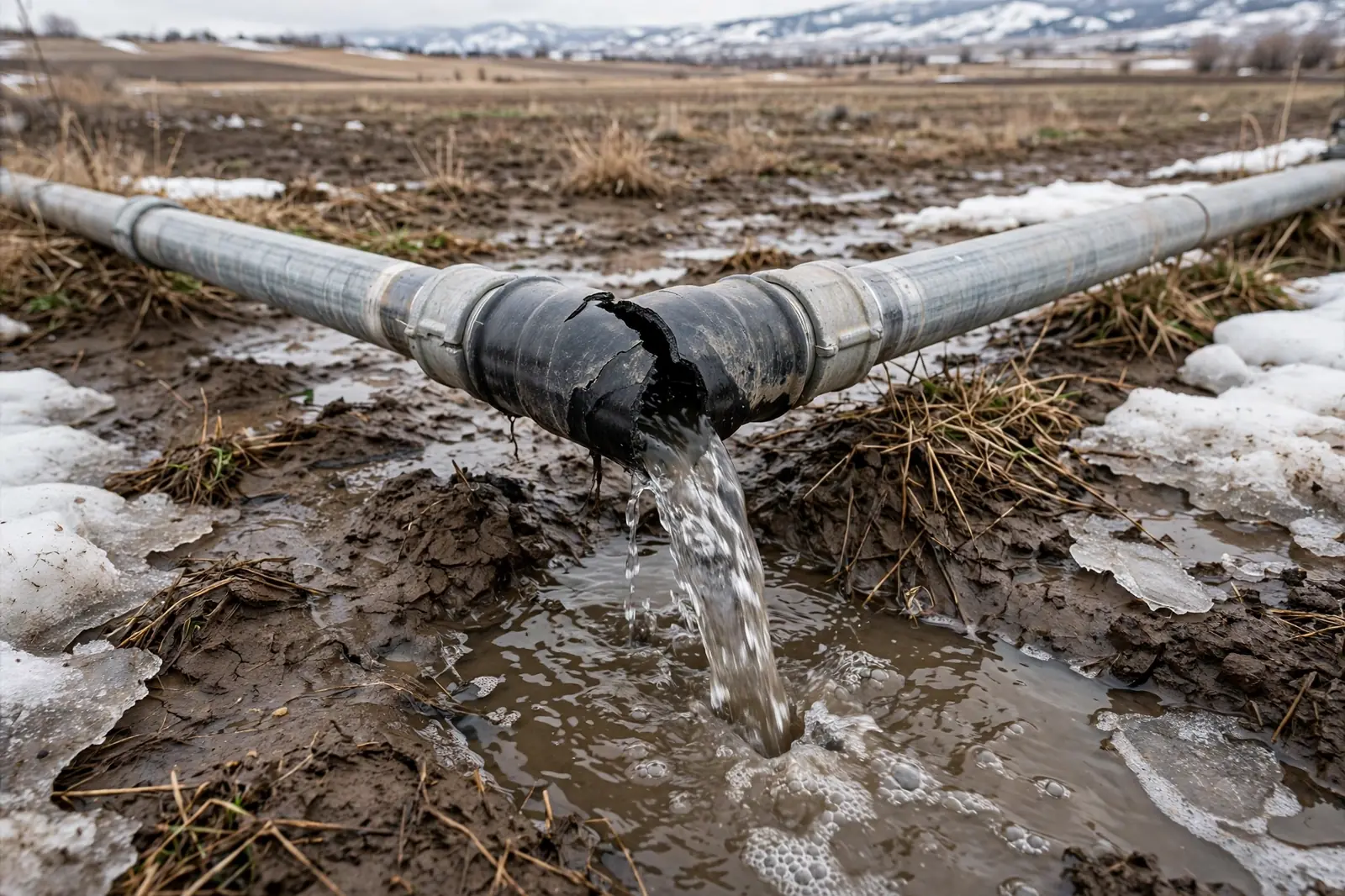
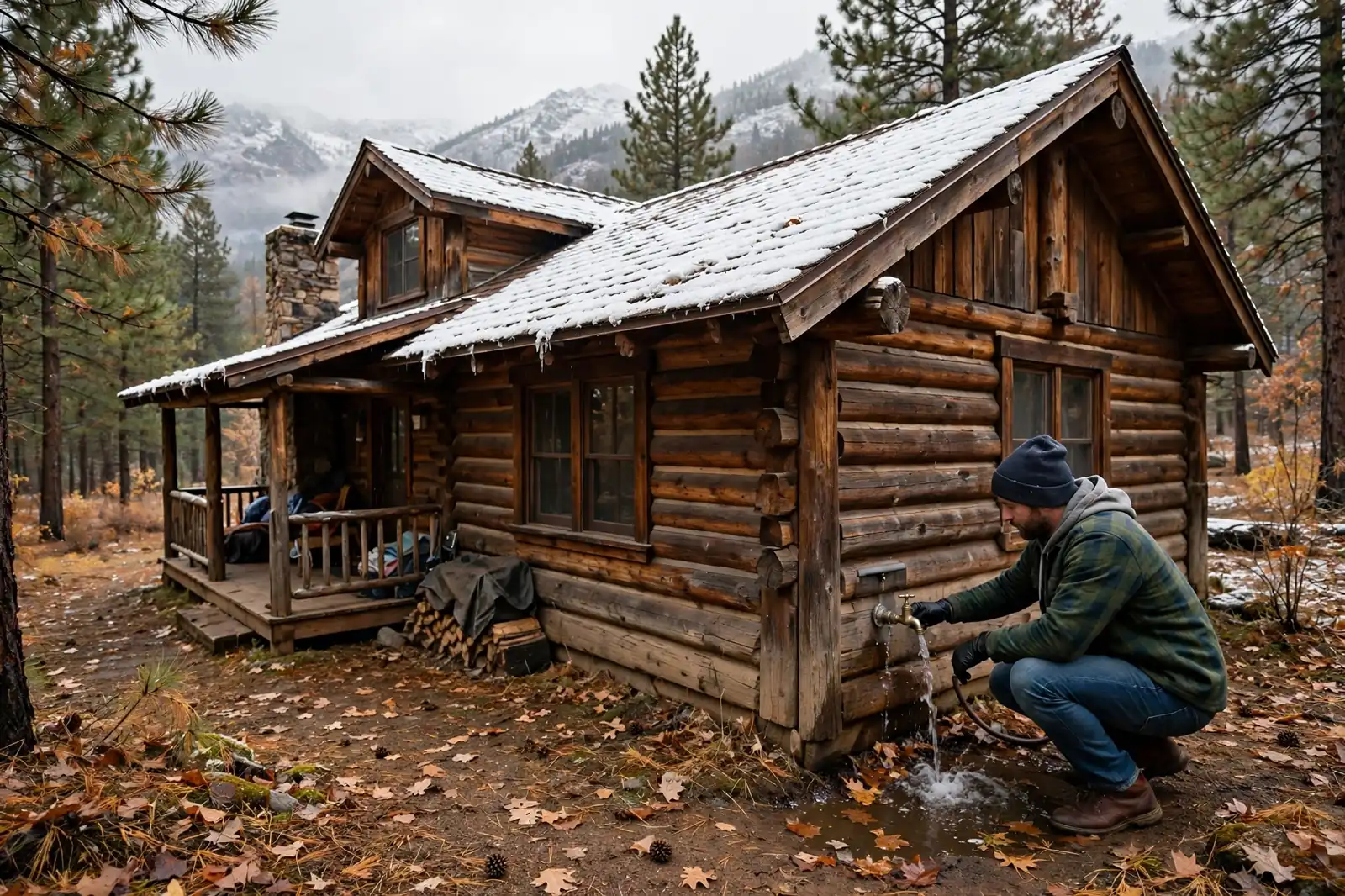
Why Manufactured Homes In Idaho Freeze And Burst More Often
Free Call · Answered 24/7 · Local Pros Near You
In This Guide
- Why Do Manufactured Homes Freeze Up More Often?
- What Makes Under Home Plumbing So Hard To Protect?
- What Role Does Skirting Play In Keeping Pipes Warm?
- How Do You Protect Pipes Under A Manufactured Home?
- What Are The First Signs Of A Freeze Under The Home?
- What Should You Do When A Pipe Bursts Under The Home?
- How Do Pros Repair And Dry An Under Home Burst?
Quick Answer
Manufactured homes freeze more often because most of their plumbing runs underneath the floor, inside a thin enclosed belly that sits close to cold outdoor air. When skirting is damaged, insulation sags, or heat tape fails, that space drops below freezing fast. The trapped water expands, splits a line, and the leak often runs unseen under the home until the floor above feels soft or damp.
Why Do Manufactured Homes Freeze Up More Often?
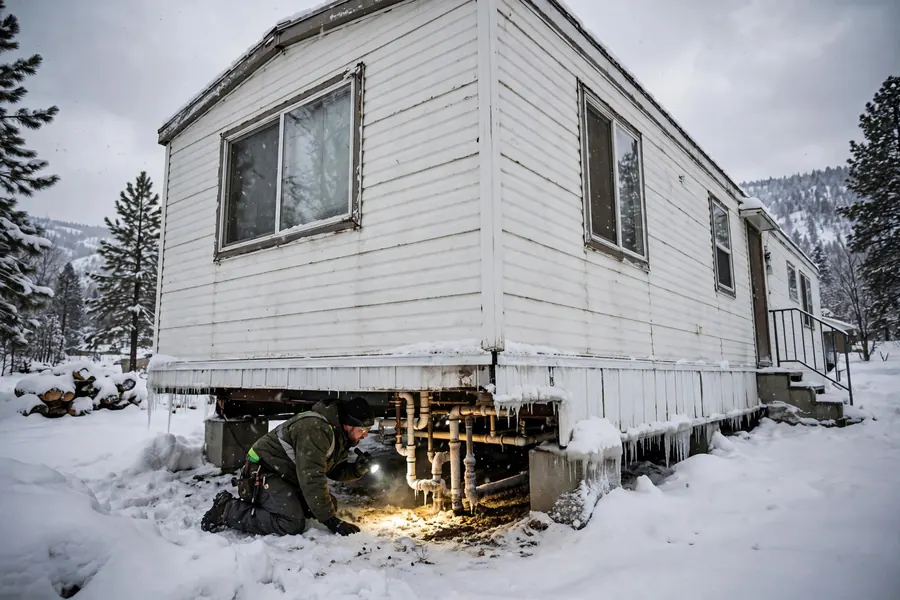
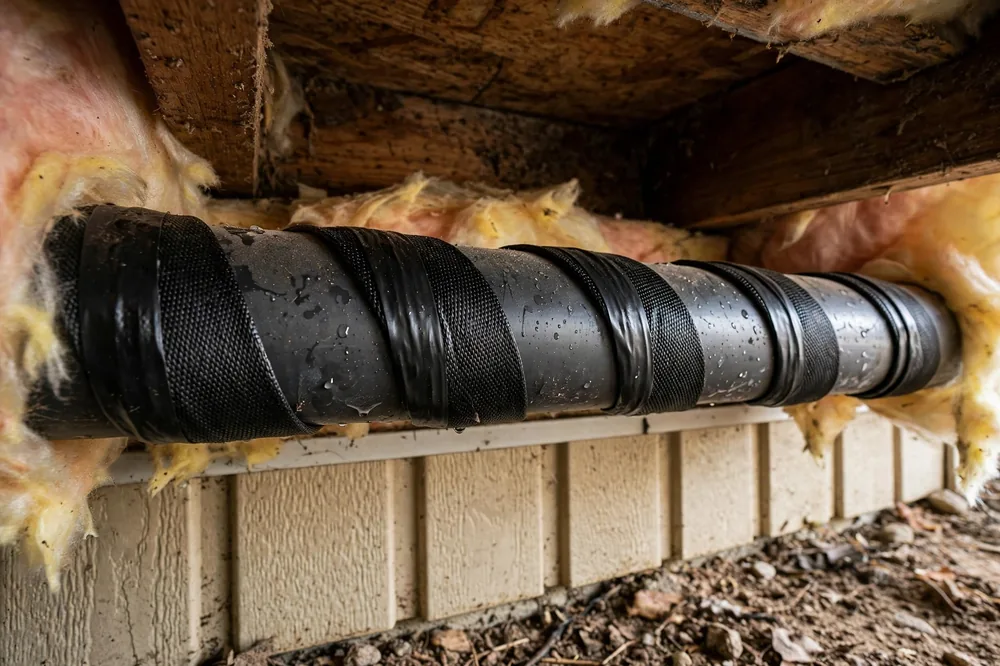
A site-built house usually keeps its pipes inside heated walls or a basement, the lowest level where the main line often enters. A manufactured home is different. Its supply lines run under the floor, above the ground, inside the manufactured home underbelly, the enclosed underside where water lines run and can freeze if skirting or insulation fails. That space gets very little warmth from the rooms above, so on a hard Idaho night it can fall below freezing while the living room still feels comfortable.
Wind makes the gap wider. Gusts push cold air through any opening at ground level and strip away the still air that was slowing heat loss. Long cold snaps in eastern Idaho give that cold time to work through the floor system. By the time a tap slows to a trickle, ice may already fill a long section of line under the home, far from any heated room.
Does The Age Of The Home Change The Risk?
Yes. Older homes often have sagging belly insulation, thinner skirting, and lines that have already survived many freeze seasons. Pipe corrosion, the gradual wearing away of a pipe wall, thins older metal lines, and a failed fitting, a connector that cracks or separates, becomes more likely each winter the plumbing is stressed and then warmed again.
What Makes Under Home Plumbing So Hard To Protect?
The lines under a manufactured home are hard to reach and hard to see. Access usually means crawling through a small skirting panel with a flashlight, often over cold ground. A slow leak can run for days in that space, soaking the ground and the belly material, before anyone inside notices a smell, a soft floor, or a change in pressure at the taps.
The layout adds risk too. Long horizontal runs sit close to the outer edges of the home, near the skirting, where cold arrives first. Lines feeding a kitchen sink cabinet or a bathroom at the far end of the home travel the greatest distance through cold air. Each joint along that run is one more place where ice expansion pressure, the force of water expanding as it freezes in a closed pipe, can open a split.
Why Does The Leak Show Up So Late?
Ice itself plugs the split it caused, so nothing leaks while the line stays frozen. Only when the thaw melts that plug does water pour out under the home. By then the break may have been sitting there for days, which is why so many under-home floods seem to start on a mild day rather than the coldest night.
Pipe Frozen Or Burst Right Now? One Free Call Connects You With A Local Pro.
Call NowWhat Role Does Skirting Play In Keeping Pipes Warm?
Skirting is the wall around the base of the home, and it does more than hide the underside. Intact skirting blocks wind, holds a pocket of still air under the floor, and slows the loss of the small amount of heat that escapes downward. One missing panel, a cracked corner, or a gap around a utility entry can turn that sheltered space into a wind tunnel on a stormy night.
Check skirting before winter and after every windstorm. Panels should sit tight, with no daylight showing at the seams and no openings where animals have pushed through. Homeowners reading about burst pipe help in Aberdeen often find the freeze started exactly at a damaged panel, where cold air poured straight onto an exposed line all night long.
Should Skirting Vents Stay Open In Winter?
Some skirting systems use vents for moisture control in warmer months, and many owners close or cover those vents for the cold season, following the skirting maker's guidance. Trapped moisture matters too, because damp belly material loses insulating value. The goal is a dry, still, enclosed space under the floor all winter.
How Do You Protect Pipes Under A Manufactured Home?
Start with insulation that actually touches the pipe. A pipe insulation sleeve, foam tubing slipped over a pipe, slows heat loss, but only where it fits snugly with no gaps at elbows and tees. Fallen or waterlogged belly insulation should be repaired so the whole floor system holds warmth again. Saturated insulation, insulation soaked by a leak, holds moisture against framing and loses its value, so old wet material needs to come out, not just dry in place.
Next, protect the coldest runs with heat tape, an electric cable applied along a pipe to keep it above freezing. It must suit the pipe material, follow its maker's spacing rules, and plug into a protected outlet. Rural owners may also want to read about well and septic lines freezing on Idaho properties, because the well line entering the home is often the coldest, shallowest run of all.
Which Pipes Should You Protect First?
Protect the main entry line first, then any run near the skirting edge, then lines feeding rooms at the far ends of the home. The feed to a hose bib, the outdoor tap for hoses, deserves attention too, since a hose left connected can freeze back into the wall and split the line inside it.
What Are The First Signs Of A Freeze Under The Home?
The earliest sign is usually at a tap: water slows, spits, or stops at one bathroom while other rooms still flow. Frost on the underside of the floor, a cold patch on the flooring above a line, and a water heater that seems to run more often can all point to trouble below. A faint hissing under the floor, heard in a quiet house, is a warning worth taking seriously.
Your water meter, the utility meter that records water use, can confirm a hidden leak. Turn every tap off and watch the meter: if the dial still moves, water is escaping somewhere. Owners in smaller communities served by burst pipe help in Almo use that same check before crawling under the home, because it tells them whether they are hunting a freeze, a leak, or both.
What Should You Do When A Pipe Bursts Under The Home?
Close the main water shutoff valve, the main valve that stops all water entering the home, before anything else. On many manufactured homes it sits near where the water service line, the buried pipe bringing water into the home, rises through the belly. Closing it stops the flow feeding the split, and every minute saved keeps standing water, pooled water left sitting in a space, from spreading under the floor.
Then turn off power to wet areas if water is near wiring, and call for help. Idaho Burst Pipe Pros is a free service connecting callers with independent local pros, with calls answered 24/7 on (800) 555-0100 and pros typically arriving in 30–60 minutes. If the need feels urgent, the emergency burst pipe hub for Idaho explains what happens next, step by step, before anyone arrives.
What Should You Avoid Doing Under The Home?
Do not use a blowtorch or open flame under the home. The American Red Cross warns that open flame can start a fire in hidden material. Do not crawl under a home with standing water near electrical lines, and do not ignore a slow drip because it seems small; a split that weeps today can open fully tonight.
How Do Pros Repair And Dry An Under Home Burst?
A pro confirms the shutoff, then locates the split, often with a thermal imaging camera, a camera that shows temperature differences on a surface, used from inside the home to find the cold, wet zone. From underneath, the damaged section is cut out with a pipe cutter and replaced, and fittings are checked along the whole run, because a freeze that split one spot often stressed its neighbours.
Drying matters as much as the pipe fix. Water extraction, removing standing water with pumps and vacuums, comes first where water pooled. Then structural drying, the planned drying of floors and framing, uses an air mover and a dehumidifier, equipment that pulls moisture from the air, while a moisture meter, a handheld device that measures moisture in wood and drywall, confirms readings are falling. A final pressure test, filling the line at a set pressure and watching for a drop, proves no second split is hiding before the belly is closed.
Material choice can lower the next risk. PEX pipe, a flexible plastic pipe, flexes slightly in a freeze, while a copper pipe is strong but rigid, and older CPVC pipe can turn brittle with age and cold. Owners comparing burst pipe help in American Falls often hear the same advice: replace the damaged run in a more forgiving material, re-insulate it, and repair the skirting gap that let the cold in.
Frequently Asked Questions
Straight answers, no fine print. If your question is not here, one free call gets you a local pro who can check your exact problem.
Still Have Questions? Call Free
Answered 24/7 — a local pro can arrive in 30–60 minutes.
Call Now — (800) 555-0100Their plumbing runs under the floor inside a thin enclosed belly, close to outdoor air and far from the home's heat. A site-built house keeps more of its plumbing inside heated walls. When skirting is damaged or belly insulation sags, cold air reaches those under-floor lines quickly, and a long cold snap can freeze a run solid while the rooms above still feel warm and comfortable.
Keep skirting intact with no gaps or missing panels, repair fallen belly insulation, and fit insulation sleeves snugly on exposed runs. Add heat cable to the coldest sections, following its maker's rules for your pipe material. Before hard freezes, disconnect hoses, and on the coldest nights let a tap drip slowly and open sink cabinet doors so warmer room air can reach the plumbing inside.
Yes. The split opens under the floor, so water pours into the belly and onto the ground instead of across a room. That makes under-home bursts easy to miss for days. The signs are indirect: a soft or cold patch of floor, a musty smell, lower pressure at the taps, or a water meter that keeps moving when every tap in the home is closed.
Skirting walls off the space under the home, blocking wind and holding a pocket of still air that slows heat loss from the floor. Intact skirting can keep the underbelly several degrees warmer than the outside air on a windy night. One missing panel or open seam near a water line removes that shelter exactly where the pipe needs it most, which is why freezes often trace back to skirting damage.
It can be, when the product suits your pipe material and is installed exactly as its maker directs, with a protected outlet and no overlapping wraps unless the instructions allow them. Old, damaged, or wrongly fitted cable is a fire risk, so inspect it each fall and replace cracked sections. Many owners have a pro fit it during a repair visit, when the lines are already exposed.
Watch for water pressure dropping at several taps, a floor area that feels cold, soft, or damp, and sounds of running water when nothing is on. Under the home, look for dripping, wet belly material, or pooled water on the ground. The meter check is decisive: with all taps off, a moving dial means water is leaving the system somewhere, even if you cannot see the split yet.
Gentle heat can be safe on an accessible, unfrozen-looking section: a heating pad, warm towels, or a hair dryer worked slowly along the pipe. Never use open flame, and stop if you see a split, bulge, or leaking joint. If the frozen run is hard to reach, the shutoff location is unclear, or water already pools under the home, calling a pro is the safer route.
Water soaks the belly insulation and floor framing, and wet material against wood invites mold growth within days. Floors can soften or sag, and the repair grows from one pipe section to drying, insulation replacement, and sometimes floor work. The longer the leak runs, the more water the meter records too. Finding it early, with the meter check and a look under the home, keeps the job far smaller.
Often, yes. Flexible plastic pipe can expand slightly as ice forms, which helps it tolerate a freeze that would split a rigid line. It is not freeze-proof, and fittings still need protection, but swapping the damaged run and insulating it well lowers the odds of a repeat. A pro can tell you whether the rest of the under-home plumbing would benefit from the same change over time.
Call as soon as you have closed the main shutoff, or immediately if you cannot find it. Idaho Burst Pipe Pros answers calls 24/7 on (800) 555-0100 and connects you with an independent local pro, typically arriving in 30–60 minutes. Tell the pro the home is manufactured and the leak is underneath; that detail helps them arrive with the access tools and materials the job usually needs.
Reviewed By Hamza
Lead Water Damage Restoration & Structural Drying Specialist
Hamza is an emergency water restoration specialist with deep expertise in burst pipe mitigation, freeze damage remediation, and industrial structural drying across freezing northern climates. He focuses on rapid moisture extraction, thermal imaging diagnostics, and comprehensive subfloor restoration to protect homes from mold and structural deterioration.
Updated October 27, 2026
Need Burst Pipe Help In Idaho?
One free call connects you with a local pro — answered 24/7, and a pro can arrive in 30–60 minutes.
Call Now — (800) 555-0100Free Call · Answered 24/7 · Local Pros Near You