Can Well And Septic Lines Freeze On Idaho Rural Properties?
Free Call · Answered 24/7 · Local Pros Near You
In This Guide
- Can A Well Line Or Septic Line Freeze In Idaho?
- Why Does A Rural Home Lose Water In A Cold Snap?
- What Are The Signs Each Line Has Frozen?
- Where Do Rural Lines Freeze Most Often?
- What Should You Do First When The Water Stops?
- How Do Pros Thaw And Check Rural Lines?
- How Do You Protect Well And Septic Lines Next Winter?
- When Does A Rural Freeze Become An Emergency?
Quick Answer
Yes. On rural Idaho properties, the pipe from a private well and the line running to a septic tank can both freeze during a long cold snap, especially where the run is shallow, exposed at the entry point, or crosses open ground. A frozen well supply usually means no water at any tap, while a frozen septic line often shows as slow drains and backups inside the home.
Can A Well Line Or Septic Line Freeze In Idaho?
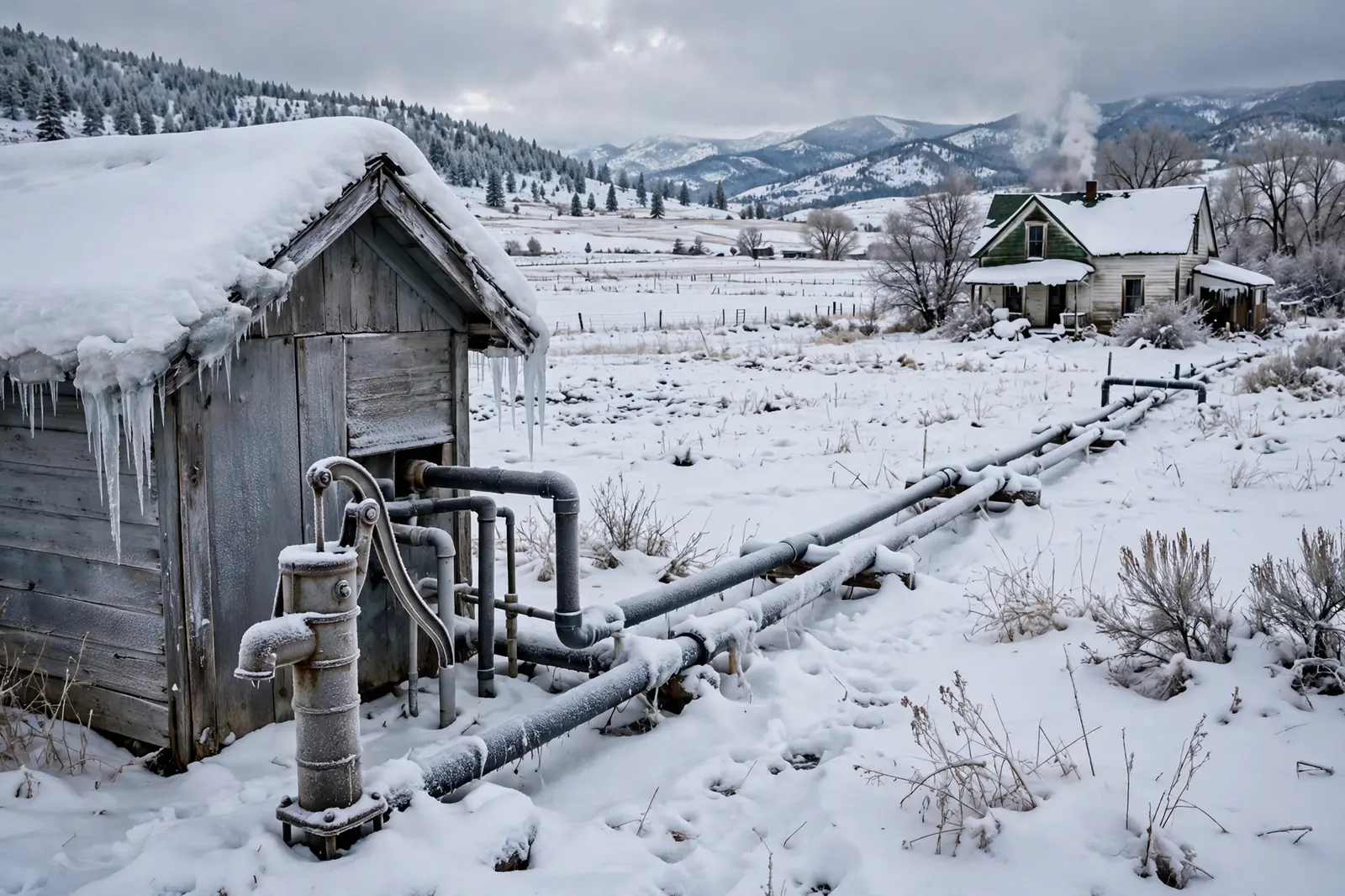
Yes, both can freeze, and rural homes face risks that town homes on a city water utility supply rarely see. The line from the well, the pipe carrying water from a private well into a home, runs buried across open yard or pasture. Where that run sits above the frost depth, crosses a ditch, or rises into the house, cold air and frozen ground can chill it until ice blocks the flow completely.
The septic side freezes differently. The line from the house to the tank carries warm wastewater in short bursts, so it often survives longer, but a slow drip, a running toilet, or a long shallow run lets a thin trickle freeze layer by layer. In eastern Idaho, where cold can settle in for weeks, even a well-built system can freeze during an unusual snap.
Which Line Freezes First On Most Properties?
The supply side usually freezes first because it holds still water under pressure all night, while the septic line only carries water when you use it. Shallow entry points, the spot where the line rises into a crawl space, and exposed fittings near the wellhead are common first freeze points on older rural systems.
Why Does A Rural Home Lose Water In A Cold Snap?
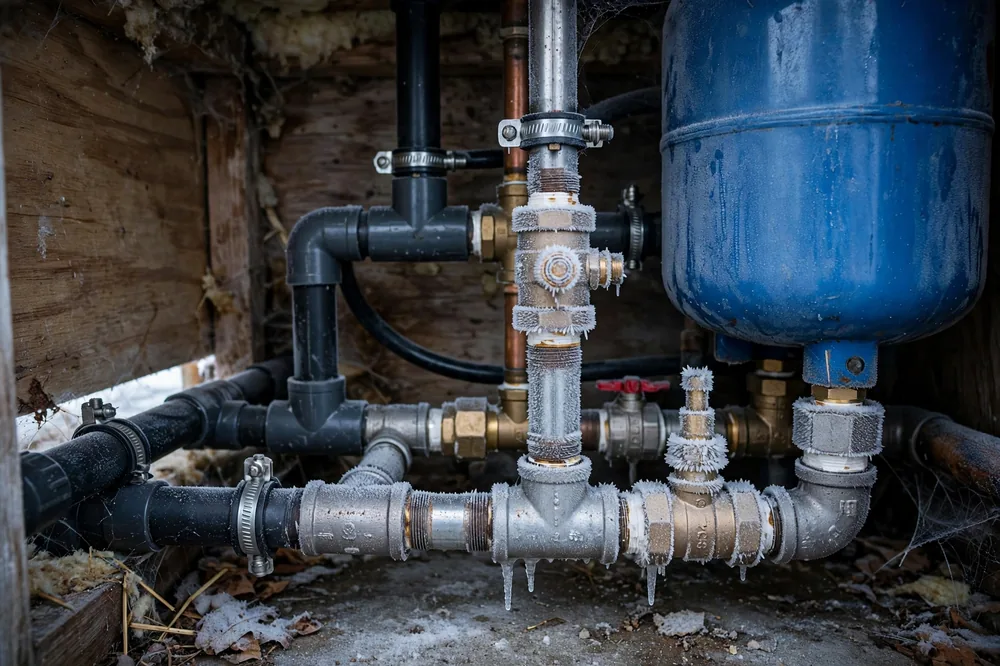
A total loss of water at every tap, with no leak visible anywhere, points away from a burst inside the house and toward the supply from the well. Ice can block the buried run, freeze at the pressure tank connections in an unheated pump house, or lock up the short exposed section where the line enters through the foundation or under the home.
Power cuts make it worse. Many rural homes lose heat and well pump power together during winter storms, and a pump house that normally stays just above freezing can drop fast. The Idaho Office of Emergency Management publishes winter storm guidance for exactly these outages. Homeowners reading about burst pipe help in Arbon often describe the same pattern: the power returns, the pump runs, and still no water comes.
How Can You Tell The Pump Is Not The Problem?
Listen for the pump cycling and check whether the pressure gauge near the tank moves when a tap opens. If the pump runs and builds pressure but no water reaches the house, the blockage likely sits in the line between the tank and the taps. If nothing runs at all, the problem may be electrical rather than frozen.
Pipe Frozen Or Burst Right Now? One Free Call Connects You With A Local Pro.
Call NowWhat Are The Signs Each Line Has Frozen?
A frozen supply line gives a simple picture: every tap runs dry or fades to a trickle at the same time, toilets stop refilling, and the water heater, the appliance that heats household water, cannot fill. There is usually no damp wall and no moving water meter, because a private well system has its own pump rather than a utility meter recording flow.
A frozen septic line looks different. Drains slow across the house, tubs and sinks gurgle, and the lowest fixtures may back up when you run water elsewhere. You still have full pressure at the taps, which separates a septic freeze from a supply freeze quickly. That distinction matters, because thawing the wrong line wastes the coldest hours of the day.
Can A Frozen Septic Line Damage The House?
Yes. Wastewater that cannot leave will find the lowest opening inside, often a floor drain, shower, or toilet in a basement, the lowest level of a home. Sewage backup is a cleanup problem as well as a plumbing one, so stop running water once backups start and treat any standing water, pooled water left sitting in a room, as contaminated.
Where Do Rural Lines Freeze Most Often?
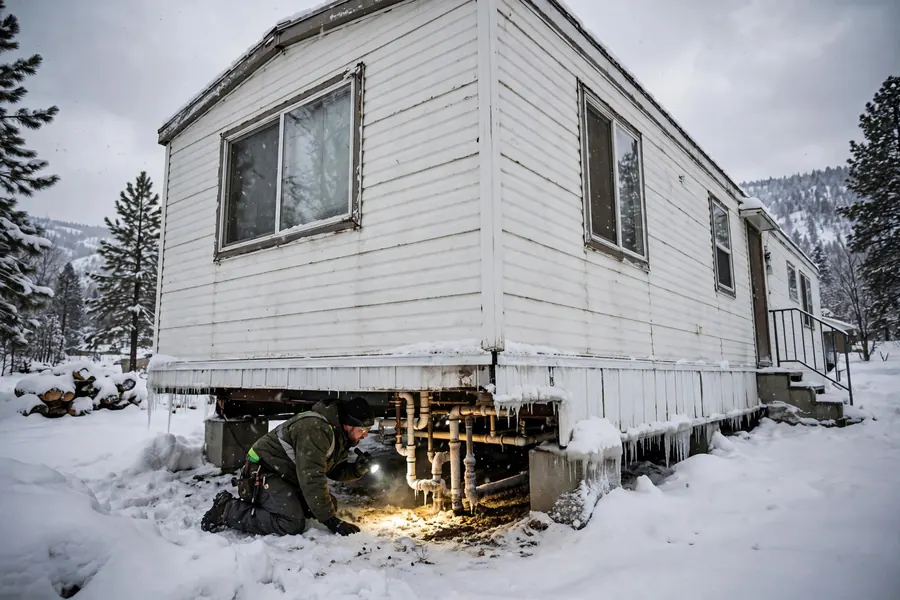
The weak points are where burial gets shallow or the line meets air. Driveway crossings are often dug shallower than the rest of the run. Lines also freeze where they pass under unheated outbuildings, rise into a manufactured home underbelly, the enclosed underside of a manufactured home, or cross a creek bank where wind strips heat from the ground.
Inside the property, the crawl space, the shallow space under a home, exposes the entry section to cold air through vents and gaps. Homes like those covered in our guide to why manufactured homes in Idaho freeze and burst more often share this pattern: the buried run survives, but the last few feet into the home freeze solid.
Does Snow Cover Help Or Hurt Buried Lines?
Deep snow usually helps, because it insulates the ground and slows frost from driving deeper. Bare, frozen ground during a windy cold snap is the harder case, since frost reaches deeper where no snow blanket sits. Plowed driveways lose that cover, which is one reason lines under drives freeze before lines under the yard.
What Should You Do First When The Water Stops?
Start by checking whether the problem is only yours. Ask a neighbour on the same system, check the pump breaker, and look for any obvious leak around the pump house before you assume a freeze. Then close the main water shutoff valve, the main valve that stops all water entering the home, if you find water escaping anywhere, because a line that froze may also have split.
Call for help early rather than waiting for a thaw that may be days away. Idaho Burst Pipe Pros is a free service connecting callers with independent local pros, with calls answered 24/7 and pros typically arriving in 30–60 minutes. Rural homeowners near burst pipe help in Arimo can call (800) 555-0100 and describe the pump, tank, and line layout while the pro travels.
What Should You Avoid Doing Around A Well Or Septic Line?
Never use a blowtorch or open flame on any line, tank fitting, or pump house pipe. The American Red Cross warns that open flame can start fires and damage pipe. Avoid digging frozen ground blindly around a septic line, since a shovel strike can crack a cold, brittle line and turn a freeze into a break.
How Do Pros Thaw And Check Rural Lines?
A pro works from the house outward, confirming the pump and pressure tank first, then warming the exposed entry section with gentle heat such as electric heating pad thawing, applying gentle electric heat to a frozen section. A thermal imaging camera, a camera that shows temperature differences on a surface, can help spot the cold section where the line enters, and listening along the run helps separate a freeze from a break.
Once flow returns, the check is not finished. A pressure test, filling a line at a set pressure and watching for a drop, shows whether ice expansion pressure, the force of water expanding as it freezes, split the line somewhere underground. If pressure holds and every tap runs clear, the system can go back into normal use with the weak points noted for protection.
What If The Line Split Underground?
A split buried section usually shows as pressure that will not hold, a pump that cycles with no tap open, or a soft, wet patch of ground along the run once thawing starts. That repair means exposing the damaged section, cutting it out with a pipe cutter, and fitting new pipe and a brass fitting, a corrosion-resistant metal connector, before the trench is closed again.
How Do You Protect Well And Septic Lines Next Winter?
Protect the entry section first. A pipe insulation sleeve, foam tubing slipped over a pipe, plus heat tape, an electric cable applied along a pipe to keep it above freezing, on the exposed rise into the home covers the stretch that freezes most often. Seal gaps where the line passes through the foundation, keep pump house heat working, and check it during every cold snap.
Fix small water waste before winter. A running toilet or dripping tap feeds the thin trickle that freezes inside a septic line, so repair those early. Owners of seasonal places should also think about outdoor lines before winter, since sprinkler and stock-water runs share the same shallow burial problem. For urgent cases anywhere in the state, the emergency burst pipe hub for Idaho explains what happens next.
Should You Let A Tap Drip On A Well System?
A slow drip at a tap far from the entry can keep water moving through the house pipes during extreme cold, and moving water freezes more slowly. It does not protect the buried run itself, though, and on a septic system a constant trickle can add to the freeze risk in the outgoing line, so use dripping briefly and deliberately.
When Does A Rural Freeze Become An Emergency?
Treat the freeze as urgent when water returns and pressure will not hold, when you hear the pump running with every tap closed, or when wastewater backs up into living space. Those signs suggest a split line, a failing pump from running dry, or a blocked septic run, and each hour of delay adds damage to floors, framing, and equipment.
Homes far from town feel the delay most. Around burst pipe help in Athol, a split line in an empty farmhouse can run through a whole thaw weekend before anyone visits. A low-cost habit helps: during hard cold, have someone walk the property, check the pump house, run each tap briefly, and confirm drains still flow before a small freeze becomes a flooded room.
Frequently Asked Questions
Straight answers, no fine print. If your question is not here, one free call gets you a local pro who can check your exact problem.
Still Have Questions? Call Free
Answered 24/7 — a local pro can arrive in 30–60 minutes.
Call Now — (800) 555-0100Yes. The buried pipe from a private well can freeze where it runs shallow, crosses under a plowed driveway, or rises into the home through cold air. Still water sitting in the line overnight gives ice time to form and seal the pipe. Once sealed, flow to every tap stops, even though the pump and pressure tank may still be working normally.
Yes. A septic line can freeze when wastewater moves through it in a thin trickle, such as from a running toilet or a dripping tap, because that slow flow freezes layer by layer inside a shallow or long run. A full, fast flow of warm water rarely freezes, which is why fixing small leaks before winter is real freeze protection for septic systems.
A rural home usually loses water because ice blocks the supply from the well, either in the buried run or at the exposed section where the line enters the house. Power cuts add to the problem by stopping pump house heat. If every tap fails at once and no leak is visible, a frozen supply line is the most likely cause.
If every tap in the house runs dry at the same time, the problem sits before the plumbing splits into branches, which points to the well supply, the pressure tank, or the entry section. If only one room or one tap fails, the freeze is more likely in a house branch line, often inside a wall or under the floor near that fixture.
Sometimes, once temperatures rise and stay above freezing, a shallow frozen section will clear by itself. The risk is waiting without knowing whether the line also split while frozen. When flow returns, watch the pressure gauge, check for wet ground along the run, and confirm the pump stops cycling. Any of those warning signs means the line needs a closer look.
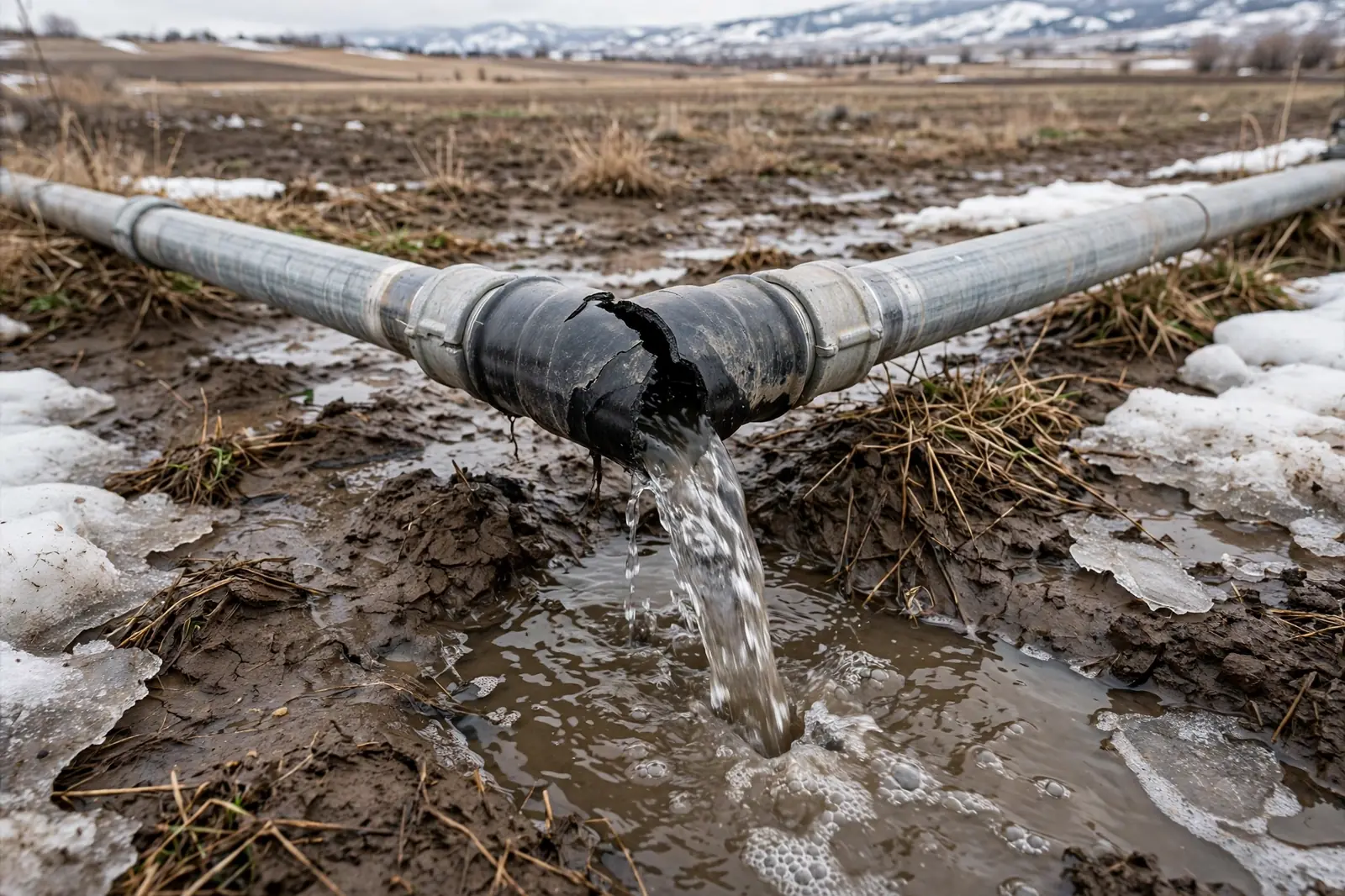
Yes. Ice forming inside a buried line creates the same pressure as ice inside a wall, and a weakened or shallow section can split below ground. The break may not show until the thaw, when water escapes into the soil instead of reaching the house. A pump that runs constantly and pressure that will not build are the classic signs.
Stop running water at once, because everything you send down a drain has nowhere to go and will rise at the lowest fixture. Keep people and pets away from backed-up water, which should be treated as contaminated. Then call for help and describe the backup clearly, since a frozen septic line needs thawing and checking, not just drain cleaning.
Dripping a tap keeps water moving through the pipes inside the house, which can delay freezing there during extreme cold. It does little for the buried run between the well and the house, because that stretch depends on burial depth and ground temperature. Use dripping as one part of a plan that also includes insulation and heat on exposed sections.
Burial depth depends on local frost depth, which varies across Idaho and runs deeper in colder, higher areas. Lines are normally placed below the depth frost is expected to reach, but older properties, added driveways, and regraded yards can leave sections shallower than intended. If a line freezes, ask the pro to note the shallow spots while the ground is open.
Call as soon as you confirm the water loss is not a simple breaker or pump switch problem, especially if pressure will not hold, the pump cycles constantly, or wastewater backs up indoors. Early help limits damage and gives the pro daylight and warmer hours to work in. Calls are answered 24/7, and pros typically arrive within 30–60 minutes.
Reviewed By Hamza
Lead Water Damage Restoration & Structural Drying Specialist
Hamza is an emergency water restoration specialist with deep expertise in burst pipe mitigation, freeze damage remediation, and industrial structural drying across freezing northern climates. He focuses on rapid moisture extraction, thermal imaging diagnostics, and comprehensive subfloor restoration to protect homes from mold and structural deterioration.
Updated October 27, 2026
Need Burst Pipe Help In Idaho?
One free call connects you with a local pro — answered 24/7, and a pro can arrive in 30–60 minutes.
Call Now — (800) 555-0100Free Call · Answered 24/7 · Local Pros Near You