How To Winterize A Vacation Cabin In Idaho
Free Call · Answered 24/7 · Local Pros Near You
In This Guide
- How Do You Winterize A Cabin That Sits Empty All Winter?
- Should Cabin Water Be Shut Off And Drained?
- How Do You Drain The Inside Plumbing Step By Step?
- What About Outside Lines And Irrigation?
- How Do Heat And Insulation Fit Into The Plan?
- What Should You Check Before You Lock Up?
- How Do You Reopen The Cabin Safely In Spring?
Quick Answer
Yes, an empty Idaho cabin should have its water shut off and its lines drained before winter. Turn off the supply at the main valve, open taps and drain points, empty the heater, protect traps with plumbing antifreeze, and disconnect outside hoses. A cabin in the Central Idaho Mountains can sit below freezing for weeks, so leaving full lines invites a split that nobody finds until spring.
How Do You Winterize A Cabin That Sits Empty All Winter?
Start with a simple order: shut the water off, drain every line, protect what cannot drain, then secure the building. Work through the cabin room by room so no tap, toilet or outside line is missed. Keep a written list for the next owner or family member who closes the cabin, because the same steps in the same order prevent most mistakes.
An empty cabin is different from a lived-in home. Nobody runs taps, nobody hears dripping, and nobody notices a stain. In lake and mountain areas, owners asking about burst pipe help in Bayview often learn that a small autumn job prevents a spring flood. Winterizing is that job, done while the weather is still mild.
What Should You Do First?
Find the main water shutoff valve, the main valve that stops all water entering the home, and test it before you need it. A valve that will not close fully should be repaired during the visit, not discovered in a snowstorm. Tag the valve after closing it so anyone entering mid-winter knows the system is drained and should stay off.
Should Cabin Water Be Shut Off And Drained?
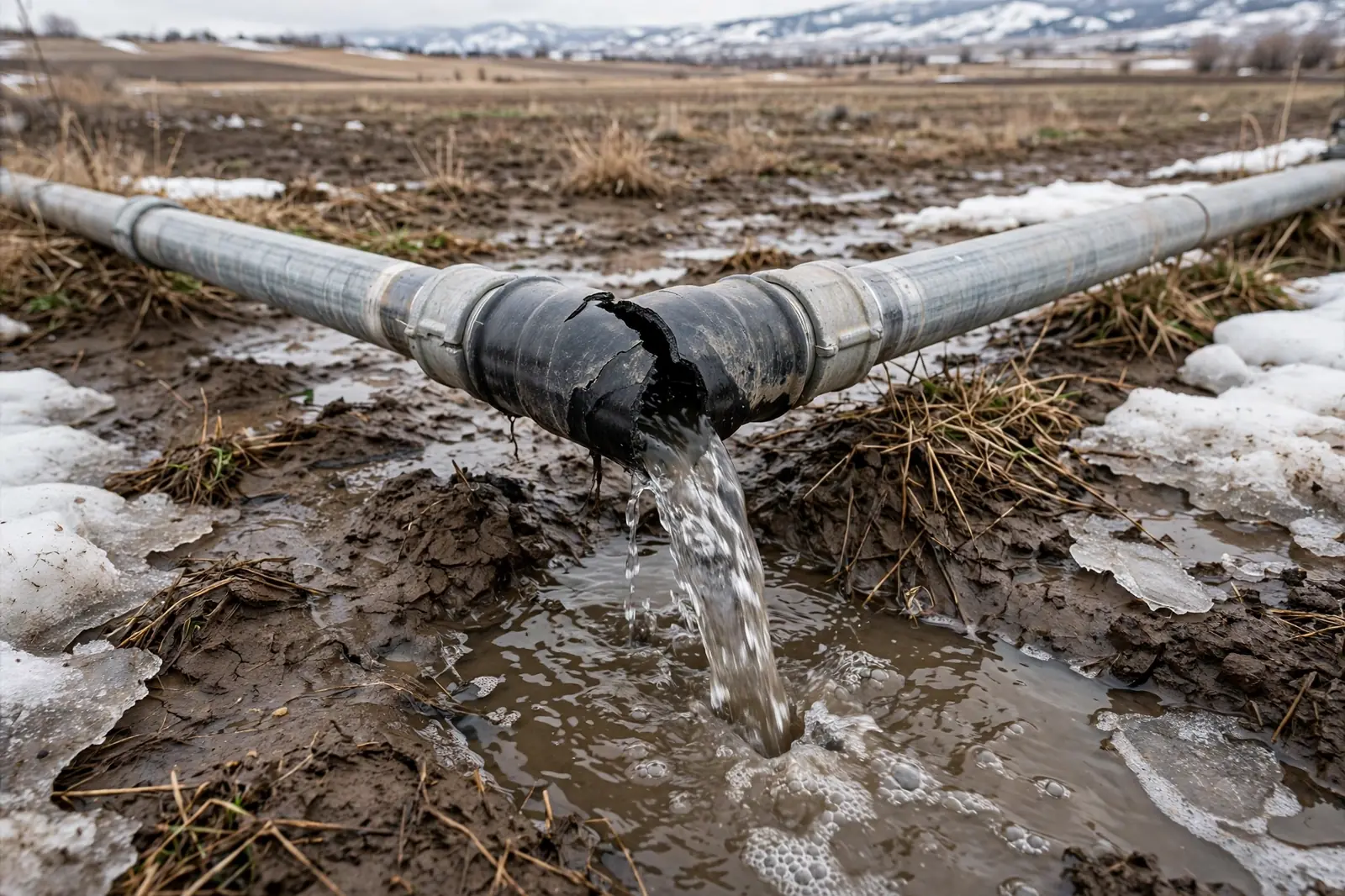
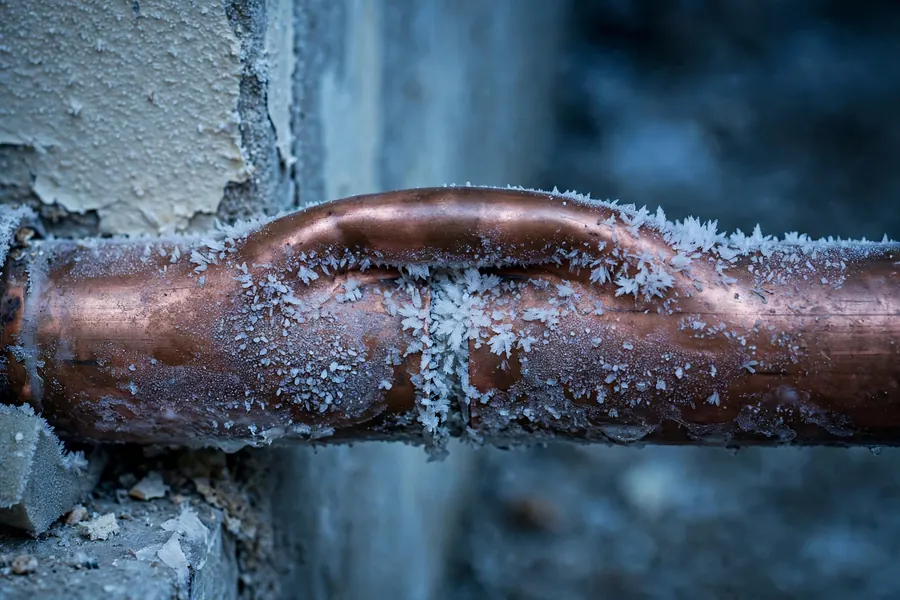
Yes. Shutting off and draining is the safest choice for a cabin that will sit empty through hard freezes. Water left in a line can freeze, build ice expansion pressure, the force created when water expands as it freezes inside a closed pipe, and split the wall. Draining removes most of that water, so even cold air in the walls has far less to work on.
If the cabin uses a private supply, the well line, the pipe carrying water from a private well into a home, also needs attention where it is shallow or exposed. Follow the pump maker's shutdown steps, switch off its power if the maker advises it, and note what you did. Clear notes make spring start-up calmer and safer for everyone.
What If Some Water Stays In The Line?
Low spots can hold pockets of water even after draining. Opening the lowest drain point and each tap helps air replace water. A pro may blow lines clear with gentle air pressure where the layout traps water. Do not force high pressure into old lines, because weak joints can fail under the strain.
Pipe Frozen Or Burst Right Now? One Free Call Connects You With A Local Pro.
Call NowHow Do You Drain The Inside Plumbing Step By Step?
With the supply off, open the highest tap in the cabin, then the lowest, and work through every sink, tub and shower. Flush each toilet, hold the handle to empty the tank, and sponge out remaining water. Leave taps open over winter so any small amount of trapped water has room to move instead of pressing on a closed line.
Do not forget appliances. Drain the water heater, the appliance that heats household water, through its drain valve once it is cool and its power or gas is off. Clear supply hoses to washers and the fridge line as well. Homeowners comparing notes on signs a pipe is about to freeze often find these small side lines are the ones people forget.
How Do You Protect Traps And Toilets?
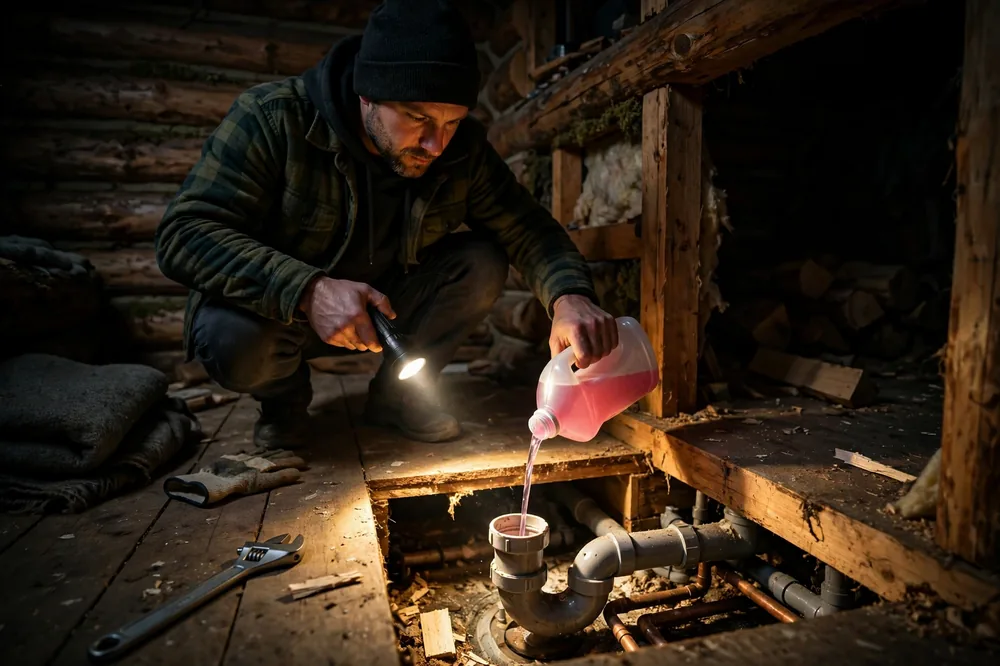
Traps under sinks and tubs cannot drain fully, and toilet bowls hold water by design. Adding plumbing antifreeze made for drains to each trap and bowl keeps that water from freezing and cracking porcelain or plastic. Never use automotive antifreeze in drains. It is toxic and not made for home plumbing or septic systems.
What About Outside Lines And Irrigation?
Disconnect every hose from a hose bib, the outdoor tap for hoses, drain the bib if it has a shutoff inside, and cover it. A hose left attached traps water in the short section inside the wall, which is a classic split point. Walk the yard and note sprinkler zones, outbuilding taps and any line feeding a dock or shop.
An irrigation line, buried sprinkler piping that must be blown out with air before winter, needs a proper blowout so trapped water does not split it underground. That related job is covered in missed irrigation blowout and spring bursts. Owners near the Snake River plain who arrange burst pipe help in Basalt hear the same advice for barns and outbuildings: every separate building needs its own shutoff and drain-down.
Should Outbuildings Be Winterized Too?
Yes, if they have water. A shop sink, barn line or guest-house bathroom freezes just as fast as the main cabin, often faster because the building gets less heat. Shut each building off at its own valve where one exists, drain it the same way, and add it to your written closing list.
How Do Heat And Insulation Fit Into The Plan?
Some owners keep a low heat setting instead of draining, but heat alone is a gamble if power fails during a storm. If you keep heat on, set it well above freezing, open cabinet doors on cold walls, and ask a neighbour or caretaker to check after outages. A power cut plus full lines is how many empty cabins flood.
Add protection where lines stay. A pipe insulation sleeve, foam tubing slipped over a pipe, slows heat loss in a crawl space, the shallow space under a home. Heat tape, an electric cable applied along a pipe to keep it above freezing, can guard a short exposed run, fitted exactly as its maker directs. Seal gaps where cold air pours in around pipes and vents.
Which Lines Need Protection Most?
Lines in an exterior wall, an outside-facing wall whose runs sit closest to outdoor cold, and lines above a ceiling freeze first. A kitchen sink cabinet, the cabinet under a kitchen sink, on an outside wall is a common weak spot. Protect those runs first, then lines in garages, porches and under-floor areas with little warmth.
What Should You Check Before You Lock Up?
Walk the cabin once more with your list. Confirm the supply is off, taps are open, the heater is drained or set as planned, traps hold antifreeze, hoses are stored, and windows and doors are shut. Take dated photos of the meter area, the valve and each room. Photos help a caretaker, an insurer or a pro understand the setup later.
Check the water meter, the utility meter that records water use, if the cabin has one, and write down the reading. If a caretaker visits mid-winter, a changed reading with everything off is an early warning. Cabins served through burst pipe help in Blackfoot and similar cold towns benefit from one mid-winter check after the deepest cold, not just a spring visit.
What If You Find A Leak While Closing?
Do not leave a weeping joint or a damp patch for spring. A small leak in autumn can become standing water, pooled water left sitting in a room, by the time anyone returns. Shut the supply off, dry what you can, and arrange a repair before the freeze. Small fixes are simpler while roads and parts are easy to reach.
How Do You Reopen The Cabin Safely In Spring?
Reopen in reverse order, slowly. Close the drain points and taps you opened, then turn the supply on a little at a time while a second person walks the cabin listening and looking. Check under sinks, around toilets, at the heater and along under-floor runs before restoring full pressure. A split that happened anyway will show itself in these first minutes.
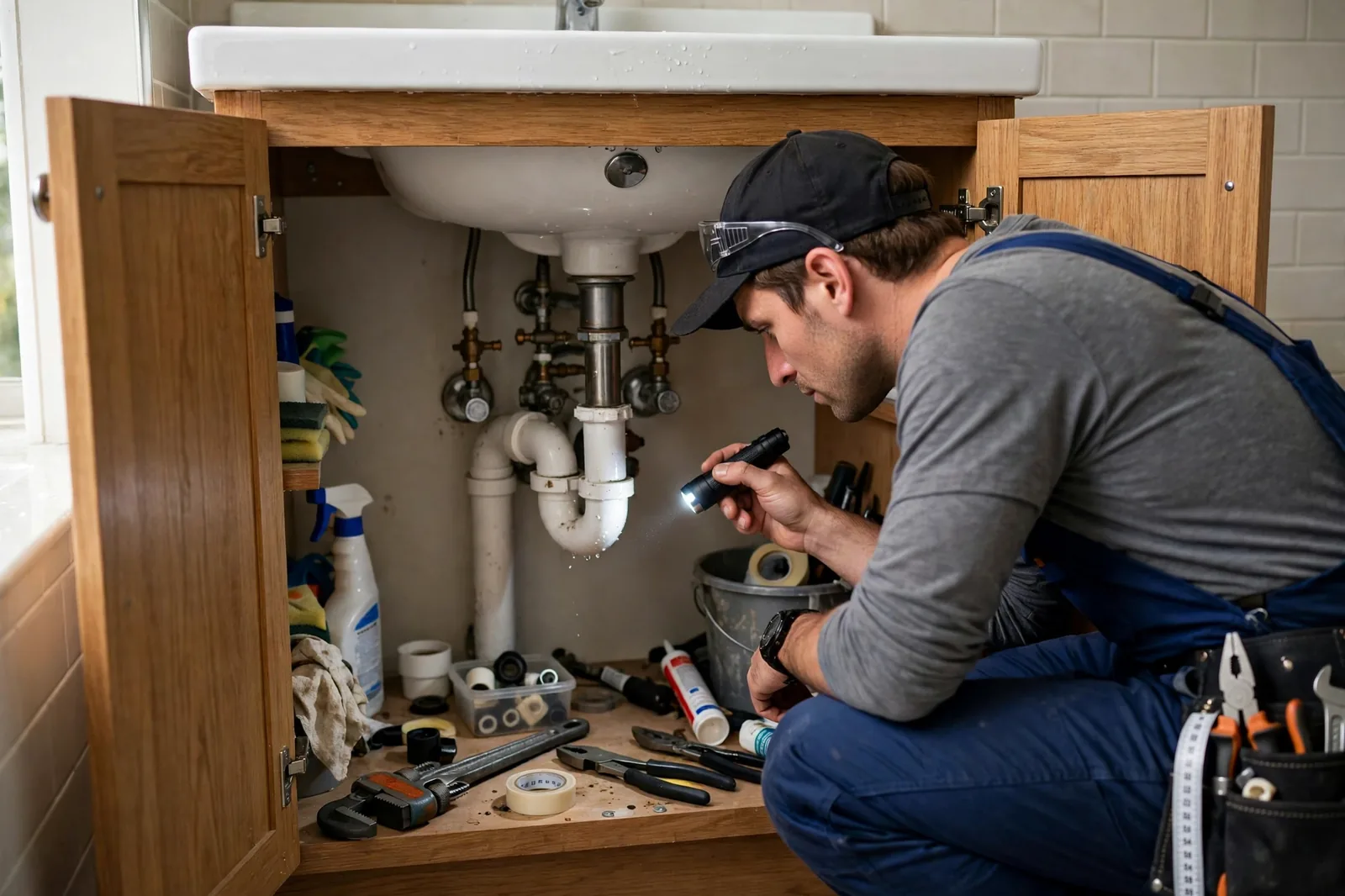
If you find a leak, close the supply again at once. For a burst that has already soaked floors or walls, the emergency burst pipe help in Idaho page explains the first steps, and Idaho Burst Pipe Pros is a free service connecting callers with independent local pros, with calls answered 24/7 on (800) 555-0100. Pros typically arrive in 30 to 60 minutes, and early drying limits mold growth, fungi that can start growing on wet materials within days.
Frequently Asked Questions
Straight answers, no fine print. If your question is not here, one free call gets you a local pro who can check your exact problem.
Still Have Questions? Call Free
Answered 24/7 — a local pro can arrive in 30–60 minutes.
Call Now — (800) 555-0100Shut off the supply at the main valve, drain every line by opening taps from highest to lowest, flush and sponge out toilets, drain the heater, and add plumbing antifreeze to traps and bowls. Disconnect hoses, blow out sprinkler lines, and leave taps open. Finish with a room-by-room check and dated photos, so the cabin can sit empty without full lines waiting to freeze.
Yes, for a cabin that will sit empty through hard freezes. Draining removes most of the water that could freeze and split a line, so it is safer than relying on heat alone, which fails if power goes out. If you keep heat on instead, still shut off water to unused parts, open cabinets on cold walls, and arrange checks after storms and outages.
Do it before the first hard freeze, while daytime temperatures are still above freezing and roads are clear. In high country that can mean early autumn rather than late. Working in mild weather lets you test the main valve, drain lines fully, and fix small leaks you find along the way, instead of rushing the job in snow with frozen ground and short daylight.
Only in the places water cannot drain: sink and tub traps, toilet bowls and tanks that still hold water, and floor drains. Use antifreeze made for plumbing, never automotive antifreeze, which is toxic. Supply lines themselves should be drained, not filled. A little in each trap also keeps sewer gases from rising through a dry trap during the long empty months.
Switch off the pump power if the maker advises it, shut the supply valve, then drain the pressure tank and lines through the lowest point. Protect any shallow or exposed run between the well and the cabin. Write down each step you took, including breaker and valve positions, so spring start-up follows the same list in reverse and nothing is pressurised before its drain is closed.
You can, but it carries risk. A furnace fault or a long power cut during a cold snap can drop the cabin below freezing within hours, and full lines can then split with nobody there to notice. Many owners do both: keep low heat, drain what they can, and arrange a caretaker check after outages. That layered approach costs little and removes the single point of failure.
Water can run for weeks, soaking floors, walls and insulation, and feeding mould by the time anyone returns. The repair then involves the pipe, the damaged materials and a long drying job. That scale of damage is why draining matters so much for second homes. A mid-winter caretaker visit after severe cold is cheap insurance against the worst version of this outcome.
Yes. Buried sprinkler piping holds water in low spots that do not drain on their own, and that trapped water can split the line underground. A proper blowout uses controlled air pressure zone by zone until lines run clear. Do it in autumn along with the house drain-down, and mark the controller and valves as off so nobody refills the system by mistake.
Close every drain and tap you opened, then turn the supply on slowly while someone walks the cabin checking under sinks, around toilets and at the heater. Bring pressure up in stages and listen for hissing or dripping. If a leak appears, shut the supply off again right away. Only restore full pressure, power and appliances once every run has stayed dry under pressure.
If the main valve will not close, a line will not drain, or you found a leak while closing, call for help before the freeze rather than leaving it. Idaho Burst Pipe Pros is a free service connecting callers with independent local pros on (800) 555-0100, with calls answered 24/7. A pro can test valves, clear trapped low spots and repair weak joints in the same visit.
Reviewed By Hamza
Lead Water Damage Restoration & Structural Drying Specialist
Hamza is an emergency water restoration specialist with deep expertise in burst pipe mitigation, freeze damage remediation, and industrial structural drying across freezing northern climates. He focuses on rapid moisture extraction, thermal imaging diagnostics, and comprehensive subfloor restoration to protect homes from mold and structural deterioration.
Updated October 27, 2026
Need Burst Pipe Help In Idaho?
One free call connects you with a local pro — answered 24/7, and a pro can arrive in 30–60 minutes.
Call Now — (800) 555-0100Free Call · Answered 24/7 · Local Pros Near You