Can A Clog Really Cause A Pipe To Burst?
Free Call · Answered 24/7 · Local Pros Near You
In This Guide
- Can A Clog Cause A Pipe To Burst?
- Why Do Drain Clogs Usually Cause Backups, Not Bursts?
- Can A Slow Drain Lead To A Pipe Failure?
- What Blockages Put The Most Stress On A Pipe?
- When Do Clog And Pressure Become A Real Burst Risk?
- What Should You Do About A Clog On An Older Line?
- How Do Pros Clear A Clog Without Damaging The Pipe?
Quick Answer
Rarely on its own, and almost never in a healthy pipe. Most clogs sit in drain lines, which carry water by gravity at low pressure, so a blockage usually causes a slow drain or a backup long before it splits a pipe. The danger appears when pressure builds behind a clog in a line already weakened by corrosion, roots, age or freezing, and then a weak joint can leak or give way.
Can A Clog Cause A Pipe To Burst?
The honest answer is: a clog alone seldom bursts a pipe, but it can finish off a weak one. Clog pressure buildup, pressure rising behind a blockage in a line, is real, yet in a drain it stays modest because water can back up toward open fixtures and vents. A sound pipe handles that easily.
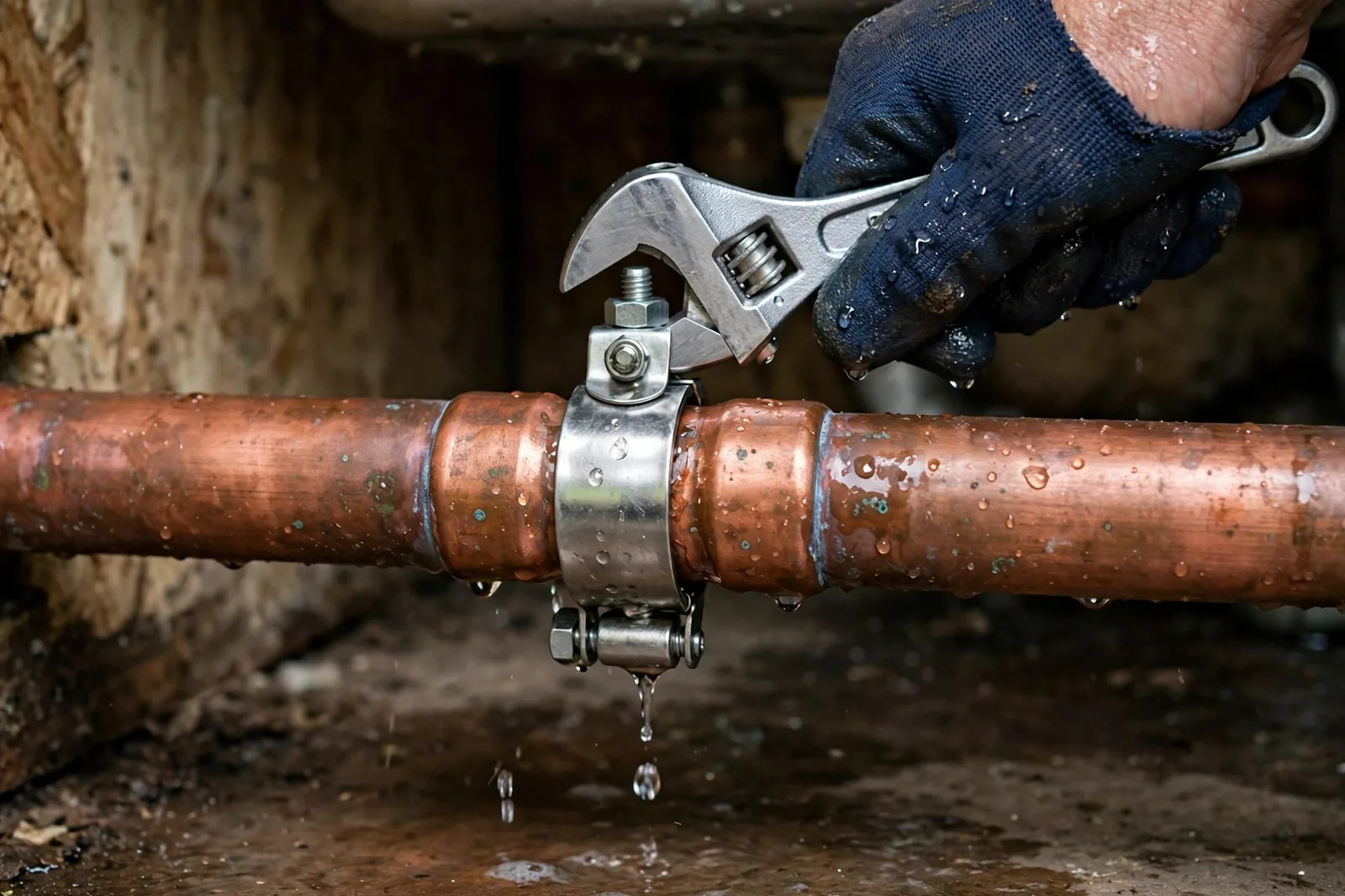
Problems start when the pipe is no longer sound. Pipe corrosion, the gradual wearing away of a pipe wall, a cracked joint, or roots forcing a section apart all lower the strength of the line. Then repeated backups, pumping and surging against the blockage can push water through the weak point, and the leak gets blamed on the clog that merely exposed it.
Can A Clog Burst A Pressurised Supply Pipe?
A clog inside a supply line is uncommon because supply water is filtered and the pipes are narrower and smoother, but scale or a failing water heater can shed debris that blocks a fixture or valve. That kind of blockage cuts flow rather than raising pressure to bursting. Supply bursts almost always trace to pressure, freezing or a weakened wall, not to a lump of waste.
Why Do Drain Clogs Usually Cause Backups, Not Bursts?
Drain and waste lines are built for gravity flow. A PVC pipe, a rigid white plastic pipe used mainly for drain, waste and irrigation lines, in a drain system is rarely full and pressurised the way a supply line is. When waste meets a blockage, it slows, pools and rises back toward the lowest open fixture, which is why a clogged main drain often shows first in a tub or floor drain.
That backup is unpleasant, but it is also a pressure release. For pressure to split a drain pipe, the line would need to be sealed and pumped, which normal fixtures do not do. Exceptions involve pumps, long vertical drops, or a blockage combined with a failed fitting, a connector that cracked or separated, that was already leaking slowly underground.
Soil and waste conditions underground matter too. A buried drain that has begun to crack or separate at a joint may still pass water for months while leaking a little into the surrounding soil with every use. The first clear symptom can be the clog that forms at that damaged joint, where edges catch waste.
Pipe Frozen Or Burst Right Now? One Free Call Connects You With A Local Pro.
Call NowCan A Slow Drain Lead To A Pipe Failure?
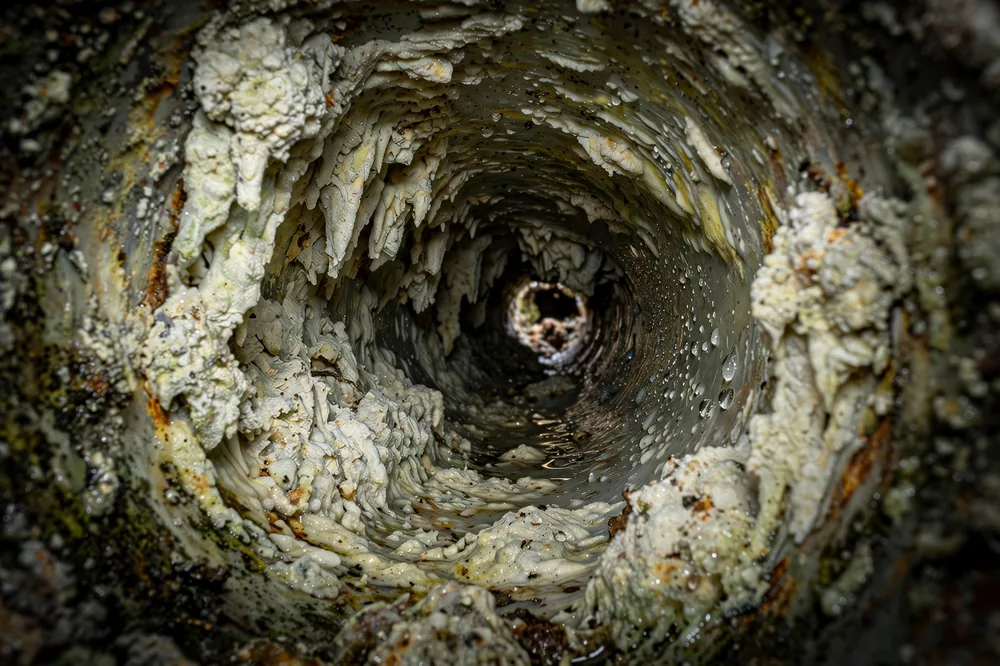
Yes, over time. A slow drain tells you the inside of the line is narrowing or holding water where it should run clear. Galvanized steel pipe, an older zinc-coated steel pipe that corrodes from inside, can narrow to a fraction of its width, so waste catches, water sits, and corrosion speeds up in the wet, rough section.
A partly blocked line in a crawl space, the shallow space under a home, also holds water that can freeze. Standing water in a sagging or clogged section is exposed to cold far longer than moving water, and a frozen, full section is where clog and freeze risks meet. Slow drainage in fall deserves attention before winter turns it into a split.
What Does A Recurring Clog Really Mean?
A clog that returns within months at the same spot usually means the pipe itself has a problem: a sag holding water, a joint lip catching waste, roots regrowing through a crack, or scale narrowing the wall. Repeated clearing treats the symptom. A camera inspection finds the cause, and fixing that section is what finally stops the cycle of slow drains.
What Blockages Put The Most Stress On A Pipe?
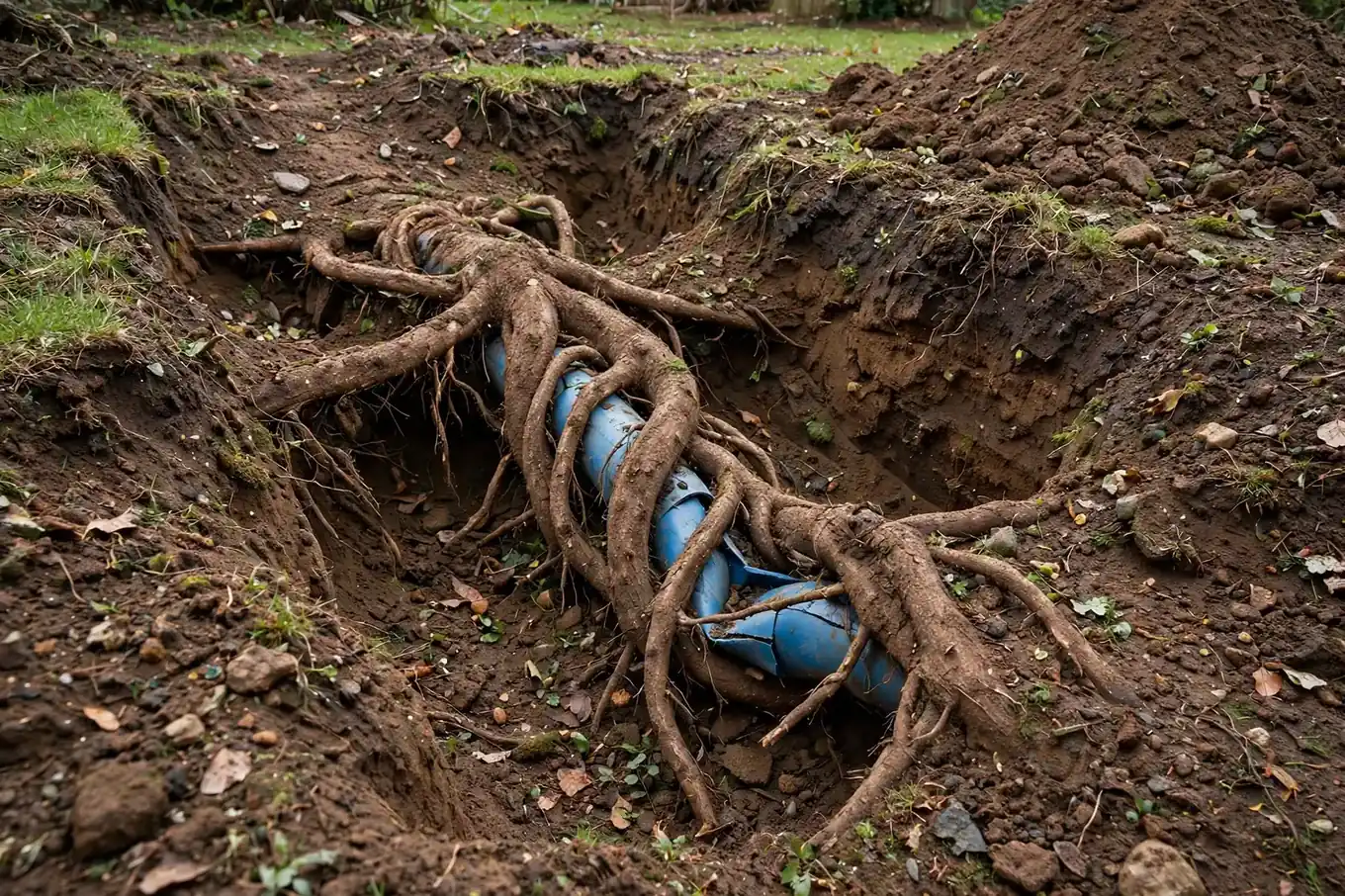
Tree root intrusion, roots growing toward moisture that can shift, crush or enter buried lines, is the most destructive. Roots enter through a tiny joint gap, grow into a mat that traps waste, and keep expanding until they crack or offset the pipe itself. The clog and the pipe damage are the same event, as explained in tree roots and shifting soil damage to underground lines.
Grease is the slower version indoors. It coats the wall, narrows the line and traps solids until flow nearly stops. Shifting soil, ground movement from settling, frost or moisture changes, can also sag a buried line into a permanent low spot where waste collects. In each case the blockage signals a line condition worth fixing, not just clearing.
When Do Clog And Pressure Become A Real Burst Risk?
The risk rises when several stresses combine. High water pressure, supply pressure above what home plumbing is designed for, and water hammer, a pressure shock wave when flowing water stops suddenly, strain supply joints that share walls with drain work. A house can have a harmless drain clog and, separately, a supply line close to failing; fixing only the clog leaves the real risk untouched.
Freezing is the strongest partner. Ice expansion pressure, the force of water expanding as it freezes in a closed pipe, can split a clogged, water-filled section that a free-running line would have survived. That combination, a slow drain plus an unheated run in eastern Idaho cold, is the clog scenario most likely to end in a burst.
Can Appliances Add To The Pressure Problem?
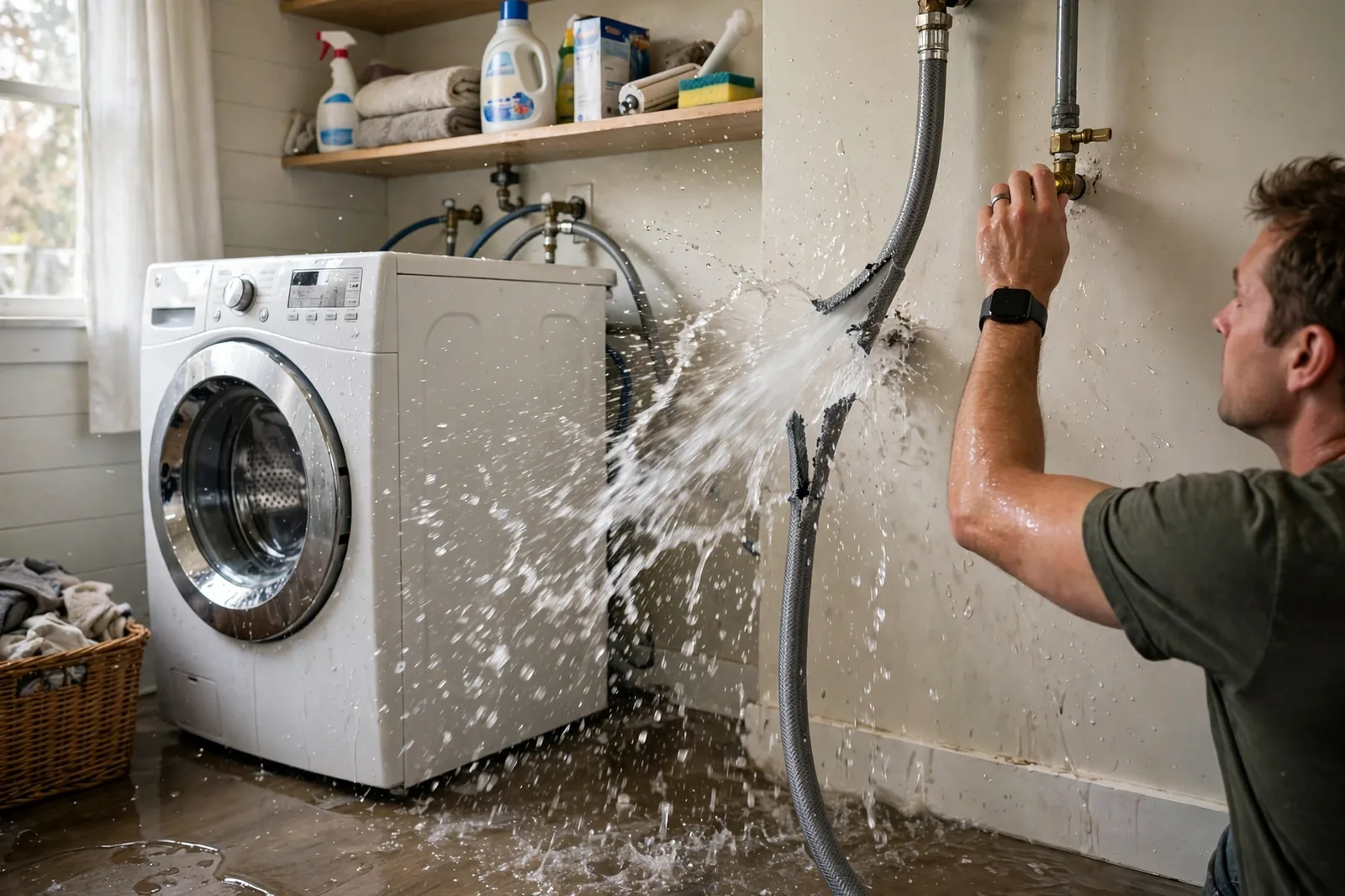
Yes. Washing machines and dishwashers pump water out in a surge, and a supply-side hose failure can flood at full pressure, which is a different risk covered in burst appliance and water heater supply hoses. On the drain side, a pumped discharge into a clogged line raises pressure briefly at every weak joint downstream of the pump.
What Should You Do About A Clog On An Older Line?
Start gently and stop early. Do not pour in harsh chemicals, which can heat and stress old plastic, damage finishes and endanger a pro who later opens the line. Do not rent a large clearing machine for a line you have not seen; a cable can catch and worsen a cracked section. Note which fixtures are affected, because that pattern locates the clog.
If several fixtures slow together, sewage appears, or the clog keeps returning, have the line inspected. Around burst pipe help in Rexburg and burst pipe help in Rigby, pros often pair clearing with a camera look and a pressure test, filling a line at a set pressure and watching for a drop, on any suspect supply section found during the same visit.
How Do Pros Clear A Clog Without Damaging The Pipe?
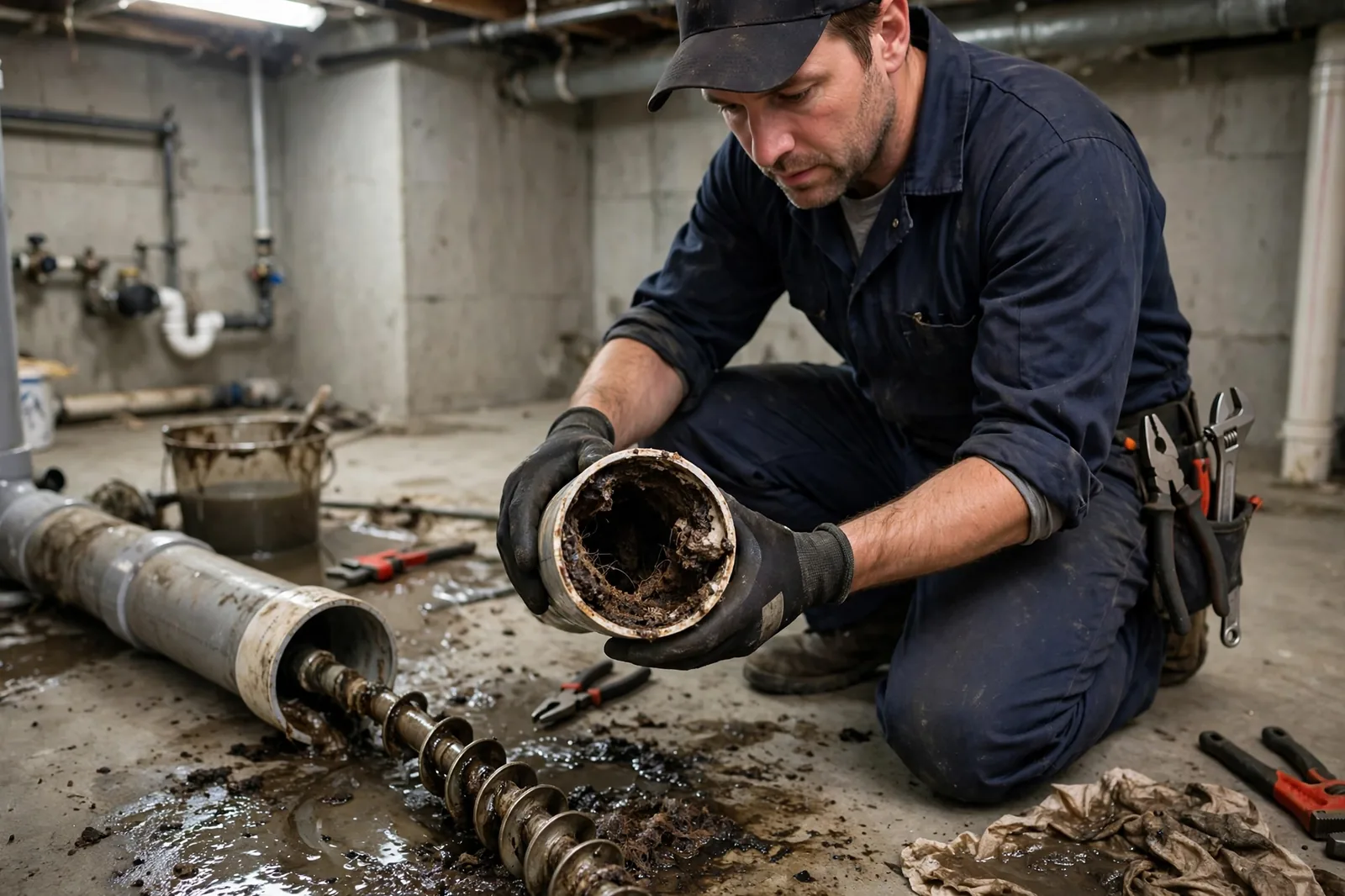
A pro matches the method to the line's condition. A cable machine cuts roots and soft buildup, water jetting scours grease and scale, and hand tools handle simple fixture traps. Before aggressive clearing, a camera inspection shows cracks, sags and joint offsets, so force is not applied to a section that cannot take it.
After clearing, the line is tested by running water and, where relevant, checking the water service line, the buried pipe bringing water into the home, and nearby joints for leaks that the clog was masking. Homeowners near burst pipe help in Rathdrum can arrange that check through Idaho Burst Pipe Pros on (800) 555-0100; one free call connects you with an independent local pro, with calls answered 24/7.
When Does Clearing Become Replacement?
When the camera shows a collapsed, badly cracked or root-filled section that will clog again within months, replacement of that section is the honest fix. The cost factors are depth, access and length of damaged line, not the clearing itself. Replacing one bad section usually ends years of repeat visits, repeat backups and the slow water damage each backup caused.
Frequently Asked Questions
Straight answers, no fine print. If your question is not here, one free call gets you a local pro who can check your exact problem.
Still Have Questions? Call Free
Answered 24/7 — a local pro can arrive in 30–60 minutes.
Call Now — (800) 555-0100Rarely in a supply pipe, and only indirectly in drain pipes. A clog in a drain can raise pressure behind it enough to push water through a weak, corroded joint or an old seal, especially when a fixture or pump keeps adding water. The pipe that fails was usually already weakened. A sound drain line normally vents or backs up at a fixture before pressure splits it.
Yes, as a warning sign more than a direct cause. A slow drain often means buildup, roots or a sagging section is narrowing the line. That same narrowing can trap water that freezes in winter, stress joints, and let waste water sit against pipe walls longer. Treat a drain that keeps slowing after simple cleaning as a signal to have the line checked, not just cleared.
Supply pipes carry pressurised water all the time, so a burst there sprays or floods until the shutoff closes. Drain pipes carry water away by gravity and are only briefly full while a fixture drains, so pressure stays low. That is why drain problems usually show as slow drainage, gurgling or a backup at the lowest fixture, rather than a sudden split like a supply line.
Grease and food in kitchen lines, hair and soap in bathroom lines, wipes and objects that should not be flushed, and tree roots entering joints underground are the usual causes. In older homes, scale and corrosion narrow the pipe from inside until ordinary waste catches and builds. The cause matters because clearing a clog without fixing its cause usually means it returns.
Stop using the fixtures on that line and do not keep flushing or running water into a backup, because every added gallon has to go somewhere, often through the weakest joint or the lowest fixture. Avoid pressure devices and harsh chemicals, which can stress old pipe and endanger anyone who later opens the line. Call a pro if sewage appears, several drains slow together, or the problem keeps returning.
Usually not as a first step. A plunger can help a single fixture with a simple, nearby clog. On old, corroded or root-filled lines, plunging raises pressure against weakened walls and joints and can force a leak. If a gentle attempt fails, or more than one fixture is affected, stop and have the line inspected rather than pushing harder.
A camera run through the line shows buildup, roots, cracks, sags and shifted joints directly, instead of guessing from symptoms. It also shows whether clearing the clog is enough or the pipe itself is failing. For recurring clogs, a camera inspection is often the step that ends the cycle, because the repair can target the actual damaged section rather than the whole line.
Often yes for a healthy line, by the method the pro chooses: a cable machine for roots and buildup, or water jetting for grease and scale. Very old, cracked or collapsed sections may not tolerate aggressive clearing and may need repair or replacement instead. A pro who has seen the line on camera can choose a clearing method that matches its condition.
Yes, this pairing is genuinely dangerous. A clog that traps water in a cold section gives ice a full, sealed pipe to work on, and ice expansion can split even a sound line. Drains that slow every winter, or a line in an unheated crawl space that backs up in cold spells, deserve attention in fall before the trapped water can freeze.
Call promptly if sewage backs up into tubs or floor drains, several fixtures slow at once, you smell sewage, or water leaks from a joint when a fixture drains. Through the emergency burst pipe help page for Idaho, one free call to (800) 555-0100 connects you with an independent local pro who typically arrives in 30–60 minutes.
Reviewed By Hamza
Lead Water Damage Restoration & Structural Drying Specialist
Hamza is an emergency water restoration specialist with deep expertise in burst pipe mitigation, freeze damage remediation, and industrial structural drying across freezing northern climates. He focuses on rapid moisture extraction, thermal imaging diagnostics, and comprehensive subfloor restoration to protect homes from mold and structural deterioration.
Updated October 27, 2026
Need Burst Pipe Help In Idaho?
One free call connects you with a local pro — answered 24/7, and a pro can arrive in 30–60 minutes.
Call Now — (800) 555-0100Free Call · Answered 24/7 · Local Pros Near You