Tree Roots And Shifting Soil: How Underground Lines Break
Free Call · Answered 24/7 · Local Pros Near You
In This Guide
Quick Answer
Yes, roots and moving ground can break a buried water line. Roots grow toward moisture, press on joints and can enter through tiny cracks, while moving ground bends and stresses pipe as it settles or heaves in frost. The break is hidden underground, so the first signs are usually a soggy patch, low pressure or a meter that will not sit still.
Can Tree Roots Or Shifting Soil Break A Water Line?
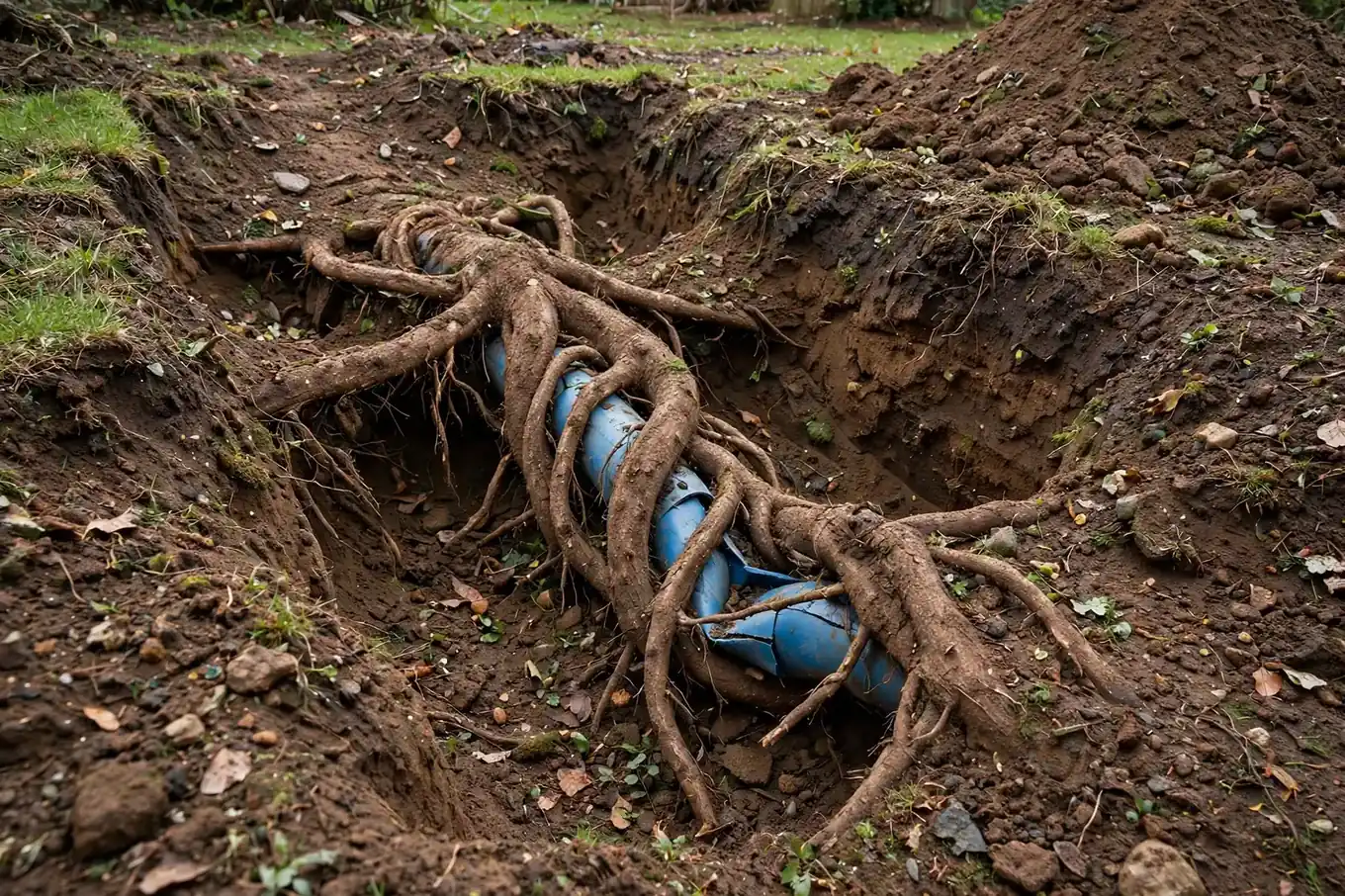
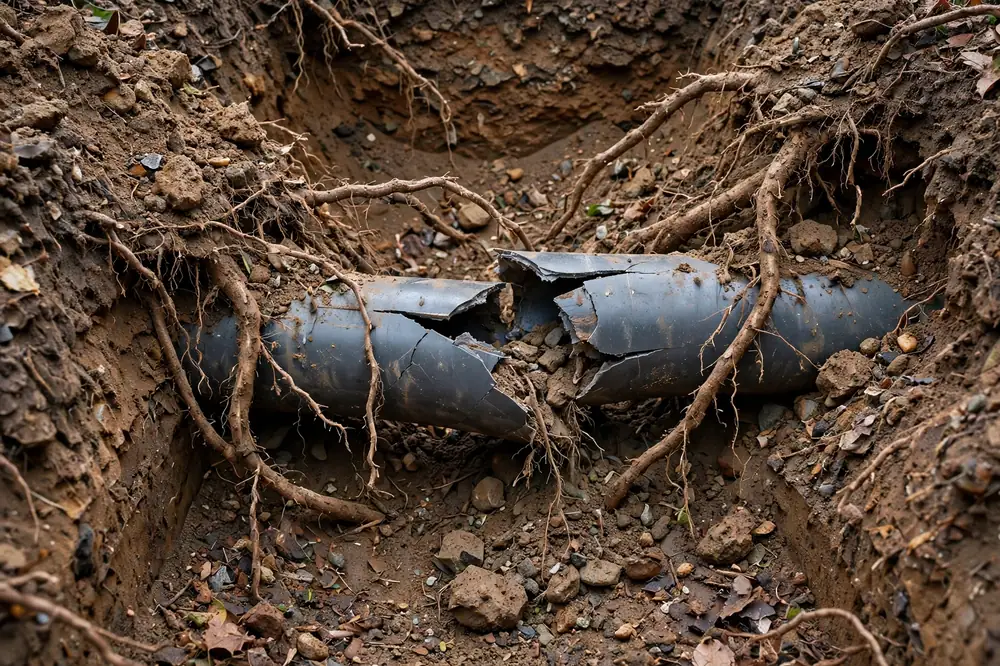
Yes. A buried line lives in moving ground, surrounded by roots seeking water. Tree root intrusion, roots growing toward moisture that can shift, crush or enter buried lines, starts small: fine roots find a joint or hairline crack where moisture escapes, thicken over seasons, and pry the opening wider until the joint separates or the pipe wall cracks.
Supply lines under pressure resist root entry better than drains, because water pushes outward. But the pressure that protects the inside does not protect the outside. A growing root mass can shift a line off line, bend it at a joint, or crush a weakened section, especially where pipe corrosion, the gradual wearing away of a pipe wall, has already thinned older metal.
Which Lines Are Most At Risk?
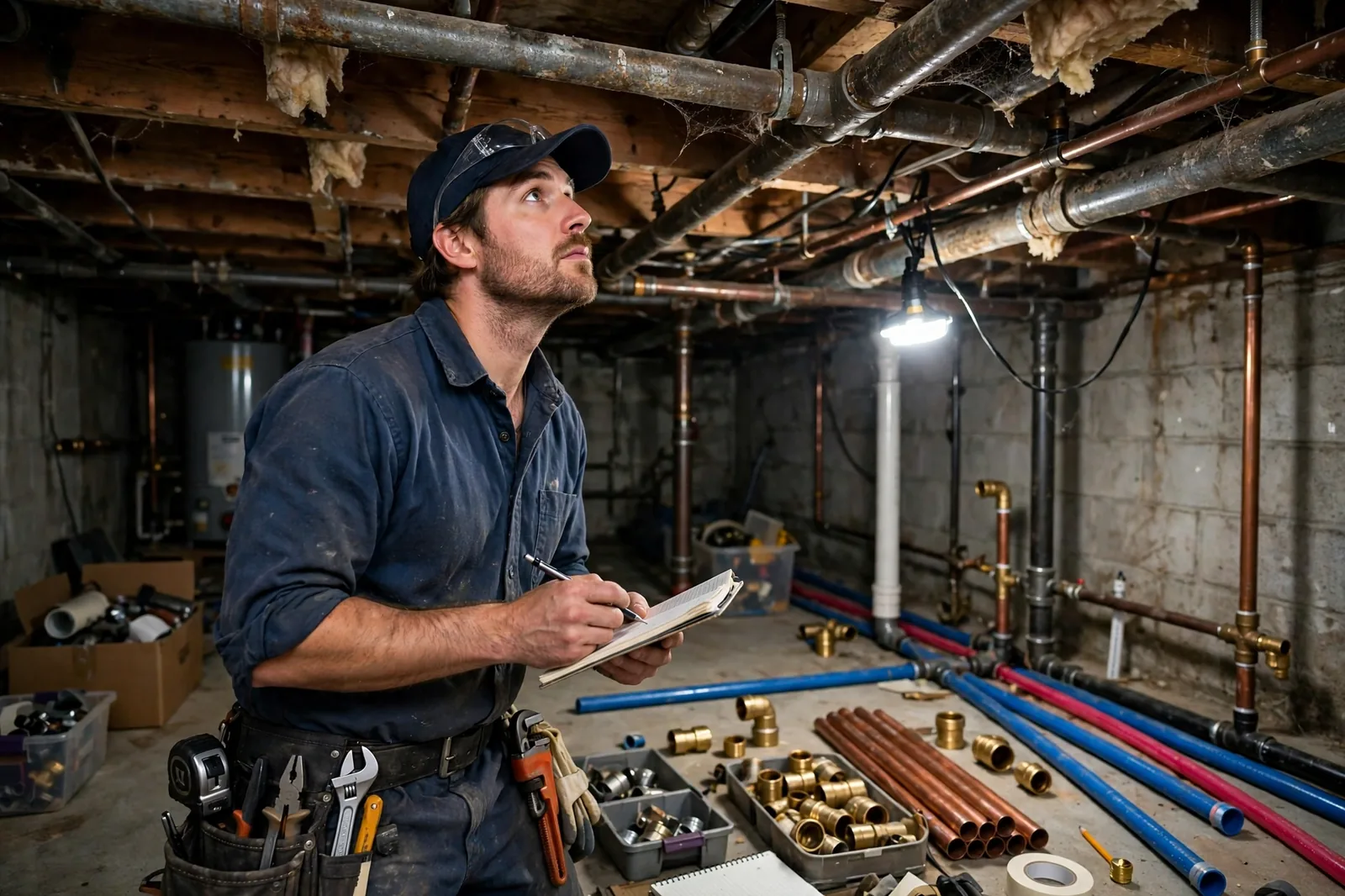
Older lines with many joints, shallow lines near large trees, and drain and sewer runs are most at risk. A water service line, the buried pipe bringing water from the utility main or a well into the home, that passes under a mature tree deserves watching. Newer continuous runs with fewer joints give roots fewer entry points.
Why Do Underground Lines Fail?
Underground lines fail from a mix of age, movement and load. Soil settles after trenches are dug, driveways and traffic press down from above, and Idaho's freeze thaw cycle, repeated freezing and warming that weakens a pipe, moves the ground itself as frost forms and melts. Each movement bends the line a little, and joints and corroded spots absorb most of that strain.
Shifting soil, ground movement from settling, frost or moisture changes that bends buried pipes, is slow but constant. Clay soils swell when wet and shrink when dry, tugging lines with the seasons. A line that was straight and supported at installation can end up carrying weight at one joint years later, which is where the break finally appears.
Does Frost Heave Really Move Pipes?
Yes. When soil moisture freezes, it expands and can lift the ground, then drops it unevenly as it thaws. Shallow lines and lines near the surface at driveways and paths feel this most. Over many winters the repeated lift and settle works on joints like slow bending, which is why some buried breaks appear in spring.
Pipe Frozen Or Burst Right Now? One Free Call Connects You With A Local Pro.
Call NowWhat Are The Signs A Buried Line Is Breaking?
Look for a patch of lawn that stays green, lush or soggy while the rest dries, a soft spot in a driveway bed, or water pooling with no rain. Inside, pressure drops at all taps, the pump on a well system cycles often, or the water meter, the utility meter that records water use, keeps moving when every fixture is off.
Sounds help too. A faint hiss near the entry point or along the line's path can be water escaping into soil. Owners investigating with burst pipe help in Ririe often start with the meter check, because it confirms a hidden loss before any digging. A sudden change in the water bill points the same way, though only a check proves it.
Can A Buried Leak Damage The Home?
Yes. Water escaping underground can wash soil away, undermining slabs, paths and foundations, and can travel along the trench into a basement or crawl space. A line leaking for months may show inside as persistent damp rather than a flood. Early locating limits both the water loss and the ground damage around the break.
How Do Pros Locate An Underground Break?
Pros start by isolating sections: closing valves to see which part of the system loses pressure, then listening along the route. Acoustic leak detection, listening equipment used to hear water escaping from a pipe in the ground, can pinpoint the hiss of escaping water through soil and paving. A pressure test, filling a line at a set pressure and watching for a drop, confirms which section fails.
Once located, a small excavation confirms the cause: roots in the joint, a bent or split section, or a corroded fitting. That confirmation matters, because the right repair differs by cause. Digging up the whole run is a last resort. Modern locating aims to open one hole in the right place, repair, test, and backfill properly.
What If The Line Runs Under A Driveway?
Locating equipment works through paving, so the opening can be limited to a small section where the break sits. The repair then includes compacting the backfill in layers so the surface does not sink later. Poorly compacted trenches are a common cause of the next settlement problem, so this finishing step deserves as much care as the pipe itself.
How Are Root And Soil Breaks Repaired?
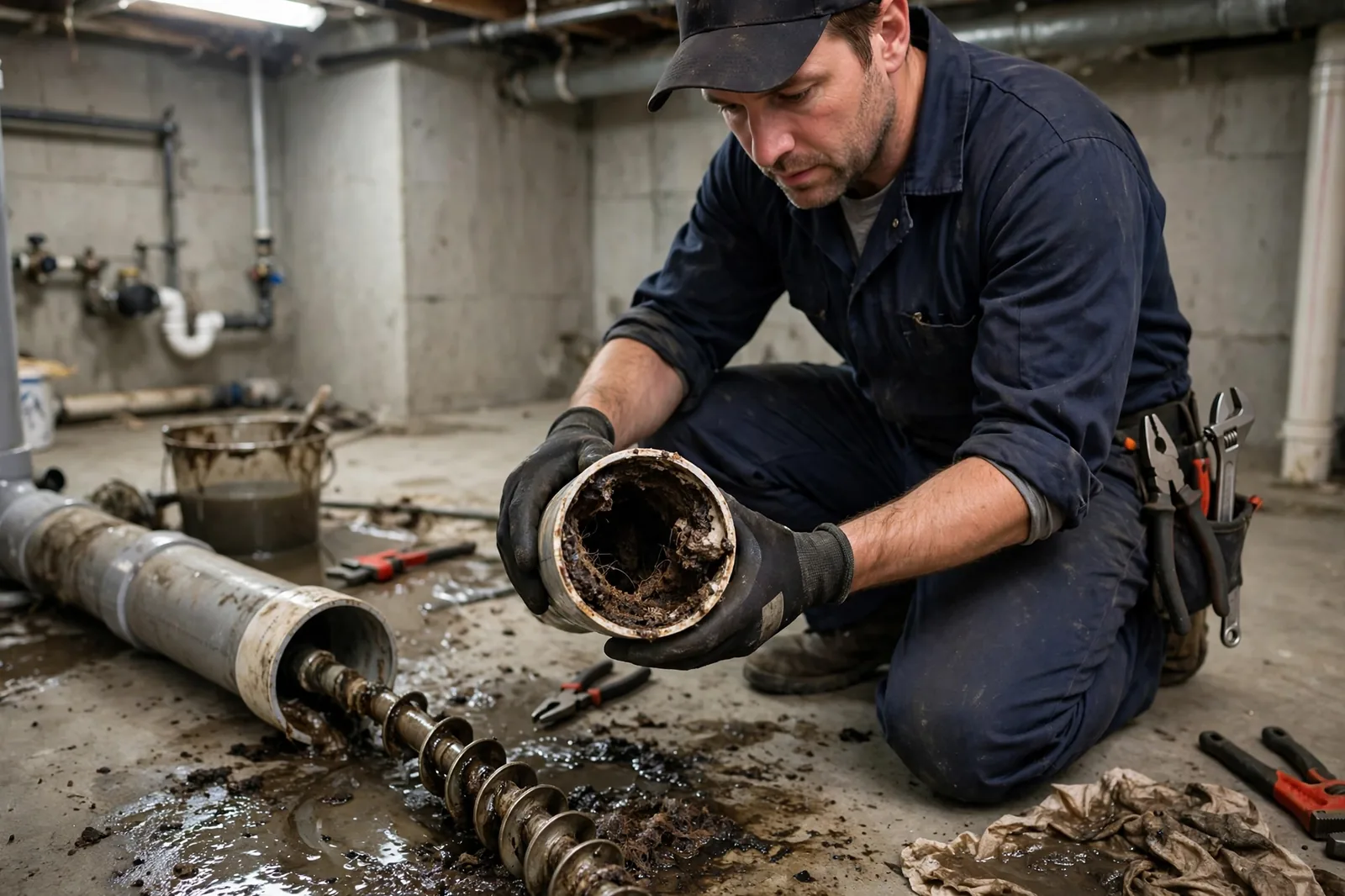
The damaged section is cut out and replaced, roots are cleared back, and the new section is bedded on stable material so it is evenly supported. If roots entered through a joint, the new layout may use fewer joints near the tree. Where a whole run is corroded or root-filled, replacing the full line can be wiser than patching one spot and waiting for the next.
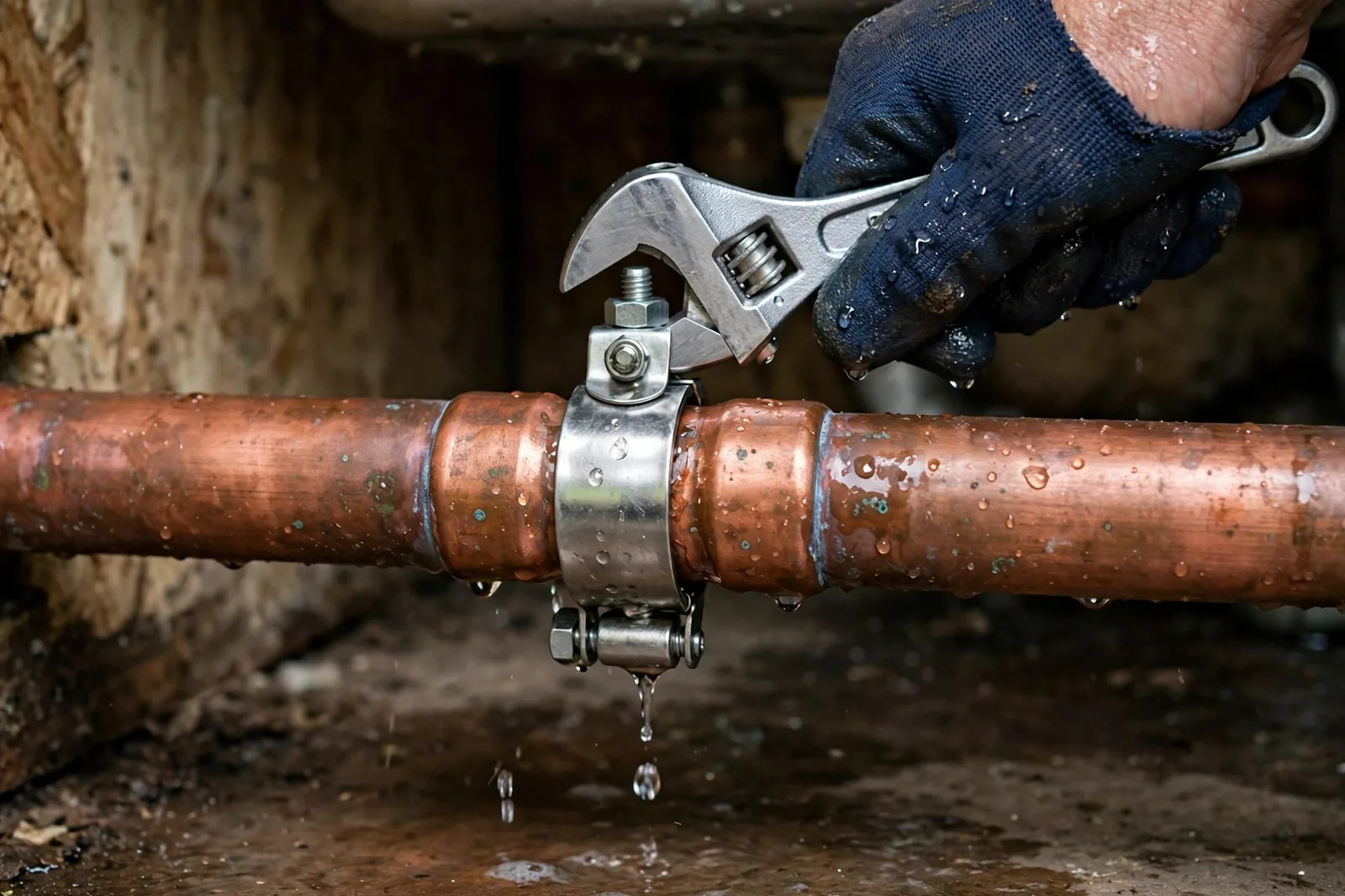
Trenchless methods can sometimes pull a new line through the old path with minimal digging, depending on the route and material. Your pro will explain which options your line allows. Related guidance in when a pipe clamp repair is enough explains why a clamp, fine as a short-term seal inside, is not a lasting answer for a root-crushed buried section.
Should The Tree Come Down?
Usually not. Root pruning near the line, clearing the damaged zone and rerouting the new section away from the trunk solve most cases while keeping the tree. An arborist can advise where roots can be cut without harming stability. Removing a healthy tree is a last resort for lines that cannot be moved and roots that cannot be managed.
What Does Repair Cost In Terms Of Factors?
Cost turns on depth, surface, length of damaged line and locating time. A shallow break under lawn is simpler than a deep break under a driveway. Replacing a full service line costs more than one section, but may end repeated digging on a failing run. Water loss itself can add to a utility bill, which is another reason to act on early signs.
No honest figure exists before locating, because the break's position sets most of the work. Homeowners near burst pipe help in Roberts lower surprises by approving locating first, then choosing between section repair and full replacement with the exposed pipe in view. That staged approach keeps decisions tied to evidence.
Does Insurance Help With Underground Breaks?
Treatment varies by policy and by whether resulting damage to the home occurred. Keep the located break, removed section and invoices documented and photographed, and report promptly. Even where the pipe work itself is a maintenance cost, damage caused inside the home may be treated differently, so ask rather than assuming either way.
How Do You Protect Buried Lines Afterwards?
Plant new trees and large shrubs away from the line's path, and keep a simple map of where the line runs for future digging and planting. Maintain steady drainage so water does not pool and soften soil over the trench. If your irrigation line, buried sprinkler piping, crosses the service line, note both routes, because a leak in either can mimic the other.
Watch the meter a few times a year, especially after spring thaw and after any ground work near the route. Owners in burst pipe help in Rockland with well systems should also note pump cycling changes. A shallow well line and older PVC pipe drain runs near trees deserve the same watch, because both sit close to roots and moving soil. If a break sits near the street, the city water utility can say where their side of the line ends and yours begins. For a suspected active break, the emergency burst pipe help in Idaho page lists first steps, and a clog pressure buildup inside the home is a separate issue covered in can a clog cause a pipe to burst.
Frequently Asked Questions
Straight answers, no fine print. If your question is not here, one free call gets you a local pro who can check your exact problem.
Still Have Questions? Call Free
Answered 24/7 — a local pro can arrive in 30–60 minutes.
Call Now — (800) 555-0100Yes. Roots grow toward moisture, enter through tiny cracks or joints, thicken and pry openings wider, and root masses can shift or crush a weakened line from outside. Moving ground bends buried pipe as it settles, swells or heaves in frost. Breaks usually appear at joints or corroded sections, where the line is least able to absorb that slow, constant movement.
They age in moving ground. Soil settles, clay swells and shrinks with moisture, frost lifts and drops the surface, and traffic loads press from above. Corrosion thins older metal from inside while roots and movement stress it from outside. The failure is rarely one event. It is years of small strains collecting at the weakest joint until that joint separates or the wall cracks.
Watch for a soggy or unusually green patch over the line's route, pooling water without rain, low pressure at every tap, a well pump cycling often, and a meter dial that moves when all fixtures are off. A rising water bill without a change in use is another prompt. A pro can confirm with pressure testing and listening equipment before any digging starts.
Less easily than drains, because outward pressure resists entry, but roots still damage supply lines from outside by shifting, bending and crushing them, and they enter where a joint already weeps. Once a tiny leak moistens the soil, roots gather there and worsen it. So a small joint leak underground tends to grow rather than stabilise, which argues for prompt repair.
They isolate sections with valves and pressure testing to narrow the failing stretch, then use listening equipment to hear escaping water through soil or paving. That points to a single excavation to confirm the cause. Only then is the repair chosen. This staged method avoids trenching the whole route and keeps driveways, lawns and planting largely intact.
A clamp or patch can seal a clean, round section short term, but root damage usually involves crushed, bent or split pipe and a joint full of roots. Lasting repair means cutting out the damaged section, clearing roots, and bedding the new pipe on stable material. Patching over crushed pipe underground tends to fail and require digging the same spot again.
Usually not as a first step. Clearing roots near the line, repairing with fewer joints in that zone, or rerouting the section away from the trunk solves most cases. An arborist can say where roots can be pruned safely. Removal is a last resort where the line cannot move and root pressure cannot otherwise be managed.
Depth, surface cover, locating time and length of replacement drive the cost. A shallow section under lawn is simpler than a deep line under a driveway. Replacing a whole failing run costs more now but can end repeated digging. Approving locating first, then deciding with the break exposed, gives the clearest price and avoids paying for guesswork.
Keep a map of the line's route, plant trees and large shrubs away from it, maintain drainage so soil over the trench does not stay saturated, and check the meter a few times a year for unexplained movement. When replacing a line, ask about routes with fewer joints near trees and proper bedding and compaction, which reduce both root entry and settlement strain.
Call when the meter moves with everything off, pressure drops across the home, or a soggy patch appears over the line. Idaho Burst Pipe Pros is a free service connecting callers with independent local pros on (800) 555-0100, answered 24/7, with pros typically arriving in 30 to 60 minutes. Shut off the supply if water is reaching the home.
Reviewed By Hamza
Lead Water Damage Restoration & Structural Drying Specialist
Hamza is an emergency water restoration specialist with deep expertise in burst pipe mitigation, freeze damage remediation, and industrial structural drying across freezing northern climates. He focuses on rapid moisture extraction, thermal imaging diagnostics, and comprehensive subfloor restoration to protect homes from mold and structural deterioration.
Updated October 27, 2026
Need Burst Pipe Help In Idaho?
One free call connects you with a local pro — answered 24/7, and a pro can arrive in 30–60 minutes.
Call Now — (800) 555-0100Free Call · Answered 24/7 · Local Pros Near You