Copper, PEX Or Something Else: Choosing Replacement Pipe
Free Call · Answered 24/7 · Local Pros Near You
Quick Answer
For most old galvanized lines, the replacement choice comes down to copper or flexible plastic in most Idaho homes today. Copper is rigid, proven and suits short visible runs. Flexible plastic bends with fewer joints, tolerates freezing better and suits long hidden runs. The right pick depends on the route, water conditions, budget factors and what the rest of the home already uses.
What Pipe Material Should Replace Old Galvanized Plumbing?
Galvanized steel pipe, an older zinc-coated steel pipe that corrodes from inside over time, narrows as rust builds, so pressure falls and the wall weakens. When a section finally splits or leaks at a thread, replacing just that section with modern material is common, and replacing more of the run is worth discussing if corrosion is widespread.
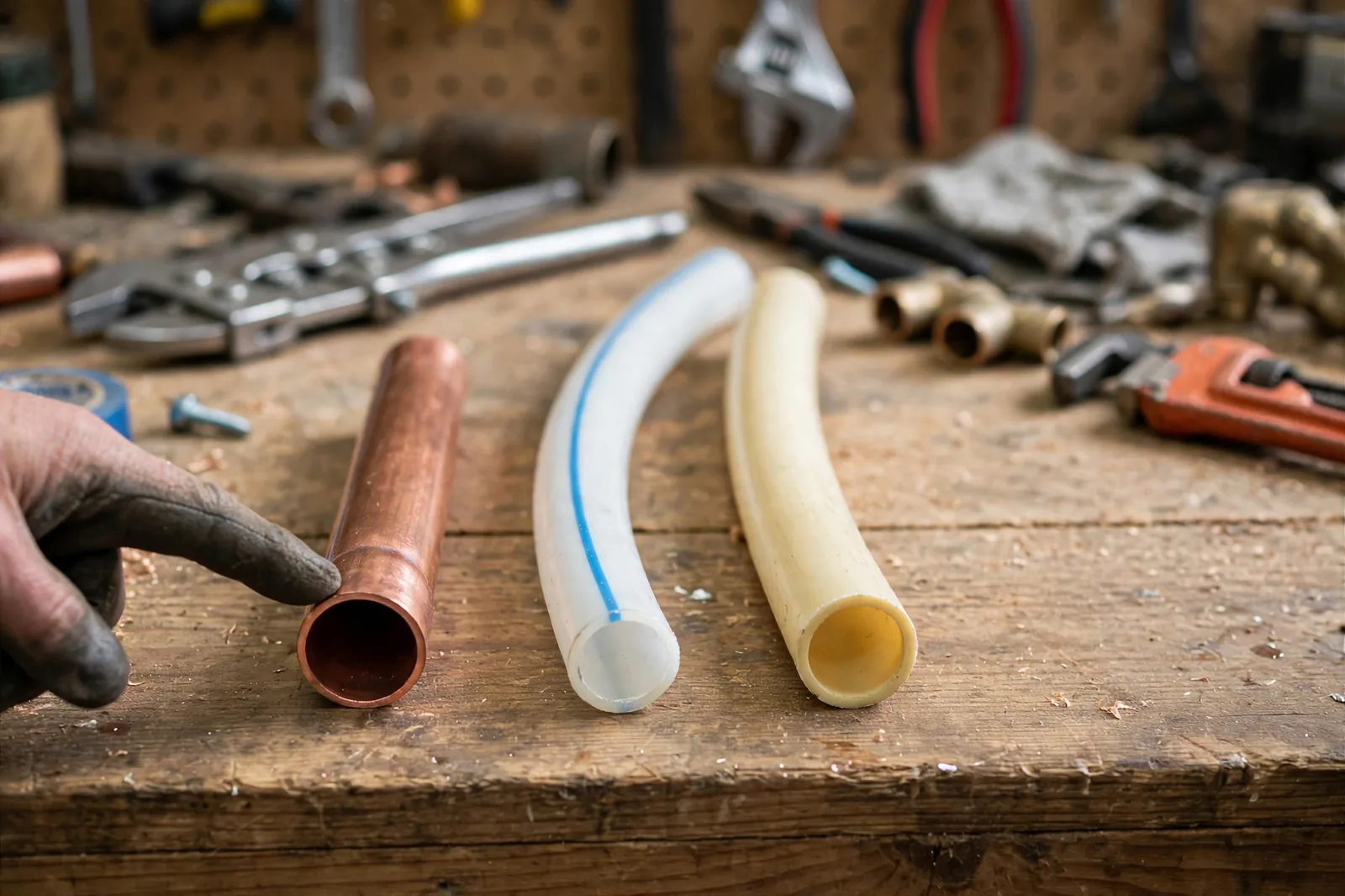
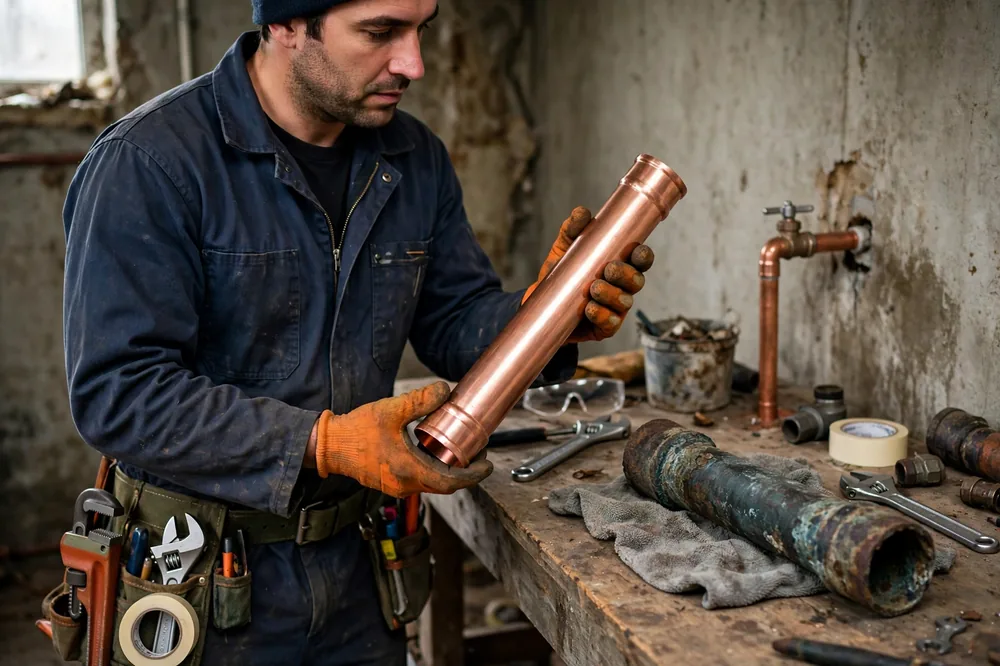
The two main successors are copper pipe, the metal pipe used in many homes, and PEX pipe, a flexible plastic pipe that can expand slightly. Both are widely used for supply lines in Idaho homes. Owners weighing work in burst pipe help in New Plymouth should ask not only what replaces the failed piece, but how far the old material continues beyond it.
Should You Replace More Than The Failed Section?
If the failed section is rusted through, neighbouring galvanized sections of the same age are often close behind. Replacing a longer run in one visit can cost less than several emergency visits. Ask the pro to show you the inside of the removed piece, because its condition is honest evidence for how much more to replace now.
Copper Or PEX For A Repair Section?
For a short, straight repair in an open wall, copper matches many existing systems, solders cleanly and holds its shape. For a long run that must thread through joists and around corners, flexible plastic needs fewer joints, and every joint avoided is one less future leak point hidden inside a wall or floor.
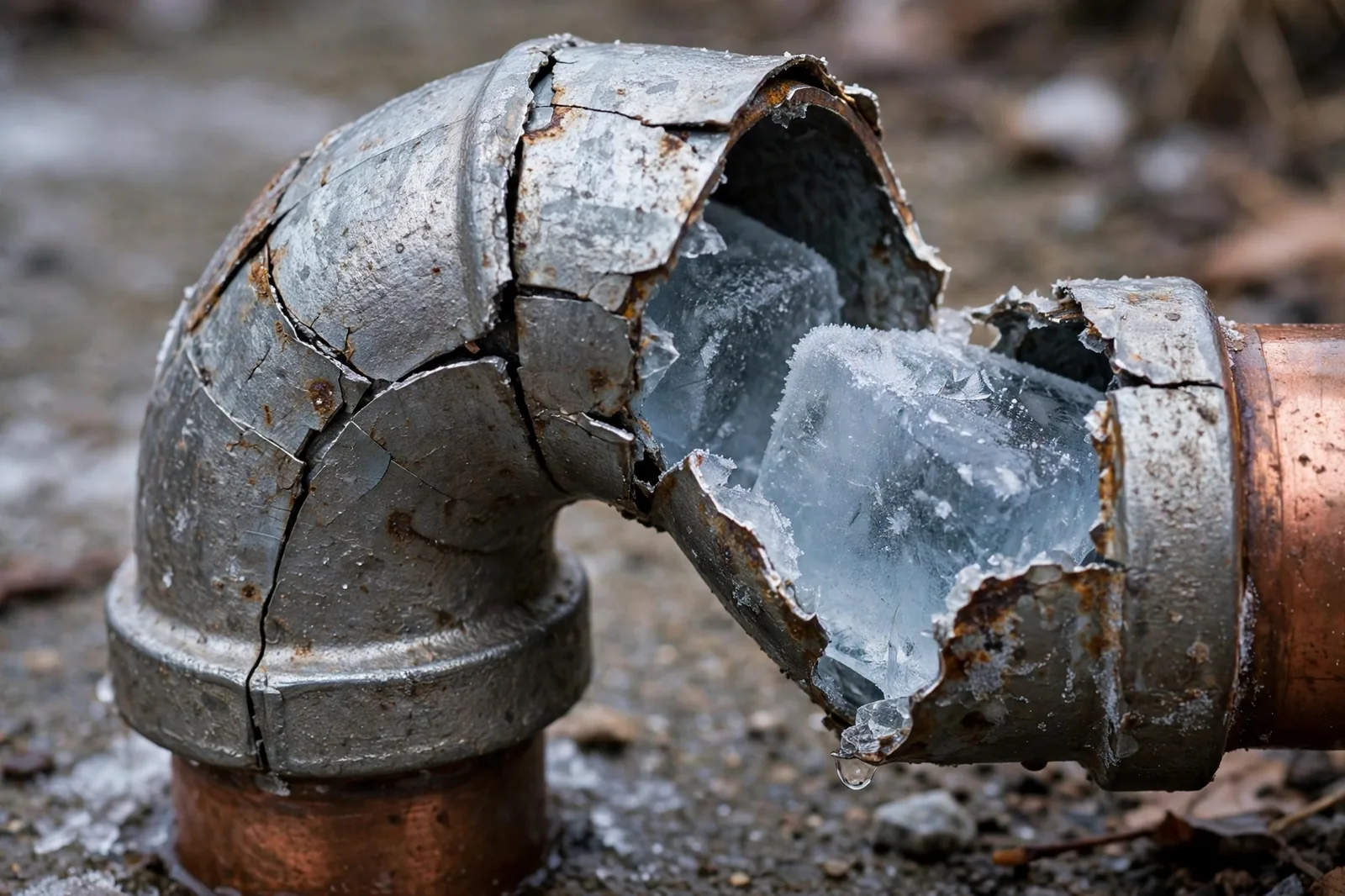
Freeze behaviour also differs. Rigid copper can split when ice expansion pressure, the force created when water expands as it freezes, builds inside it. Flexible plastic can swell slightly and often survives a freeze that would split a rigid line, though fittings on it remain vulnerable. In a cold Idaho wall, that tolerance is a real point in its favour.
Can Copper And Plastic Be Joined Together?
Yes, with the correct transition fittings made for that pairing. A brass fitting, a corrosion-resistant metal connector used to join sections, is a common bridge between materials. The joint must be supported and accessible where possible. Mixing materials is normal in repair work, provided each connection uses fittings rated for both sides of the join.
Pipe Frozen Or Burst Right Now? One Free Call Connects You With A Local Pro.
Call NowHow Does Copper Behave Over Time?
Copper has a long record in home plumbing. It resists sunlight, holds up in visible runs, and plumbers everywhere know how to repair it. Its weaknesses are cost of material, theft appeal in empty buildings, and pinhole leaks in some water conditions over very long periods. It also transmits noise and can sweat in humid spaces without insulation.
Where copper already runs through most of a home and the repair is small, matching it keeps the system simple. A pro can also test whether pipe corrosion, the gradual wearing away of a pipe wall, in the old copper suggests a wider issue. Guidance in why fittings and joints fail first explains why joints, whatever the material, deserve the closest look during any replacement.
Does Copper Need Freeze Protection Too?
Yes. Copper does not forgive a hard freeze, so runs in a crawl space, the shallow space under a home, or an exterior wall still need a pipe insulation sleeve, foam tubing slipped over a pipe. In the coldest spots, heat tape, an electric cable applied along a pipe, adds protection. Material choice never replaces location and insulation.
How Does Flexible Plastic Behave Over Time?
Flexible plastic is lighter, faster to run and quieter than rigid metal, and its smoothness resists the internal narrowing that ruins galvanized lines. It must be protected from sunlight, sharp edges and rodents, and it needs correct support so it does not sag between joists. Its fittings, crimped or expanded, are the points a pro checks most carefully.
It also suits rerouting, where a new run must bend through existing framing. If your failed line sits in a freezing wall, replacing it in a warmer route with flexible material solves both the material and the location problem in one job. Cabins and manufactured homes across Idaho often use it for exactly that combination of reasons.
What About The Manufactured Home Underbelly?
The manufactured home underbelly, the enclosed underside where water lines run, is a cold, tight space where flexible lines are easier to run and repair. Keeping that enclosure sealed and its insulation in place matters as much as material. A flexible line in a torn, open underbelly will still freeze, so repair the enclosure with the pipe.
Where Do CPVC And PVC Fit In?
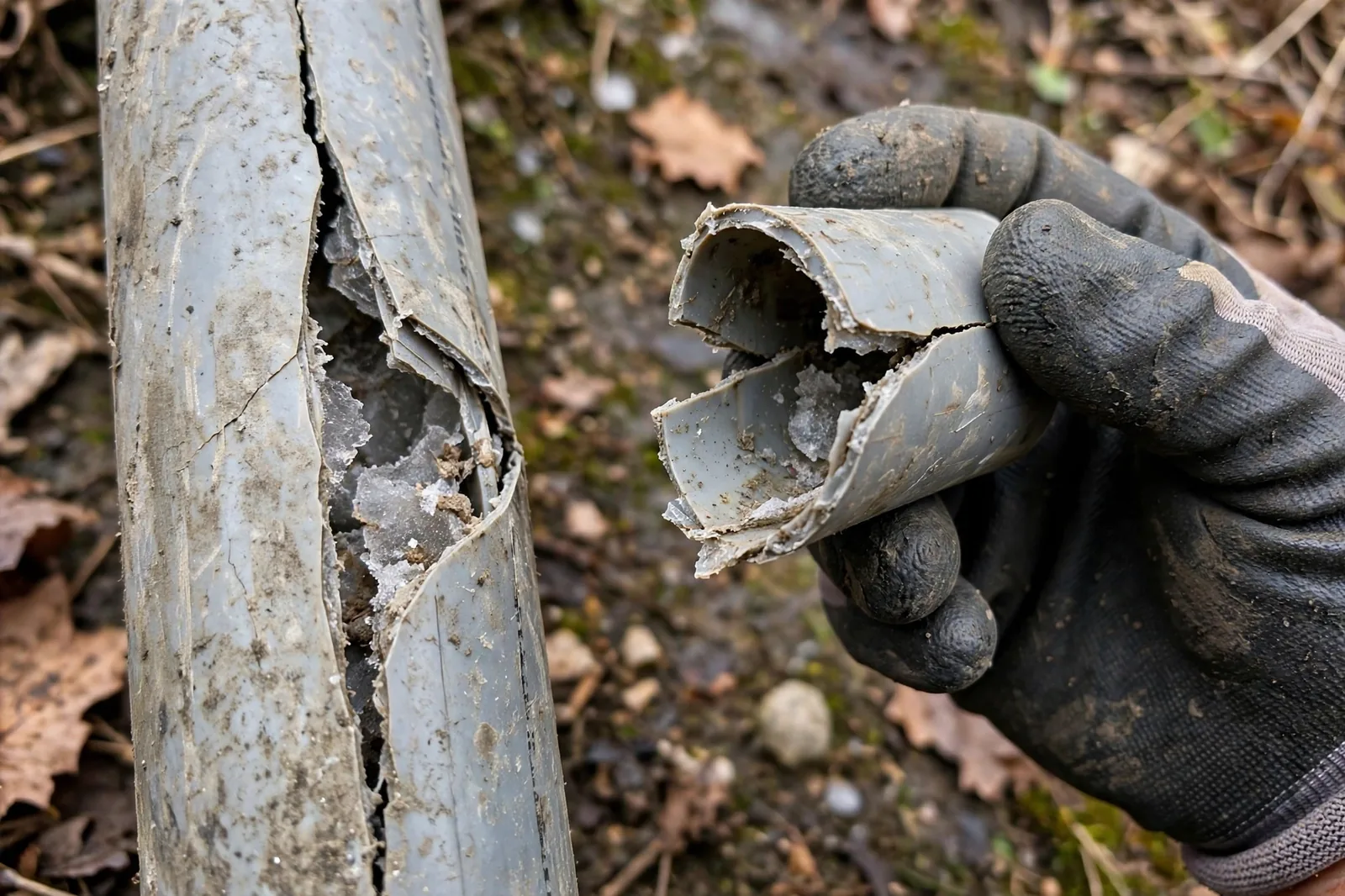
CPVC pipe, a rigid plastic rated for hot and cold supply that turns brittle with age and cold, exists in many Idaho homes and can be repaired in kind. Its brittleness in cold, older installations is why many pros prefer other materials for new runs in freezing locations, while still using it for straightforward like-for-like repairs in warm interior walls.
PVC pipe, a rigid white plastic used mainly for drain, waste and irrigation lines, is not a supply-line material for hot water in the home. Confusing the two is common in hardware stores. If you buy material yourself, confirm it is rated for pressurised hot and cold supply, and when in doubt, let the pro supply the pipe and fittings for the repair.
Should Old CPVC Be Replaced Wholesale?
Not automatically. Sound CPVC in warm locations can serve for years. Sections that have grown brittle, discoloured or cracked at fittings deserve replacement, and any freeze split is a prompt to inspect the rest of that run. A pro can flex-test and visually check accessible sections during the repair visit and report what was found.
What Cost Factors Separate The Materials?
Material price is only one factor. Labour, access, length, number of fittings, valves, patching and disposal of old pipe all shape the total. Flexible plastic often lowers labour on long hidden runs because it installs faster with fewer joints. Copper material costs more, but on a short open repair the labour difference shrinks and the totals can come close.
Whole-run replacement costs more today and can prevent repeated emergency calls on a failing system. Owners in burst pipe help in Notus often phase the work: replace the failed and worst sections now, plan the rest. Pairing replacement with leak detectors and inspections that catch bursts early protects whichever material you choose.
Does Material Affect Insurance Or Resale?
Insurers and buyers mainly care that plumbing is sound, modern and free of active leaks, rather than one specific material. Replacing corroded galvanized lines removes a known risk that surveyors flag. Keep invoices and photos of new runs before walls close, because that record answers future questions about what was done and when.
How Do You Decide With Your Pro?
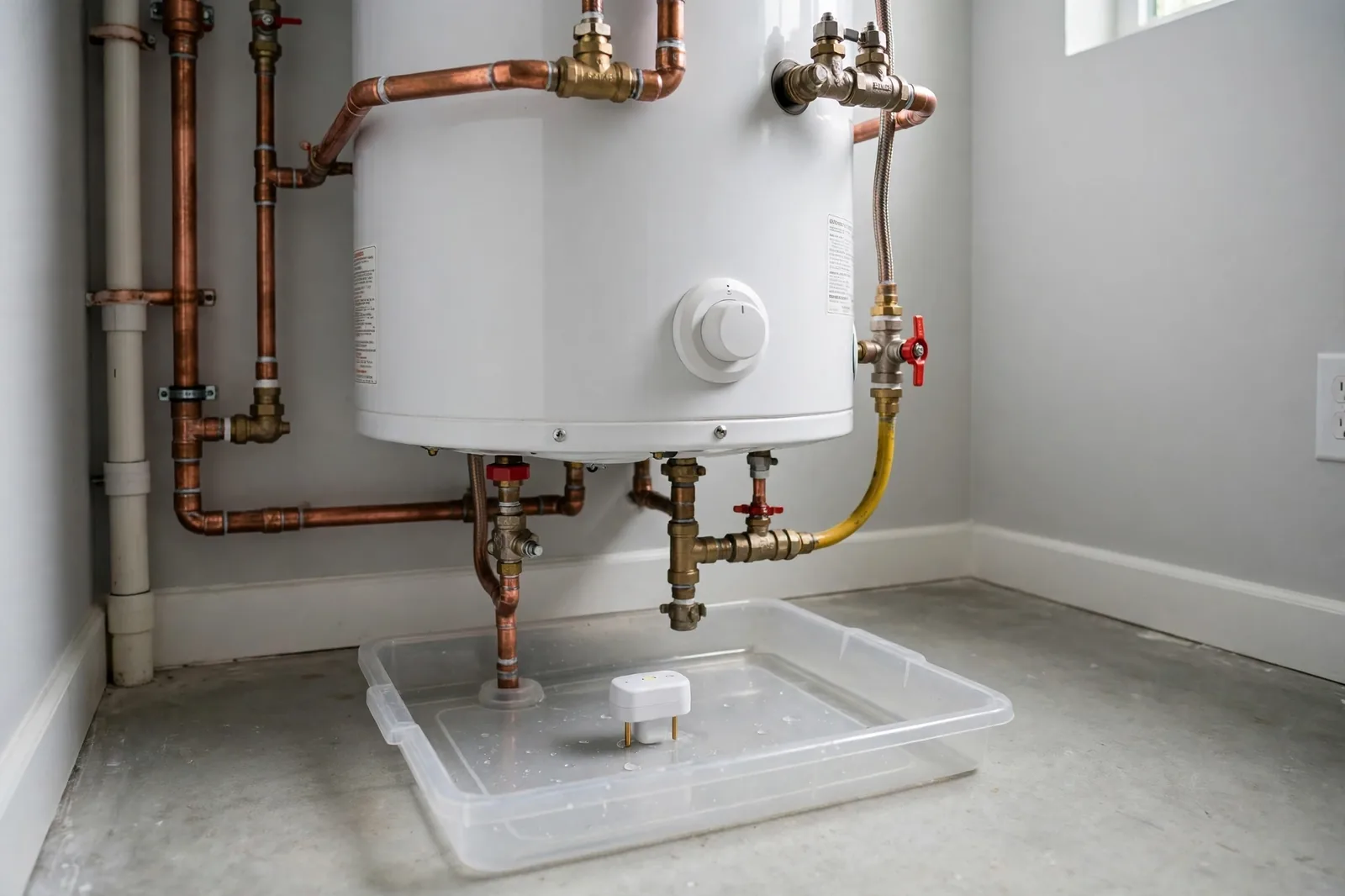
Ask three questions: how far does the old material continue, which route will the new line take, and how will it be tested? A pressure test, filling a line at a set pressure and watching for a drop, should close the job. The answers reveal whether a short matching repair or a longer replacement in a different material serves you better. The same visit can also check the water heater connections while the system is drained down for the work.
Idaho Burst Pipe Pros is a free service connecting callers with independent local pros on (800) 555-0100, answered 24/7, with pros typically arriving in 30 to 60 minutes. For homes near burst pipe help in Ola, bring photos of the failed section and any visible pipe runs. Clear information helps the pro recommend material for your home rather than by habit.
Frequently Asked Questions
Straight answers, no fine print. If your question is not here, one free call gets you a local pro who can check your exact problem.
Still Have Questions? Call Free
Answered 24/7 — a local pro can arrive in 30–60 minutes.
Call Now — (800) 555-0100Most galvanized supply lines are replaced with copper or flexible plastic. Galvanized pipe narrows and weakens as it corrodes inside, so like-for-like replacement is rarely chosen. Copper suits short, visible, matching repairs. Flexible plastic suits long hidden runs and cold locations because it bends with fewer joints and tolerates freezing better. Your pro should show you the removed section before recommending scope.
For a short straight section in an open wall, copper is a clean match for many existing systems. For a run that threads through framing or sits in a cold wall, flexible plastic usually serves better, with fewer joints and some freeze tolerance. Both are proven supply materials. The route, access and what the rest of the home uses should drive the choice, not habit.
Flexible plastic can expand slightly as ice forms, so it often survives a freeze that splits rigid pipe, though its fittings can still fail. Copper and rigid plastic have little give and split more readily under ice pressure. No material makes a line freeze-proof, so location, insulation and drainage still matter most in cold Idaho walls and under-floor spaces.
Yes, using transition fittings made for that exact pairing, commonly brass. The joint should be supported, made with the correct insert and ring or solder method for each side, and left accessible where the layout allows. Mixed systems are normal in homes that have been repaired over decades. Problems come from mismatched fittings or unsupported joints, not from mixing itself.
No. White PVC is mainly for drains, waste and irrigation, and it is not rated for hot pressurised supply in the home. CPVC is the rigid plastic rated for hot and cold supply, though it grows brittle with age and cold. If you are unsure what a length of pipe is, ask before buying or fitting it, because the two look similar.
Service life depends on water conditions, pressure, temperature and installation quality more than a single figure. Copper and flexible plastic both offer long service when sized, supported and joined correctly, and both fail early when abused by high pressure, freezing or poor joints. Keep pressure in range, protect cold runs, and fix small weeps promptly to give any material its full life.
If several sections show heavy internal rust, low pressure at many taps, or repeated leaks, replacing the system in one planned project is usually calmer than a series of emergencies. If only one run is failing, phased replacement works: worst sections now, the rest planned. Ask for the inside condition of removed pipe to be shown and photographed as evidence.
Yes, wherever the run passes through cold space. New material does not stop water inside from freezing. Foam sleeves on under-floor and wall runs, sealed gaps, and heat cable on the coldest sections all remain worthwhile. If the old line froze in a wall, consider moving the new line to a warmer route as part of the same job.
Look for the length and material of new pipe, fittings and valves, access and patching responsibilities, disposal of old pipe, and a pressure test before closing. Separation of plumbing costs from drying or rebuilding costs helps insurance paperwork too. If a quote lists only a lump sum with no scope, ask for those items in writing before work begins.
A pro who inspects the old system and explains both main materials for your route can help you decide without pressure. Idaho Burst Pipe Pros is a free service connecting callers with independent local pros on (800) 555-0100, answered 24/7, with pros typically arriving in 30 to 60 minutes. Photograph the failed section and visible runs before the visit.
Reviewed By Hamza
Lead Water Damage Restoration & Structural Drying Specialist
Hamza is an emergency water restoration specialist with deep expertise in burst pipe mitigation, freeze damage remediation, and industrial structural drying across freezing northern climates. He focuses on rapid moisture extraction, thermal imaging diagnostics, and comprehensive subfloor restoration to protect homes from mold and structural deterioration.
Updated October 27, 2026
Need Burst Pipe Help In Idaho?
One free call connects you with a local pro — answered 24/7, and a pro can arrive in 30–60 minutes.
Call Now — (800) 555-0100Free Call · Answered 24/7 · Local Pros Near You