Leak Detectors And Inspections That Catch A Burst Early
Free Call · Answered 24/7 · Local Pros Near You
In This Guide
- Do Water Leak Detectors Help Prevent Burst Pipe Damage?
- What Types Of Leak Detector Suit An Idaho Home?
- How Do Pressure Checks Catch Problems Before A Burst?
- How Often Should Plumbing Be Inspected?
- What Does A Thorough Inspection Actually Check?
- What Should Happen When A Detector Alerts While You Are Away?
- What Are The Limits Of Detectors And Inspections?
Quick Answer
Detectors do not stop a pipe splitting, but they can turn a day-long flood into a small, early repair. A floor sensor alarms the moment water appears, a flow monitor notices water moving when every tap should be off, and either one shortens the run time that drives most of the damage. Paired with a yearly inspection and pressure check, they catch weak joints before they fail.
Do Water Leak Detectors Help Prevent Burst Pipe Damage?
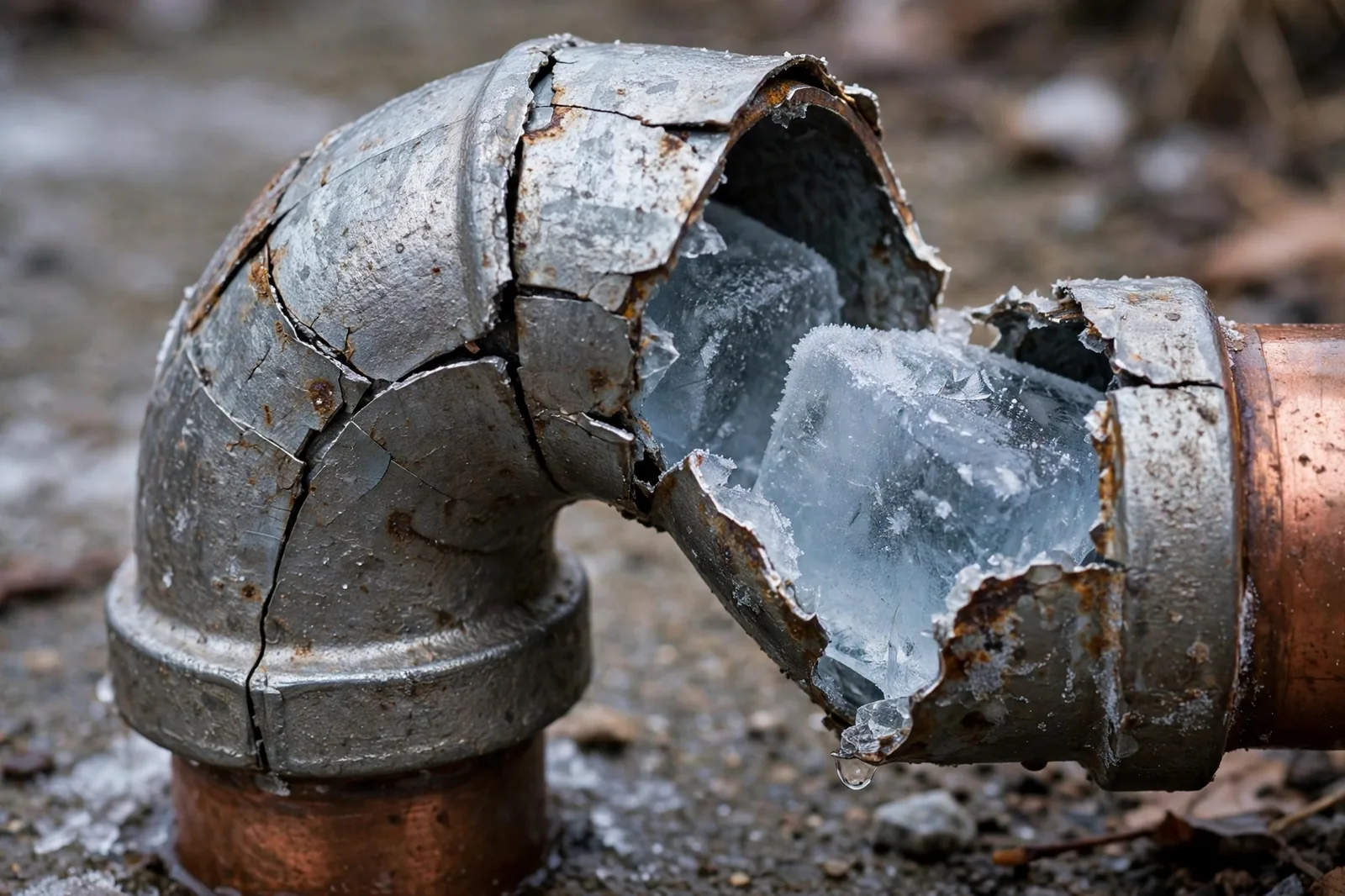
They prevent damage more than they prevent bursts. A pipe splits when ice expansion pressure, the force of water expanding as it freezes in a closed pipe, or a failed fitting gives way; no sensor changes that moment. What a sensor changes is the clock. Water found in five minutes soaks a cabinet base; water found in eight hours soaks floors, walls and insulation.
Some systems go further and close a valve automatically when flow looks like a leak. Others simply alarm or send a phone alert, which still helps if someone can reach the main water shutoff valve, the main valve that stops all water entering the home, quickly. The value of any detector is measured in how much water never escapes.
What Is An Automatic Shutoff Detector?
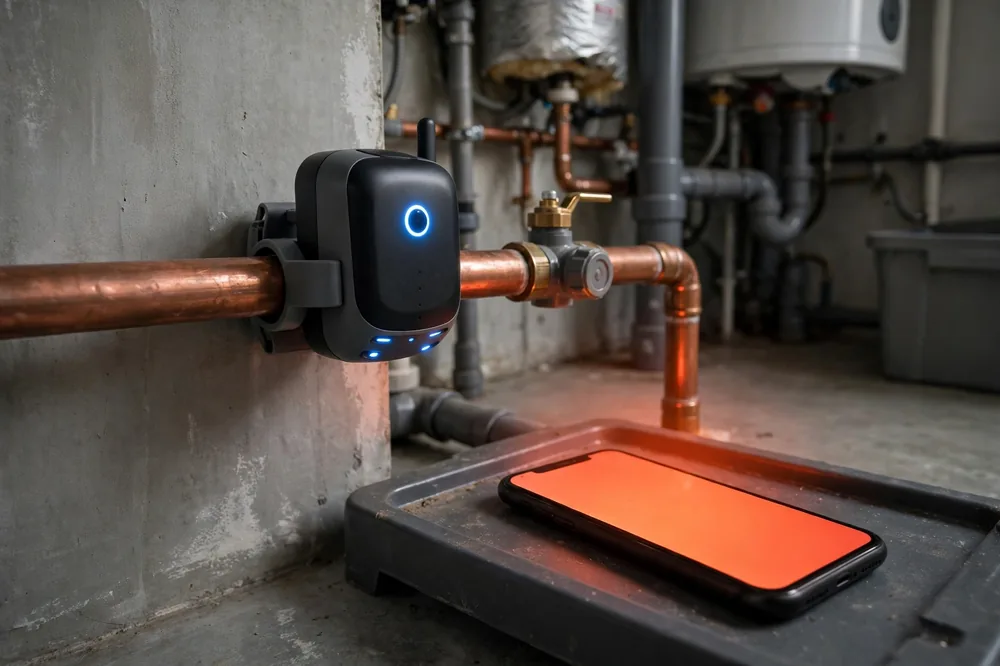
Some flow monitors connect to a motorised valve on the main line. When the system sees leak-pattern flow, it closes the valve by itself, even if nobody is home or awake. That pairing of detection and shutoff is the closest a device comes to prevention, because it limits a burst to the water already in the pipes.
What Types Of Leak Detector Suit An Idaho Home?
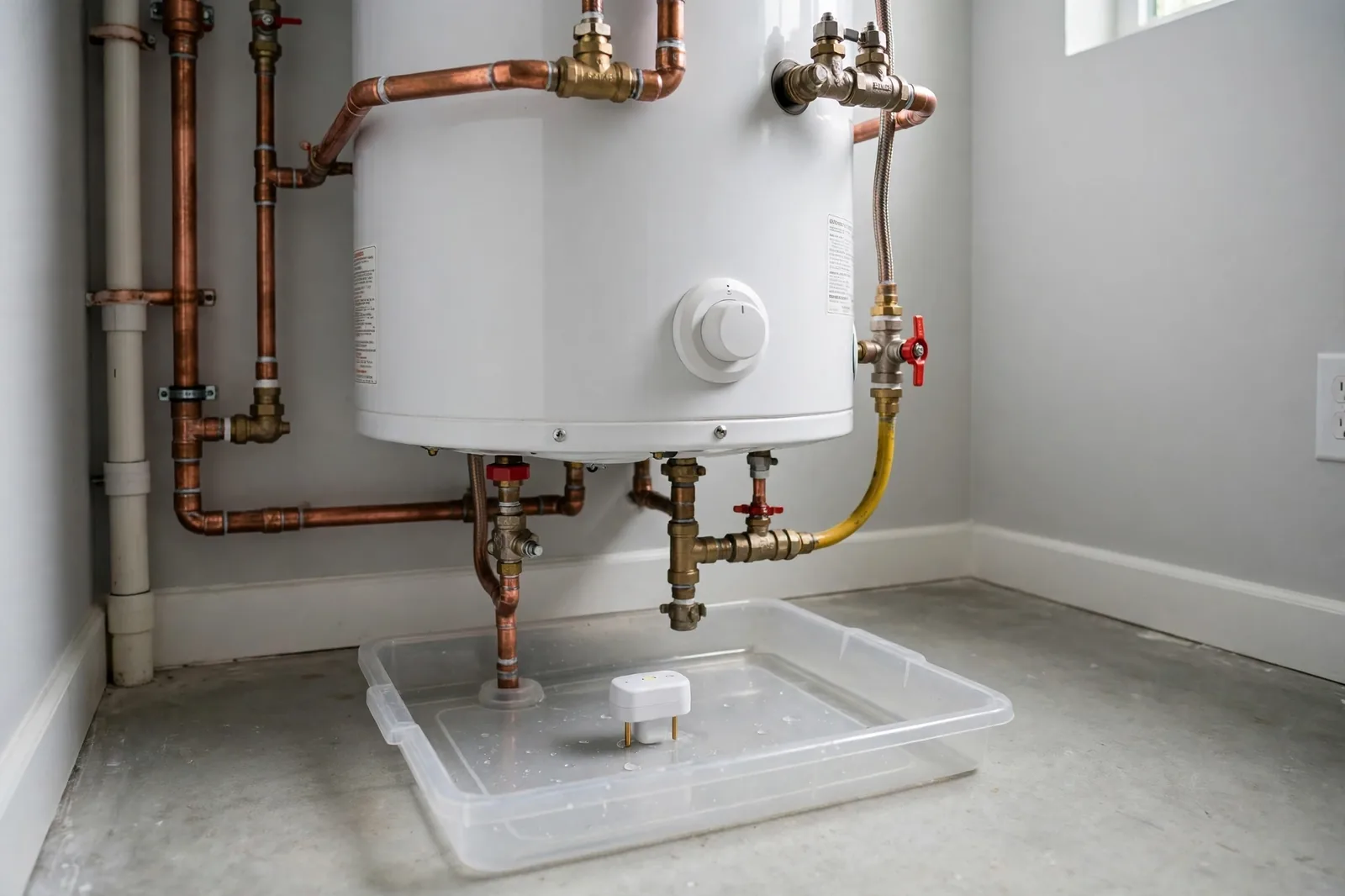
Point sensors are small battery units placed on the floor where leaks appear: by the water heater, the appliance that heats household water, behind the washer, under sinks and near pipe runs in a basement, the lowest level of the home. They alarm on contact with water and are simple to move and test.
Flow monitors fit at the water meter, the utility meter that records water use, or on the main line, and learn normal use patterns. Unusual flow at 3 a.m., or flow that never fully stops, triggers an alert. Whole-home monitoring catches hidden in-wall leaks that a point sensor would only find once water reached the floor, which can be hours later.
Installation is usually straightforward: point sensors need no plumbing work at all, while a flow monitor or automatic shutoff is fitted on the main line by a pro. Placement matters more than quantity, because one sensor in the right low spot catches more than three placed where water never reaches.
Pipe Frozen Or Burst Right Now? One Free Call Connects You With A Local Pro.
Call NowHow Do Pressure Checks Catch Problems Before A Burst?
A pressure test, filling a line at a set pressure and watching for a drop, shows whether a closed system is losing water somewhere hidden. A steady drop with all taps off means a leak exists, even if no room looks wet yet. It is one of the simplest ways to confirm what a meter or monitor is suggesting.
Static pressure matters too. High water pressure, supply pressure above what home plumbing is designed for, strains every joint and hose continuously. A gauge reading during an inspection can flag pressure that will shorten the life of fittings across the whole house, not just at one weak point. Related upkeep, like the drafts covered in sealing the drafts that freeze pipes, belongs in the same fall check.
Why Does High Pressure Matter For Detection?
A system held at excessive pressure leaks sooner and detectors alert more often, because every weak seal weeps under the strain. Checking pressure during an inspection can reveal the cause behind repeated small alerts. Lowering pressure to the range a pro advises protects fittings, appliance hoses and the detector's own valve from constant stress.
How Often Should Plumbing Be Inspected?
Once a year suits most occupied homes, timed for fall so findings can be fixed before freezing weather. The inspection should cover reachable joints and valves, the operation of the main shutoff, pressure, insulation on cold runs, and signs of pipe corrosion, the gradual wearing away of a pipe wall, at fittings and in the crawl space, the shallow space under a home.
Homes with a freeze history, older galvanized steel pipe, or long empty periods deserve more: a spring check after hard winters, plus visits during cold snaps. Around burst pipe help in Nampa, inspectors also flag the kitchen sink cabinet, the cabinet under a sink on an exterior wall, because that cold pocket freezes early and leaks quietly.
Keep the fall appointment even in a mild year, because pressure creep, slow corrosion and a failing valve do not wait for a hard winter to get worse.
What Does A Thorough Inspection Actually Check?
A useful inspection is hands-on. Valves are turned to prove they still work, including the shutoff you would need at midnight. Joints are checked for crust, damp and movement. A moisture meter, a handheld device that measures moisture in drywall and wood, tests any stained area to separate an old mark from an active leak.
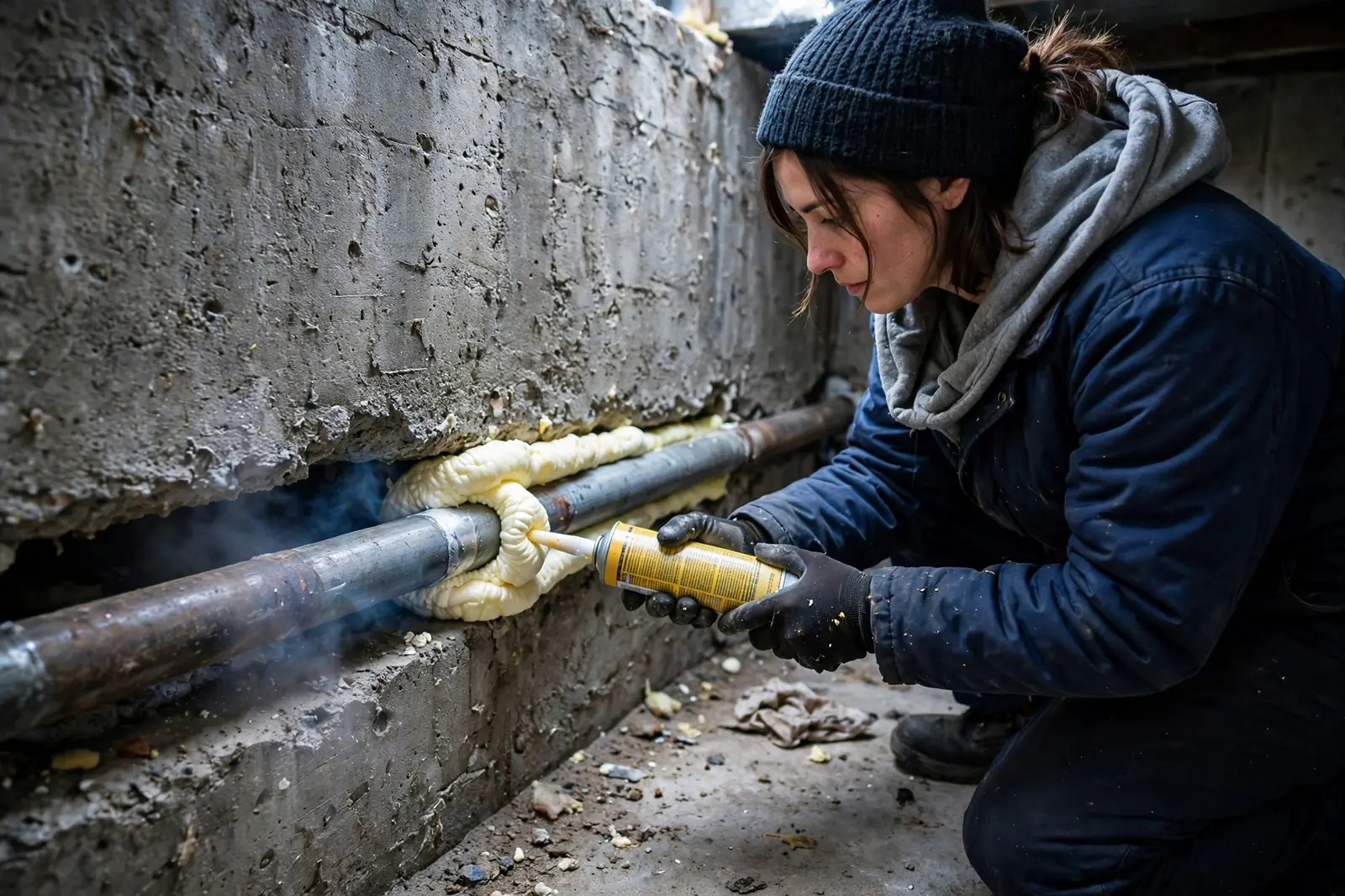
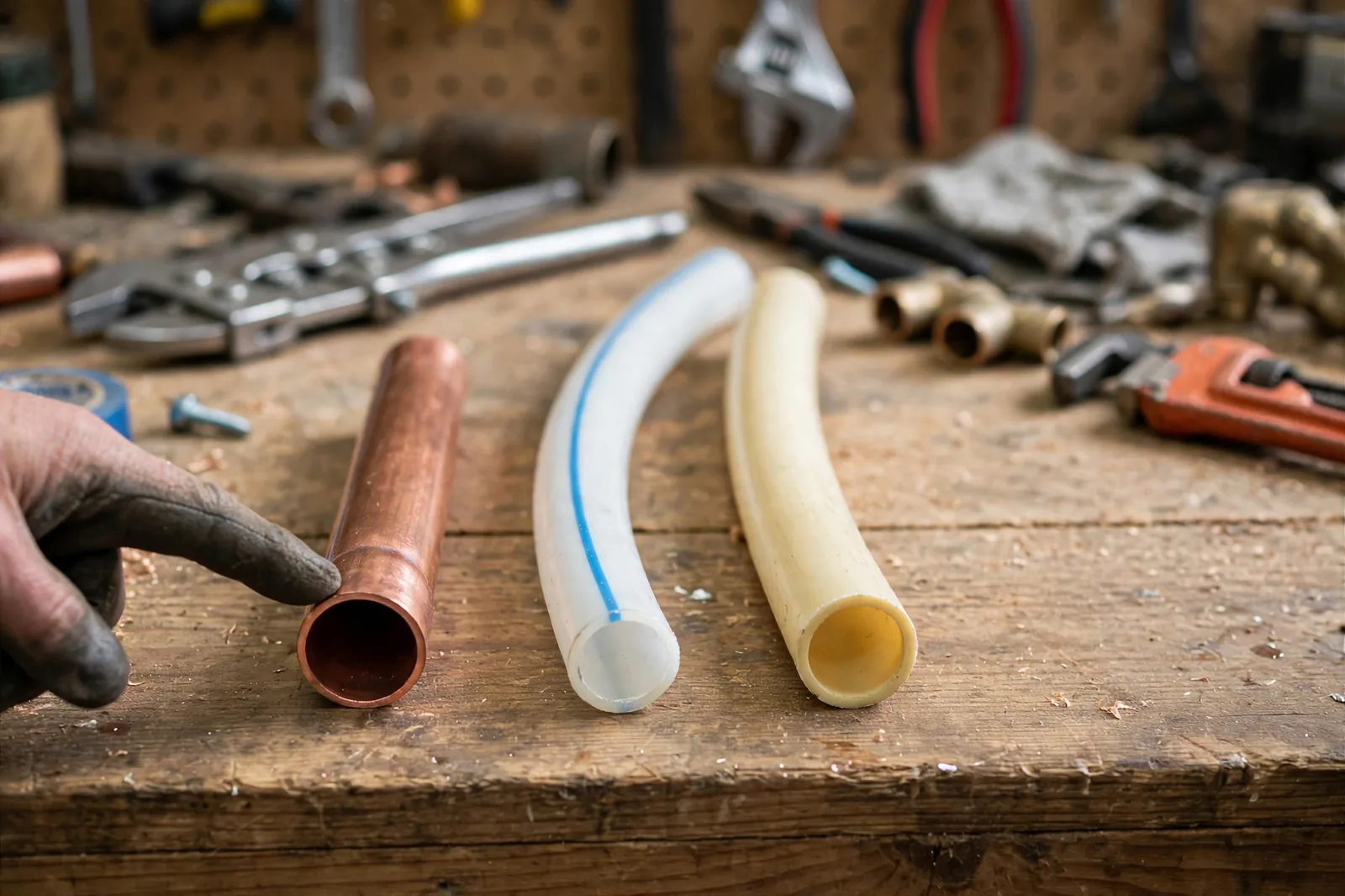
Cold protection is checked in the same visit: a pipe insulation sleeve, foam tubing slipped over a pipe, still in place, heat tape, an electric cable applied along a pipe, still working, and vents and gaps sealed. If a section does need replacing, choosing a replacement pipe material explains the options a pro may offer for that run.
Can Imaging And Listening Tools Help?
Yes, when signs point to a hidden problem. A thermal imaging camera, a camera that shows temperature differences on a surface, can reveal a cold, damp patch behind a wall, and acoustic leak detection, listening equipment used to hear water escaping, can locate a weep inside a floor. These tools turn a suspicion raised by a meter or monitor into a located, fixable fault.
What Should Happen When A Detector Alerts While You Are Away?
Act on the first alert, not the third. If your system has an automatic shutoff, confirm it closed and arrange for someone to check the home. If it only alerts, call a neighbour, caretaker or family member with a key and talk them to the shutoff location, which should be labelled in the home before any emergency.
Then call for help if water is confirmed or suspected in a wall. Standing water, pooled water left sitting in a room, keeps spreading while you travel home. In communities such as burst pipe help in Murphy and burst pipe help in Mountain Home AFB, a local pro arriving ahead of the owner can stop the flow, start water extraction, removing standing water with pumps and vacuums, and send photos of what was found.
What Are The Limits Of Detectors And Inspections?
Detectors have blind spots. A point sensor only knows about water that reaches it, and a flow monitor may miss a very slow weep below its threshold. Batteries die, Wi-Fi drops, and alerts get ignored. Inspections have limits too: hidden joints inside sealed walls cannot be seen, only inferred from pressure, moisture and history.
Used together, the layers cover each other well: inspection finds weakness, pressure checks confirm hidden loss, and detectors shorten the run time when something still fails. Idaho Burst Pipe Pros connects callers with independent local pros through one free call on (800) 555-0100, answered 24/7. Prevention here is not one gadget; it is a habit of checking, listening and acting early.
How Do You Keep Detectors Reliable?
Test sensors on the schedule the maker advises, replace batteries before they die, keep point sensors flat and in place after cleaning, and confirm phone alerts still arrive after any router or phone change. A detector with a flat battery is just decoration. Put the test date on the same fall checklist as the plumbing inspection so both happen together.
Frequently Asked Questions
Straight answers, no fine print. If your question is not here, one free call gets you a local pro who can check your exact problem.
Still Have Questions? Call Free
Answered 24/7 — a local pro can arrive in 30–60 minutes.
Call Now — (800) 555-0100They rarely stop a pipe from bursting, but they sharply cut the damage when one does. A sensor or flow monitor spots water in minutes instead of hours or days, and a model linked to an automatic shutoff can stop the flow before floors and walls soak through. The saving is in run time: less water out means less extraction, drying and material removal afterwards.
For most homes, an annual plumbing inspection is a sensible rhythm, ideally in fall before freezing weather. Older homes, homes with a history of freezes or leaks, and empty properties may need checks twice a year plus visits during cold snaps. The inspection should cover pressure, reachable joints, shutoffs, insulation and cold spots, not just a glance at the water heater.
Point sensors sit on the floor near a water heater, washer, sink or pipe run and alarm when water touches them. Flow monitors fit on the main line and watch for unusual water use, including leaks hidden in walls. Many homes use both: flow monitoring for hidden bursts, and point sensors in the rooms where appliances and fittings are most likely to leak first.
Place point sensors where water would appear first: beside the water heater, behind the washing machine, under kitchen and bathroom sinks, near the main shutoff and in the basement below pipe runs. In a crawl space home, a sensor near the access point under bathrooms helps. Keep sensors flat, dry and reachable so batteries and placement can be checked easily.
Stop the water first if you can do so safely, then check the alarmed area with a torch for pooling, spraying or damp patches. If you are away, use the app to close an automatic shutoff if fitted, and call someone local who can enter the home. Do not dismiss an alert as a fault until the area has actually been checked dry.
Yes. A simple check is to note the meter reading, avoid using water for a couple of hours, then read it again. Any movement suggests water is leaving the system somewhere. Pros use a formal pressure test for accuracy, but the meter habit costs nothing and catches many hidden leaks early, especially after a freeze or a repair visit.
Fall is the most useful season in Idaho, because findings can still be fixed before hard freezes: insulation added, heat tape checked, drafts sealed and weak joints replaced. A spring check also has value after a hard winter, to catch freeze-stressed fittings before they fail. Pick the rhythm you will actually keep, and tie it to a date you already remember.
A detector only helps if someone hears the alarm or receives the alert and can act. A loud local alarm is enough for an occupied home; an empty cabin needs an app alert or a monitoring contact who can visit. Automatic shutoff models go one step further and close the valve themselves. Match the setup to how empty the home sits, not just to the device features.
Basic point sensors are simple battery devices and are usually the least costly option. Flow monitors and automatic shutoff systems cost more because they fit onto the main line and may need a pro to install. The factors are the number of sensors, the valve work and whether monitoring is included. Compare that with the drying and material cost of one long-running leak before deciding.
Call promptly if a detector alert comes with visible water, a meter that will not stop moving, or a shutoff you cannot operate. Also call if repeated alerts point to a hidden leak you cannot find. One free call to Idaho Burst Pipe Pros on (800) 555-0100 connects you with an independent local pro, typically arriving in 30–60 minutes, with calls answered 24/7.
Reviewed By Hamza
Lead Water Damage Restoration & Structural Drying Specialist
Hamza is an emergency water restoration specialist with deep expertise in burst pipe mitigation, freeze damage remediation, and industrial structural drying across freezing northern climates. He focuses on rapid moisture extraction, thermal imaging diagnostics, and comprehensive subfloor restoration to protect homes from mold and structural deterioration.
Updated October 27, 2026
Need Burst Pipe Help In Idaho?
One free call connects you with a local pro — answered 24/7, and a pro can arrive in 30–60 minutes.
Call Now — (800) 555-0100Free Call · Answered 24/7 · Local Pros Near You