Why Fittings And Joints Split Before Straight Pipe
Free Call · Answered 24/7 · Local Pros Near You
In This Guide
- Why Do Fittings And Elbows Split Before Straight Pipe?
- What Fitting Fails Most In A Freeze?
- How Does Ice Pressure Find The Weak Point?
- Why Do Joints Differ From The Pipe Around Them?
- Which Materials And Ages Fail First?
- What Are The Signs A Fitting Is Failing?
- How Do Pros Replace And Prevent The Next Failure?
Quick Answer
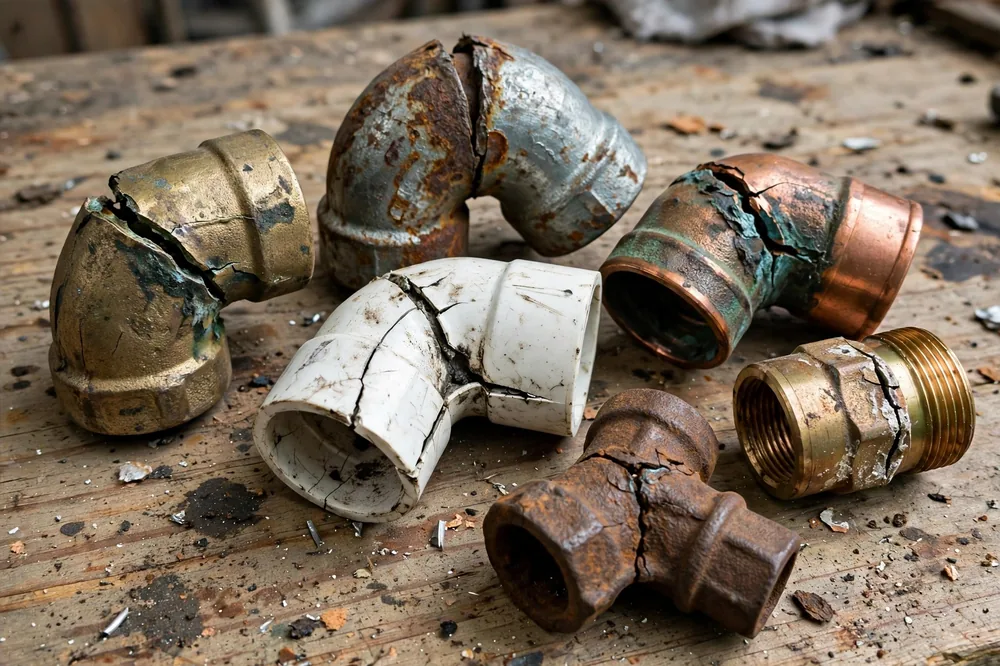
Fittings and joints split before straight pipe because they are where a line changes direction, changes material or was joined by hand. Those spots hold small gaps, thinner walls and leftover stress from installation, and ice pressure finds them first. An elbow in a cold wall can crack while the pipe on both sides survives, which is why so many freeze leaks start exactly at a joint.
Why Do Fittings And Elbows Split Before Straight Pipe?
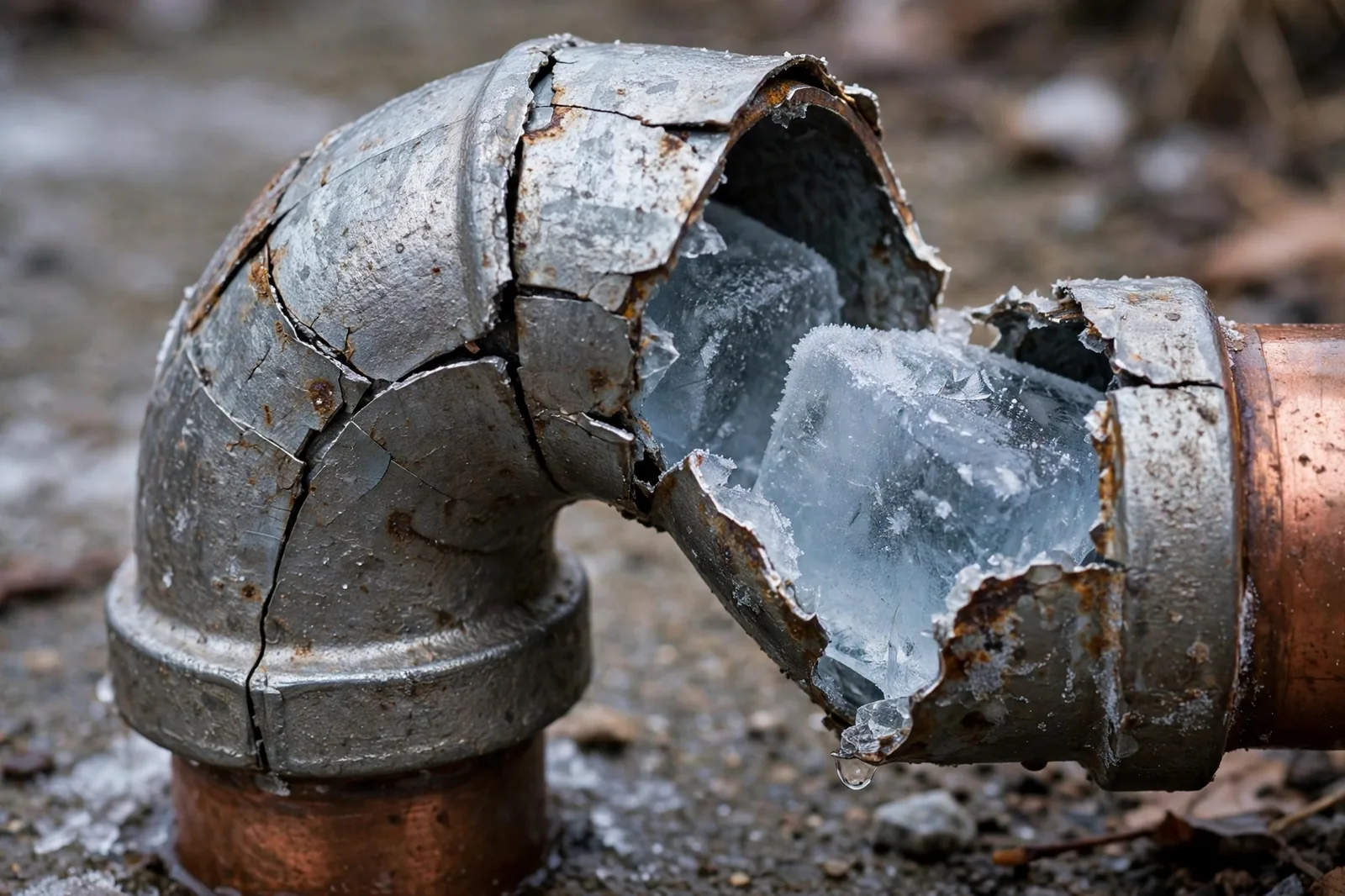
A straight run of pipe is one smooth, even tube. A fitting is an interruption: the line turns, narrows, joins another material or is sealed with solder, glue or threads. Every interruption concentrates stress. When ice expansion pressure, the force created when water freezes and expands inside a closed pipe, climbs inside the line, that stress gathers at the interruption instead of spreading evenly along the tube.
Fittings also trap water differently. An elbow at a low point holds water that cannot drain, and a valve or tee can create a small pocket where ice forms early and seals the line. Once sealed, pressure builds on both sides of the plug. A failed fitting, a joint, elbow or connector that cracks or separates, is the usual result, and it is why pros inspect every joint near a freeze, not just the split one.
Why Do Joints Sit In The Coldest Spots?
Plumbing layout puts joints where lines turn, and lines turn at walls, floors and ceilings — exactly where cold air reaches first. The elbow feeding a kitchen tap sits inside an exterior wall, an outside-facing wall whose runs sit closest to outdoor cold. The joint under a hose bib, the outdoor tap for hoses, sits inches from outdoor air. Layout, not bad luck, places the weakest parts in the harshest spots.
What Fitting Fails Most In A Freeze?
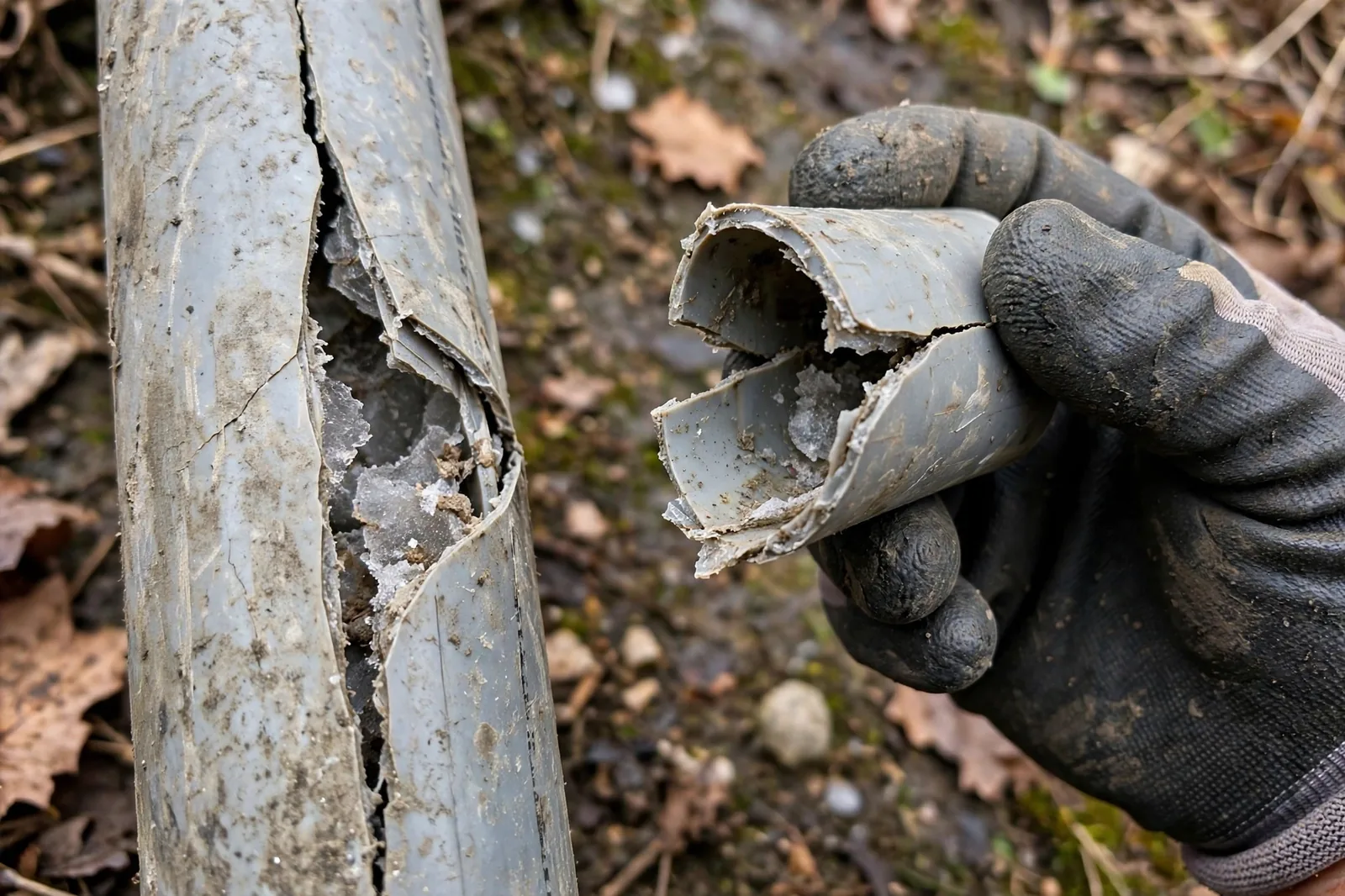
Elbows and tees in rigid plastic fail often, because CPVC pipe, a rigid plastic rated for hot and cold supply, turns brittle with age and cold, and its fittings share that brittleness. A brass fitting, a corrosion-resistant metal connector used to join pipe sections, elbows and valves, is tougher, but the joint where brass meets plastic or copper can still separate when the two materials expand and contract at different rates through a freeze.
Soldered copper joints fail in a quieter way: a joint that was slightly starved of solder at installation holds for years, then opens under freeze pressure and weeps rather than bursts. Around burst pipe help in Parma, pros see the full range in older farmhouses — cracked plastic elbows, separated threaded joints and one weeping solder seam in the same crawl space, the shallow space under a home where supply pipes often run unheated.
Pipe Frozen Or Burst Right Now? One Free Call Connects You With A Local Pro.
Call NowHow Does Ice Pressure Find The Weak Point?
Ice does not need to form at the weak point to break it. Ice grows along the coldest stretch and seals the line, then further freezing pressurizes the water trapped between the plug and a closed tap. That pressure acts on the whole sealed section equally. The wall, joint or fitting with the least strength left is simply where the section gives way, which can be feet from any ice.
History decides where that least strength sits. Pipe corrosion, the gradual wearing away of a pipe wall until it fails, thins metal from inside. Galvanized steel pipe, an older zinc-coated steel pipe that corrodes from the inside over time, loses both wall thickness and internal width, so its threaded joints carry rust, scale and stress together. The freeze thaw cycle, repeated freezing and warming that weakens a pipe, adds a little damage each winter until one cold night finishes the job.
Can Water Hammer Weaken A Joint Before Winter?
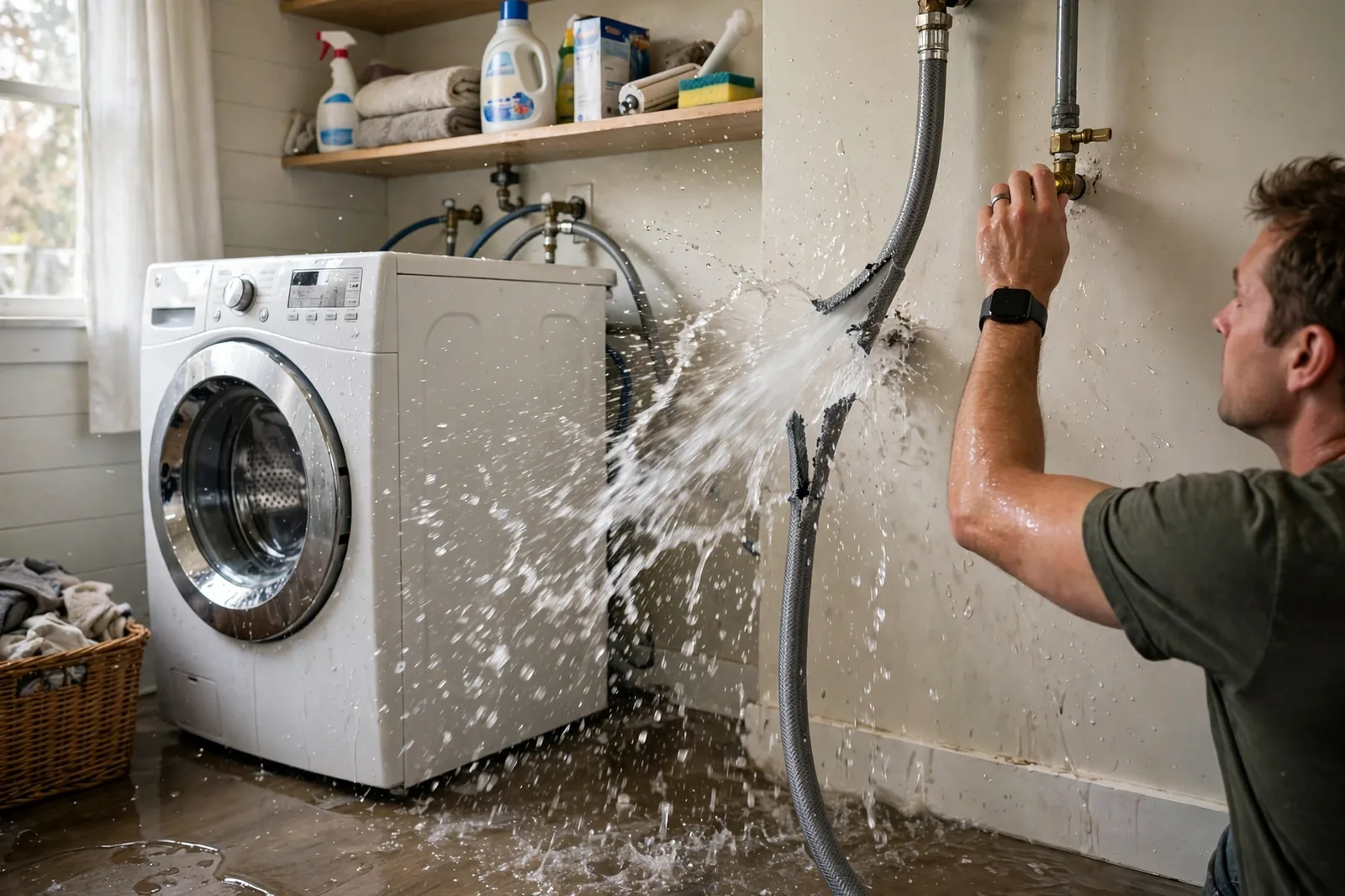
Yes. Water hammer, a pressure shock wave and banging sound when flowing water stops suddenly, slams joints thousands of times over years. Each bang is small; the accumulated loosening and fatigue are not. A joint that bangs through summer may be the same joint that separates in January. If your pipes bang when taps close quickly, mention it when a pro visits — it is real evidence about joint condition.
Why Do Joints Differ From The Pipe Around Them?
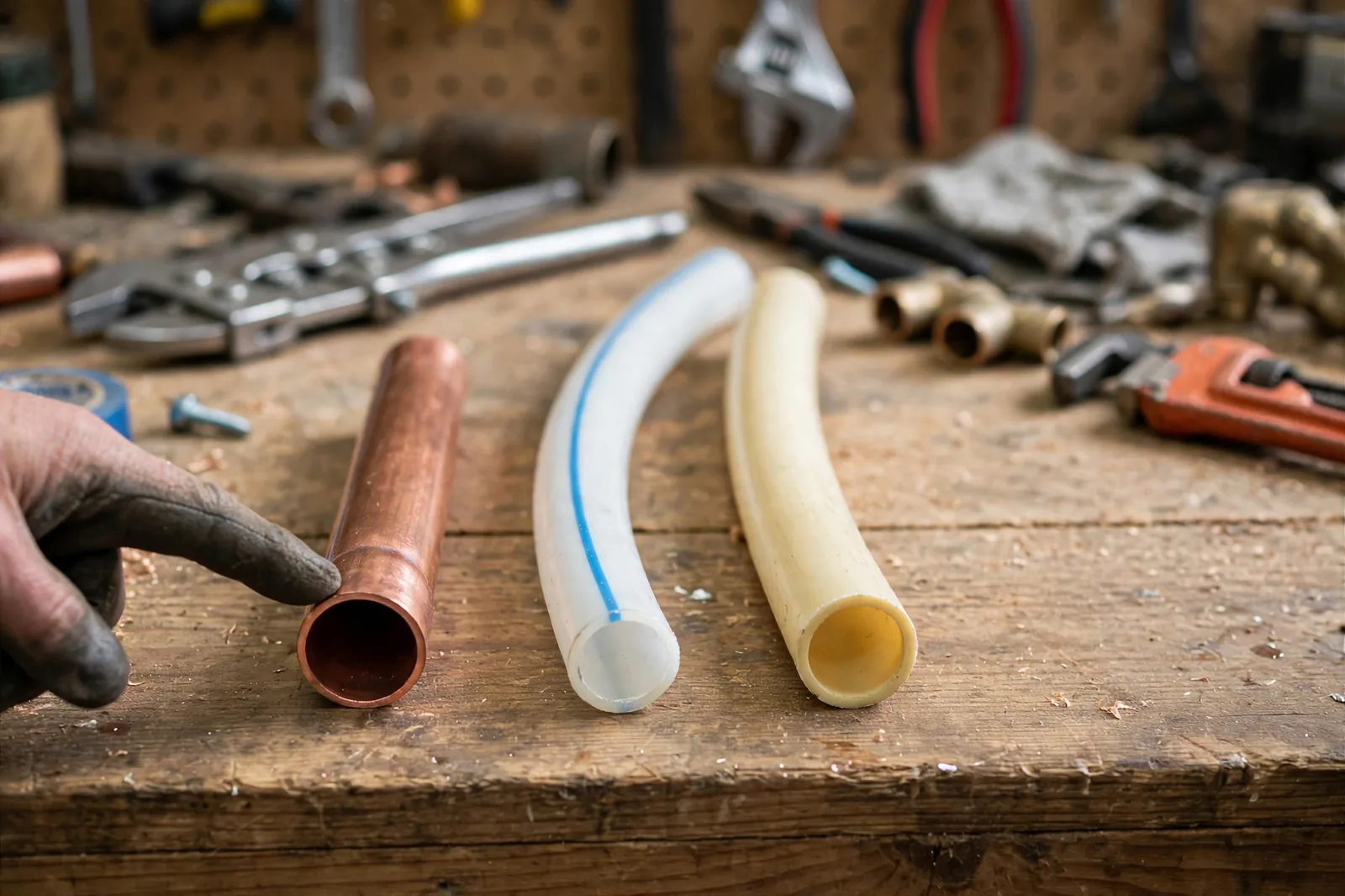
A joint is made, not drawn. Straight copper pipe, the metal pipe used in many Idaho homes, leaves the factory with a consistent wall. A joint is cut, cleaned, fluxed and soldered by hand, or glued, threaded or crimped on site, so its quality varies with the installer and the day. Two joints in the same wall can age very differently, which is why one elbow splits and its twin, a metre away, does not.
Mixed materials deepen the difference. PEX pipe, a flexible plastic pipe that can expand slightly, flexes with ice and often survives a freeze that cracks the rigid fitting threaded onto its end. The fitting becomes the stiff point in a flexible system. Our guide to choosing replacement pipe material explains how pros match fittings and pipe so the system flexes — or holds — as one piece.
Which Materials And Ages Fail First?
Age matters as much as material. Older plastic grows brittle: our guide to whether older plastic pipe gets brittle and cracks walks through that ageing in detail. PVC pipe, a rigid white plastic used mainly for drain, waste and irrigation lines, is not made for hot supply or pressure at a fitting, and where it was misused on a pressurized line, its joints are early freeze casualties.
High water pressure, supply pressure above what home plumbing is designed for, quietly raises the stakes everywhere. A system that idles at high pressure starts every freeze closer to its limit, so a joint that would have survived at normal pressure lets go. Around burst pipe help in Payette, a pressure reading is a standard part of the visit for exactly this reason: fixing the joint without checking pressure invites the next joint to fail.
Do New Fittings Fail Too?
They can, though for different reasons. A new fitting that was over-tightened can carry a hairline crack from installation day. A glued joint that was pushed together in cold weather may never have bonded fully. These are the failures that surprise homeowners most: the part is new, but the stress was built in. A pressure test after installation is what catches a weak new joint while it is still easy to replace.
What Are The Signs A Fitting Is Failing?
Before a joint splits outright, it often weeps. Look for green or white crust at a copper joint, dampness at the back of a cabinet, a single fitting that frosts faster than the pipe beside it, or a faint hiss at a wall when the house is quiet. A joint that sweats in winter while its neighbours stay dry is sitting in colder air or already holds the beginnings of ice.
After any freeze, run each tap and inspect every reachable joint while a helper watches. A fitting that survived this time but bulged, sweated or clicked under returning pressure is telling you it is next. Mark it, photograph it and plan its replacement in mild weather. That planned hour with a pipe cutter, a tool that cuts a clean section of pipe so a damaged part can be removed, in spring is far cheaper than an emergency in January.
How Do Pros Replace And Prevent The Next Failure?
Replacement starts with cutting out the failed fitting and a short margin of pipe on each side, because invisible stress can extend past the visible crack. The new section is joined, then the line is proven with a pressure test, filling the line at a set pressure and watching for a drop that shows a leak remains. Neighbouring joints on the same run are inspected while the wall or floor is open, since they shared the same freeze.
Prevention then targets the cold, not just the joint. A pipe insulation sleeve, foam tubing slipped over a pipe to slow heat loss, goes on the whole run, fittings included, and heat tape, an electric cable applied along a pipe to keep it above freezing, protects the coldest elbow. If you find a split fitting tonight, close the main valve and call Idaho Burst Pipe Pros on (800) 555-0100 for burst pipe help in Parker and statewide; calls are answered 24/7 with pros typically arriving in 30 to 60 minutes.
Should Every Old Fitting Be Replaced At Once?
Not necessarily. Replace failed and visibly stressed fittings, plus any that share the exact cold spot, and note the rest for planned work. Opening every wall in the house on suspicion alone rarely makes sense. A pro who shows you readings, corrosion and frost patterns joint by joint is giving you a defensible order of work — worst first, documented, and priced by section rather than by fear.
Frequently Asked Questions
Straight answers, no fine print. If your question is not here, one free call gets you a local pro who can check your exact problem.
Still Have Questions? Call Free
Answered 24/7 — a local pro can arrive in 30–60 minutes.
Call Now — (800) 555-0100Because a fitting interrupts the smooth, even tube of straight pipe. It changes direction, changes material or was joined by hand, and each of those concentrates stress and can hold small gaps or thinner spots. Ice pressure acts on the whole sealed section, so the section gives way at its weakest point, which is very often a joint. Straight pipe beside the failed elbow frequently survives the same freeze undamaged.
Elbows and tees in older rigid plastic are frequent failures, because the material turns brittle with age and cold and its fittings share that brittleness. Soldered joints that were light on solder from installation day also open under freeze pressure, usually as a weep rather than a split. Threaded joints in old steel can separate where rust has thinned the threads. The pattern in your home depends on its materials and age, which a pro reads quickly.
Yes, and it is common. A stressed joint may only weep under full pressure, leaving a slow drip inside a wall that shows up weeks later as a stain, soft drywall or a musty smell. That is why a freeze with no visible flood still deserves a check: run the taps, watch the meter with everything off, and feel cabinet backs and wall bases for damp. A weeping joint found early is a small, planned repair.
Joints are handmade, so no two age identically. One elbow may sit in a colder pocket of the wall, carry a slightly thin solder seam, hold a low point where water cannot drain, or connect two materials that move differently in the cold. Its twin a short distance away may sit in warmer air with a sound seam. Pros inspect the neighbours anyway, because sharing the same freeze makes them suspects even when they look fine.
Only partly. The flexible tube can expand slightly as ice forms, which lowers the pressure peak compared with a fully rigid line. The fittings on its ends, though, are rigid, and crimp or threaded connections remain stress points. A PEX system often survives a freeze that would split copper, yet still lose one fitting at a cold wall. Protecting the fittings with insulation matters just as much as the choice of tube.
Look for new crust or discoloration at the joint, a damp ring in the cabinet or flooring below it, slight bulging, or a joint that frosts or sweats out of step with the pipe around it. Have a helper run taps while you watch reachable joints. Any weeping at all under pressure means the joint has moved or cracked. Photograph what you find and plan replacement rather than waiting for the next cold night to finish it.
A split fitting cannot be tightened back to sound. Sealants and tape may slow a weep for hours, which can be useful while you wait for help with the water off, but the cracked part has lost its strength and will open again under pressure or the next freeze. The sound repair is to cut the failed fitting out and join in a new one, then pressure test the line before closing anything up.
The joint feeding an outdoor tap sits inches from outdoor air, at the end of a line that is often left full of water when a hose stays connected into fall. Trapped water in that short run freezes early and hard, and the elbow or shutoff joint inside the wall takes the pressure. Disconnecting hoses, draining that line and insulating the interior joint each fall removes one of the most predictable freeze failures in Idaho homes.
Yes. A system that idles at high pressure stresses every joint around the clock, so each freeze starts closer to the failing point. Pressure also worsens banging when taps close, which fatigues joints over time. A pro can read your pressure in minutes during a repair visit. If it is high, correcting it protects every remaining fitting in the home, not just the one that split, and is usually simple work.
Idaho Burst Pipe Pros connects callers with independent local pros on (800) 555-0100; calls are answered 24/7 and pros typically arrive in 30 to 60 minutes. While you wait, close the main shutoff if the joint is leaking, catch drips in a bucket, and take dated photos of the joint and any wet areas. Tell the pro if the pipes bang or if this run has frozen before, because that history helps them judge the neighbouring joints too.
Reviewed By Hamza
Lead Water Damage Restoration & Structural Drying Specialist
Hamza is an emergency water restoration specialist with deep expertise in burst pipe mitigation, freeze damage remediation, and industrial structural drying across freezing northern climates. He focuses on rapid moisture extraction, thermal imaging diagnostics, and comprehensive subfloor restoration to protect homes from mold and structural deterioration.
Updated October 27, 2026
Need Burst Pipe Help In Idaho?
One free call connects you with a local pro — answered 24/7, and a pro can arrive in 30–60 minutes.
Call Now — (800) 555-0100Free Call · Answered 24/7 · Local Pros Near You