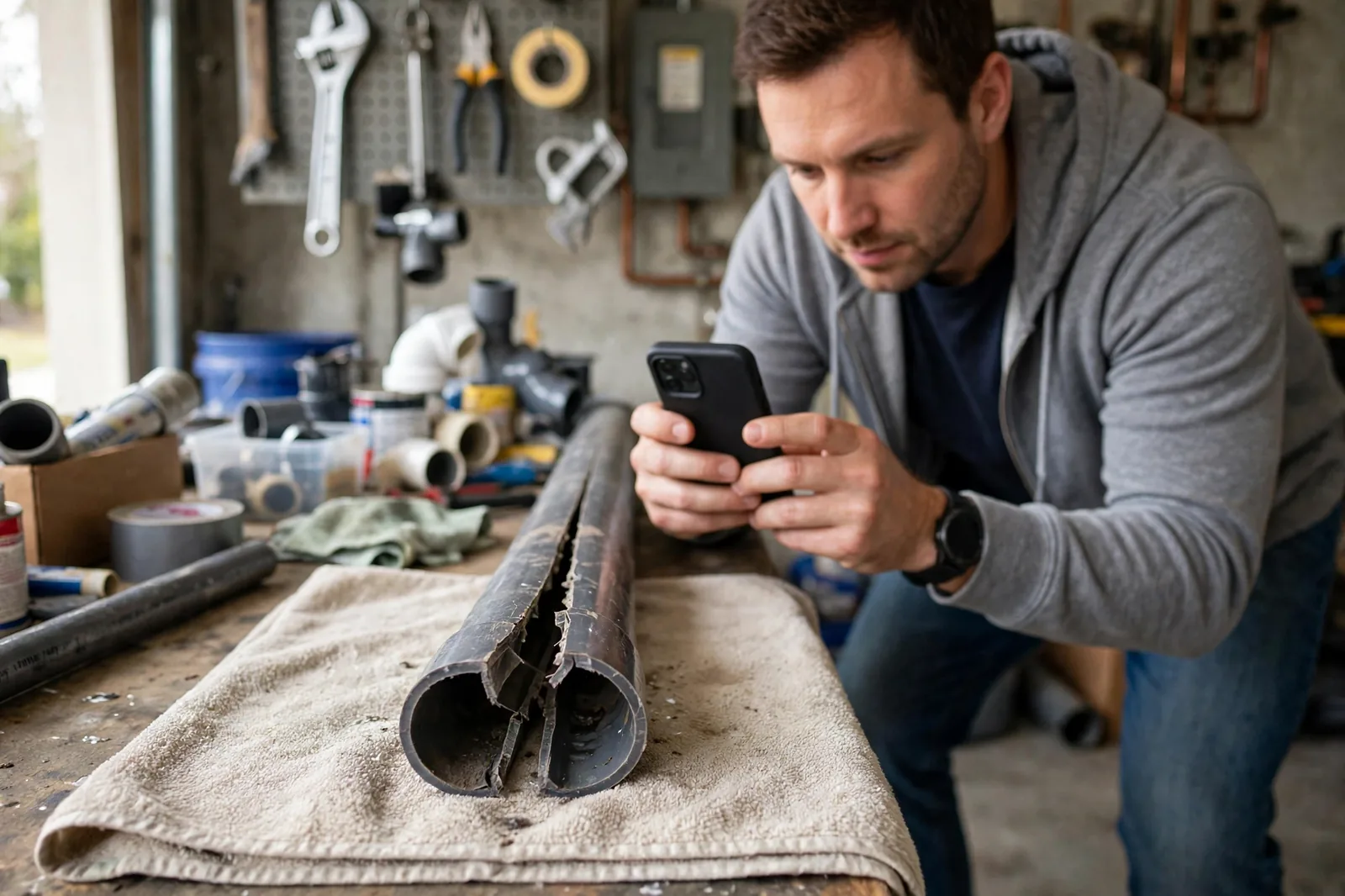
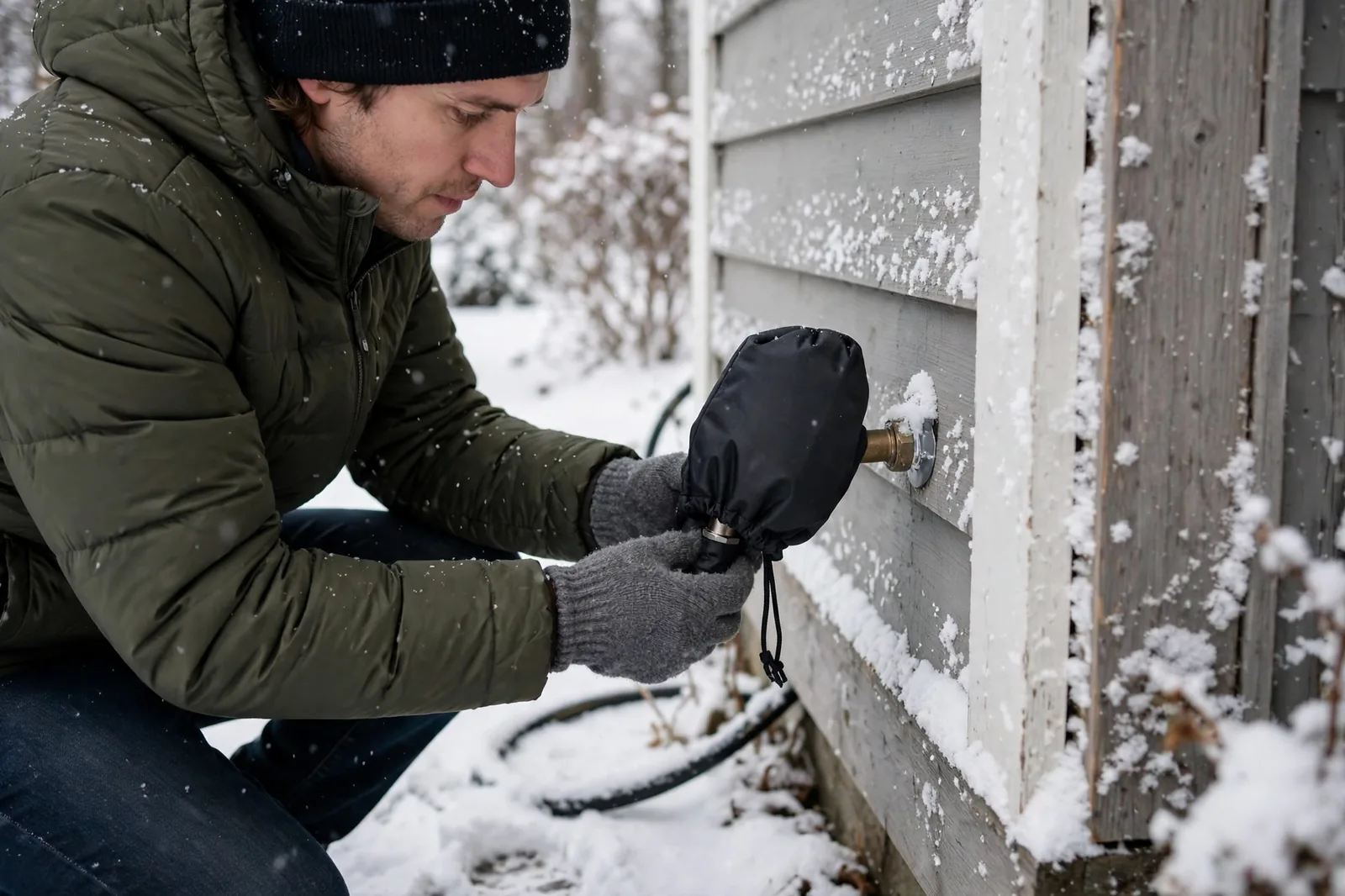
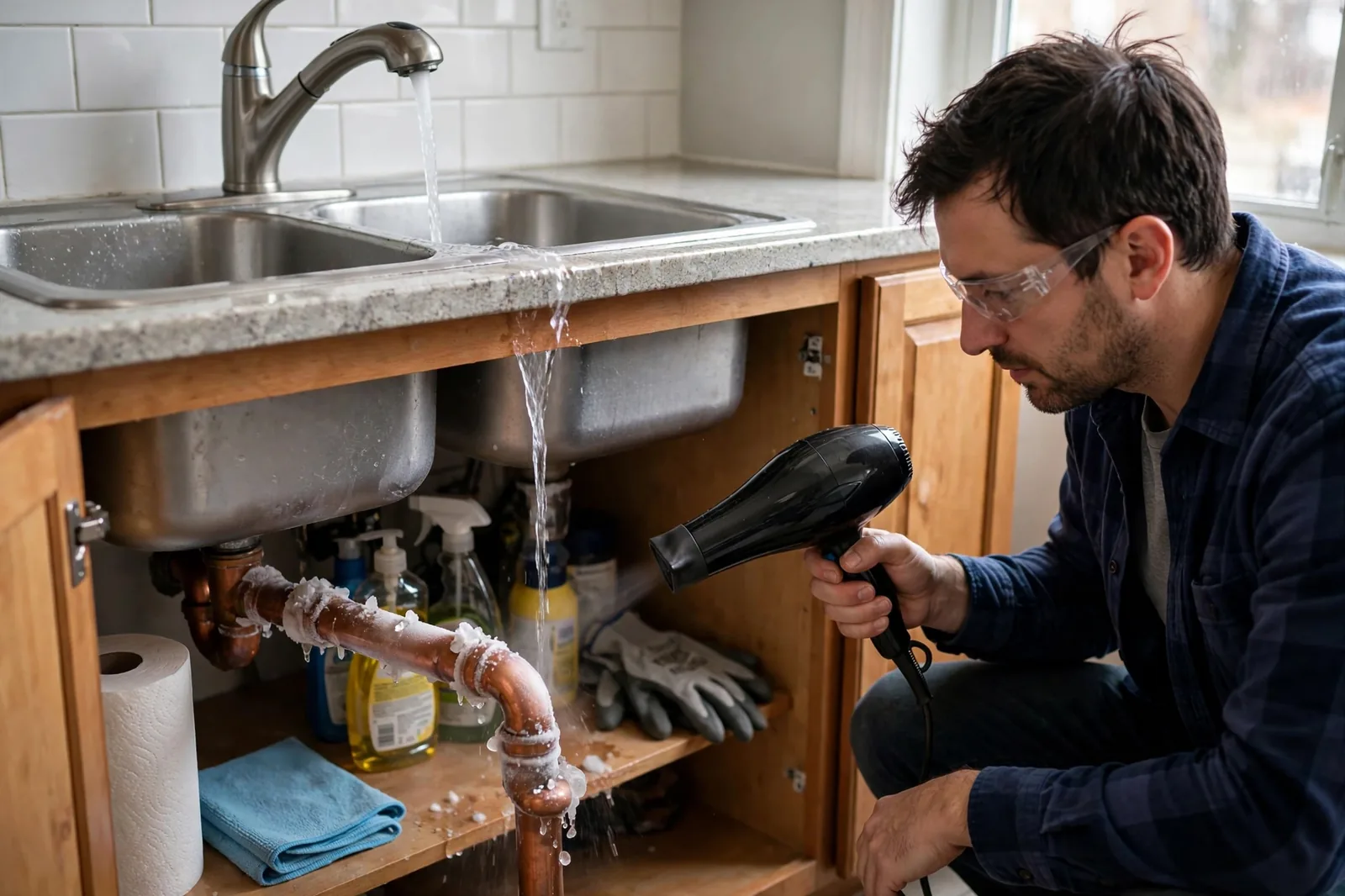
Heat Tape For Pipes: How It Works And How To Use It Safely
Free Call · Answered 24/7 · Local Pros Near You
Quick Answer
An electric cable applied along a pipe keeps a vulnerable run above freezing by warming the pipe itself. Used on the right product for your pipe material, fitted exactly as its maker directs, and plugged into a protected outlet, it is a safe and proven layer of protection. Most problems come from damaged, aged, or wrongly fitted cable, so yearly inspection matters as much as the installation.
How Does Heat Cable Prevent Freezing?
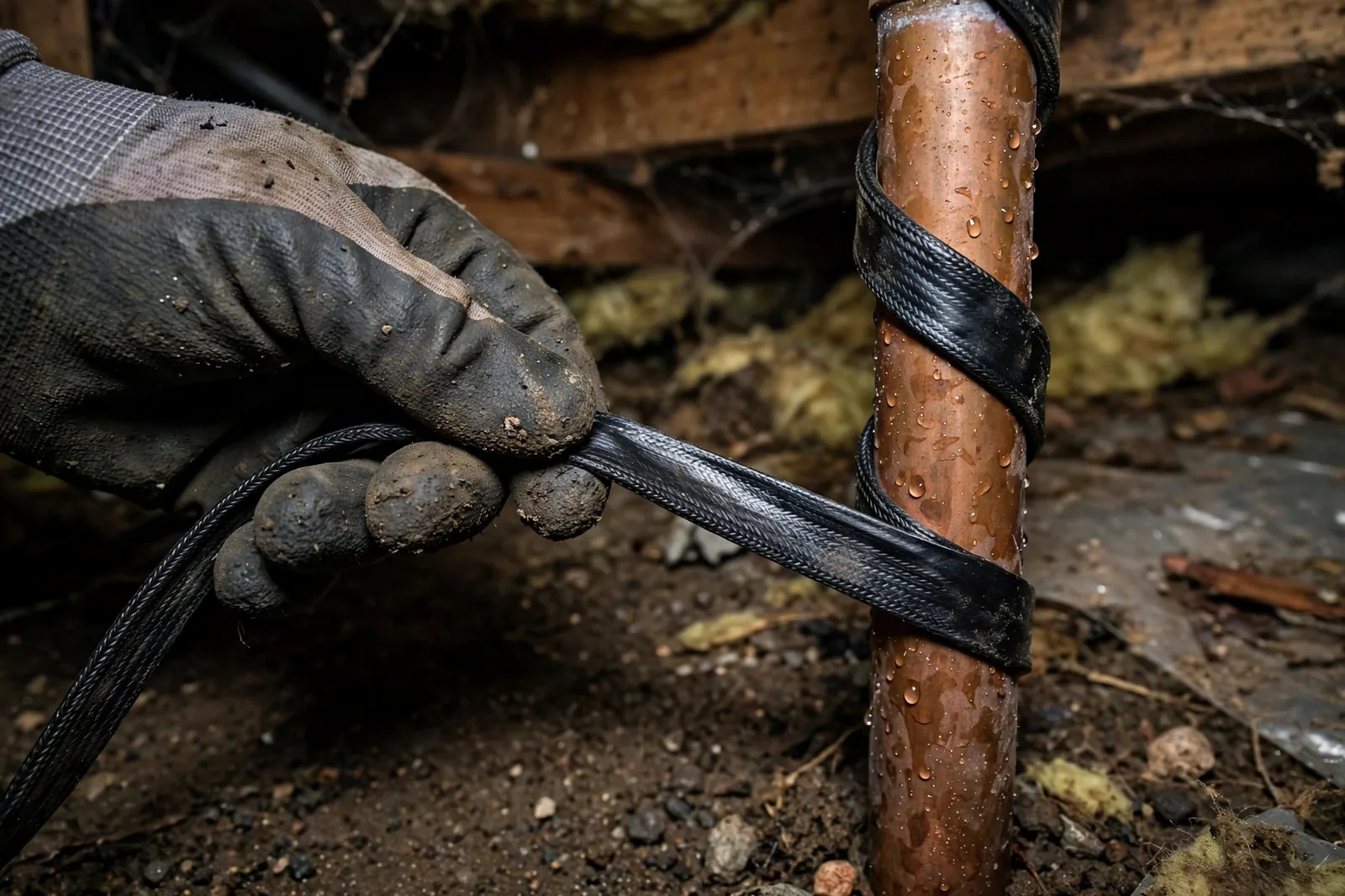
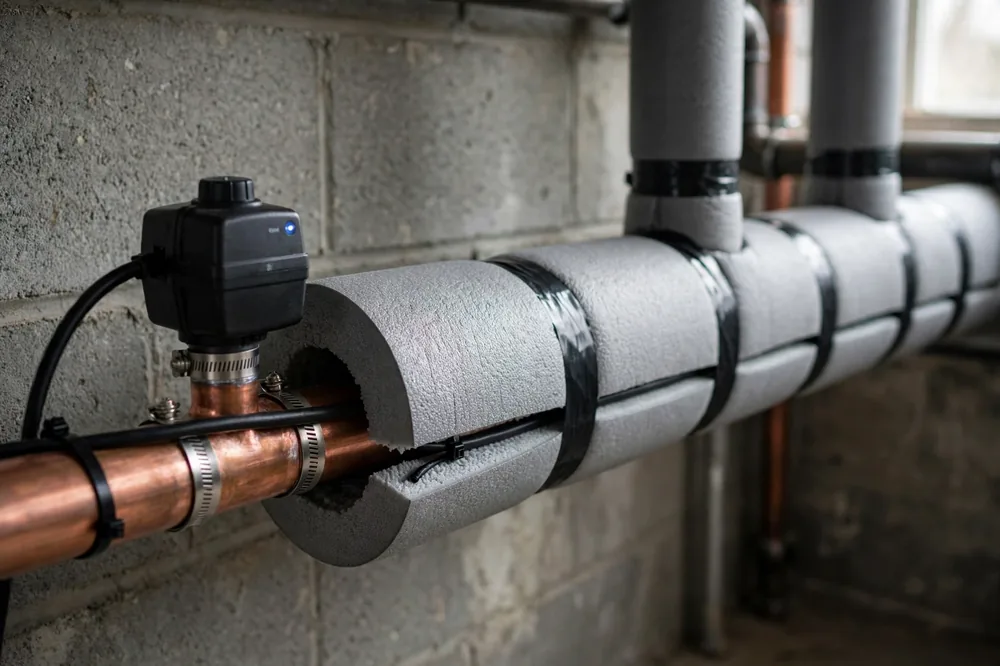
A pipe freezes when the water inside it gives up its heat to colder air faster than the home replaces it. The cable reverses that balance at the pipe's surface. The cable runs along the run, secured against the pipe, and its gentle warmth offsets the heat the cold air steals. The water never reaches freezing, so no ice plug forms, no ice expansion pressure builds, and the freeze thaw cycle never gets started on that run.
Self-regulating cable adjusts its output along its length, warming more where the pipe is colder. Constant-wattage cable delivers even heat and is often paired with a thermostat that switches it on as temperatures fall. Either design protects only the run it touches, which is why placement matters: the cable belongs on the coldest, most exposed sections first, the runs that froze in past winters or sit where insulation alone has already proven not enough.
Where Does The Cable Help Most?
It helps most where insulation alone cannot hold the line: very cold exposure, long under-home runs, and spots where wind strips warmth faster than foam can keep it. It helps least, and is needed least, on warm interior runs. Matching the cable to the genuinely cold sections keeps the system simple, effective, and easy to inspect each year.
Is Heat Tape Safe For Pipes?
Yes, with conditions that are easy to state and worth following exactly. The product must suit the pipe material beneath it, because metal and plastic take heat differently and makers rate their cables accordingly. It must be fitted as directed, with the spacing, fastening, and end arrangements the instructions describe. And it must be powered properly, through a ground-fault protected outlet, not a frayed extension cord run under a home for a decade.
The failures that make headlines almost always involve a breach of those conditions: cable wrapped over itself where the maker forbids overlap, damaged sections left in service, indoor product used outdoors, or cable buried under insulation against its rating. The American Red Cross treats electric heating methods as the safe alternative to open flame for pipes, and that judgement assumes the product is sound and correctly used. Respect the conditions, and the method deserves its reputation.
Why Do Most Problems Trace Back To Old Cable?
Cable ages like any electrical product: its jacket cracks, moisture enters, and repairs made with ordinary tape hide damage instead of fixing it. A cable installed a decade ago and never inspected is a different object from the one that was fitted. The fall inspection, done by eye and by touch with the cable powered, is what keeps an aging installation in the safe category year after year.
Pipe Frozen Or Burst Right Now? One Free Call Connects You With A Local Pro.
Call NowHow Do You Fit Cable On A Vulnerable Run?
Start by identifying the run precisely: its material, its length, and the points where it passes valves, elbows, and joints, because fittings lose heat faster than straight pipe and the maker's instructions usually call for extra cable there. Measure before buying, choose the product rated for that material and location, and read the full instruction sheet before anything touches the pipe. Half an hour of reading prevents nearly every installation error on the common list.
Fit the cable along the pipe's coldest side as directed, secure it at the stated intervals with the stated tape or ties, and arrange the thermostat sensor where the maker places it, against the pipe at a representative cold point. Homeowners reading about burst pipe help in Athol, where under-home runs are long and winters are serious, often protect the manufactured home underbelly run this way, cable first and insulation over it where the product allows, as one combined system.
How Does Insulation Work With The Cable?
Insulation and cable do different jobs, and the pairing is stronger than either alone. A pipe insulation sleeve, foam tubing slipped over a pipe, slows heat loss but adds no heat, so in a long deep freeze a merely insulated pipe still eventually reaches air temperature. The cable adds the missing heat, and the insulation then holds that warmth against the pipe instead of letting it bleed into a crawl space, which lowers running cost and evens out the protection.
Whether the sleeve may cover the cable depends entirely on the product, and the instructions answer it in plain language. Many systems are designed for exactly that arrangement; some are not. Fit them in the maker's order, with the thermostat and any indicator light accessible enough to check. A system you can inspect in seconds each fall is a system that actually gets inspected, which is its own safety feature.
Which Other Layers Belong In The Same Plan?
Draft sealing, for one: cold air pouring through a gap can outrun a small cable on the windiest night, so sealing the opening is part of protecting the run. Our guide on protecting outdoor faucets and hose bibs covers the outdoor end of the same system, where a drained line and a fitted cover finish what the cable starts on the inside run.
Where In Idaho Homes Does Cable Earn Its Keep?
The classic locations repeat across the state: the main entry line rising through a crawl space, the shallow space under a home where supply pipes run unheated; long runs inside the manufactured home underbelly; the well line, the pipe carrying water from a private well into the home, where it runs shallow or exposed; and lines feeding rooms over garages or inside an exterior wall. Each is a run that insulation alone has a history of losing to on the coldest nights.
Cabins and second homes in the central Idaho mountains use cable differently: paired with drained lines and low heat, as a guard for the sections that cannot be fully emptied. Rural owners near burst pipe help in Atomic City and farming properties with outbuilding lines face the same arithmetic: one protected run, checked each fall, costs a fraction of one burst in an empty building discovered weeks later by a water bill or a neighbour.
What Mistakes Make Cable Protection Fail?
The first mistake is coverage that stops short: cable along the easy straight metres, with the valve, the elbow, and the final cold stretch left bare. A run freezes at its coldest unprotected point, so partial coverage can fail completely while looking thorough. The second is power: a cable plugged into an outlet that trips, a switch someone turns off in spring and forgets, or a cord damaged by animals under a home, protects nothing while appearing installed.
The third is neglect after damage elsewhere. A burst repaired in January soaks the area, and structural drying, the planned drying of walls and floors, follows; the soaked cable and its connections in that zone need checking before they are trusted again. A moisture meter reading may clear the wall while the cable's own condition goes unexamined. Add the cable to the post-repair checklist, alongside the pressure test that proves the pipe, and the system returns to service whole.
Why Is Testing In Fall Better Than Trusting In Winter?
A cable can fail silently in June and announce itself only when the pipe it guarded freezes in January. Powering it on a cool fall day and feeling for warmth along its length, checking its outlet's protection, and confirming the thermostat responds takes minutes. That small ritual is the difference between a protection system and a decoration, and it belongs on the same fall list as disconnecting hoses.
How Do You Keep The System Working Year After Year?
Make it a short fall routine. Inspect the full length by eye for cracks, pinches, scorch marks, and animal damage. Power it and confirm warmth and a working thermostat. Confirm the outlet's ground-fault protection tests correctly. Check that insulation over or around it sits as fitted, and that skirting, vents, and the spaces the run crosses are closed against the wind before the first hard freeze arrives.
Keep the paperwork too: the product name, its rating for your pipe material, and its fitting instructions, filed where the next owner or the next repair visit can find them. Homeowners around burst pipe help in Bancroft who keep that file find every later conversation simpler, from a repair to documenting the home's systems for a claim, the subject of our guide on documenting burst pipe damage for insurance. Good records and a warm cable are both quiet forms of protection.
Frequently Asked Questions
Straight answers, no fine print. If your question is not here, one free call gets you a local pro who can check your exact problem.
Still Have Questions? Call Free
Answered 24/7 — a local pro can arrive in 30–60 minutes.
Call Now — (800) 555-0100Yes, when it is the right product for your pipe material, fitted exactly as its maker directs, and powered through a protected outlet. Problems come from old or damaged cable, wraps that overlap when the maker forbids it, cable crossing itself, and using indoor-rated product outdoors or under insulation against instructions. Inspect it every fall, replace cracked or pinched sections, and never run damaged cable through another winter.
The cable warms the pipe directly, holding its surface above freezing even when the air around it falls below. Self-regulating types adjust their heat output along their length, warming cold spots more and mild spots less, while constant types deliver steady heat and rely on a thermostat. Either way, the goal is narrow: keep that one vulnerable run from ever reaching the temperature where ice can form and build.
Follow the maker's chart for your pipe: metal and plastic need different products and sometimes different fitting methods, and some makers require a thermostat or limit use on plastic. The cable runs along the pipe, often on its coldest side, secured at the maker's spacing, with extra length at valves and joints as instructed. Guessing at these details is how a safe product becomes a hazard, so the instructions rule.
Only where the maker allows it, and in the order the maker states. Many systems are designed to sit under foam insulation, which holds their warmth against the pipe and cuts running cost. Others must not be covered at all. This is the single detail most often guessed at, and the instructions answer it plainly for your specific product, so check before the insulation goes on, not after.
Plug it in before the first hard freeze and leave it powered through the cold season if it has a thermostat or self-regulating design, since the coldest night is exactly when it earns its keep. Unplug or switch it off in spring if the maker advises. Test it early in fall by touch: a working cable feels warm. Discovering a dead cable in November beats discovering it in January.
No. It protects the run it touches, and it does nothing for a failure of power, which is when freezes often strike. It also does not repair a pipe, thaw a solid freeze in moments, or excuse missing insulation elsewhere. Treat it as one strong layer among several: insulation, sealed drafts, drained outdoor lines, and a cable on the run that history says freezes first.
Warning signs are a cable that stays cold when it should be warm, visible cracks, scorch marks, a breaker or ground-fault outlet that trips, and insulation that looks heat-damaged near the line. Any of these means the cable comes out of service until it is replaced. Do not tape over damage or splice a heating cable; replacement sections are the safe and simple answer.
For thawing, gentle methods lead: warm towels, a heating pad, or warm air on the frozen section, with the tap open and the shutoff location known. Some cable products are not made for thawing a solid pipe quickly. Never use open flame. If the frozen run is hidden, long, or already leaking as it warms, a pro's controlled thaw protects the pipe and the house better than force.
Overlapping wraps, cable crossing itself, stretching it tight around sharp fittings, running it through areas the maker excludes, and powering it from a worn extension cord all appear on real problem lists. Another common error is protecting only the easy middle of a run while leaving valves, elbows, and the coldest end bare. The run freezes at its coldest unprotected inch, so coverage must be complete to count.
Call when a vulnerable run freezes every winter, when an existing cable is damaged or trips its outlet, or when you want a long under-home or well line protected properly. Idaho Burst Pipe Pros answers 24/7 on (800) 555-0100 and connects you with an independent local pro, typically arriving in 30–60 minutes. Mention the pipe material and where the run travels; that shapes the product choice before anyone arrives.
Reviewed By Hamza
Lead Water Damage Restoration & Structural Drying Specialist
Hamza is an emergency water restoration specialist with deep expertise in burst pipe mitigation, freeze damage remediation, and industrial structural drying across freezing northern climates. He focuses on rapid moisture extraction, thermal imaging diagnostics, and comprehensive subfloor restoration to protect homes from mold and structural deterioration.
Updated October 27, 2026
Need Burst Pipe Help In Idaho?
One free call connects you with a local pro — answered 24/7, and a pro can arrive in 30–60 minutes.
Call Now — (800) 555-0100Free Call · Answered 24/7 · Local Pros Near You