How To Protect Outdoor Faucets And Hose Bibs In Winter
Free Call · Answered 24/7 · Local Pros Near You
In This Guide
- How Do You Protect Outdoor Faucets And Hose Bibs In Winter?
- Can A Garden Hose Left On Cause A Burst Pipe?
- What Is Different About Frost-Free Faucets?
- How Do You Drain The Line Behind The Faucet Properly?
- What Other Outdoor Lines Need The Same Attention?
- What Are The Signs An Outdoor Line Already Split?
- What Should You Do If An Outdoor Pipe Bursts?
- How Do You Make Outdoor Faucet Care A Routine?
Quick Answer
Protecting an outdoor faucet takes three simple steps before the first hard freeze: disconnect every garden hose, drain the water left in the faucet and its short pipe run, and cover the faucet with an insulated cap. A hose left connected traps water inside the wall, and that trapped water is what freezes, splits the pipe, and floods the room inside when the thaw comes.
How Do You Protect Outdoor Faucets And Hose Bibs In Winter?
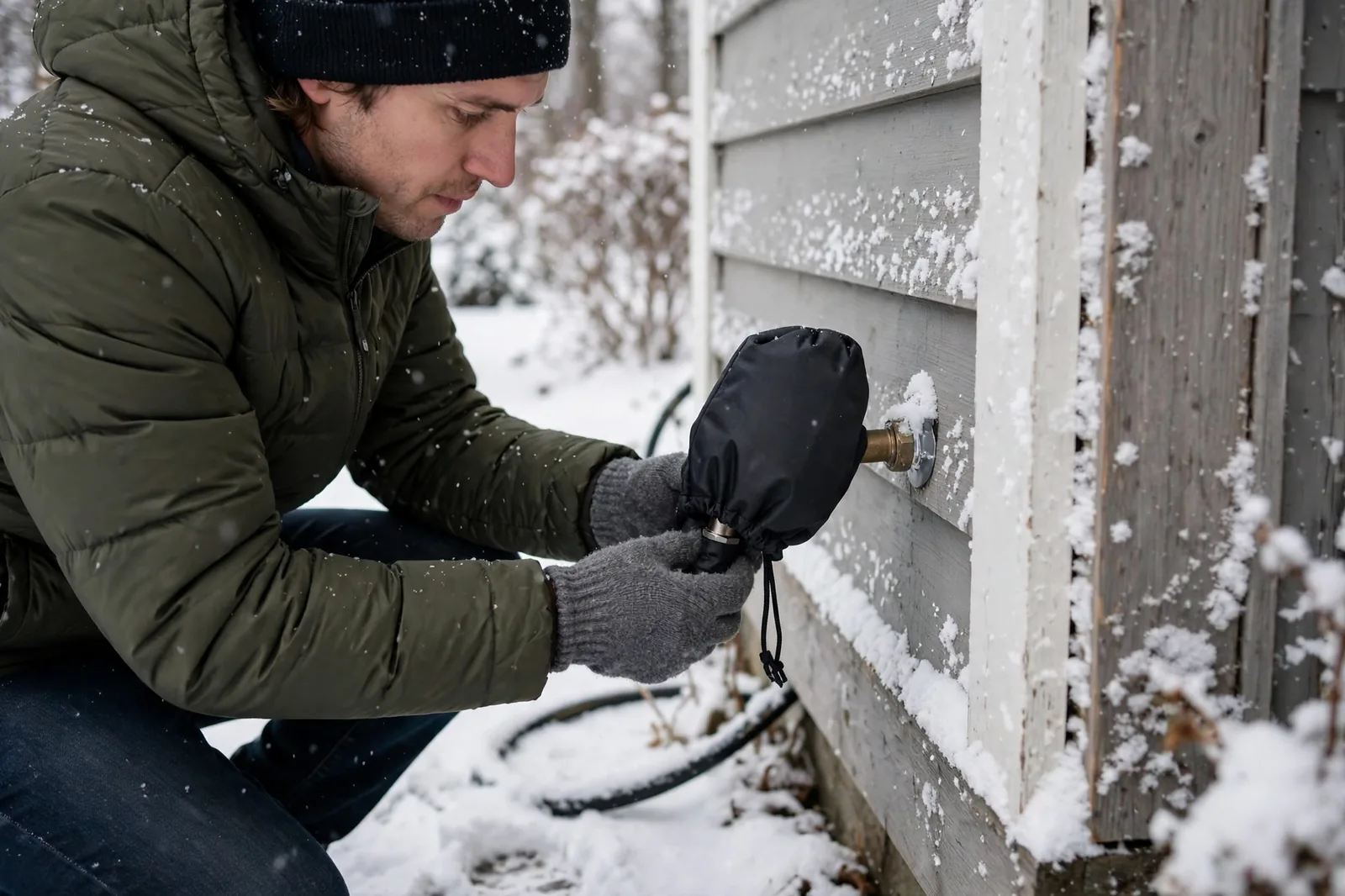
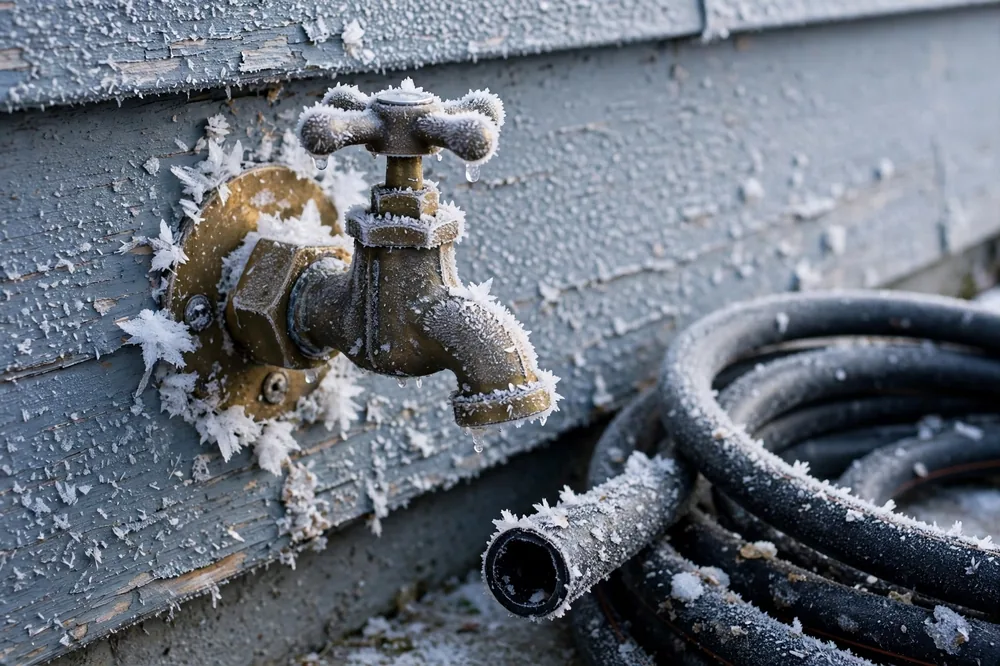
Start with the hose. Disconnect every hose from every hose bib, the outdoor tap for hoses, drain the hose itself, and store it under cover. Then open the faucet briefly to let the water in the short run drain out, and if your faucet has an inside shutoff valve on its line, close that valve and leave the outside tap open so any remaining water can expand toward the opening instead of against a sealed pipe.
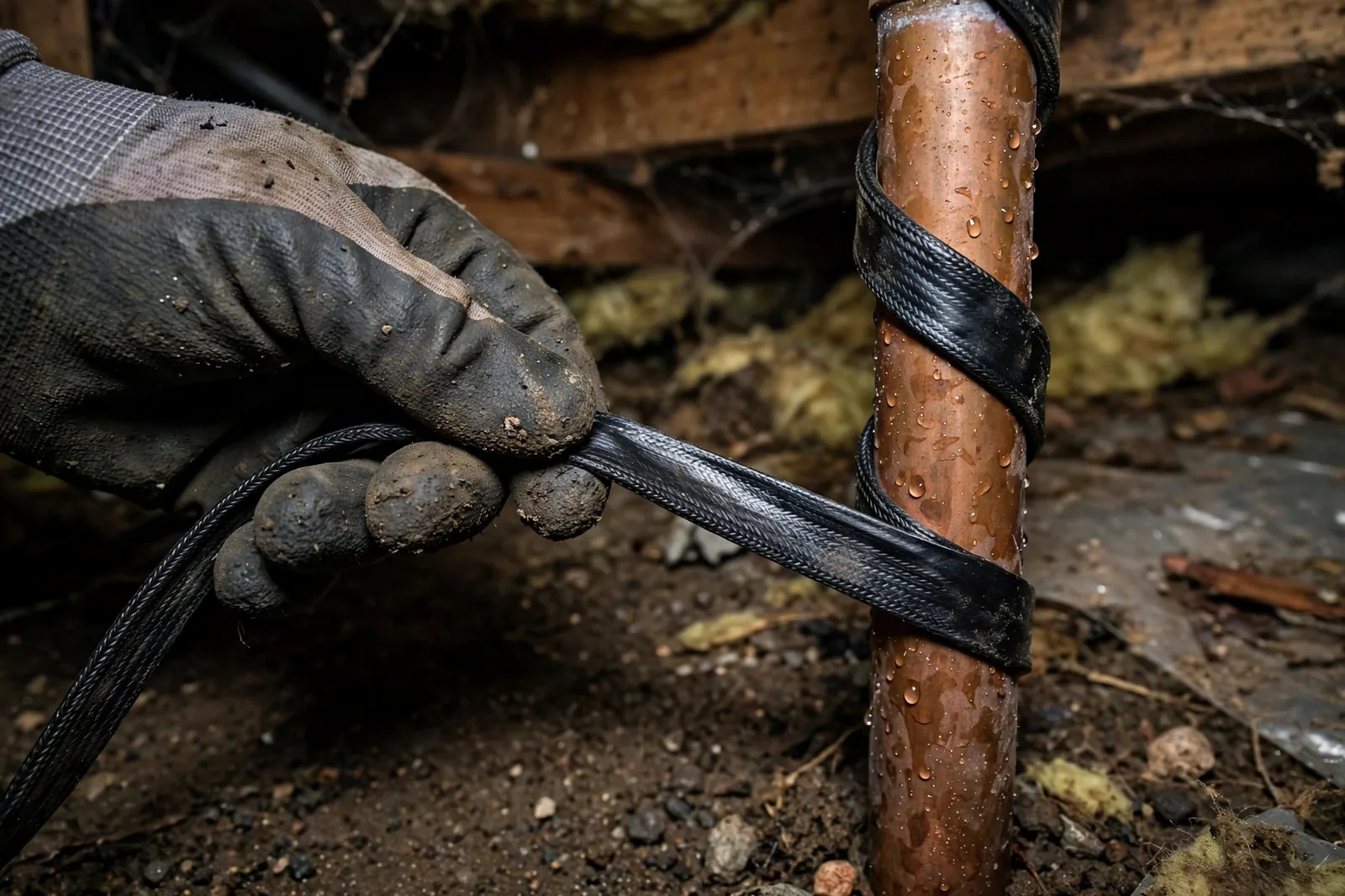
Finish with a cover. A fitted foam cover over the faucet slows heat loss from the metal body, which sticks out into the coldest air the house meets. In colder parts of eastern Idaho, the colder eastern part of the state, homeowners add a pipe insulation sleeve, foam tubing slipped over a pipe, on the inside run as well, covering the stretch of pipe in the wall and the under-floor space behind the faucet.
When Should You Do This In Idaho?
Aim to finish before the first hard freeze rather than the first frost, and treat an early cold snap forecast as your deadline. The NOAA National Weather Service Pocatello office and its Boise counterpart both issue freeze warnings in autumn that make a natural reminder. Doing the job on a mild weekend beats kneeling in the snow in December.
Can A Garden Hose Left On Cause A Burst Pipe?
Yes, and it is one of the most common causes of spring leaks. A connected hose holds water in the faucet and the pipe behind it, because the closed hose nozzle stops that water draining away. When the temperature falls, the trapped water freezes first at the exposed faucet, then the ice grows back into the pipe inside the wall, where you cannot see it.
The split itself often goes unnoticed all winter, because the ice plugs the line and the indoor shutoff, if closed, holds back the supply. The problem announces itself in spring, the first time you open the faucet: water pours through the split inside the wall instead of out of the hose. Homeowners near burst pipe help in Banks frequently meet this exact sequence after the first warm weekend of the year.
Why Does The Leak Appear Inside The House?
Because the pipe splits inside the wall cavity, not at the visible faucet. The faucet body outside can look perfect while the copper pipe, the metal pipe used in many Idaho homes, behind it has opened along its length. Water follows the wall framing down and pools at the floor, so the first sign is often a wet carpet or a stain far below the faucet.
Pipe Frozen Or Burst Right Now? One Free Call Connects You With A Local Pro.
Call NowWhat Is Different About Frost-Free Faucets?
A frost-free faucet is built with a long stem that closes the water off deep inside the warm part of the wall, so the outer section drains itself after each use. Fitted and sloped correctly, it removes the pool of water sitting in the cold zone. It is a genuine improvement, and most newer Idaho homes have them on at least some walls.
It is not immunity, though. A hose left connected defeats the design completely, because the hose holds water in the stem that was meant to drain. A faucet fitted without the slight downward slope also keeps a pocket of water at the cold end. Treat a frost-free faucet exactly like a standard one in autumn: hose off, drained, covered, and it will reward you by needing nothing else.
How Can You Tell Which Type You Have?
A frost-free faucet usually has a longer body, a handle that turns with more travel, and sometimes a vacuum breaker cap on top. Inside, its supply pipe runs further into the wall before the valve seat. If you are unsure, a pro can identify it during any visit, and the autumn routine is safe advice for both types anyway.
How Do You Drain The Line Behind The Faucet Properly?
If your home has a dedicated inside shutoff for the outdoor line, the routine is: close the inside valve, open the outside faucet, then open the small drain cap on the inside valve, if one is fitted, to let the trapped section empty fully. Leave the outside faucet open for the winter so the empty line has room to breathe, and put a bucket under the drain cap moment while it drips.
Homes without a dedicated valve rely on disconnection and gravity: hose off, faucet opened until it stops dripping, cover on. Where the inside run crosses a crawl space, the shallow space under a home, adding insulation to that stretch matters because it is the coldest part of the line. Around burst pipe help in Basalt, that under-floor stretch is where most outdoor faucet lines actually freeze.
What About Faucets On Outbuildings And Barns?
Treat them the same way, and earlier, because outbuildings are unheated and their lines often run shallow. A barn or shop faucet with a stock-tank hose attached all winter is a classic rural failure. Where a building will not be used, shutting its water off at the main line and draining the whole system is safer than protecting each tap.
What Other Outdoor Lines Need The Same Attention?
The irrigation line, buried sprinkler piping, is the big one: it must be blown out with air before winter, because its shallow runs and low points hold water that no draining from a single valve will clear. A missed blowout leaves split sprinkler lines to find in spring, right when you want the system working again.
Outdoor showers, pool fill lines, and lines to detached garages and cabins share the same risk in smaller form. Work around the property with one list in autumn: every outside tap, every hose, every line that will not be used until spring. Our guide to heat tape for pipes and how to use it safely helps for the few exposed runs that stay live all winter and cannot simply be drained.
Should You Cover Faucets Before Or After Draining?
After. A cover fitted over a faucet still holding water only hides the problem; the trapped water freezes behind the foam just the same. Drain first, confirm the dripping has stopped, then fit the cover snugly so wind cannot work it loose. Check the covers again after the first storm, because a missing cover in January helps nobody.
What Are The Signs An Outdoor Line Already Split?
The clearest sign is water where it should not be when the faucet runs: a damp patch on the inside wall, water at the base of the wall inside, or a sound of running water in the wall while the hose outside only trickles. A water meter, the utility meter that records water use, that moves while the hose runs at low flow tells you water is escaping somewhere along the way.
Other signs wait for the thaw. Ice expansion pressure, the force of water expanding as it freezes, may split the pipe in the coldest week, but the leak only flows when the ice melts and supply returns. If you turned an outdoor faucet on in spring and pressure felt weak while a wall got damp, close the main water shutoff valve, the main valve that stops all water entering the home, and treat it as a burst until a pro proves otherwise.
How Do Pros Repair A Split Faucet Line?
The pro opens the wall or works from the under-floor side, cuts out the split section with a pipe cutter, and fits new pipe and a brass fitting, a corrosion-resistant metal connector, then tests the line under pressure before closing up. If the faucet itself is old, replacing it with a frost-free model while the wall is open is a small extra that prevents a repeat performance next winter.
What Should You Do If An Outdoor Pipe Bursts?
Close the main shutoff or the line's own inside valve at once, then open the outside faucet to drain what is left in the run. Move anything stored against the wet wall, and start drying: a wet and dry vacuum, a vacuum that can remove standing water, handles the first water, and air movement across the wall base helps while you wait for help. Take dated photos of the wet area for an insurance claim before you clean up.
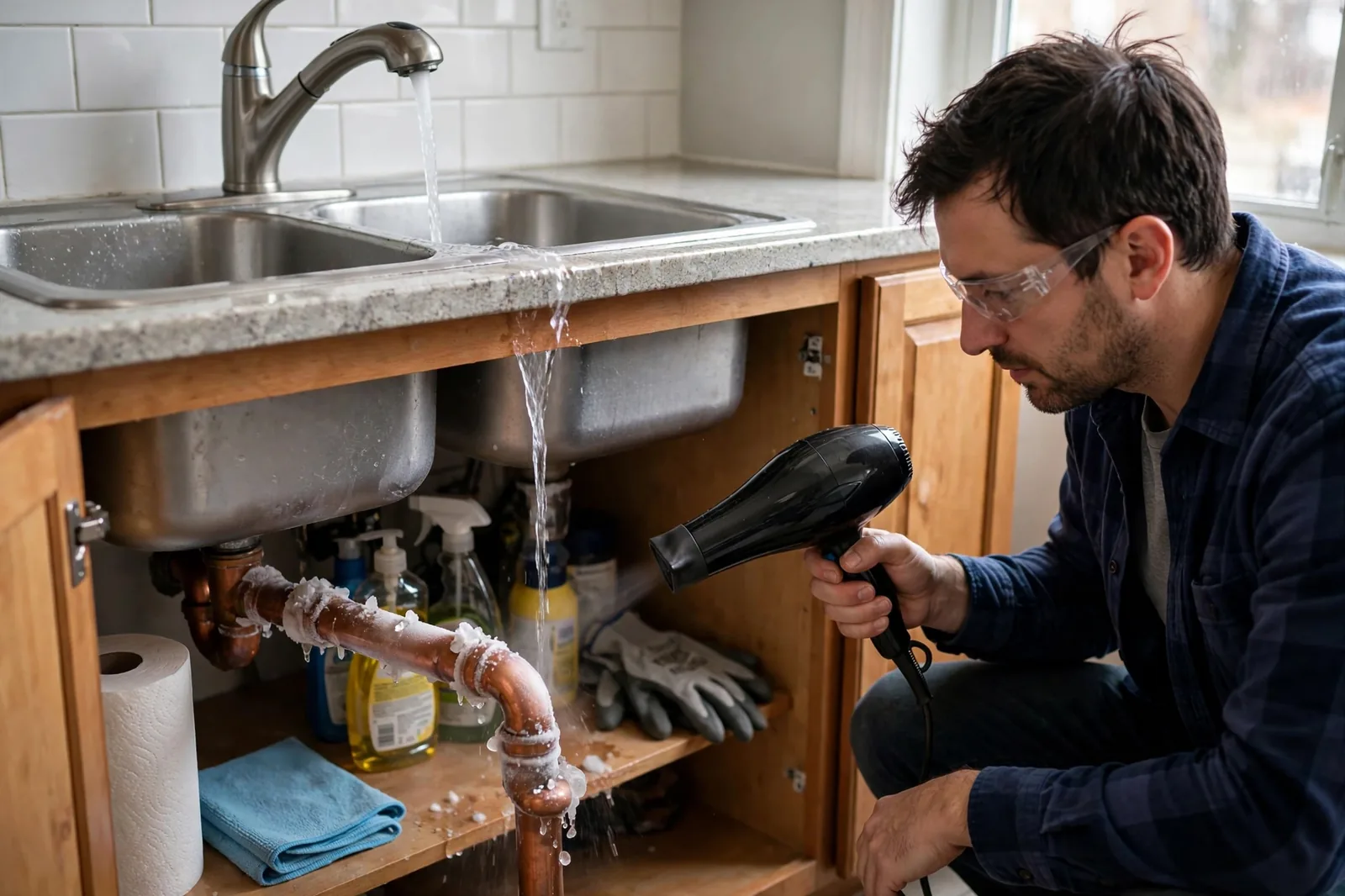
Then call. Idaho Burst Pipe Pros is a free service connecting callers with independent local pros; calls are answered 24/7 and pros typically arrive in 30–60 minutes. If the pipe froze rather than split, thaw it gently with warm towels or a hair dryer, and follow the American Red Cross guidance that warns against open flame, which can start a fire inside a wall.
Can You Just Cap The Line And Deal With It In Spring?
You can isolate a burst outdoor line at its inside valve and leave the repair for better weather, provided the valve fully stops the flow and the wet structure gets dried now, not in spring. Drying cannot wait, because mold growth, fungi that can start on wet materials within days, begins on the same timetable whatever the season. The pipe can wait a week; the water cannot.
How Do You Make Outdoor Faucet Care A Routine?
Tie it to an autumn habit you already keep: when the clocks change or the first freeze warning appears, walk the property once with a bucket and this list. Hoses off and drained, faucets opened and covered, inside valves closed where fitted, irrigation blown out, outbuilding lines drained. The whole round takes under an hour on most properties and removes one of the most preventable causes of water damage in the state.
Households around burst pipe help in Bayview often add a spring check to the same routine: open each faucet slowly the first time, with someone inside watching the wall behind it, so a winter split is caught in seconds rather than after an afternoon of watering. For urgent help at any point, the emergency burst pipe hub for Idaho explains the process, or call (800) 555-0100.
Frequently Asked Questions
Straight answers, no fine print. If your question is not here, one free call gets you a local pro who can check your exact problem.
Still Have Questions? Call Free
Answered 24/7 — a local pro can arrive in 30–60 minutes.
Call Now — (800) 555-0100Disconnect every garden hose, open the faucet so the water in the short run drains out, close the inside shutoff valve for that line if your home has one, and fit an insulated cover over the faucet. Do the round before the first hard freeze. Those few steps remove the trapped water that freezes and splits the pipe inside the wall.
Yes. A connected hose traps water in the faucet and the pipe behind it, because the closed nozzle stops it draining. That trapped water freezes, expands, and can split the pipe inside the wall. The leak often stays hidden until spring, when you open the faucet and water pours through the split indoors instead of flowing out of the hose.
Yes, though they need less. Their long stem shuts water off inside the warm wall so the outer section can drain, but a hose left connected holds water in that stem and defeats the design. Disconnect hoses, let the faucet drain, and fit a cover anyway. Sloped or damaged frost-free faucets can also keep a pocket of water at the cold end.
Before the first hard freeze of autumn, not the first light frost. Watch the autumn freeze warnings from the National Weather Service offices serving Idaho and treat the first one as your deadline. In colder, higher areas that can come weeks earlier than in the valleys, so local forecasts beat any fixed date on a calendar.
Do not force the hose off or open the faucet hard. Close the inside valve for that line if one exists, let the faucet thaw naturally as temperatures rise, and watch the inside wall for damp when it does. If water appears indoors or pressure behaves oddly in spring, have the line checked, because the pipe may have split behind the wall.
Disconnect the hose, open the faucet fully, and let gravity empty what it can, then fit the cover once dripping stops. Without a dedicated valve you cannot empty the line completely, which makes insulating the inside run, where it passes through cold spaces, more important. Adding an inside shutoff during any future plumbing work is a worthwhile upgrade.
No. A cover slows heat loss from the exposed metal, but it cannot protect water trapped in the line by a connected hose, and it does nothing for the pipe run inside a cold wall. Covers are the finishing step after disconnecting and draining, not a substitute for them. Used together, the three steps protect the whole run.
Weak flow at the hose combined with a damp inside wall, the sound of water running inside the wall, or a meter that moves faster than the hose flow explains all point to a split behind the faucet. The pipe often splits during the coldest weather but only leaks at the thaw or first spring use, so test faucets carefully each spring.
If the line has its own inside shutoff, close that valve and leave the outside faucet open, so any small amount of remaining water has room to expand and can drain. If there is no inside valve, the faucet simply stays closed after draining, with its cover on. Either way, the hose stays off and stored for the whole season.
Sprinkler lines need more: they must be blown out with compressed air before winter, because their shallow buried runs hold water in low points that draining alone cannot clear. A missed blowout means split underground lines discovered at spring start-up. Schedule the blowout in autumn alongside your faucet round, and keep both on the same yearly checklist.
Reviewed By Hamza
Lead Water Damage Restoration & Structural Drying Specialist
Hamza is an emergency water restoration specialist with deep expertise in burst pipe mitigation, freeze damage remediation, and industrial structural drying across freezing northern climates. He focuses on rapid moisture extraction, thermal imaging diagnostics, and comprehensive subfloor restoration to protect homes from mold and structural deterioration.
Updated October 27, 2026
Need Burst Pipe Help In Idaho?
One free call connects you with a local pro — answered 24/7, and a pro can arrive in 30–60 minutes.
Call Now — (800) 555-0100Free Call · Answered 24/7 · Local Pros Near You