Water Hammer: Can Banging Pipes Lead To A Burst?
Free Call · Answered 24/7 · Local Pros Near You
Quick Answer
Yes, repeated banging can weaken plumbing over time. That bang is a pressure shock wave that hits when flowing water stops suddenly, and each bang sends a jolt through joints, elbows and appliance hoses. One bang rarely splits a sound pipe, but years of jolts can loosen fittings, stress solder and turn a weak joint into a leak or burst.
What Is Water Hammer?
The bang, a pressure shock wave and banging sound when flowing water stops suddenly, happens because moving water has momentum. When a valve snaps shut, the water behind it has nowhere to go, so pressure spikes and a wave runs back through the line. You hear it as a bang, a shudder or a series of knocks in the wall.
Fast-closing valves trigger it most: washing machines, dishwashers and some single-lever taps. The bang is not the water itself hitting the pipe wall. It is the pressure spike flexing the line and shaking loose runs against framing. Homes asking about burst pipe help in Eagle often describe months of banging before any leak appeared.
Why Does It Sound Worse In Some Rooms?
Sound travels along pipe runs and framing, so the bang may seem to come from a wall far from the appliance that caused it. Long straight runs, loose straps and lines through a kitchen sink cabinet can amplify the knock. Note which appliance is running when it happens, because that pattern helps a pro trace the trigger quickly.
Can Banging Pipes Damage Joints Over Time?
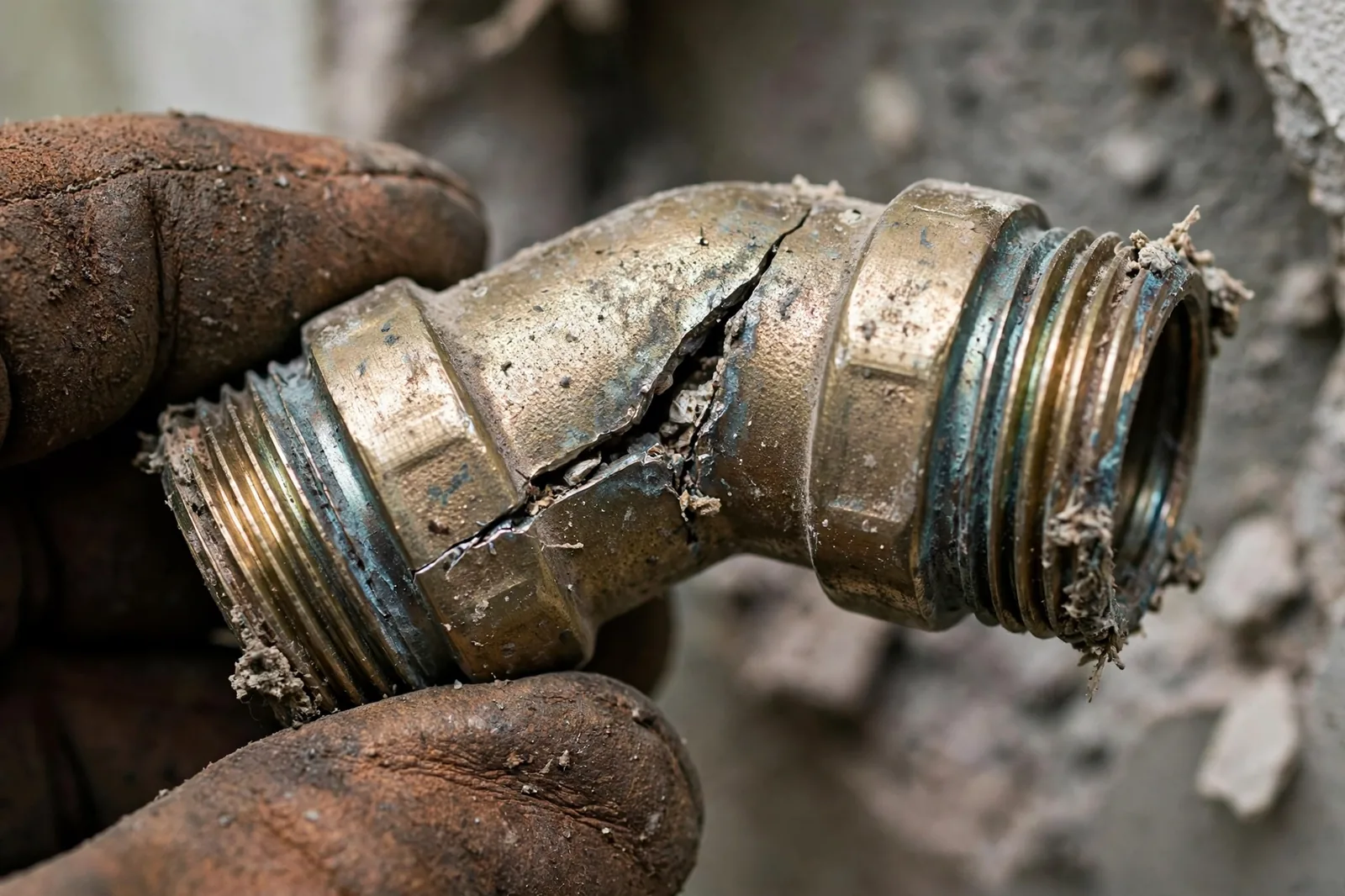
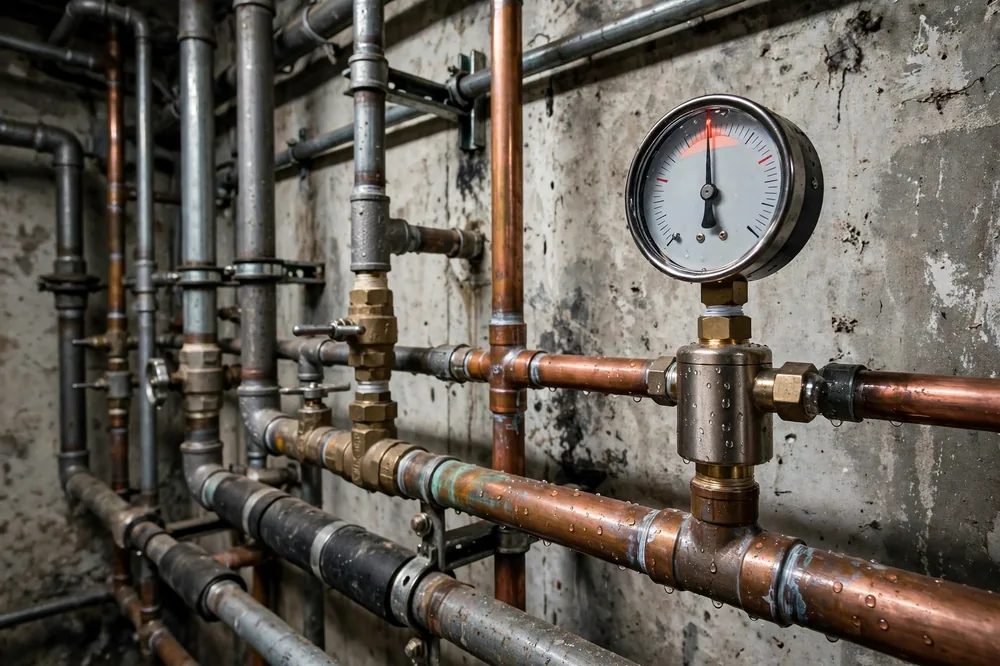
Yes. Each pressure spike loads the weakest points first: elbows, tees, valves and the joints between sections. A failed fitting, a joint or connector that cracks or separates, often starts as a joint loosened by years of small jolts. Soldered joints on a copper pipe, the metal pipe used in many homes, can fatigue, and threaded joints can back off a fraction at a time.
The damage is gradual, which is why it gets ignored. A joint that weeps only during a spike leaves a faint stain or crust that grows for months. By the time dripping is steady, the wall around it may already be damp. The link between noise and later failure is also covered in poor installation and later bursts.
Which Parts Wear Out First?
Appliance hoses, angle stops under sinks, and elbows near fast-closing valves take the hardest hits. A brass fitting, a corrosion-resistant metal connector used to join sections, handles pressure well but can still loosen if the line moves. Washing machine hoses deserve special attention, because a hose weakened by repeated spikes can split without warning.
Pipe Frozen Or Burst Right Now? One Free Call Connects You With A Local Pro.
Call NowWhat Else Causes Banging Besides A Sudden Stop?
High water pressure, supply pressure above what home plumbing is designed for, makes every spike stronger. If street pressure entering the home is already high, the added surge from a closing valve pushes joints much harder. A pressure gauge on an outside tap gives a simple reading a pro can interpret during a visit.
Loose or missing pipe straps also cause noise that mimics hammer. A line that jumps when flow starts and stops will knock against studs even at normal pressure. In older homes with galvanized steel pipe, an older zinc-coated steel pipe that corrodes from inside, narrowed passages can change flow and add turbulence and noise of their own.
How Can You Tell Loose Pipes From Pressure Spikes?
A single sharp bang the instant a valve closes points to a pressure spike. Repeated rattling while water runs points more to a loose run or a worn washer. Both deserve attention, but the fixes differ, so describing the pattern clearly matters. Note whether the noise follows one appliance or happens at several taps around the home.
Can Water Hammer Burst A Pipe On Its Own?
A single event rarely splits a sound, modern line. The real risk is combined: repeated spikes plus pipe corrosion, the gradual wearing away of a pipe wall, plus high pressure, acting on an old joint. That combination can turn a bang into a split at a fitting, often at night when pressure in the street main rises as neighbourhood use falls.
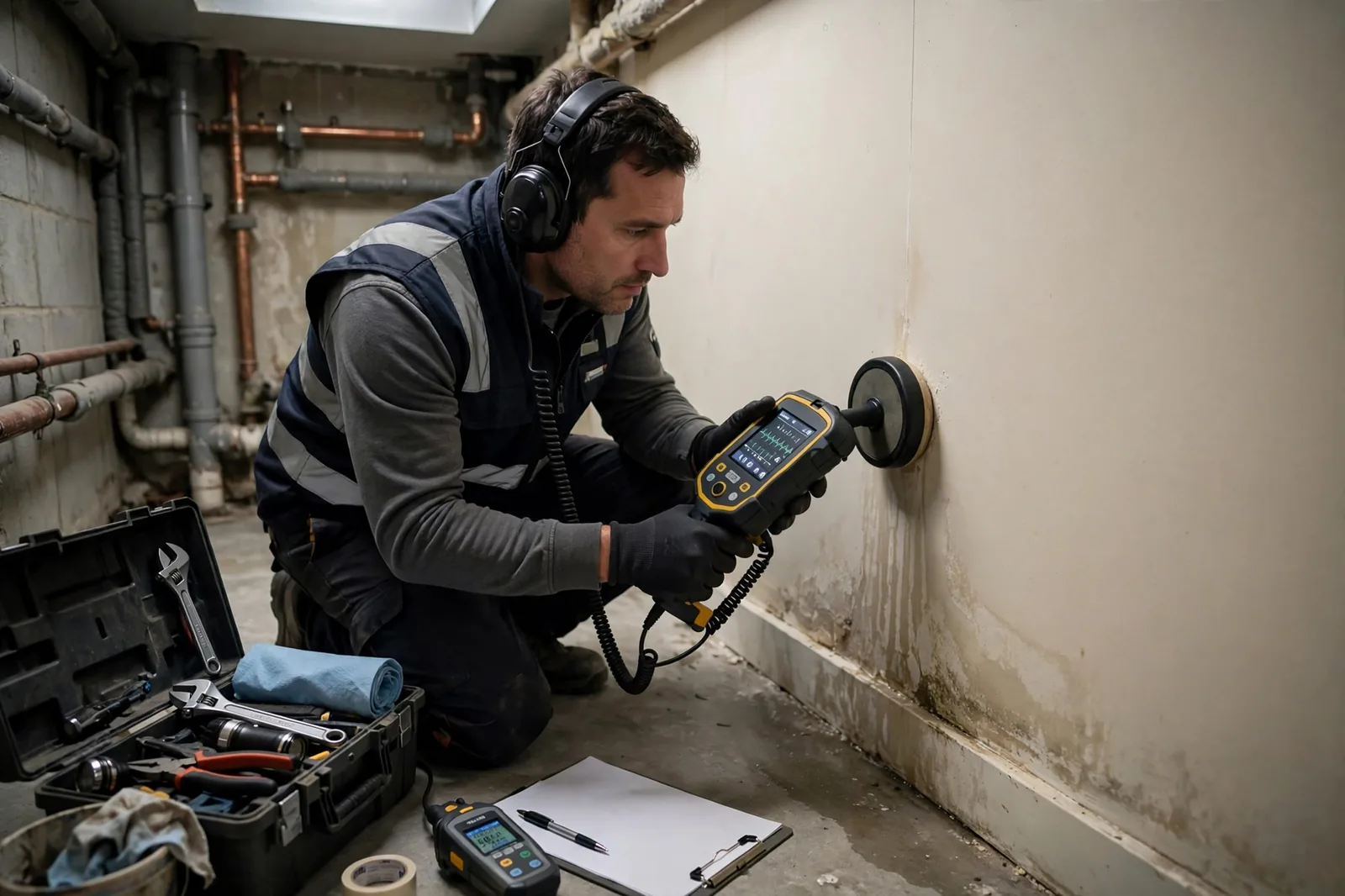
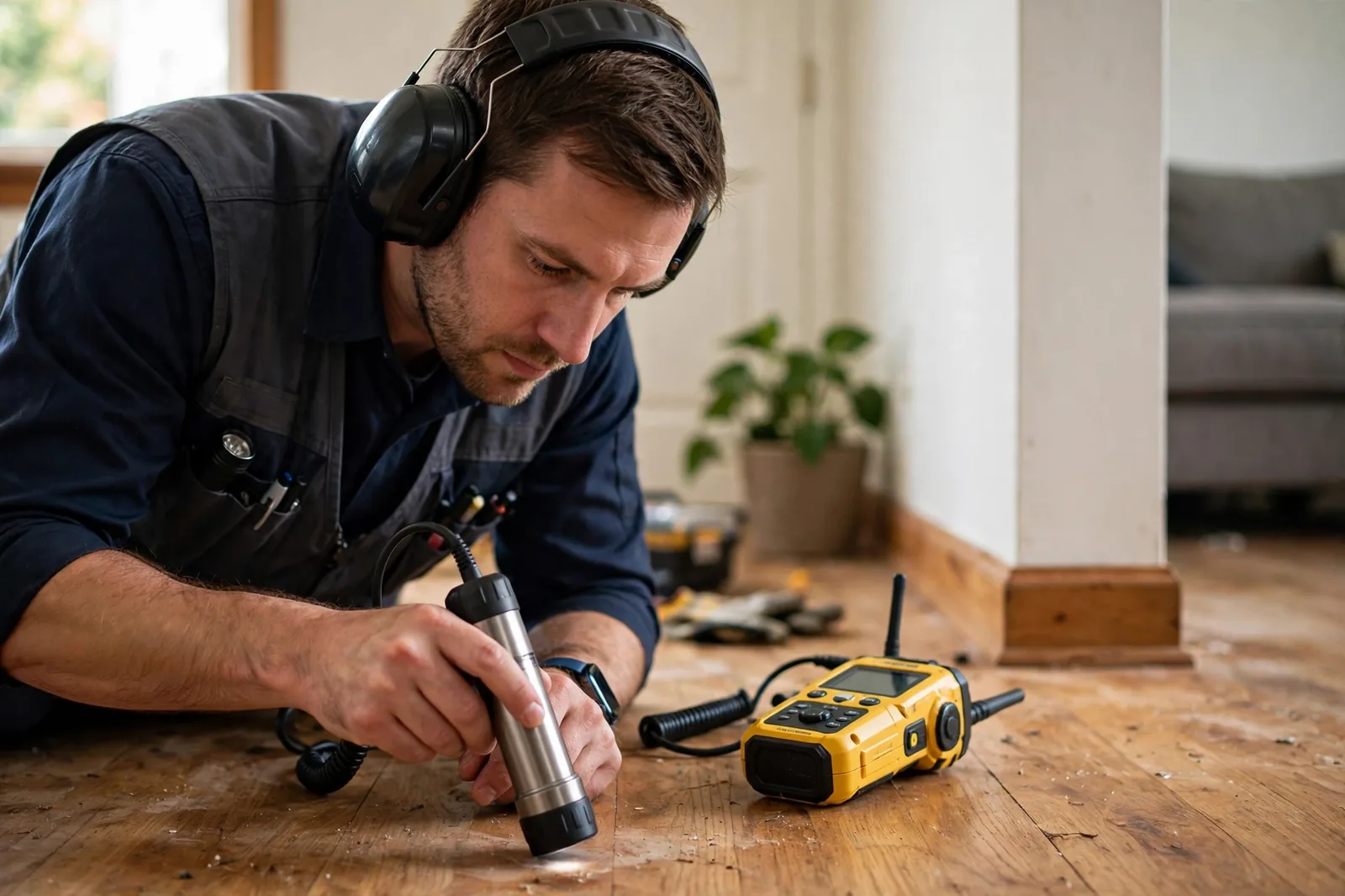
A burst linked to hammer usually happens at a joint or hose rather than mid-run. That is why pros inspect fittings first when a homeowner reports banging followed by a leak. If water is already escaping inside a wall, how pros find a burst pipe inside a wall explains the tracing steps, and fast shutoff still comes first.
What Are The Warning Signs Before A Leak?
Watch for banging that is getting louder, new stains near noisy walls, a drop in pressure at one tap, or crusty green or white deposits at joints. Those deposits mean water has been weeping and drying there. Any of these signs moves the job from a nuisance fix to a leak check, ideally before the joint lets go fully.
How Do Pros Calm Banging Pipes?
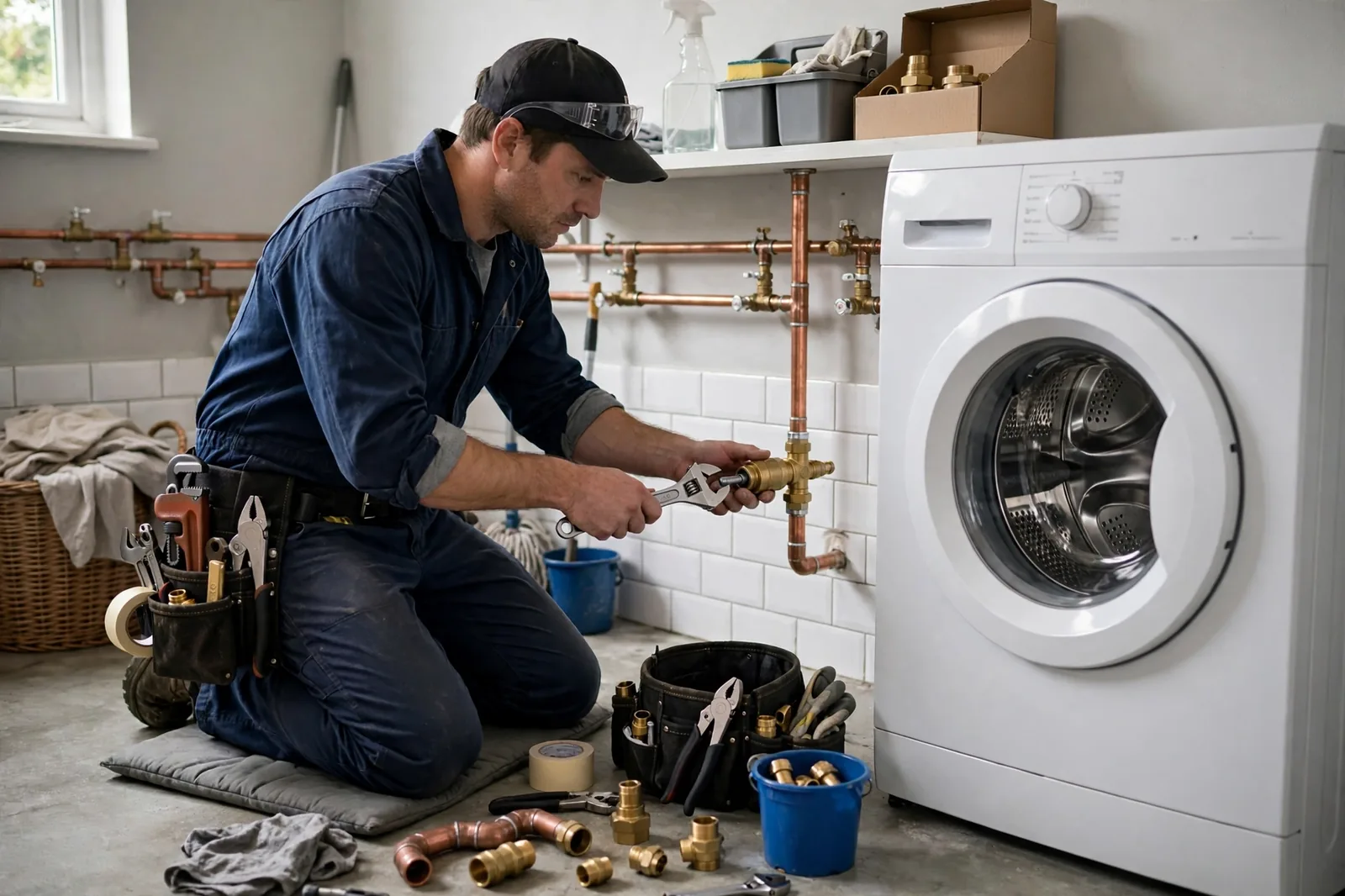
The fix starts with measurement. A pro checks supply pressure, looks for a pressure reducing valve and tests whether it still works, then traces which valves trigger the bang. Common fixes include fitting hammer arrestors, small sealed chambers that absorb the spike, near the offending appliance, securing loose runs, and replacing worn washers or cartridges.
Where pressure is high, adjusting or replacing the reducing valve protects the whole system, not just one line. In homes around burst pipe help in Emmett, pros also check the water heater, the appliance that heats household water, because a failed expansion tank can add pressure swings that feel like hammer. Each fix is matched to the measured cause, not guessed from the noise alone.
Do Arrestors Need Replacing?
Traditional air chambers can fill with water over time and stop cushioning, which is why banging sometimes returns years after a fix. Sealed arrestors last longer but can still fail. If the bang comes back, a pro can test the arrestor and the supply pressure together rather than simply adding more chambers to the line.
What Does Fixing It Cost In Terms Of Factors?
Cost depends on access, cause and how much damage already exists. Securing a loose run in an open basement is simple. Opening a finished wall to reach a failing joint, replacing an arrestor, or fitting a new pressure reducing valve each add parts and labour. If a weeping joint has soaked drywall or flooring, drying and material repair add more again.
No honest quote comes from the noise alone, because the same bang can mean a loose strap or a failing valve. What lowers the bill is acting while it is still noise. Homeowners in burst pipe help in Firth who call at the banging stage usually face a small plumbing job, while those who wait for the burst face water damage work as well.
Can You Do Anything Yourself First?
You can note which appliance triggers the bang, check visible joints for stains or crust, and read pressure with a simple gauge if you are comfortable doing so. Avoid tightening old joints hard, which can crack them. If you see active leaking, close the main valve and call rather than experimenting with a line that is already failing.
When Should Banging Become An Urgent Call?
Call promptly if banging arrives with visible leaks, stains, a sudden pressure change, or the sound of running water when nothing is open. Those signs suggest a joint has already started to fail. Close the main water shutoff valve, the main valve that stops all water entering the home, if water is escaping, and protect floors and belongings while you wait. Check the basement and any attic run while you wait, and note whether an exterior wall feels damp to the touch.
For an active burst, the emergency burst pipe help in Idaho page sets out the first steps. Idaho Burst Pipe Pros is a free service connecting callers with independent local pros on (800) 555-0100, answered 24/7, with pros typically arriving in 30 to 60 minutes. A pressure test, filling a line at a set pressure and watching for a drop, can then confirm every joint is holding before walls are closed.
Frequently Asked Questions
Straight answers, no fine print. If your question is not here, one free call gets you a local pro who can check your exact problem.
Still Have Questions? Call Free
Answered 24/7 — a local pro can arrive in 30–60 minutes.
Call Now — (800) 555-0100It is a pressure shock wave that runs through a pipe when flowing water stops suddenly, heard as a bang or shudder in the wall. Fast-closing valves on washing machines and dishwashers trigger it most. The spike flexes the line and loads joints and fittings. Occasional mild noise is common, but repeated hard banging deserves a pressure check and a look at the fittings involved.
Yes. Each bang sends a pressure jolt through elbows, tees, valves and appliance hoses. Over months and years those jolts can loosen threaded joints, fatigue solder and start a slow weep at a fitting. The weep often shows first as crusty deposits or a faint stain. Fixing the cause early is far simpler than repairing a joint that finally splits and floods a wall.
Rarely, on a sound modern line. The danger grows when repeated spikes combine with high supply pressure, corrosion and old joints. Then the spike tends to split a fitting or hose rather than the straight run. If banging has been getting louder and a leak appears, treat the two as connected and have the pressure, joints and hoses checked together in one visit.
Its valves open and close quickly and often during a cycle, stopping moving water abruptly many times in one wash. Each stop sends a spike back through the supply lines and their hoses. Arrestors fitted near the machine absorb much of that spike. Because machine hoses also age under this pounding, pros often suggest checking or replacing them when hammer starts.
The higher the steady pressure in your lines, the stronger every spike becomes when a valve closes. A failing pressure reducing valve can let street pressure climb, especially overnight. A simple gauge reading tells a pro whether pressure is part of the problem. Correcting pressure protects joints, hoses and appliances across the whole home, not just the one noisy line.
It is a small sealed chamber fitted near a valve or appliance that gives the pressure spike somewhere to go, cushioning the line when flow stops suddenly. Arrestors are commonly fitted at washing machines, dishwashers and problem taps. Older open air chambers can fill with water and stop working over time, which is one reason banging sometimes returns years after an earlier fix.
Not quite. A loose run rattles or knocks while water moves, because the pipe jumps against framing. A pressure spike gives one sharp bang at the moment a valve closes. Both make noise and both can wear joints, but the fixes differ: straps and supports for loose runs, arrestors and pressure control for spikes. Describing the pattern helps a pro diagnose it faster.
Louder banging, new stains on walls or ceilings near noisy runs, crusty deposits at joints, musty smells, and pressure changes at taps all suggest a joint is starting to fail. A water meter that moves when everything is off confirms water is escaping somewhere. At that point the job is a leak check, not just a noise fix, and it should not wait.
You can observe and record: note the triggering appliance, look for stains at visible joints, and check that accessible runs are strapped. Avoid forcing old fittings tighter, which can crack them. Arrestors, pressure valves and hidden joints are pro work because they involve opening the system. If any leak is active, close the main valve first and call for help.
Call when banging is frequent, getting louder, or paired with stains or pressure changes. Idaho Burst Pipe Pros is a free service connecting callers with independent local pros on (800) 555-0100, with calls answered 24/7 and pros typically arriving in 30 to 60 minutes. A pro can measure pressure, trace the trigger, secure loose runs and test the joints in one visit.
Reviewed By Hamza
Lead Water Damage Restoration & Structural Drying Specialist
Hamza is an emergency water restoration specialist with deep expertise in burst pipe mitigation, freeze damage remediation, and industrial structural drying across freezing northern climates. He focuses on rapid moisture extraction, thermal imaging diagnostics, and comprehensive subfloor restoration to protect homes from mold and structural deterioration.
Updated October 27, 2026
Need Burst Pipe Help In Idaho?
One free call connects you with a local pro — answered 24/7, and a pro can arrive in 30–60 minutes.
Call Now — (800) 555-0100Free Call · Answered 24/7 · Local Pros Near You