Sealing The Drafts That Freeze Pipes Inside Walls
Free Call · Answered 24/7 · Local Pros Near You
In This Guide
- Can Cold Air Leaks Freeze A Pipe Inside A Wall?
- Where Do The Drafts That Freeze Pipes Come From?
- Where Should You Seal Gaps Around Plumbing First?
- Does Sealing Replace Pipe Insulation?
- How Does Sealing Help Rooms Beyond The Plumbing?
- What Habits Pair With Sealing During A Cold Snap?
- When Is Sealing A Job For A Pro?
- How Do You Check Your Sealing Worked?
Quick Answer
Yes, a cold air leak can freeze a pipe inside a wall even when the room feels warm. Wind-driven air slipping through gaps around pipes, vents, and the foundation line chills one short section far below room temperature. Sealing those gaps, then insulating the pipe itself, removes the cold spot that starts most wall freezes in Idaho homes during windy winter weather each year.
Can Cold Air Leaks Freeze A Pipe Inside A Wall?
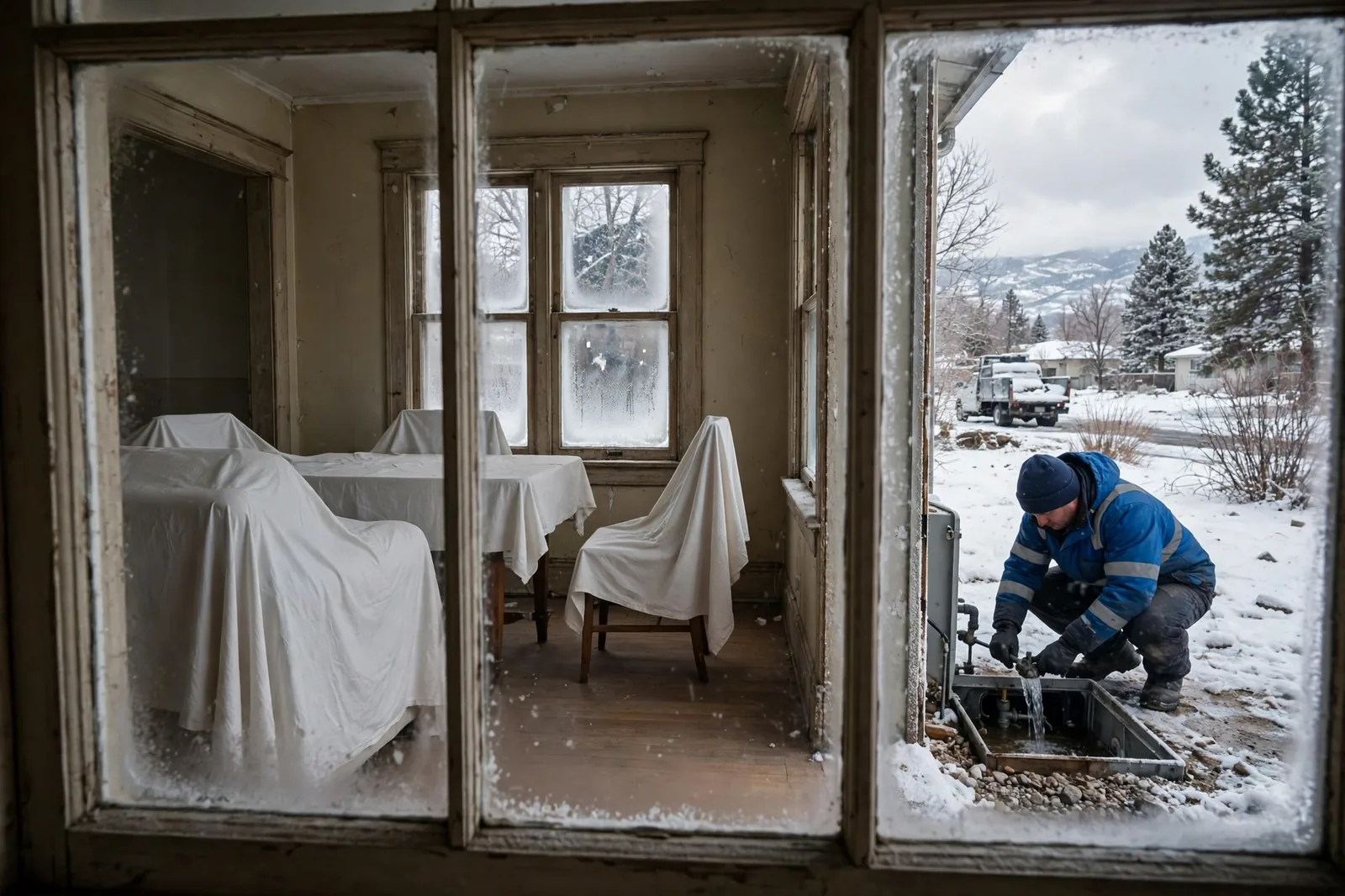
Yes, and it happens more often than pipes freezing from general cold alone. A wall cavity is not sealed tight: gaps around pipe entries, electrical boxes, vent stacks, and the sill plate, the framing timber at the top of the foundation, let outdoor air slip in. Wind pressure pushes that air along the cavity until it washes over one section of pipe for hours.
That focused stream of cold air strips heat from the pipe far faster than still cold air does, so a short stretch can freeze while the rest of the run stays fine. This is why a pipe in an exterior wall, an outside-facing wall whose runs sit closest to outdoor cold, freezes on windy nights that are not even the coldest of the season.
Why Does The Freeze Start At One Small Spot?
Ice only needs one section cold enough, for long enough. Once ice seals that section, ice expansion pressure, the force of water expanding as it freezes inside a closed pipe, builds against the trapped water in the rest of the line. The split then opens at the weakest nearby point, which may be a joint or a section thinned by age rather than the icy spot itself.
Where Do The Drafts That Freeze Pipes Come From?
The common entry points are ordinary and easy to overlook: the holes where pipes and wires pass through the top and bottom of the wall, gaps around a hose bib, the outdoor tap for hoses, unsealed joints where a crawl space, the shallow space under a home, meets the floor framing, and cracks where additions join the original house. Each opening is small; together they feed a steady flow of cold air.
Outbuildings and garages add their own routes. A pipe run through a garage wall freezes where the door seal leaks wind onto it, and lines in a basement, the lowest level of a home, chill where rim joists were never sealed or insulated. Homeowners around burst pipe help in Midvale often find the culprit is one unsealed penetration directly behind the frozen run.
How Can You Find A Draft Without Special Tools?
On a windy day, hold the back of your hand or a strip of tissue near pipe entries, outlets on outside walls, and under-sink penetrations, and feel for moving air. A candle or incense stick shows the same leaks as a flickering flame or drifting smoke. Mark each spot you find, because sealing works as a whole-house sweep rather than one gap at a time.
Pipe Frozen Or Burst Right Now? One Free Call Connects You With A Local Pro.
Call NowWhere Should You Seal Gaps Around Plumbing First?
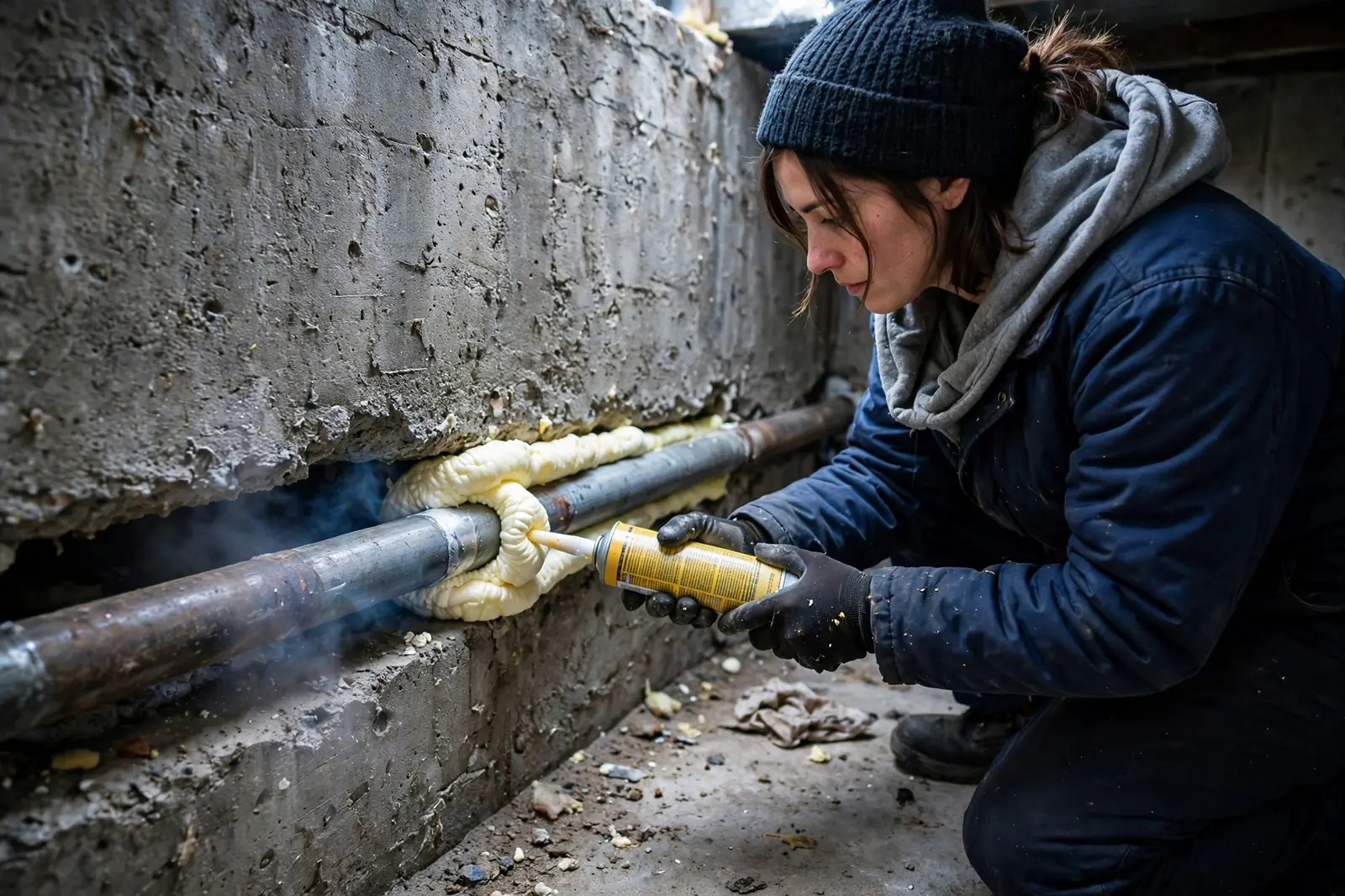
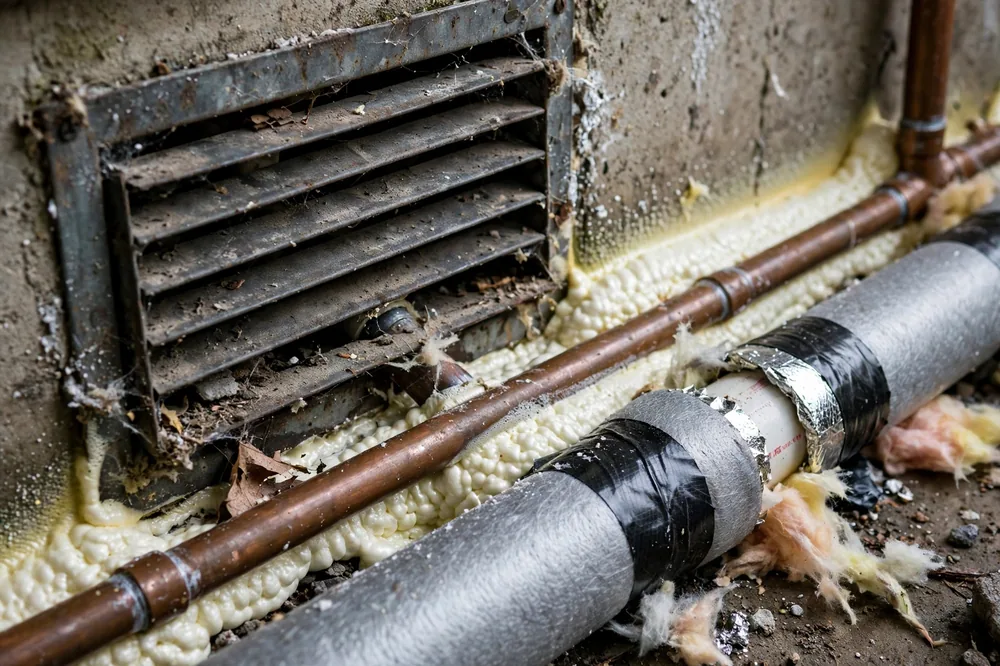
Start where pipes meet cold air directly: the penetrations under the kitchen sink cabinet, the cabinet under a kitchen sink, bathroom entries on outside walls, and the holes where supply and drain lines pass into the floor or wall. Seal those with caulk for small gaps and backer rod plus sealant, or a suitable foam, for larger ones, working from inside the warm space where you can reach.
Next, seal the big structural leaks that feed the cavities: the sill plate line, rim joists above the foundation, and open vents or gaps into the under-floor space. The Department of Energy publishes air sealing guidance for homes that covers these same junctions, because the leaks that waste heating money and the leaks that freeze pipes are usually the same ones.
What Should You Not Seal?
Do not block vents that appliances need for combustion air, flues, or drainage cleanouts, and do not seal a wall cavity shut around an active leak. Sealing is for air gaps around sound plumbing. If you find dampness, corrosion, or a weeping joint while sealing, that pipe needs repair attention first, and the sealing waits until the line is dry and sound.
Does Sealing Replace Pipe Insulation?
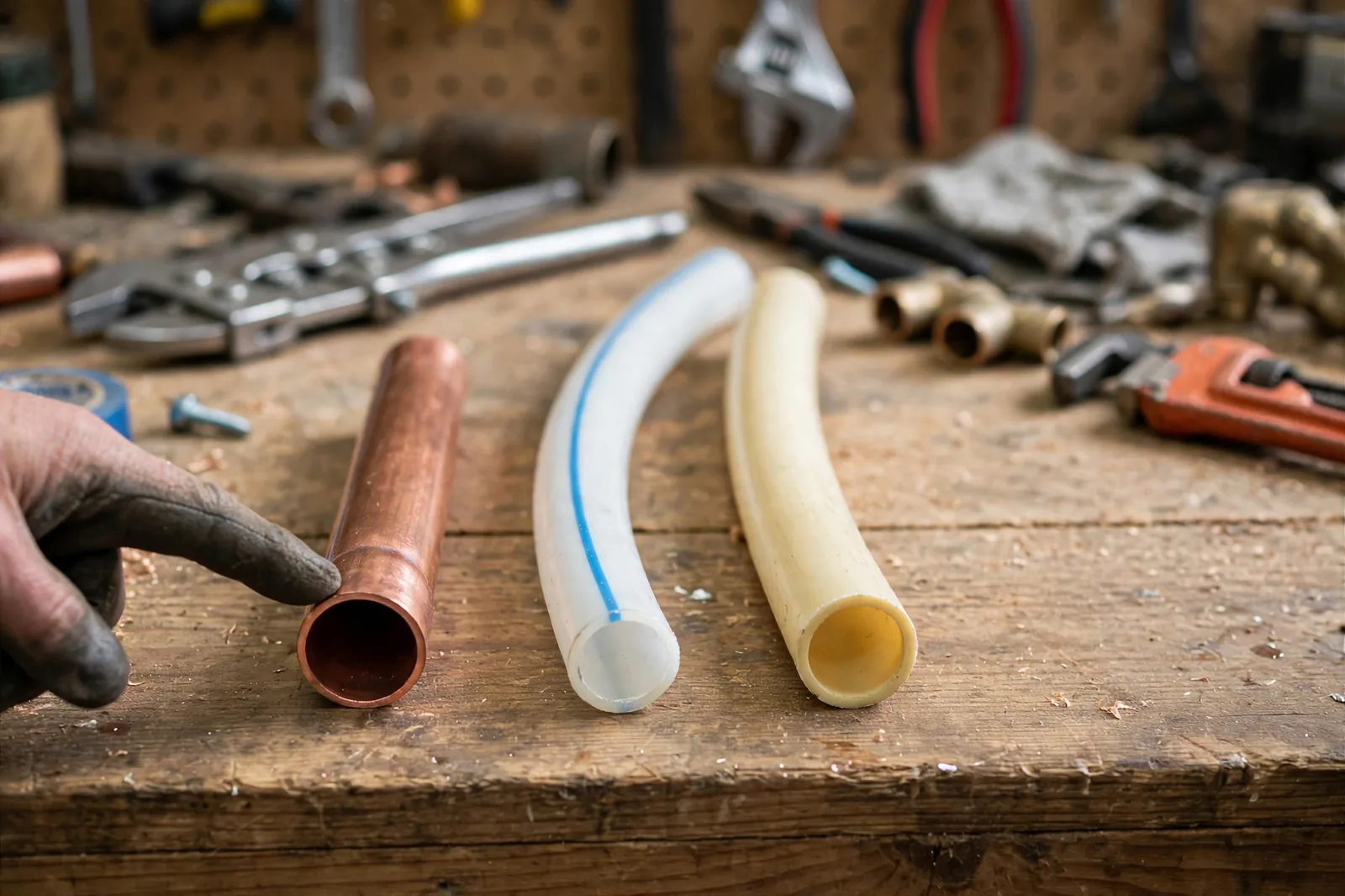
No. Sealing stops the moving cold air; insulation slows the heat loss from the pipe itself. The two work together, and either one alone leaves a gap in the defence. After sealing, fit a pipe insulation sleeve, foam tubing slipped over a pipe, on every run you can reach in the wall cavity, under-floor space, garage, and attic, the space above the ceiling.
For the coldest sections, add heat tape, an electric cable applied along a pipe to keep it above freezing, under the insulation, following the maker's instructions exactly. Homes in the Treasure Valley, the southwestern Idaho valley region, often get by with sealing plus insulation, while higher, colder towns add the cable on north-facing walls as a matter of routine.
Which Pipes Should You Insulate First?
Prioritise any run that has frozen before, lines on north and west walls that take the wind, and sections above unheated spaces. A pipe that froze once has already told you exactly where your cold spot lives. Protect that run first, then work outward to other exposed plumbing while access is open and the weather is mild.
How Does Sealing Help Rooms Beyond The Plumbing?
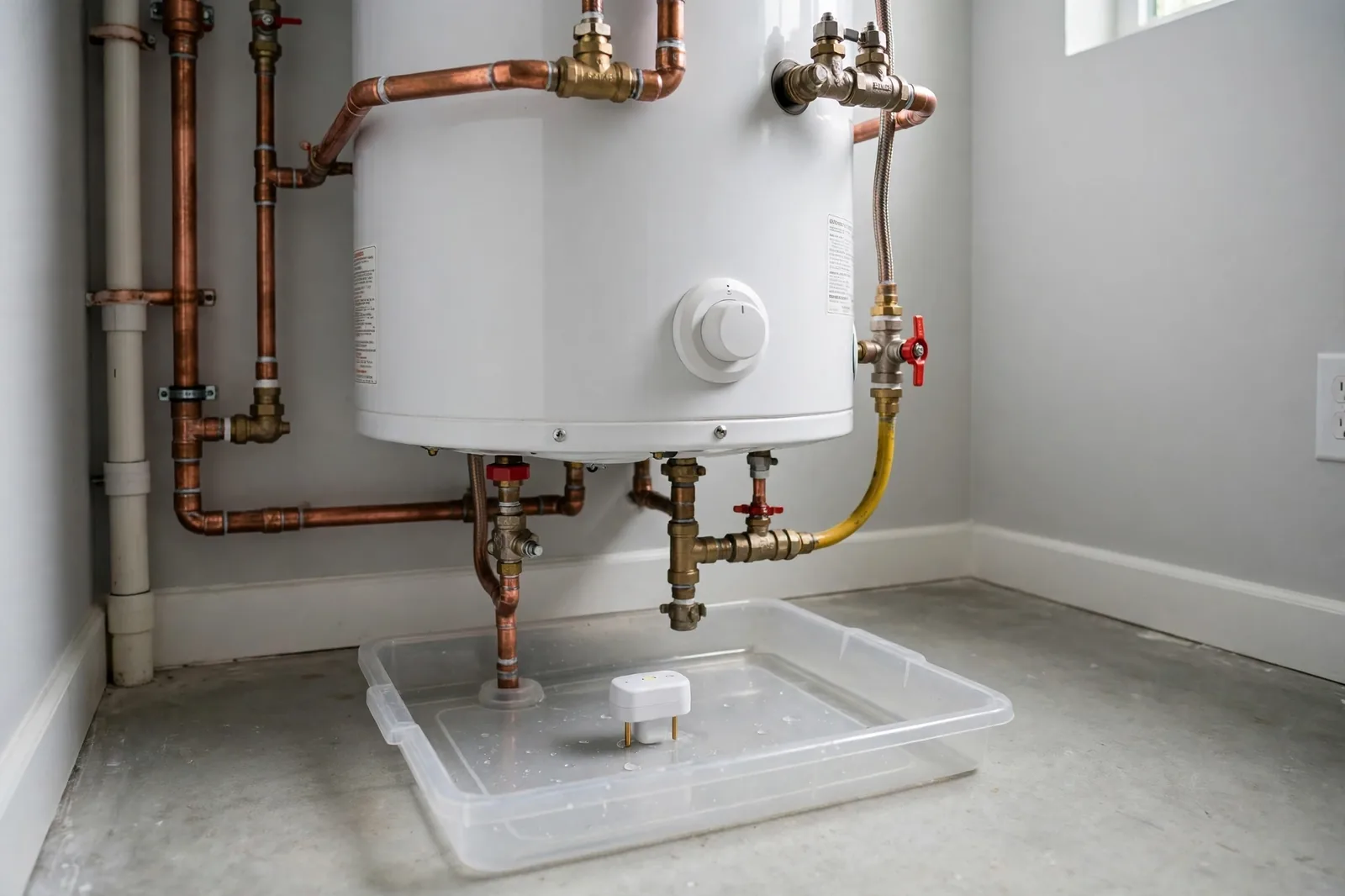
The same gaps that freeze pipes also chill floors, make rooms near outside walls feel draughty, and raise heating bills all winter. Sealing them is one of the few fixes that protects plumbing and improves comfort at the same time. A warmer wall cavity also keeps a water heater, the appliance that heats household water, and its lines in a utility corner from losing heat on windy nights.
There is a moisture point too. Warm indoor air leaking out into a cold wall can condense inside the cavity, wetting insulation and framing. Saturated insulation, wall insulation soaked by moisture, loses its insulating value and holds damp against the pipe, so sealing from the warm side helps keep the cavity dry as well as warm.
Can Sealing Prevent A Freeze On Its Own During Extreme Cold?
During a severe snap with power out and no heat, sealing alone may not save an exposed run, because the whole structure eventually reaches outdoor temperature. It still buys hours, and hours matter: most freezes happen in the coldest stretch of one night. Combine sealing with dripping taps and open cabinet doors during the worst weather for a layered defence.
What Habits Pair With Sealing During A Cold Snap?
Open cabinet doors under sinks on outside walls so room air reaches the pipes, let a tap drip slowly during extreme cold so water keeps moving, and keep the house heat steady overnight rather than letting it drop. If a home will sit empty, those habits are not enough on their own, and our guide to how to winterize plumbing in a vacant home covers the fuller shutdown, drain-down, and monitoring steps vacant properties need.
Know your main water shutoff valve, the main valve that stops all water entering the home, before the cold arrives, and check that it turns freely. During a hard freeze around burst pipe help in Moreland, the homes that escape damage are usually the ones where someone caught the freeze early, shut the water off, and called before the thaw turned ice into a flood.
What Should You Do If A Pipe Freezes Anyway?
Shut the water off if you suspect a split, then warm the frozen section gently with a hair dryer, warm towels, or a heating pad, working from the tap toward the ice. Never use a blowtorch or open flame, which the American Red Cross warns can start a fire inside a wall. If flow does not return or you see any leak, call for help rather than forcing the thaw.
When Is Sealing A Job For A Pro?
The sealing itself is within most homeowners' reach, but call a pro when the cold spot hides inside a finished wall, when a pipe has frozen repeatedly in the same place, or when opening the under-floor area reveals damp framing or a slow leak. Repeated freezes at one spot mean the cause is structural, and guessing at it season after season risks a split.
A pro can also combine the visit with detection: a thermal imaging camera, a camera that shows temperature differences on a surface, finds the cold wash inside a wall precisely, and a moisture meter confirms nothing is already leaking. Idaho Burst Pipe Pros is a free service connecting callers with independent local pros; calls are answered 24/7 and pros typically arrive in 30–60 minutes.
What Does A Prevention Visit Usually Cover?
Expect a walk-through of the exposed plumbing, a check of known freeze points, sealing and insulation on the runs that need it, and advice on the sections that need watching. Around burst pipe help in Mountain Home, autumn visits like these are the difference between a quiet winter and a January emergency call in the middle of the night.
How Do You Check Your Sealing Worked?
Test it the same way you found the leaks: on the next windy day, feel for moving air at the spots you sealed and listen for the faint whistle some gaps make under wind pressure. Then watch the pipes through the first hard cold, checking under sinks and in the under-floor space for frost on the line or a drop in pressure at the taps it feeds.
Keep a short list of the places you sealed and the runs you insulated, with dates. If a freeze still occurs, that list tells the pro exactly what has already been tried, and the remaining cause is found faster. For anything urgent in the meantime, the emergency burst pipe hub for Idaho explains how help works statewide, or call (800) 555-0100 any time.
Frequently Asked Questions
Straight answers, no fine print. If your question is not here, one free call gets you a local pro who can check your exact problem.
Still Have Questions? Call Free
Answered 24/7 — a local pro can arrive in 30–60 minutes.
Call Now — (800) 555-0100Yes. Wind-driven air entering a wall cavity through gaps around pipes, wires, and framing can chill one short section of pipe far below the room temperature. That section freezes even though the house feels warm. Sealing the gaps stops the moving cold air, and insulating the pipe then slows heat loss from the line itself.
Start with the penetrations where pipes pass through walls and floors, especially under sinks on outside walls, around outdoor taps, and where lines enter from the under-floor space. Then seal the larger structural gaps at the foundation line and rim joists that feed cold air into the cavities. Work from the warm side wherever you can reach.
Sealing stops air movement through gaps; insulating slows heat loss from the pipe surface. A draft can overwhelm insulation by constantly washing the pipe with cold air, while a sealed but bare pipe still loses heat in a cold space. Doing both gives the full protection: still air around the pipe, and a foam layer keeping its warmth in.
On a windy day, feel for moving air at outlets, pipe entries, and under-sink penetrations on outside walls, or watch incense smoke drift near suspect spots. The frozen history helps too: the cavity that froze before is the one being washed with cold air. A thermal camera scan shows the cold pattern precisely when simple checks leave doubt.
Spray foam works for larger gaps around penetrations and is widely used for air sealing, applied in modest amounts so it does not over-expand against the pipe. Caulk suits small cracks and joints. Keep foam and sealant off heat sources and flues, and never bury an active leak inside sealant: repair damp or weeping pipe first.
Usually, yes. The gaps that admit cold air around plumbing are part of the same air leakage that makes rooms draughty and forces heating systems to work harder. Sealing them improves comfort near outside walls and floors as a side benefit. The savings vary by home, but the freeze protection alone justifies the afternoon the work takes.
Yes, for sinks on outside walls. Opening the cabinet doors lets warm room air circulate around the pipes instead of leaving them in a cold, closed box against the exterior wall. It costs nothing and works immediately. Combine it with a slow tap drip during the coldest nights for the runs you know have frozen before.
A repeated freeze at one spot means something else is feeding the cold: a bigger structural gap, missing wall insulation, or a run routed through an unconditioned space. That pattern deserves a professional look with a thermal scan rather than another round of guessing, because each freeze stresses the pipe and raises the chance of a split.
Many homeowners close foundation vents in winter to keep under-floor air warmer, which can help pipes, but moisture control matters too: a sealed, damp under-floor space invites its own problems. If your under-floor area has moisture issues, get advice before closing vents long-term. Sealing pipe penetrations and insulating the lines helps regardless of the vent decision.
Call when a pipe freezes repeatedly in the same place, when the cold spot is inside a finished wall you cannot open confidently, or when you find dampness or a slow leak while sealing. Also call at once if a pipe has frozen and flow has not returned, because a split may be waiting for the thaw. Help is available 24/7.
Reviewed By Hamza
Lead Water Damage Restoration & Structural Drying Specialist
Hamza is an emergency water restoration specialist with deep expertise in burst pipe mitigation, freeze damage remediation, and industrial structural drying across freezing northern climates. He focuses on rapid moisture extraction, thermal imaging diagnostics, and comprehensive subfloor restoration to protect homes from mold and structural deterioration.
Updated October 27, 2026
Need Burst Pipe Help In Idaho?
One free call connects you with a local pro — answered 24/7, and a pro can arrive in 30–60 minutes.
Call Now — (800) 555-0100Free Call · Answered 24/7 · Local Pros Near You