Frozen Pipe Not Thawing? When To Stop And Call A Pro
Free Call · Answered 24/7 · Local Pros Near You
In This Guide
- When Should You Stop Trying To Thaw A Pipe And Call A Pro?
- What If You Cannot Find The Frozen Section?
- What Thawing Methods Are Safe To Keep Using?
- What Are The Signs The Pipe Has Already Split?
- How Does A Pro Thaw What You Cannot Reach?
- What Does Calling Early Save You?
- How Do You Reach Help For A Frozen Pipe In Idaho?
Quick Answer
Stop and call when gentle heat brings no drip after a reasonable try, when you cannot find the frozen section, when any tap shows a split or leak, or when the frozen line hides inside a wall or under a floor. Safe thawing is slow and supervised. Bulging, cracking sounds or water stains mean the pipe may already have split.
When Should You Stop Trying To Thaw A Pipe And Call A Pro?
Give gentle heat a fair, supervised try on an accessible pipe, then stop if nothing changes. No drip, no softening sound, and no improvement after steady warming suggests the freeze is longer, deeper or somewhere else than you think. Continuing to heat one spot while the ice sits elsewhere wastes time while the line remains at risk.
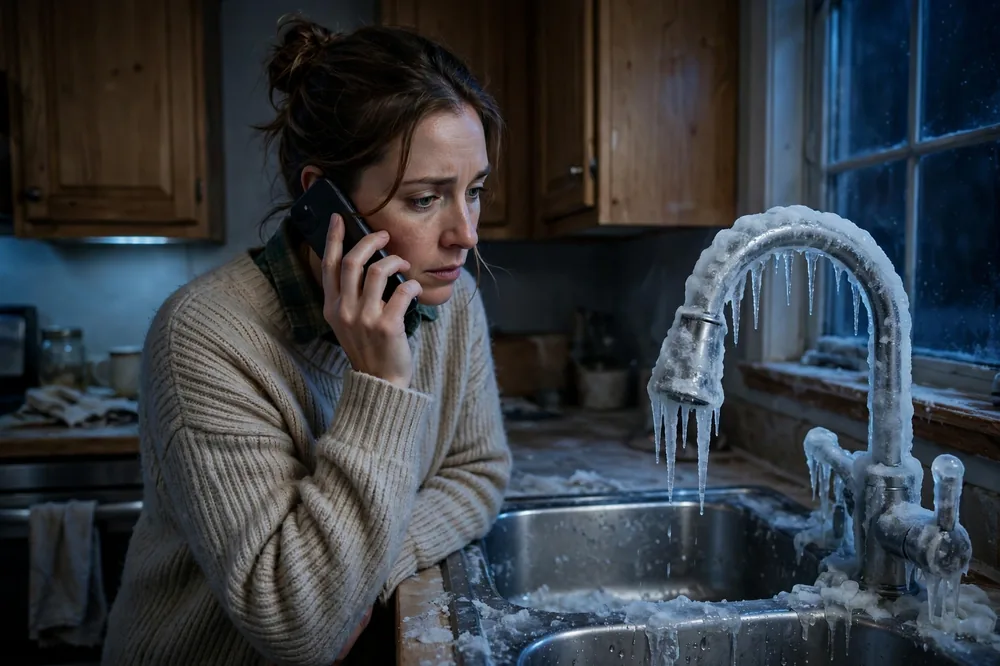
Stop immediately for warning signs: a bulge in the line, cracking or ticking sounds, frost that gives way to a drip, or a new stain on the wall or ceiling. Those point to a split that will pour once the ice plug melts. At that moment the job changes from thawing to leak control, and how to thaw a frozen pipe safely covers the careful steps that should have come before this point.
How Long Is A Reasonable Try?
For a short exposed section, gentle methods usually show some sign of progress, a drip, a trickle, a change in sound, without endless waiting. If an hour of supervised warming on the section you can reach produces nothing at all, assume the freeze is hidden or extensive and call. Exact timing varies, but no progress is information.
What If You Cannot Find The Frozen Section?
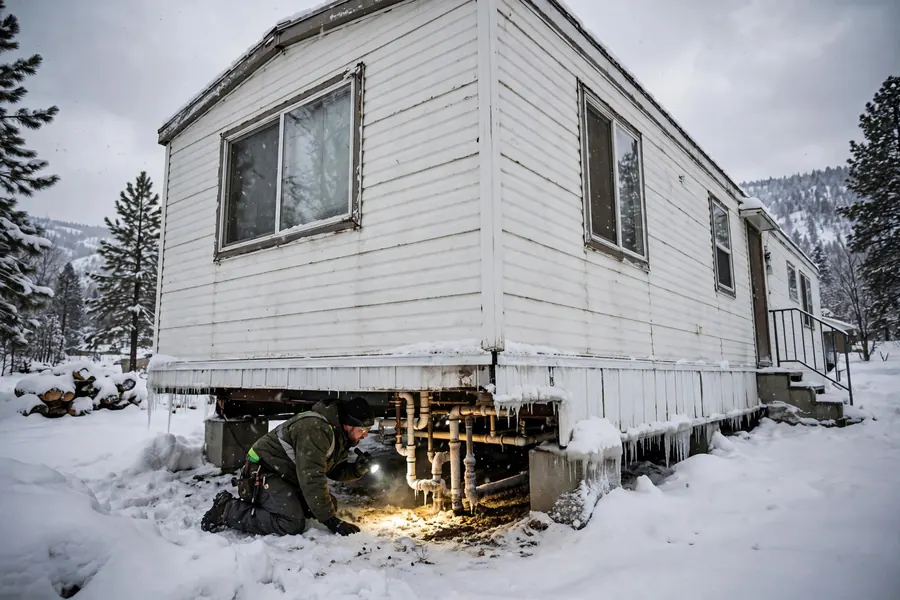
A tap that will not run tells you a line is frozen, not where. The blockage may sit inside a wall, across a crawl space, the shallow space under a home, or along an attic run. Guessing leads homeowners to heat the wrong room for hours while the real freeze stays untouched and pressure builds behind the ice.
Pros locate the section methodically: checking which taps work, feeling along accessible runs, and using a thermal imaging camera, a camera that shows temperature differences on a surface, to find the cold stretch inside a wall. Homeowners in burst pipe help in Bruneau who call at this stage often save the wall, because locating comes before opening, not after.
Which Clues Narrow Down The Location?
Note which taps are dead and which still run, because that pattern maps the branch that froze. A single dead tap points to its own branch; several dead taps point to a shared run. Cold air drafts, exterior walls and rooms above garages are prime suspects. Share that map with the pro to shorten the search.
Pipe Frozen Or Burst Right Now? One Free Call Connects You With A Local Pro.
Call NowWhat Thawing Methods Are Safe To Keep Using?
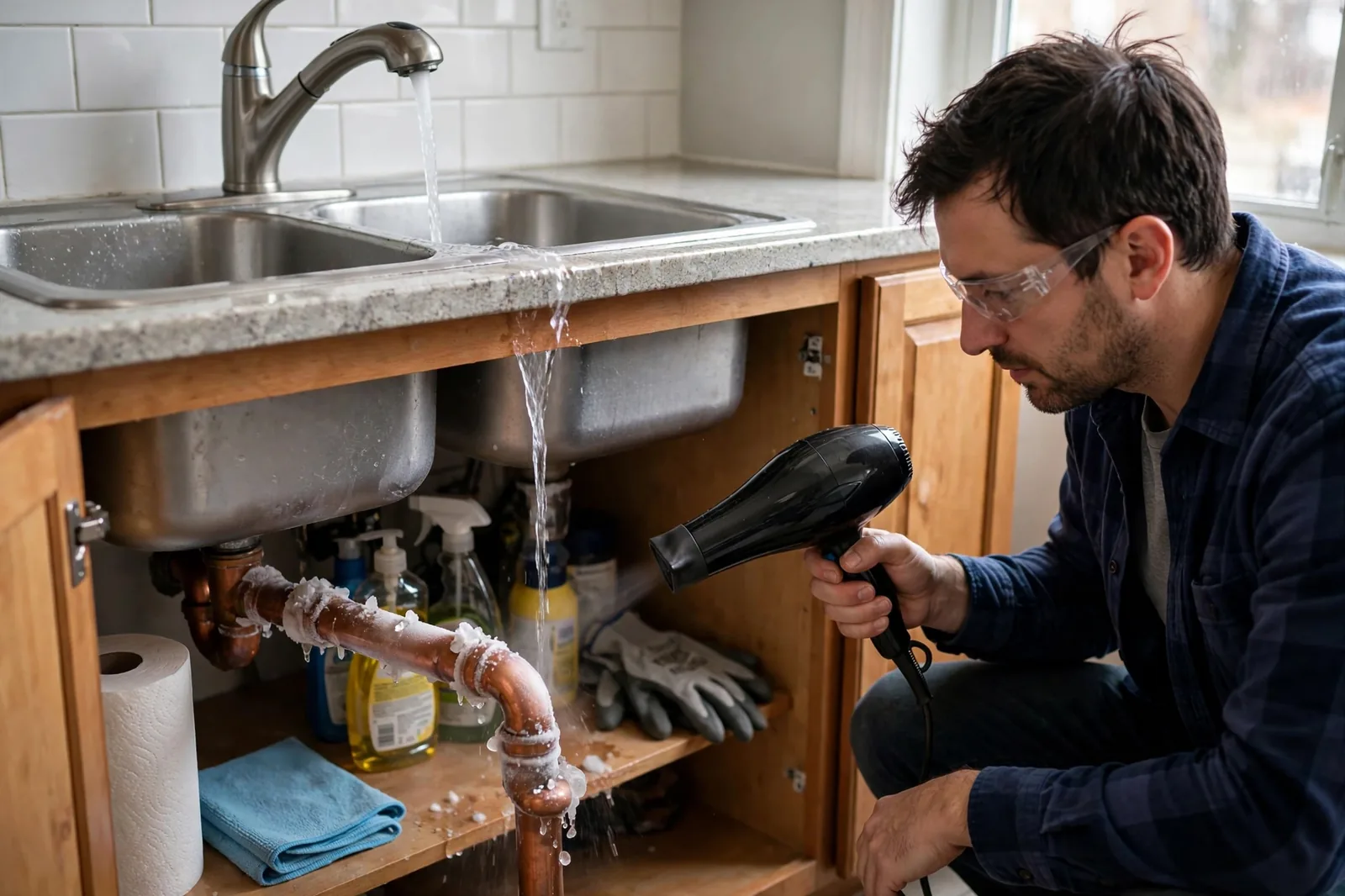
The American Red Cross lists gentle options: warm air from a hair dryer moved along the pipe, a portable space heater kept at a safe distance, warm towels, and electric heating pad thawing, applying gentle electric heat to a frozen section. Start near the tap and work toward the coldest part, with the tap open so melting water and steam can escape.
Raise the room heat, open the kitchen sink cabinet, the cabinet under a kitchen sink, if the line runs there, and keep checking the pipe as you work. Patience matters: steady gentle heat thaws without shocking the pipe. If the pipe is a copper pipe in an open area, progress is easy to feel. Hidden lines give fewer clues, which is itself a reason to call.
What Should You Never Use To Thaw A Pipe?
Never use a blowtorch, propane heater with open flame, or any flame inside a wall or near framing. The Red Cross warns that open flame can start a fire you cannot see inside the wall. Also avoid boiling water poured on a frozen line, which can shock and crack cold material, and never leave a space heater running unattended.
What Are The Signs The Pipe Has Already Split?
A split often hides until the thaw, because the ice plug blocks the crack. Watch for water appearing as flow returns, a hiss inside the wall, falling pressure, or the water meter, the utility meter that records water use, moving with taps off. A bulged section of PEX pipe, a flexible plastic pipe, or a split along a rigid line may be visible on exposed runs.
If you suspect a split, stop thawing and close the main water shutoff valve, the main valve that stops all water entering the home, before the plug melts fully. That single step can be the difference between a damp patch and a flooded room. Then call, and do not reopen the valve until the line has been checked and tested.
Why Does The Leak Wait For The Thaw?
Ice expansion pressure, the force created when water expands as it freezes, cracks the wall during the freeze, but the ice itself seals the crack. When the ice melts, full pressure returns and water pours through the opening. This freeze thaw cycle behaviour is why so many bursts are discovered on the first mild morning after a cold night, not during it.
How Does A Pro Thaw What You Cannot Reach?
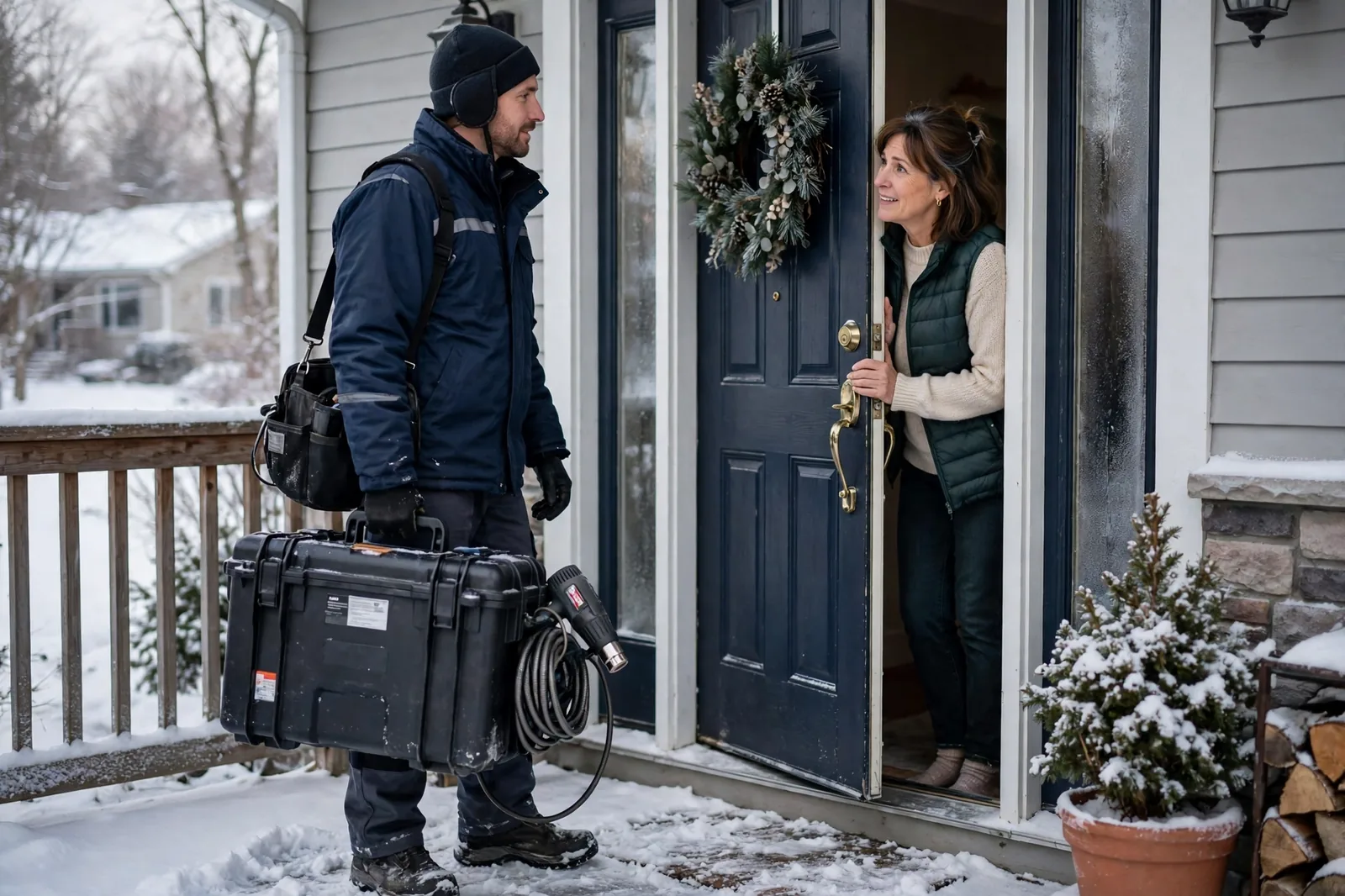
A pro brings locating tools, controlled heat for hidden sections, and the ability to open a small, planned access point if needed. Where a section is already split, the pro isolates it, cuts out the damage with a pipe cutter, a tool that cuts a clean section of pipe, fits new material, and restores pressure slowly while checking every joint along the run.
After thawing or repair, a pressure test, filling the line at a set pressure and watching for a drop, proves the line holds before walls close. Pros also check neighbouring sections that froze but did not split, because a freeze that cracked one joint often stressed others. That whole-line check is difficult to do well with household tools alone.
Will A Pro Need To Open The Wall?
Only if the frozen or split section is hidden and cannot be reached or verified another way. Locating first keeps any opening small and in the right place. Compare that with guessing, which can produce several holes and still miss the freeze. Ask the pro to explain the locating steps before agreeing to openings, so the plan is clear.
What Does Calling Early Save You?
Early calls keep options open. A pro who arrives while the line is still frozen can thaw it under control, catch a split as it reveals itself, and protect the area. A call after the plug melts on its own may start with water extraction and drying instead. The difference is often one room's flooring, cabinets and wall material.
Cost follows the same pattern. Locating and thawing is modest work compared with repairing a burst plus drying a soaked home. Owners near burst pipe help in Burley who call at the no-progress stage usually face the smaller bill, even when a repair is needed, because water never got loose inside the structure.
What Should You Do While You Wait?
Keep the tap open, keep gentle heat on the accessible cold area if it is safe to supervise, and place a bucket and towels where a leak would appear. Know where your main valve is and be ready to close it. Move belongings away from the wall below the frozen run, and photograph the area as a precaution.
How Do You Reach Help For A Frozen Pipe In Idaho?
If the line is hidden, not thawing, or showing any sign of a split, make the call rather than escalating home methods. The emergency burst pipe help in Idaho page covers urgent first steps, and homeowners in burst pipe help in Caldwell use the same number statewide. Give the line's location, the rooms affected and how long it has been frozen, because those details shape the visit and help the pro plan the first hour of work.
Idaho Burst Pipe Pros is a free service connecting callers with independent local pros on (800) 555-0100, with calls answered 24/7 and pros typically arriving in 30 to 60 minutes. Describe which taps are dead, what you have tried, and any sounds or stains. That short report helps the pro bring the right locating and thawing equipment on the first trip.
Frequently Asked Questions
Straight answers, no fine print. If your question is not here, one free call gets you a local pro who can check your exact problem.
Still Have Questions? Call Free
Answered 24/7 — a local pro can arrive in 30–60 minutes.
Call Now — (800) 555-0100Stop when gentle, supervised heat on the accessible section brings no drip or change after a reasonable try, when you cannot locate the freeze, or when you see a bulge, hear cracking, or find a drip or stain. Those signs mean the freeze is hidden, extensive or already split. Continuing to heat the wrong spot wastes the window where controlled thawing helps most.
Call rather than guessing for hours. Note which taps are dead and which still run, because that pattern maps the frozen branch, and check cold spots along exterior walls, under-floor runs and rooms over garages. A pro can trace the line and use temperature imaging to find the cold stretch inside a wall, then thaw or open in exactly the right place.
A short exposed section warmed gently usually shows progress, a drip or trickle, fairly soon. A long or hidden freeze takes longer and gives fewer signs. If steady supervised warming produces no change at all, the ice is probably elsewhere or more extensive than the part you can reach. Treat no progress as the signal to call, rather than turning up the heat.
Yes, it is one of the gentle methods the Red Cross lists, along with warm towels, a heating pad and a safely placed space heater. Keep it moving along the pipe, start near the open tap, and work toward the coldest section. Never use open flame, and never leave any heater unattended. If the pipe is hidden in a wall, surface heat may not reach it.
A bulge in the line, cracking sounds, water appearing as flow returns, hissing inside a wall, falling pressure, and a meter that moves with taps off. Often the leak only shows when the ice plug melts, because the ice was sealing the crack. If you suspect a split, close the main valve before the thaw completes and call for help.
If you suspect any split, yes: close the main valve so the melting plug cannot release a flood. For a pipe you believe is only frozen, leaving the tap open helps pressure escape as it thaws. Knowing your valve location before winter is the real preparation. Test it in mild weather, because a stuck valve discovered mid-freeze helps nobody.
Yes. Pros locate the cold section first, warm the area with controlled heat where possible, and open a small planned access point only if the section must be reached directly or has split. Locating before opening keeps damage small. After thawing or repair, the line is pressure tested so you know it holds before anything is closed up again.
Say which taps have stopped, when they stopped, what thawing you have tried and for how long, and any sounds, bulges or stains you have noticed. Mention whether the home uses a well or city supply and where the main valve sits. That short report lets the pro bring locating and thawing equipment suited to your layout on the first trip.
Mostly, yes. Insulate exposed runs, seal drafts, disconnect hoses before winter, open cabinets on cold nights and let a tap drip during extreme cold. Lines that have frozen once deserve added protection or rerouting, because they will freeze again in similar weather. Prevention is quieter and cheaper than even a successful emergency thaw, so act on the first freeze warning.
Call when a pipe will not thaw, cannot be found, or shows any sign of splitting. Idaho Burst Pipe Pros is a free service connecting callers with independent local pros on (800) 555-0100, with calls answered 24/7 and pros typically arriving in 30 to 60 minutes. While you wait, keep the tap open, supervise gentle heat, and be ready at the main valve.
Reviewed By Hamza
Lead Water Damage Restoration & Structural Drying Specialist
Hamza is an emergency water restoration specialist with deep expertise in burst pipe mitigation, freeze damage remediation, and industrial structural drying across freezing northern climates. He focuses on rapid moisture extraction, thermal imaging diagnostics, and comprehensive subfloor restoration to protect homes from mold and structural deterioration.
Updated October 27, 2026
Need Burst Pipe Help In Idaho?
One free call connects you with a local pro — answered 24/7, and a pro can arrive in 30–60 minutes.
Call Now — (800) 555-0100Free Call · Answered 24/7 · Local Pros Near You