How Fast Should You Report A Burst Pipe To Insurance?
Free Call · Answered 24/7 · Local Pros Near You
In This Guide
- How Soon Should You Report A Burst Pipe To Your Insurer?
- Do You Have To Stop More Damage Before You File A Claim?
- What Should Happen Before You Make The Call?
- What Information Does The Insurance Company Ask For?
- What If The Break Happened While You Were Away?
- How Does Prompt Reporting Help The Claim Itself?
- What Mistakes Can Slow A Claim Down?
Quick Answer
Report a burst pipe to your insurance company the same day you find it, ideally within the first 24 hours. Stop the water first, prevent further damage, and take dated photos, then call. Policies expect prompt notice and reasonable steps to limit the loss. Reporting early protects your claim, starts the adjuster process sooner, and creates a dated record while the evidence is still fresh and easy to show.
How Soon Should You Report A Burst Pipe To Your Insurer?
The plain answer is: as soon as the water is stopped and the home is safe, which in practice means the same day. Most policies require notice of a loss promptly, and a burst pipe is a loss that keeps growing while it sits wet. A call on day one creates a dated claim record that matches your photos, the pro's visit and the drying log that follows.
Do not wait until repairs are finished to make that first call. You can report with incomplete information and add documents later; what you cannot do is recreate a timely report weeks afterwards. Homeowners near burst pipe help in Melba and across the state follow the same order: shutoff, safety, photos, report, then repairs.
Does Reporting Late Always Hurt A Claim?
Not always, but it invites questions you then have to answer with evidence you may no longer have. Late notice can complicate a claim when damage grew during the delay, when wet materials were thrown away before being documented, or when the cause is harder to prove. If you are already late, report now anyway and be straightforward about the timeline; a late honest report still beats no report.
Do You Have To Stop More Damage Before You File A Claim?
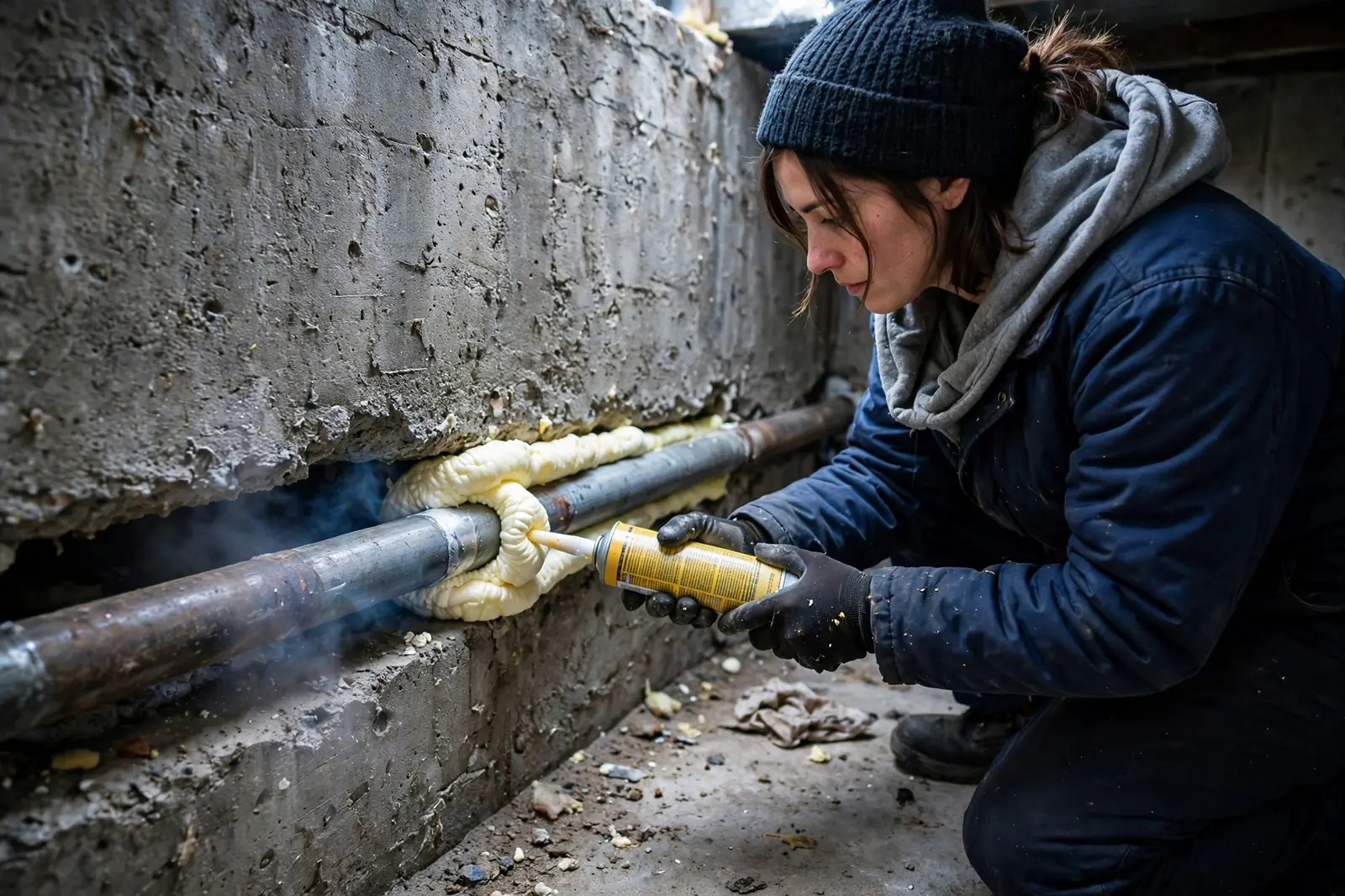
Yes. Policies generally expect you to take reasonable steps to prevent further damage after a loss, and that duty starts immediately, not after an adjuster visits. Closing the main water shutoff valve, the main valve that stops all water entering the home, removing standing water, pooled water left sitting in a room, and starting drying are exactly the steps that duty describes. Keep receipts for that emergency work.
Stopping damage is not the same as completing repairs. Temporary and protective steps — extraction, drying, covering a damaged area — should go ahead at once. Permanent repairs to finishes can usually wait for the adjuster's guidance. Our comparison of burst pipe, flood and sewer backup coverage explains why the cause and timing of water damage matter so much to how a claim is treated.
Pipe Frozen Or Burst Right Now? One Free Call Connects You With A Local Pro.
Call NowWhat Should Happen Before You Make The Call?
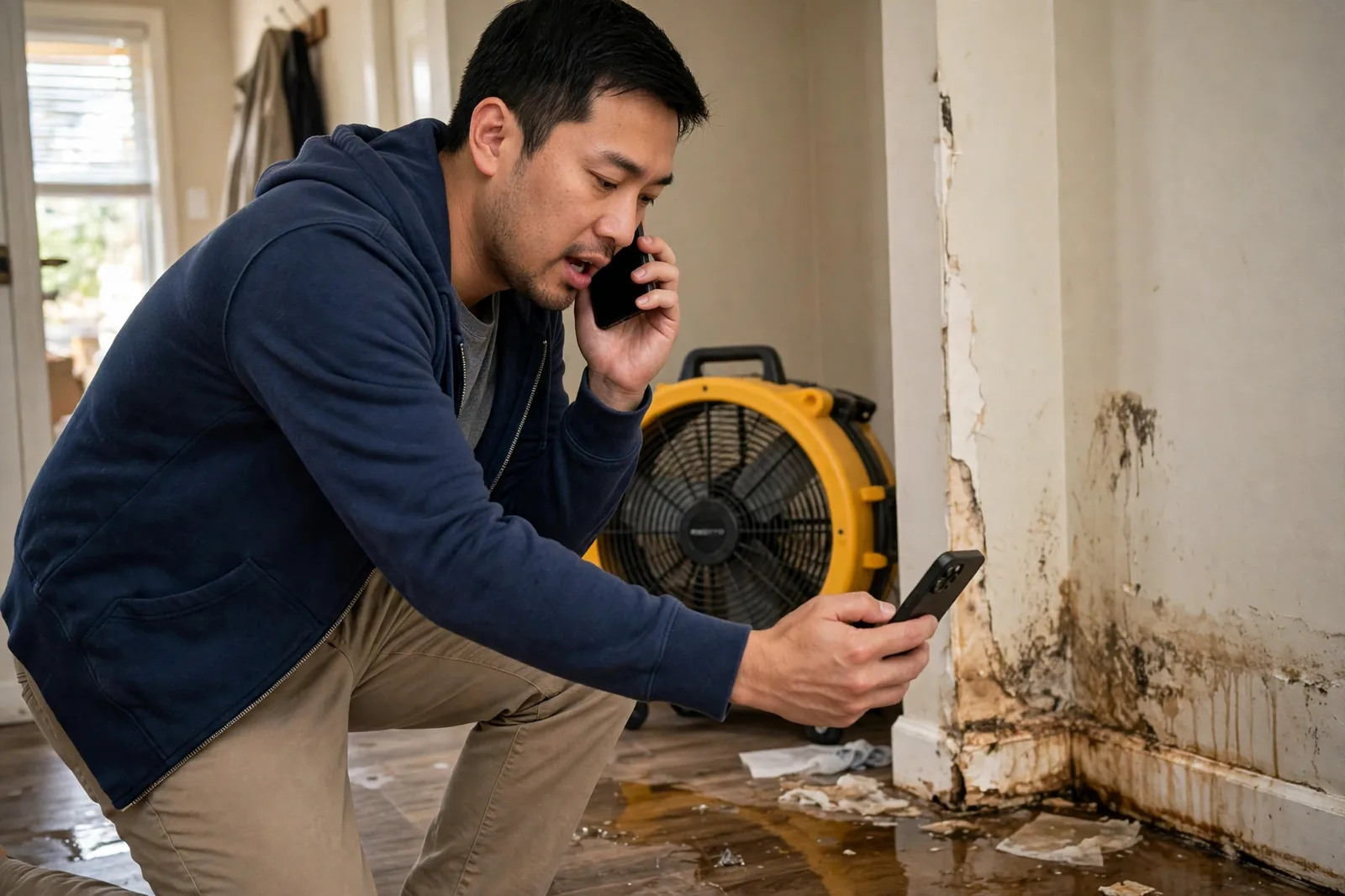
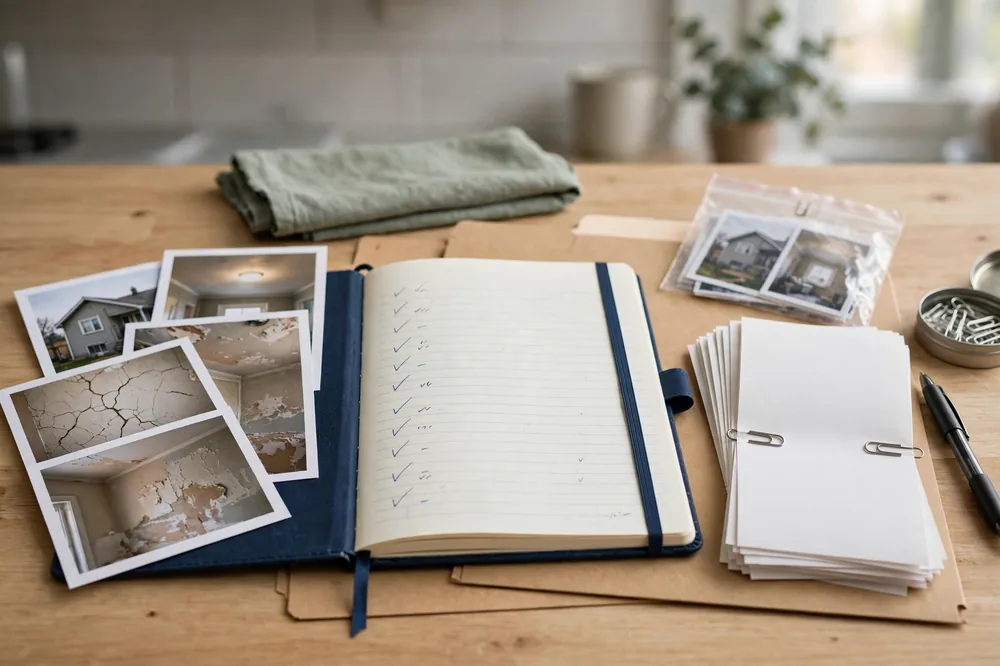
Three quick steps come first. Stop the water at the main valve and turn off power to any wet area where water is near outlets or appliances. Then take dated photos and a slow video walk-through of every wet room, including the broken pipe area if you can see it, before anything is moved or thrown away. Finally, note the time you found the damage and the time the water was stopped.
Those few minutes of documentation carry real weight. A water meter, the utility meter that records water use, reading can even show when the loss stopped. In colder towns served by burst pipe help in McCammon, where a break may run unnoticed in an empty house, that timeline becomes the backbone of the whole claim, so write it down while it is fresh.
Should You Throw Wet Items Away Before Reporting?
Only when keeping them is unsafe or truly impractical, and only after photographing them. Adjusters may want to see damaged items, or at least clear photos of them in place. If soaked carpet or boxes must go out for health reasons, photograph each item, note what it was, and keep a small sample of flooring or material where you can. A photo log turns a thrown-away item into documented evidence.
What Information Does The Insurance Company Ask For?
Expect the basics, asked early: when the loss happened or was found, what caused it as far as you know, what rooms and belongings are affected, and what you have already done to stop further damage. Your policy number, the pro's name and arrival time, and any invoices for emergency work all help. Answer with what you know and say plainly what you do not know yet.
You will usually receive a claim number and the name of an adjuster. Write both down with the date and time of the call. Ask what documents they want, whether a pro's moisture readings and drying log are useful, and what work can proceed before a visit. Pros who measure with a moisture meter, a handheld device that measures moisture in drywall, wood and flooring, produce exactly the kind of record adjusters are used to reading. A thermal imaging camera, a camera that shows temperature differences on a surface, can add images showing where water spread behind a wall, which strengthens the same file.
What If The Break Happened While You Were Away?
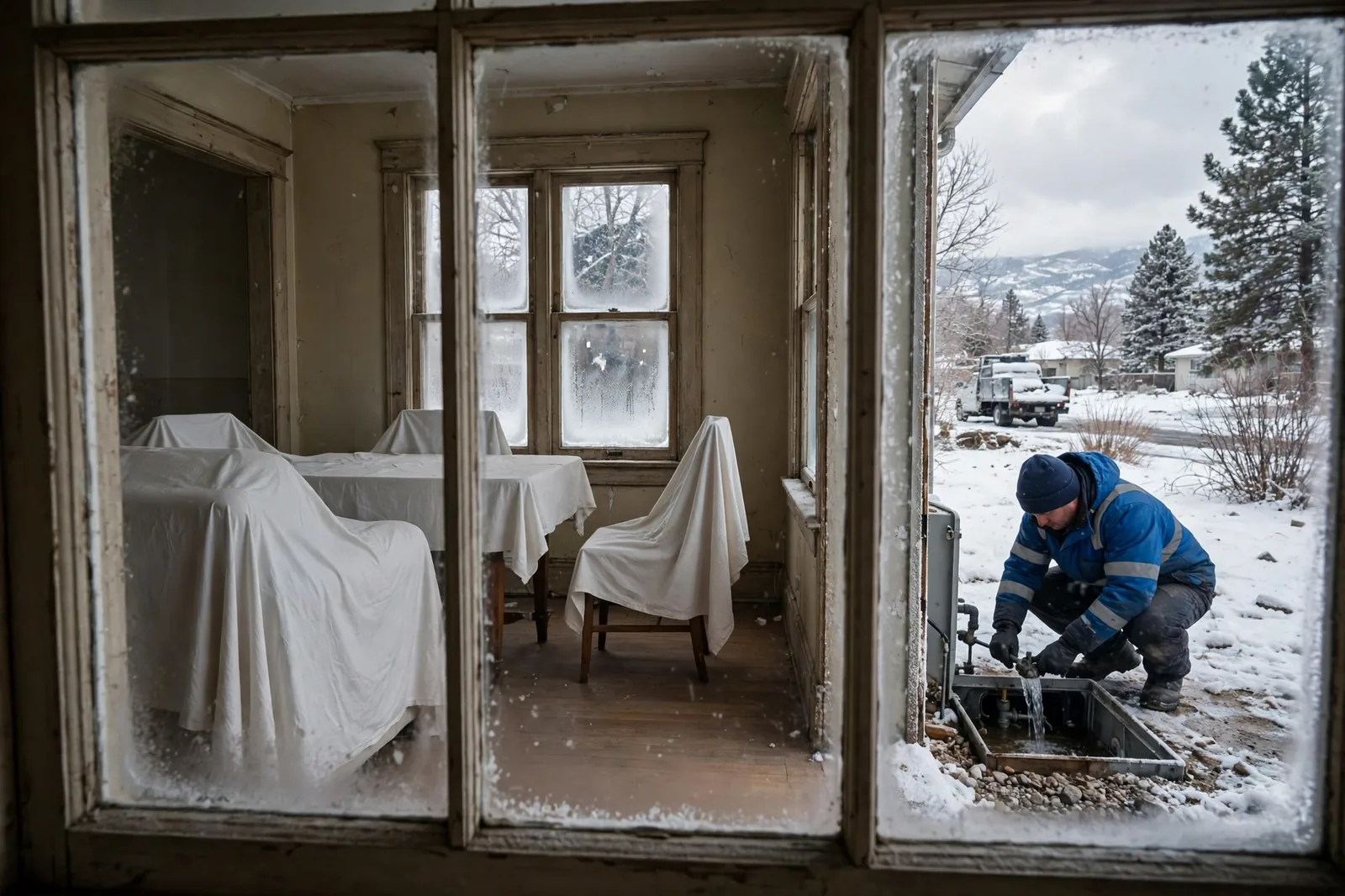
Report it as soon as you discover it, and say clearly when you left, when you returned and who found the damage. A break in an empty home is common in Idaho, especially in cabins and houses that sat unheated through a cold snap. Lines in a crawl space, the shallow space under a home where supply pipes often run unheated, can split quietly and leak downward for days before any stain appears indoors. The freeze thaw cycle, repeated freezing and warming that weakens a pipe, does its work quietly, and a home that is checked weekly can still flood between visits.
Your preparation before leaving now matters to the conversation. Notes on how the home was winterized, thermostat settings and who held a key all help show the loss was sudden rather than neglected. Our guide to winterizing plumbing in a vacant home lists the steps worth recording. Around burst pipe help in Medimont, where second homes sit empty for weeks, that preparation record often decides how smoothly a claim moves.
Can A Neighbour Or House Checker Report For You?
They can make the first call to you and to a pro, and their dated photos and notes are valuable evidence. The formal report, though, normally comes from the policyholder, so make your own call as soon as you are reached. Ask your checker to write down when they entered, what they saw and what they switched off; that short note, made on the day, supports everything you report afterwards.
How Does Prompt Reporting Help The Claim Itself?
Early reporting aligns every record. Your call date matches the pro's invoice, the dated photos and the start of structural drying, the planned drying of walls, floors and framing. That consistency makes the file easy to approve, because nobody has to reconstruct what happened. It also starts mitigation sooner, and the EPA, the US Environmental Protection Agency, which publishes guidance on mold cleanup, advises drying wet materials within 24 to 48 hours to limit mold growth, the fungi that can start on wet materials within days.
Prompt action protects the home as well as the paperwork. Water extraction, removing standing water with pumps and vacuums, followed by an air mover, a fan that pushes air across wet surfaces, and a dehumidifier, equipment that pulls moisture from the air, can save flooring and wall material that a week of waiting would lose. A claim that shows quick, sensible action is simply a stronger file than one that shows a long, wet delay. Preparedness guidance from FEMA, the Federal Emergency Management Agency, which publishes winter weather guidance, makes the same timing point for winter losses generally: act early, while the damage is still small.
What Mistakes Can Slow A Claim Down?
The common mistakes are quiet ones: waiting days to call, finishing permanent repairs before documenting, throwing away the split pipe section, and letting wet rooms sit while deciding what to do. Each one removes evidence or adds damage that did not need to happen. Saturated insulation, wall or floor insulation soaked by a leak, left in place for a week is a typical example of damage that prompt drying would have prevented.
If you are unsure about any step, ask. The Idaho Department Of Insurance, the Idaho state agency that regulates insurers and helps consumers with insurance questions and complaints, is a public resource when a claim stalls. And for the emergency itself, Idaho Burst Pipe Pros answers 24/7 on (800) 555-0100, a free service connecting you with independent local pros who typically arrive in 30 to 60 minutes. For sudden losses statewide, the emergency hub page lists the first steps in order.
Should You Accept The First Settlement Offer Quickly?
Read it against your documented damage first. Compare the offer with the pro's drying log, the list of damaged items and the repair estimates, and ask questions about anything that seems missing. There is rarely a reason to rush this step; the urgency belongs to stopping water and drying the home, not to closing the file. If the gap is large, your documentation is what supports a fair second look.
Frequently Asked Questions
Straight answers, no fine print. If your question is not here, one free call gets you a local pro who can check your exact problem.
Still Have Questions? Call Free
Answered 24/7 — a local pro can arrive in 30–60 minutes.
Call Now — (800) 555-0100Report it the same day you find it, once the water is stopped and the area is safe. Same-day notice creates a dated record that matches your photos and the pro's visit, and it satisfies the prompt-notice duty most policies describe. You do not need complete information to open a claim; you can add invoices, readings and estimates as they come. Waiting weeks, by contrast, invites questions that fresh evidence would have answered easily.
Yes. Policies expect reasonable steps to limit further loss right away, before and alongside filing. Closing the main valve, extracting standing water, moving belongings out of wet rooms and starting drying all count, and you should keep receipts and invoices for that emergency work. What can usually wait for adjuster guidance is permanent repair to finishes. Mitigation now, full restoration after the claim is underway: that order protects both home and claim.
Report it as soon as you discover it and explain the timeline plainly: when the home was last checked, when you found the water and what you did next. Discovery-based reporting is common with vacation homes and quiet under-floor leaks. Dated photos, a checker's notes and the pro's first readings help establish when the loss likely began. Honest, prompt reporting after discovery is far stronger than guessing or quietly repairing first.
Stop the water first, then get both calls made quickly; the order between them matters less than the delay. Many homeowners call a pro first so extraction and drying start, then report within the same few hours. If water is still flowing or a room is flooding, the pro call cannot wait for a claims queue. Either way, note the time of each call, because that simple timeline supports the whole file.
Clear, dated photos of each wet room before cleanup, the broken pipe or fitting if visible, damaged belongings in place, and any waterline marks on walls. Add a slow video walk-through if you can, plus close-ups of flooring, baseboards and cabinet bases. Photograph the same rooms again during drying and after repair. Store the originals unedited, because timestamps on the files themselves are part of the evidence the adjuster reviews.
Coverage varies by policy, and homeowners are often surprised that the resulting water damage and the plumbing repair itself can be treated differently. Ask the adjuster directly which parts fall where, and keep the pro's invoice itemised so each part is clear. What is consistent is that prompt reporting and good documentation help every part of the file. The state insurance department can explain general consumer rights if answers stay unclear.
A deductible is the amount your policy sets as your share of a covered loss, taken from the claim payment rather than usually paid upfront to anyone. Knowing the amount helps you judge the scale of a claim, but it should not delay reporting or drying. Ask the adjuster to show how the deductible was applied in any settlement figures, and keep that paperwork with your photos, invoices and drying records until the claim is fully closed.
Claims can be questioned when an insurer believes a loss came from neglect, such as a home left unheated and unchecked through winter, rather than a sudden failure. That is why your preparation record matters: thermostat settings, winterizing steps and check visits all show reasonable care. Report promptly, answer honestly and provide that record early. If a denial arrives and seems wrong, the state insurance department can explain review and complaint options.
Simple claims with quick reporting and complete documentation often move in weeks; large losses with extensive drying and restoration take longer. The pace depends on adjuster visits, drying time, contractor schedules and how complete your file is. You control one of those factors entirely: a tidy file with dated photos, invoices, moisture readings and a short written timeline removes the most common cause of delay, which is chasing missing evidence.
Start with your adjuster and ask, in writing, what is still needed. If that fails, the Idaho Department Of Insurance, the state agency that regulates insurers and helps consumers with questions and complaints, offers consumer assistance. For the physical emergency, separate from any claim, Idaho Burst Pipe Pros answers 24/7 on (800) 555-0100 and connects callers with independent local pros, typically arriving in 30 to 60 minutes. Keep both tracks moving: drying should never wait on paperwork.
Reviewed By Hamza
Lead Water Damage Restoration & Structural Drying Specialist
Hamza is an emergency water restoration specialist with deep expertise in burst pipe mitigation, freeze damage remediation, and industrial structural drying across freezing northern climates. He focuses on rapid moisture extraction, thermal imaging diagnostics, and comprehensive subfloor restoration to protect homes from mold and structural deterioration.
Updated October 27, 2026
Need Burst Pipe Help In Idaho?
One free call connects you with a local pro — answered 24/7, and a pro can arrive in 30–60 minutes.
Call Now — (800) 555-0100Free Call · Answered 24/7 · Local Pros Near You