Signs A Pipe Is About To Freeze Before It Bursts
Free Call · Answered 24/7 · Local Pros Near You
In This Guide
- How Can You Tell A Pipe Is Starting To Freeze Before It Bursts?
- What Does Frost On A Pipe Mean?
- Why Does One Tap Slow Down Before The Others?
- Which Places In The Home Show Signs First?
- What Sounds And Smells Should Make You Suspicious?
- What Should You Do In The Next Hour?
- How Do You Protect That Pipe After The Warning?
- When Does A Warning Become An Emergency?
Quick Answer
A pipe that is starting to freeze usually warns you first. One tap slows to a trickle, exposed metal feels far colder than the room, and frost or condensation appears on the line. You may hear faint ticking as ice forms inside. Treat those signs as urgent: warm the area gently, open the tap, and act before ice expansion pressure seals the line and splits the wall of the pipe.
How Can You Tell A Pipe Is Starting To Freeze Before It Bursts?
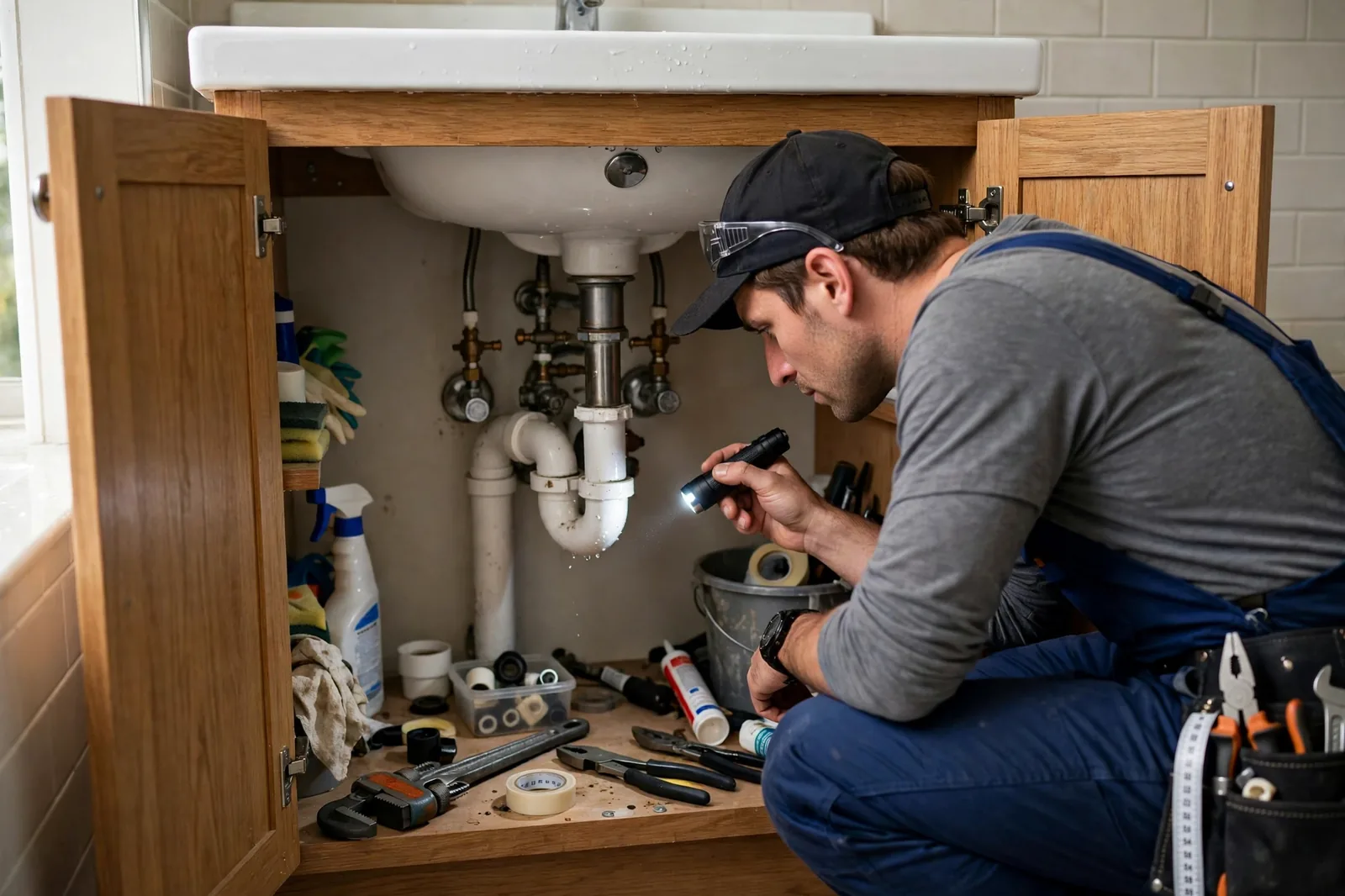
Start with flow. A tap that ran normally at breakfast and now gives only a thin stream is often the earliest clear warning, because ice is narrowing the inside of its supply line. If only that one tap is affected, the freeze is usually on its branch, which helps you locate it. Our guide to why only one faucet has no water explains that pattern in more detail.
Next, compare temperatures by hand. A section of copper pipe, the metal pipe used in many Idaho homes, that feels sharply colder than nearby sections is sitting in cold air or already holds ice. Check the runs you can reach under sinks, in the basement, the lowest level of a home where the main line often enters, and along any wall that faces the wind.
Which Tap Should You Check First?
Check the tap farthest from where water enters the home and any tap fed by an outside wall. Those lines lose heat first and show a slowdown earliest. Run each tap for a few seconds on a very cold morning, because a line that still flows freely is unlikely to be close to freezing, while a weak or spitting flow deserves attention the same day.
What Does Frost On A Pipe Mean?
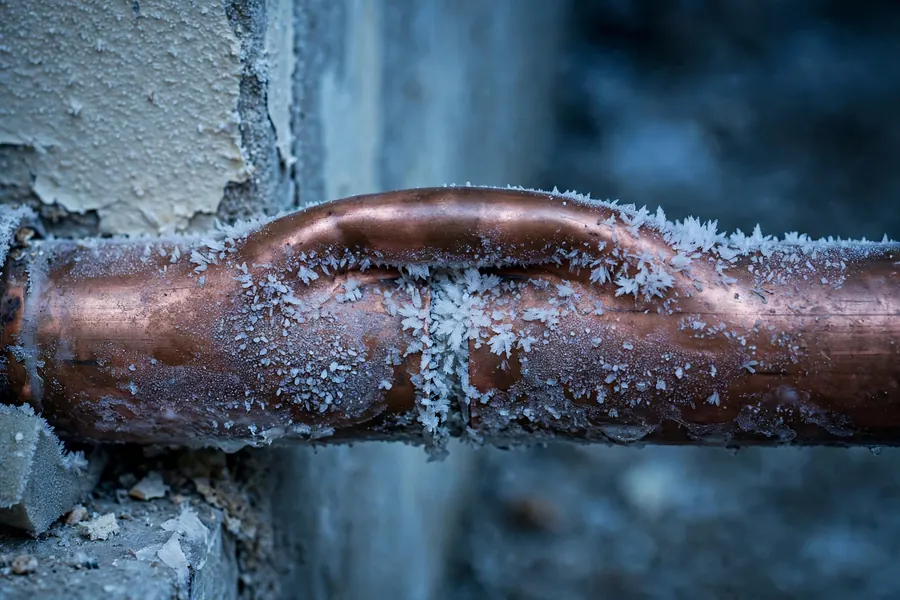
Frost on the outside of a pipe means the pipe surface is below freezing and moisture in the surrounding air is turning to ice on contact. It does not prove the water inside has frozen solid, but it tells you the line is cold enough that ice is likely forming inside it too. Treat visible frost as a late warning, not an early one, and start gentle warming right away.
Heavy frost also points to the cold source. Look for a gap, vent or uninsulated stretch near the frosted section, especially in a crawl space, the shallow space under a home where supply pipes often run unheated. Homeowners reading about burst pipe help in Boise often find the same pattern: one uninsulated run in moving cold air, frosted while the rest of the system stays clear.
Is Condensation The Same Warning As Frost?
No. Condensation is liquid water beading on a cold pipe in warmer air, common in summer. Frost is white, feathery and dry to the touch, and it only forms when the surface is at or below freezing. If you are unsure, note the room temperature: frost in a space that is itself below freezing means the pipe needs warming and insulation, not just watching.
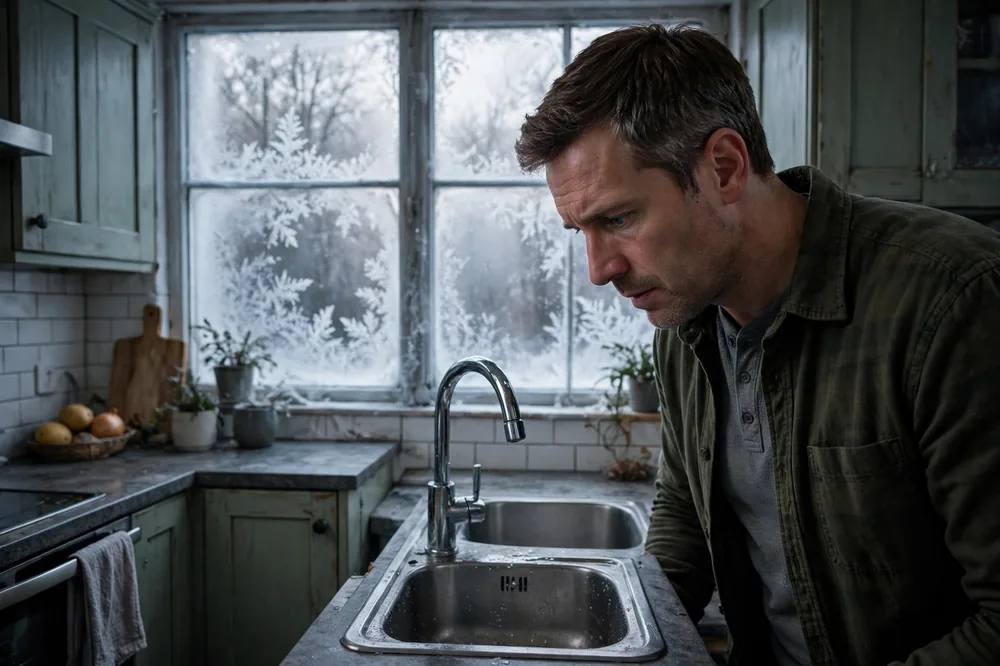
Pipe Frozen Or Burst Right Now? One Free Call Connects You With A Local Pro.
Call NowWhy Does One Tap Slow Down Before The Others?
Ice rarely forms evenly through a whole house. It starts where one line meets the coldest air: an exterior wall, an outside-facing wall whose runs sit closest to outdoor cold, a garage ceiling, or an attic, the space above the ceiling where little house heat reaches the pipes. That branch narrows first, so its tap slows while taps on warmer interior lines still run at full pressure.
A slow tap is also useful information. It tells a pro which branch to warm and inspect, and it tells you the freeze has not yet sealed the line, because some water still moves. Keep that tap open while you warm the area. Moving water and an open outlet give expanding ice somewhere to push, which lowers the pressure building inside the pipe.
Which Places In The Home Show Signs First?
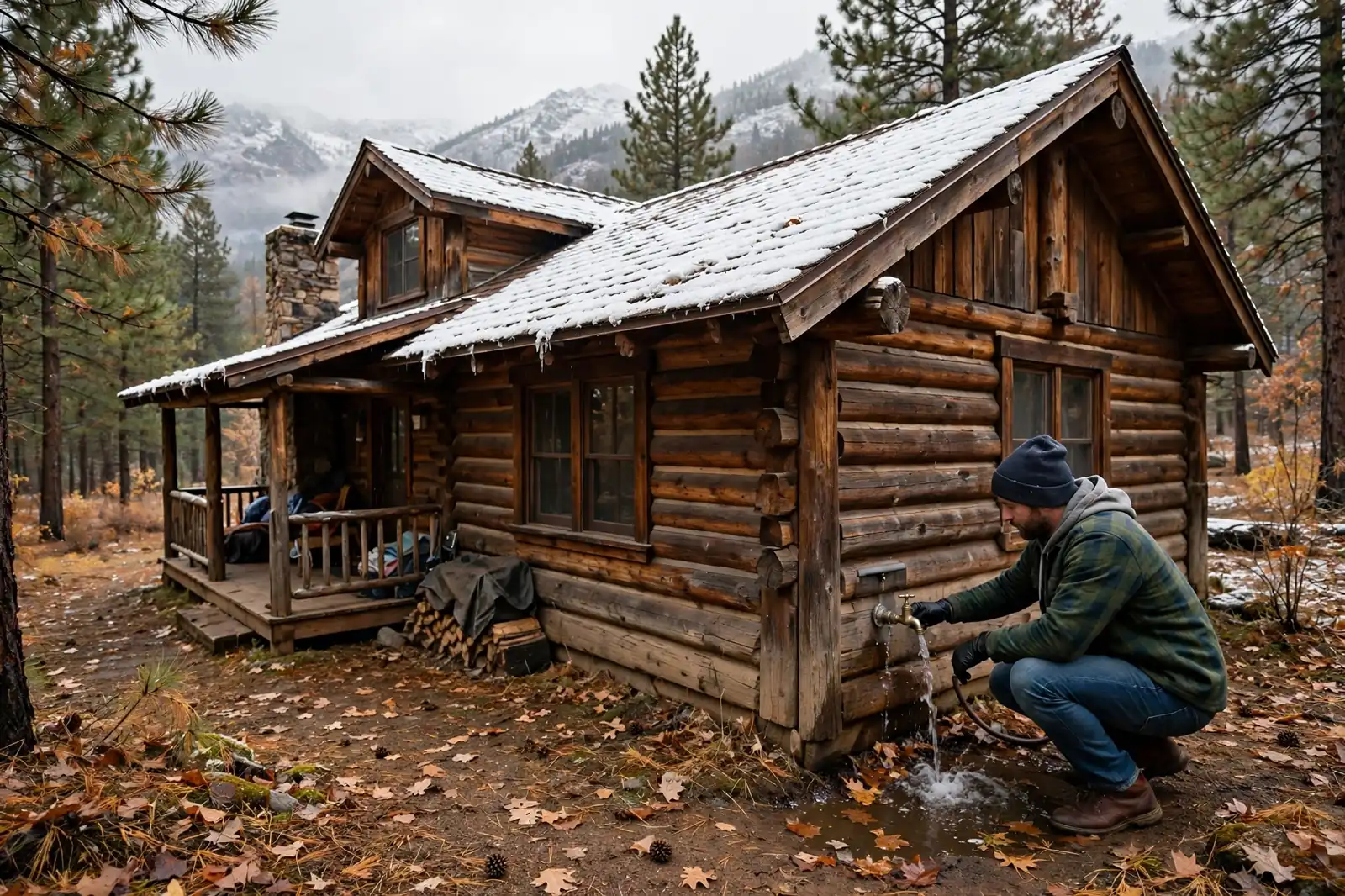
The kitchen sink cabinet, the cabinet under a kitchen sink that often sits on an outside wall, is a classic first spot. Open its doors on a cold night and feel the back panel: if the air inside is much colder than the room, the pipes behind it are at risk. A hose bib, the outdoor tap for hoses, with a hose still attached is another early casualty, because trapped water in that short line freezes fast.
Manufactured homes deserve a closer look. The manufactured home underbelly, the enclosed underside where water lines run, can lose its protection when skirting breaks or insulation falls, and pipes there may frost while the rooms above feel warm. Rural homes add a well line, the pipe carrying water from a private well into the home, which can freeze where it rises shallow or enters through an unheated pump house.
Do Irrigation Lines Give Early Warnings Too?
An irrigation line, buried sprinkler piping that must be blown out with air before winter, usually gives no indoor warning at all. Its signs appear in spring, as wet soil, sinkholes or a meter that moves when the system is off. That silence is why fall blowout matters: by the time an underground line announces itself, the split has often been leaking for weeks.
What Sounds And Smells Should Make You Suspicious?
Listen on a quiet, cold night. Faint ticking, creaking or pinging from a wall can be ice forming and the pipe reacting to changing pressure. A tap that spits air, coughs or runs cloudy for a moment is also telling you the flow through that line is disturbed. None of these sounds proves a freeze on its own, but together with weak flow they build a strong case.
Smell matters once a thaw begins. A musty odor near a wall or cabinet can mean a small split has already leaked into insulation during an earlier freeze thaw cycle, the repeated freezing and warming that weakens a pipe over a season. If you notice that smell alongside a slow tap, treat the line as damaged as well as frozen and have it checked after thawing.
What Should You Do In The Next Hour?
Open the affected tap and leave it open, then warm the cold section gently. Electric heating pad thawing, applying gentle electric heat to a frozen section, is one method the American Red Cross lists for safe thawing, alongside a hair dryer moved slowly along the pipe. Work from the tap back toward the coldest spot, and never use a torch or any open flame, which can start a fire inside a wall.
Know where your main water shutoff valve, the main valve that stops all water entering the home, sits before you need it. If flow stops completely, or you see a bulge or crack in the line, close that valve and call for help. Idaho Burst Pipe Pros is a free service connecting callers with independent local pros, answered 24/7 on (800) 555-0100, with pros typically arriving in 30 to 60 minutes, including for burst pipe help in Blanchard.
When Should You Stop Warming And Just Call?
Stop and call if the pipe is bulged, split or leaking, if water appears in a wall or ceiling, or if you cannot reach the frozen section safely. Warming a pipe that has already split only feeds the leak once the ice melts. In that case the shutoff, a few photos and a call protect the home far more than continued thawing.
How Do You Protect That Pipe After The Warning?
A pipe that nearly froze once has shown you exactly where your home is vulnerable. Fit a pipe insulation sleeve, foam tubing slipped over a pipe to slow heat loss, on that run and its neighbours. On the coldest sections, heat tape, an electric cable applied along a pipe to keep it above freezing, adds active protection, as long as it is installed to the maker's instructions and checked each fall.
Then fix the cold source. Seal gaps where air pours in, close or insulate under-floor vents for the coldest weeks, and keep cabinet doors open on bitter nights. The same habits protect an empty property, and our guide to winterizing a vacation cabin in Idaho walks through them. Warnings in colder northern towns and south through the Treasure Valley, the southwestern Idaho valley region including Boise and Nampa, follow the same rule: the pipe that warned you is the pipe to protect first.
When Does A Warning Become An Emergency?
A warning becomes an emergency the moment flow stops fully, a pipe bulges or splits, or water appears where it should not. At that point the question is no longer prevention but damage control: shut the water off, protect belongings and get help moving. The emergency burst pipe hub for Idaho sets out the statewide first steps for that moment.
Do not let a mild afternoon talk you out of acting. Many splits only leak when the ice plug melts, and a pipe that looked merely frosty at noon can be pouring water by evening. A thermal imaging camera, a camera that shows temperature differences on a surface, can help a pro confirm which sections are still frozen. If in doubt, treat the warning as real: an hour of warming is cheap, and a burst never is.
Frequently Asked Questions
Straight answers, no fine print. If your question is not here, one free call gets you a local pro who can check your exact problem.
Still Have Questions? Call Free
Answered 24/7 — a local pro can arrive in 30–60 minutes.
Call Now — (800) 555-0100Watch the flow first. A tap that slows to a trickle, spits or coughs is telling you ice is narrowing its line. Then check reachable pipes by hand: a section far colder than its neighbours, or one wearing frost, is close to freezing. Ticking sounds from a wall on a cold night add to the picture. Act on any two of these signs together rather than waiting for flow to stop completely.
Frost means the pipe surface is at or below freezing, so the water inside is very likely forming ice as well. It forms when moisture in the air meets metal that cold, and it usually marks the exact stretch exposed to cold air. Treat frost as a late warning: open the tap on that line, warm the section gently with a hair dryer or heating pad, and plan insulation for that run once it thaws.
Yes. Ice often grows along the coldest stretch first, leaving a narrowed channel that still passes some water. That is why a tap may run weakly for hours before it stops. A partly frozen pipe is your chance to act: keep the tap open, warm the line gently and find the cold spot. If you wait until the channel closes, pressure can build behind the ice and split the pipe.
Lines in outside walls, under floors and above ceilings freeze first, because they sit closest to outdoor air and farthest from house heat. The feed to an outdoor tap, pipes in a garage, and lines in the underside of a manufactured home are also early risks. Kitchen and bathroom lines on outside walls fail often for the same reason. Any pipe that has frozen before belongs at the top of your watch list.
It helps, within limits. A slow drip keeps water moving, and moving water freezes more slowly than still water. An open tap also gives expanding ice a direction to push, which relieves pressure in the line. A drip will not save a pipe in a very cold, exposed spot during an extreme night, so pair it with open cabinet doors, gentle room heat and insulation on the coldest runs.
There is no single safe number, because wind, insulation and pipe location matter as much as the thermometer. Risk rises sharply during long nights well below freezing, especially when cold air can reach the line through gaps or vents. A well-insulated interior line may ride out weather that splits an exposed line in an outbuilding. Use forecasts from NOAA National Weather Service Boise, the forecast office serving southwestern Idaho, to plan your cold-night routine.
No. Never use a torch or any open flame on a frozen or frosty pipe. The American Red Cross, a nonprofit that publishes guidance on preventing frozen pipes and thawing them safely, warns that open flame can ignite framing or insulation inside a wall. Use a hair dryer, a heating pad or warm towels instead, work slowly from the tap toward the cold section, and stop at once if you see a bulge or crack.
That happens. The hot line often runs to a water heater, the appliance that heats household water, through a cold garage or under-floor space, so it can freeze while the cold line stays open. Check the taps again: if hot flow is weak everywhere, look along the heater's feed and outlet runs. Warm that section gently, and once flow returns, insulate the whole run so the same spot does not freeze again next week.
Use your taps and your water meter, the utility meter that records water use. Weak flow at one tap maps the problem to its branch. A meter dial that moves while every tap is off points to a leak rather than a freeze. A pro can add a moisture meter, a handheld device that measures moisture in drywall and wood, to check whether a hidden line has already leaked into a wall during an earlier thaw.
Call when flow stops completely, when you cannot reach or warm the frozen section, when a pipe looks bulged or cracked, or when water appears in a wall, ceiling or floor. Those signs mean the pipe may already be split and will leak as it thaws. Shut off the main valve first, then call Idaho Burst Pipe Pros on (800) 555-0100. Calls are answered 24/7 and local pros typically arrive in 30 to 60 minutes.
Reviewed By Hamza
Lead Water Damage Restoration & Structural Drying Specialist
Hamza is an emergency water restoration specialist with deep expertise in burst pipe mitigation, freeze damage remediation, and industrial structural drying across freezing northern climates. He focuses on rapid moisture extraction, thermal imaging diagnostics, and comprehensive subfloor restoration to protect homes from mold and structural deterioration.
Updated October 27, 2026
Need Burst Pipe Help In Idaho?
One free call connects you with a local pro — answered 24/7, and a pro can arrive in 30–60 minutes.
Call Now — (800) 555-0100Free Call · Answered 24/7 · Local Pros Near You