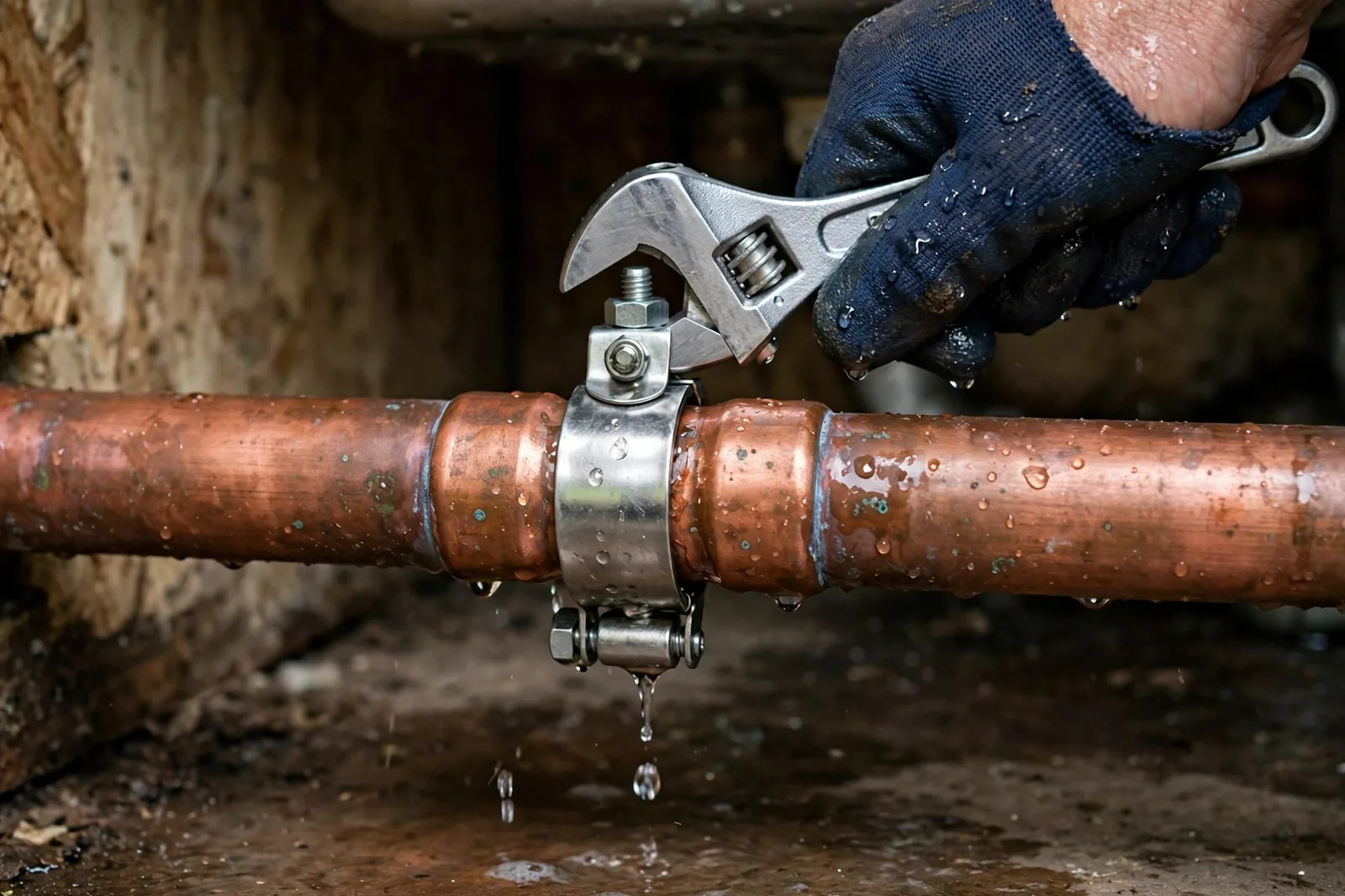
When A Burst Pipe Means It Is Time To Repipe
Free Call · Answered 24/7 · Local Pros Near You
In This Guide
Quick Answer
A burst means repiping when the pipe itself is the problem, not just the weather. One split in a sound system is a repair. Repeated leaks, widespread corrosion, crumbling pipe at every cut, and joints that weep along a whole run mean the material has reached the end of its life. At that point each new repair only moves the next failure a few feet along the same tired line.
When Should A House Be Repiped Instead Of Repaired?
The dividing line is pattern. A sound system that suffers one burst, in one cold spot, during one extreme night, deserves a repair. A system that leaks at different joints in different winters, stains water, loses pressure year by year, and shows pipe corrosion, the gradual wearing away of the pipe wall, wherever it is opened, is declining as a whole. Repairing that system is like patching one square of a worn roof while the rest quietly reaches the same age.
Age and material frame the pattern. Galvanized steel pipe, an older zinc-coated steel pipe that corrodes from inside, has a known lifespan, and older rigid plastics grow brittle on their own schedule. When a burst opens a wall and the exposed runs look tired everywhere the eye lands, a good pro will say so plainly. Homeowners reading about burst pipe help in Spirit Lake sometimes hear that honest assessment for the first time at a burst repair, and it deserves a calm hearing, not a rushed decision.
Why Does One Burst Not Automatically Mean Repiping?
A single freeze can split a healthy pipe in an unprotected spot, and fixing the cold path prevents the repeat. That home needs a repair and better insulation, not a new system. The repiping question only opens when the evidence points at the material everywhere: age, corrosion, and failures in more than one place, in more than one season, for more than one reason.
How Do You Know One Repair Is Not Enough?
Watch what the repair itself reveals. If the pro cuts out the split and finds sound, full-thickness pipe to join to, the repair rests on good material. If the cuts keep travelling because each new end crumbles, splits, or shows a wall thinned to foil, the repair is chasing strength that is not there. A failed fitting, a connector that cracks or separates, at several points along one run tells the same story from a different angle.
History confirms it. Count the callouts: a clamp here, a joint there, a ceiling stain last winter, low pressure that creeps worse each year. Our article on whether a pipe clamp repair is enough covers the temporary end of that pattern. When the honest answer is that temporary fixes are becoming the system's lifestyle, the conversation has already moved from repair to replacement, whether anyone has said the word yet.
What Does The Removed Pipe Section Tell You?
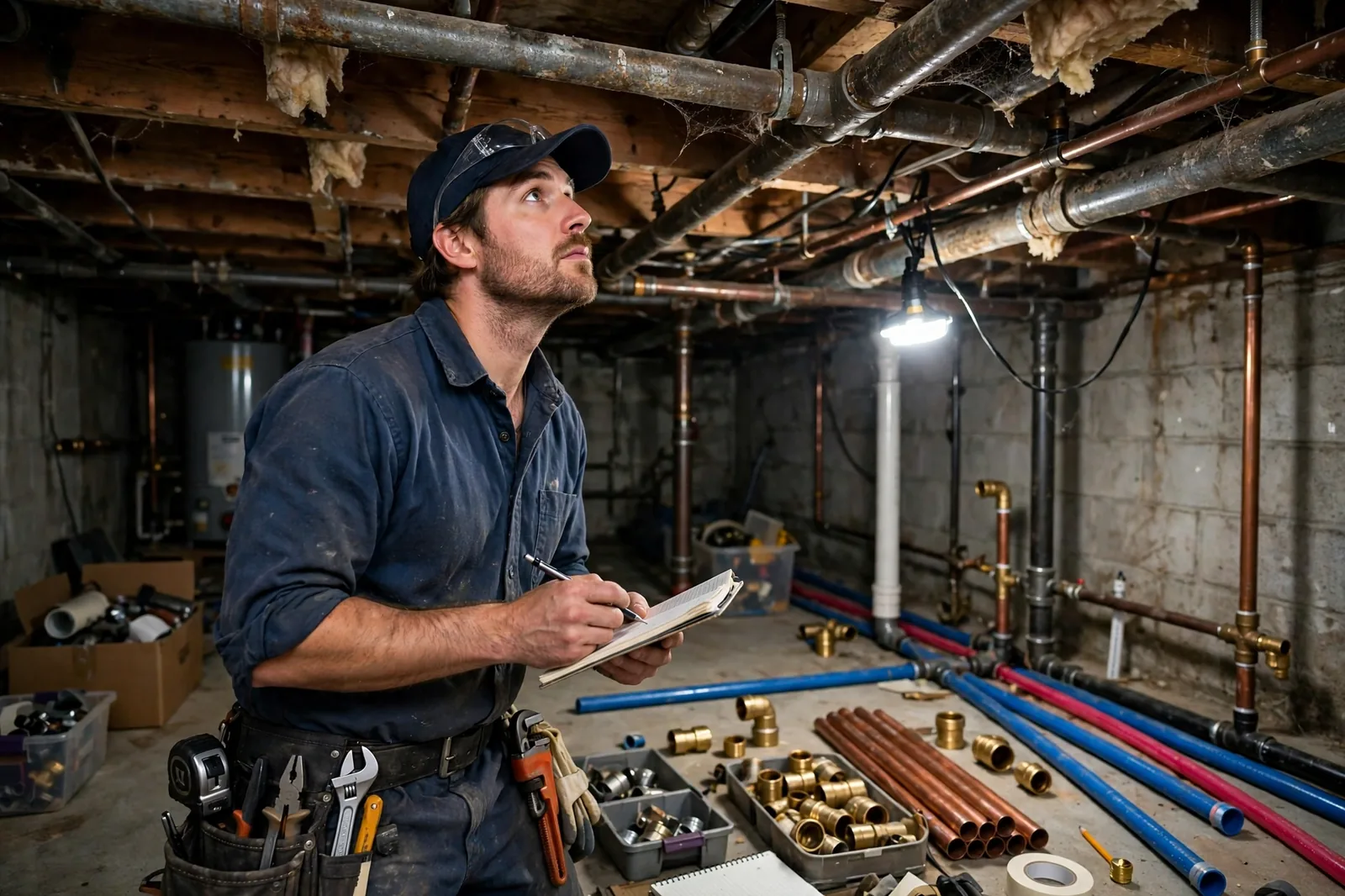
Ask to see it. Sound pipe cuts cleanly and shows a full, even wall. Failing pipe shows thinning, pitting, flaking, or cracks that travel beyond the original split, and it may crack again simply being handled. That short length of removed material is the most honest evidence in the whole conversation, and any pro should be glad to walk you through what it shows.
Pipe Frozen Or Burst Right Now? One Free Call Connects You With A Local Pro.
Call NowWhat Does A Repiping Job Actually Involve?
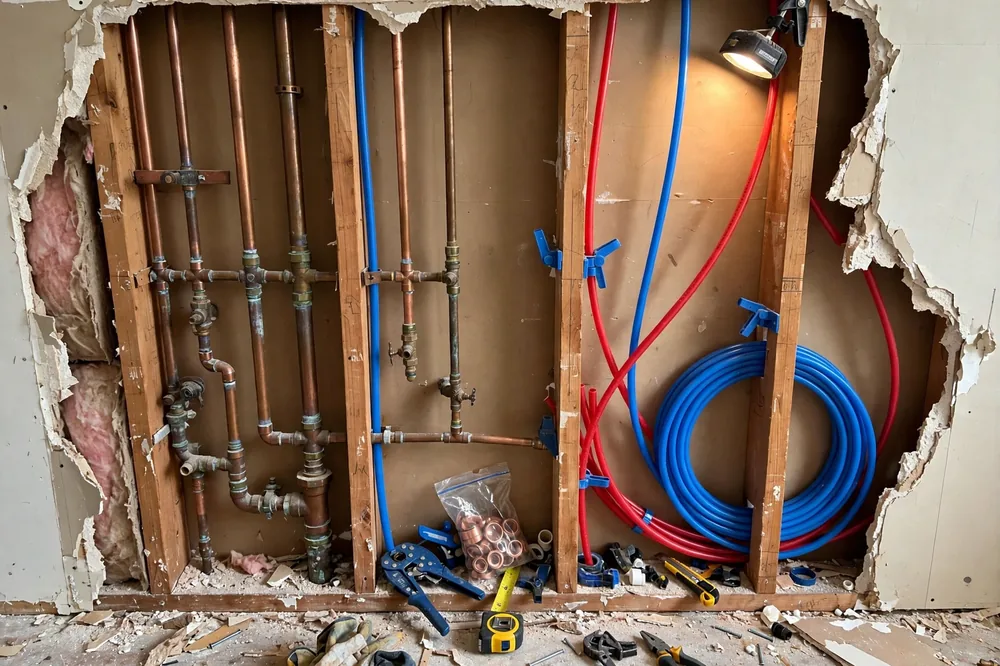
Repiping replaces the supply system, in whole or in planned stages, rather than the single damaged section. New lines are run, often through attics, crawl spaces, and wall cavities with far fewer openings than homeowners fear, then each fixture is reconnected room by room. Water is off for scheduled windows during switchovers, not for the whole project, and most families stay in the home while the work proceeds around them.
Material is a real choice. PEX pipe, a flexible plastic pipe, is widely used because it flexes in a freeze, runs in long continuous lengths with fewer joints, and threads through existing spaces cleanly. A copper pipe suits some homes and preferences. Either way, the new system ends with a pressure test, filling the lines at a set pressure and watching for a drop, across the whole installation before walls are patched and the job is signed off.
Can Part Of The House Be Repiped First?
Yes, and staging is often the sensible path. Many Idaho homes hold two or three plumbing generations: an old material in the original part, newer lines in an addition, and a patchwork between. If the failures all trace to one material or one wing, repiping that portion can end the emergencies while the sound remainder serves on. The key is evidence: which sections are actually failing, shown by openings, history, and water quality, not a guess that half a house sounds affordable.
Cold exposure can set the order too. The runs through a crawl space, the shallow space under a home, and an exterior wall freeze and burst most, so replacing those in a forgiving material removes the highest-risk metres first. Owners around burst pipe help in Springfield often stage exactly this way: the failing original lines one season, the rest planned with a remodel, and no more emergency calls in between.
How Do You Decide Which Stage Comes First?
Let condition decide, not convenience alone. The runs that burst, weep, or show the worst corrosion go first, along with any material known to be failing throughout. Sound sections of a younger material can wait for a later stage or a remodel. A written map of the system's materials and condition, made during the first stage, turns the later stages into scheduled work instead of surprises.
What Affects The Cost Of Repiping A House?
Scope drives cost: how much of the system is replaced, how many fixtures connect, and how the new routes travel. Open crawl spaces and attics make runs accessible; finished walls, slab floors, and long distances between fixtures add labour and patching. The finishing side, opening and closing walls, is its own line item, much like the separate rebuild scope after any burst, and it should be listed plainly rather than folded into a single unexplained figure.
Our article on what affects burst pipe repair cost breaks down the repair side of the same logic: access, materials, and extent decide the number. For a repipe, weigh that figure against the pattern it ends: repeated emergency visits, repeated drying with an air mover and a dehumidifier after each leak, repeated patching of the same rooms, and the standing risk of a large burst in a home whose pipes have already announced their condition several times.
What Are The Risks Of Just Repairing Again?
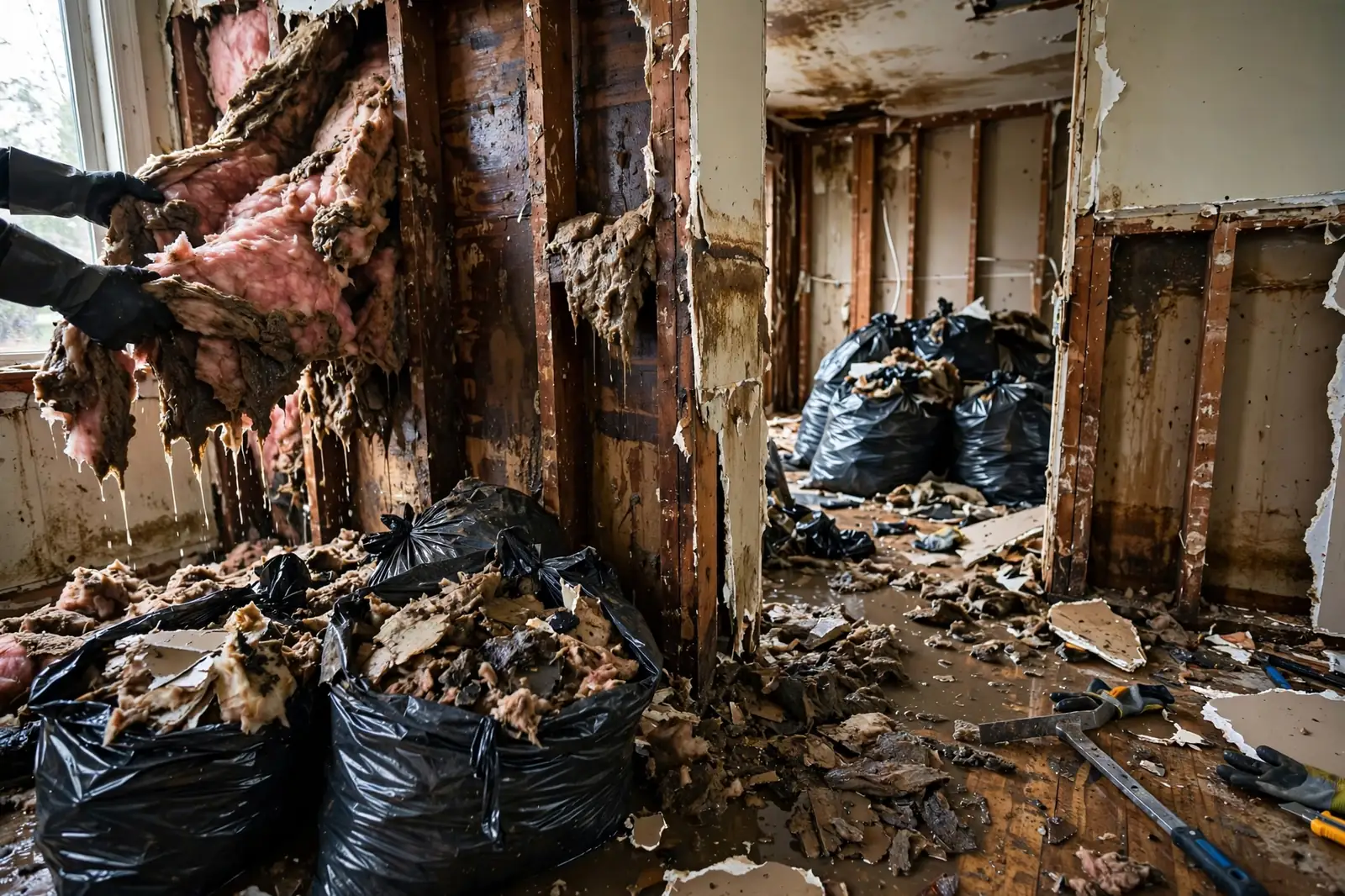
Each additional burst is a fresh flood in a house that has already been wet. Water extraction and structural drying, the planned drying of walls and framing, can rescue a room once or twice, but repeated soaking in the same walls raises the odds of mold growth and lasting damage to finishes. There is also the timing risk: a failing system chooses its own moment, and the next split may come during a holiday week with the house full, or a vacancy with nobody home to hear it.
Pressure problems add quiet damage meanwhile. High water pressure, supply pressure beyond what home plumbing is designed for, stresses every tired joint continuously, and water hammer, the shock wave when flowing water stops suddenly, hammers them daily. On a sound system these are maintenance notes. On a failing one, they are the forces that pick the date of the next leak.
Why Does Water Damage Get Worse With Repetition?
Materials forgive once better than five times. Drywall that dried soundly after one leak may crumble after a third soaking in the same cavity, and framing that stayed wet repeatedly can carry mold growth deep into the wall. Saturated insulation loses value each time it soaks. The house itself is part of the cost pattern, not just the plumbing bill, and it argues for ending the cycle at its source.
How Do You Make The Decision Calmly?
Gather three things: the removed pipe sections and what they show, a written map of the system's materials and condition, and two scopes, one for the immediate repair and one for the staged or full replacement, each listed plainly. With those in hand, the choice usually makes itself. A system with sound material beyond the break argues for repair; a system failing in pattern argues for planned replacement, on your schedule instead of the weather's.
If the decision lands on repiping, plan it for mild weather if the system allows, with the staged order set by condition and cold exposure. Homeowners near burst pipe help in Star hear the same closing thought: a repipe chosen calmly, from evidence, is a project; a repipe forced by the third burst in one winter is a crisis. The pipes will give you the evidence either way. Reading it early is the whole advantage.
Frequently Asked Questions
Straight answers, no fine print. If your question is not here, one free call gets you a local pro who can check your exact problem.
Still Have Questions? Call Free
Answered 24/7 — a local pro can arrive in 30–60 minutes.
Call Now — (800) 555-0100When repairs stop holding, leaks appear in new places, or the pipe material itself is failing from age and corrosion. One burst on a sound system is an accident; repeated bursts, weeping joints, and discoloured water are a pattern. When a pro keeps cutting back to tired material to find a section worth joining to, the system is telling you repairs have run their course.
Look at the pattern, not just the latest leak. Ask how many repairs the system has needed in recent years, what the removed pipe looked like, whether pressure problems or corrosion are widespread, and whether the same walls keep opening. One strong repair on otherwise sound pipe is enough. A repair that only moves the next failure a few feet along the same tired run is not.
Often, yes. Repiping can be staged: the failing material or the coldest, most damaged runs first, with the rest planned later. A partial repipe makes sense when one material or one part of the house causes the trouble while other lines are sound. A pro can map which sections are which material and age, so the partial scope targets the real problem instead of an arbitrary half.
Most homes stay liveable during the work. Water is shut off for planned windows while sections are replaced, and a temporary supply is often arranged so evenings and mornings work as usual. The job runs in stages: new lines installed, connections switched room by room, then walls patched where openings were made. Clear scheduling with the crew matters more than speed, because surprises hide in walls.
Flexible plastic is the common choice for its freeze tolerance, clean installation through small openings, and long service life. Metal pipe still suits some layouts and preferences. The right answer depends on your water, your layout, and local practice, and a good pro will explain the trade-offs plainly rather than pushing one material. What matters most is replacing the failing system fully, not mixing new hope into tired runs.
Cost follows scope: how much of the system is replaced, how accessible the runs are, how many fixtures connect, and how much wall opening and patching the routes need. A staged partial repipe costs less now and more later if the remaining old lines fail soon after. Ask for the scope in writing, section by section, so you can compare a partial plan and a full plan on equal terms.
Usually the system is pressure tested as each stage connects, and again as a whole at the end. Filling the lines at a set pressure and watching for any drop proves the new joints hold before walls close. You should also see clean water run clear at every tap and steady pressure across rooms that previously faded. Testing is part of the job, not an extra to request.
Repeated water damage is the risk. Each burst soaks walls and floors again, and repeated wetting invites mold growth and weakens finishes and framing over time. There is also the cost of repeated emergency visits and repeated patching of the same rooms. Against that pattern, one planned project with a known scope often reads differently, especially once a second or third repair lands in the same wall.
Almost certainly it changes the conversation. Insurers look at claims history, and repeated water claims from the same failing plumbing suggest a known problem left unaddressed. Document each repair, keep the pro's written findings about the system's condition, and talk with your insurer or the Idaho Department of Insurance about expectations. A planned repipe, documented as fixing the root cause, is a far stronger position than another emergency claim.
Call when a burst repair reveals widespread corrosion, when leaks keep appearing in new spots, or when you want an honest map of the system's condition. Idaho Burst Pipe Pros answers 24/7 on (800) 555-0100 and connects you with an independent local pro, typically arriving in 30–60 minutes. Ask the pro directly whether the system is worth another repair; a straight answer is the start of a good plan.
Reviewed By Hamza
Lead Water Damage Restoration & Structural Drying Specialist
Hamza is an emergency water restoration specialist with deep expertise in burst pipe mitigation, freeze damage remediation, and industrial structural drying across freezing northern climates. He focuses on rapid moisture extraction, thermal imaging diagnostics, and comprehensive subfloor restoration to protect homes from mold and structural deterioration.
Updated October 27, 2026
Need Burst Pipe Help In Idaho?
One free call connects you with a local pro — answered 24/7, and a pro can arrive in 30–60 minutes.
Call Now — (800) 555-0100Free Call · Answered 24/7 · Local Pros Near You